 SELENE

On May 13, Silver Moon called at Valdez. It was the second-to-last Alaska port before Whittier the next day. The sky was overcast, the ground still wet, and snow still sat on the mountain tops; the whole town looked quiet and clean, as if it had just been washed by rain.
First off the ship: a little trolley
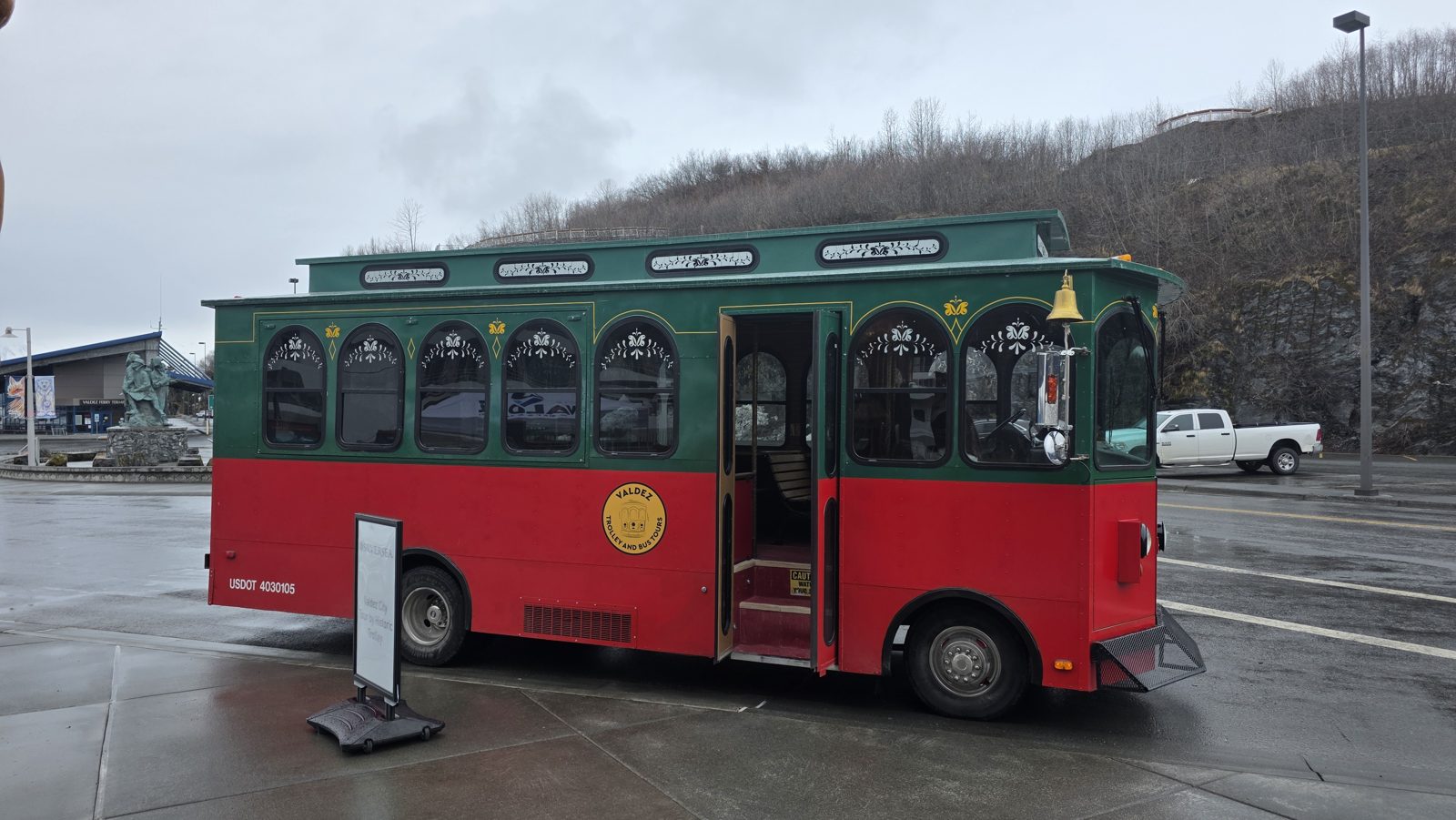
Beside the pier stood a red-and-green trolley marked VALDEZ TROLLEY AND BUS TOURS, its door open, a signboard next to it. We did not ride it; the trolley itself felt like Valdez's way of saying hello. The town is small, and it does not need a grand way of being explored.

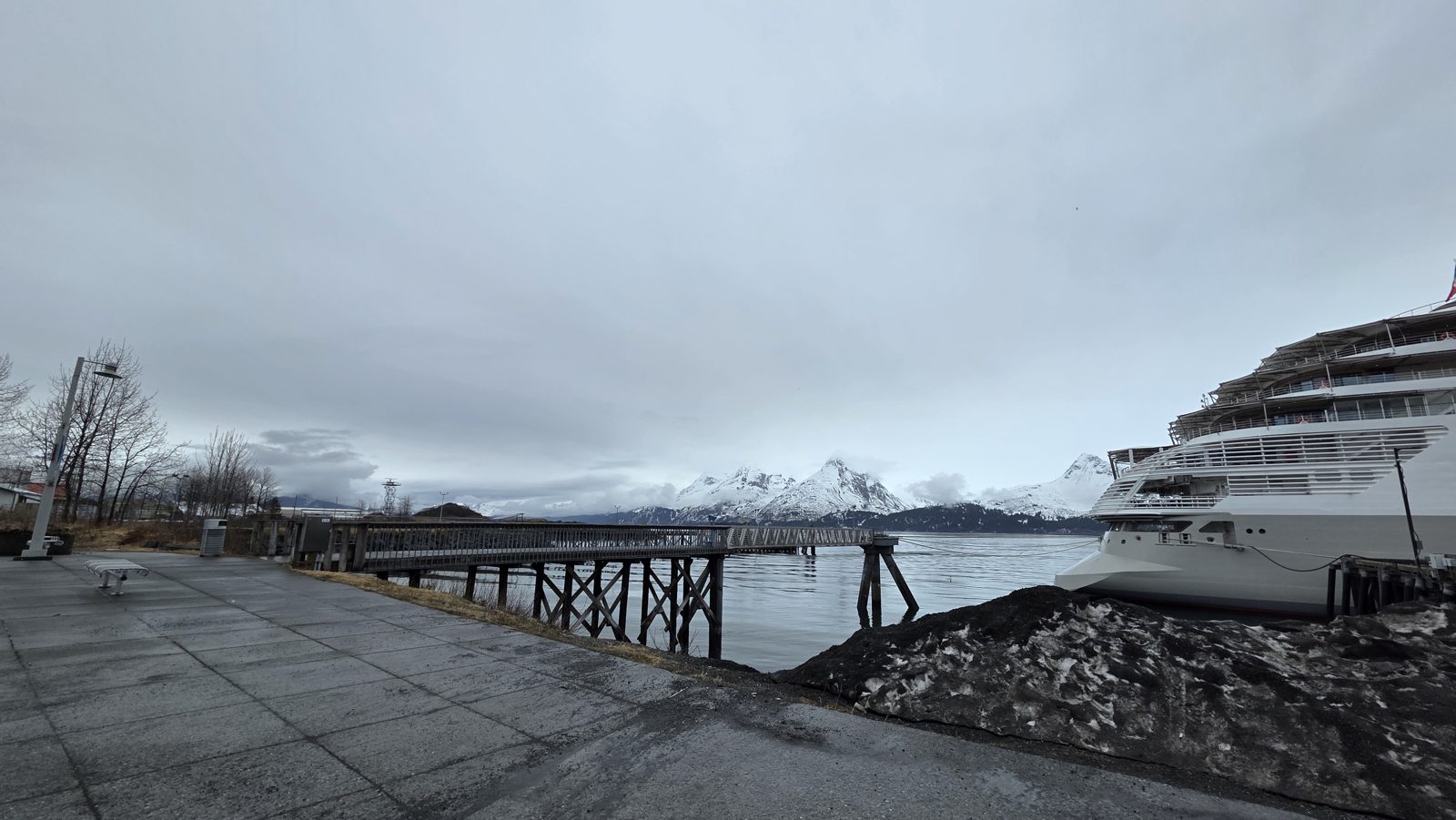
Walking along the shore, a wooden pier reached into the water, Silver Moon's bow on the right, snow mountains lined up across the bay. A small patch of unmelted snow was still left at the end of the pier, and the wet asphalt shone.

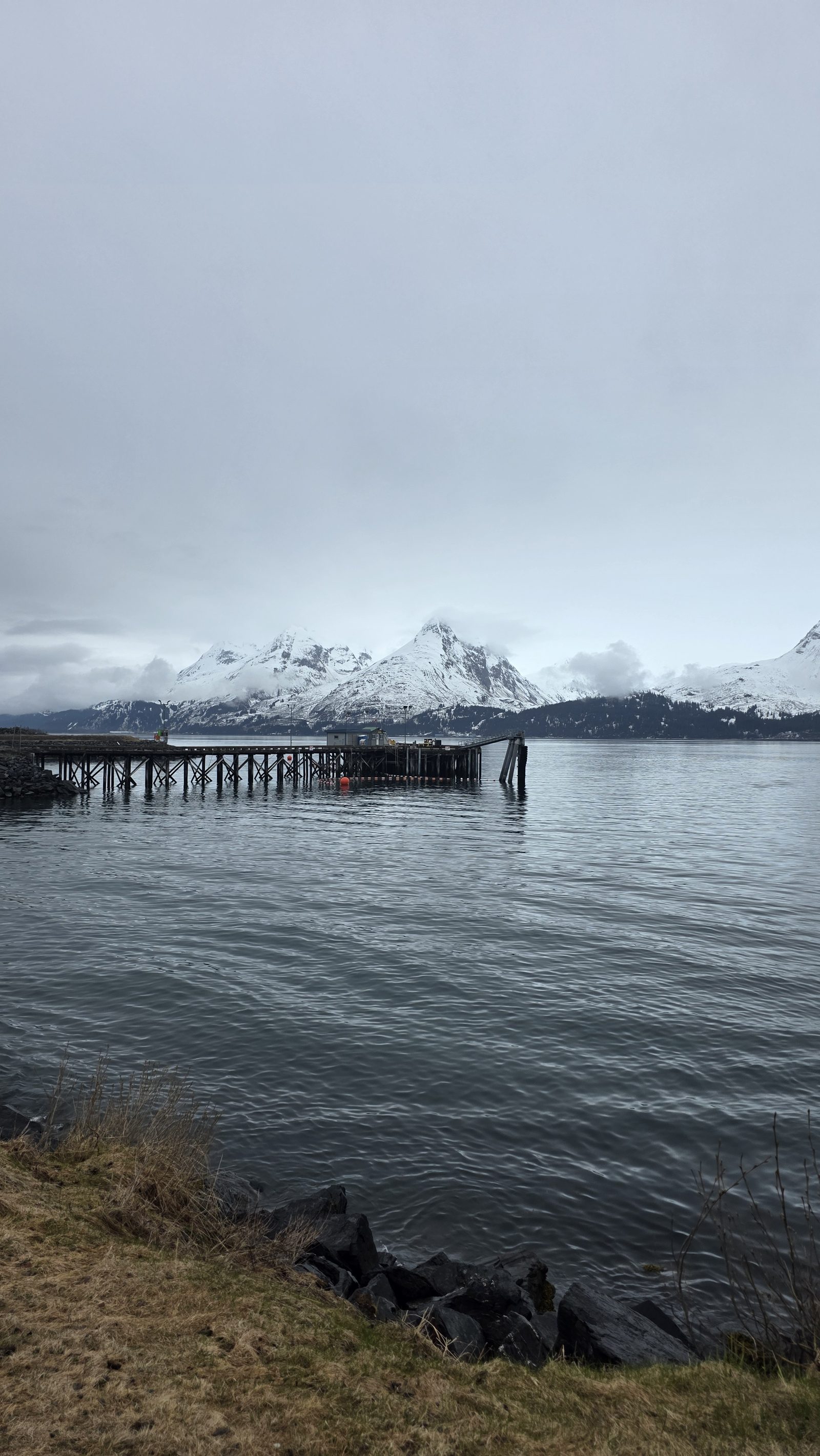
Further along, a grassy slope dropped to rocks and water, and a long wooden pier ran straight into the bay, a small hut at its head, snow mountains emerging from under the clouds. There was hardly anyone on this stretch — only ripples and distant mountains, best walked slowly.

Bears everywhere in Valdez
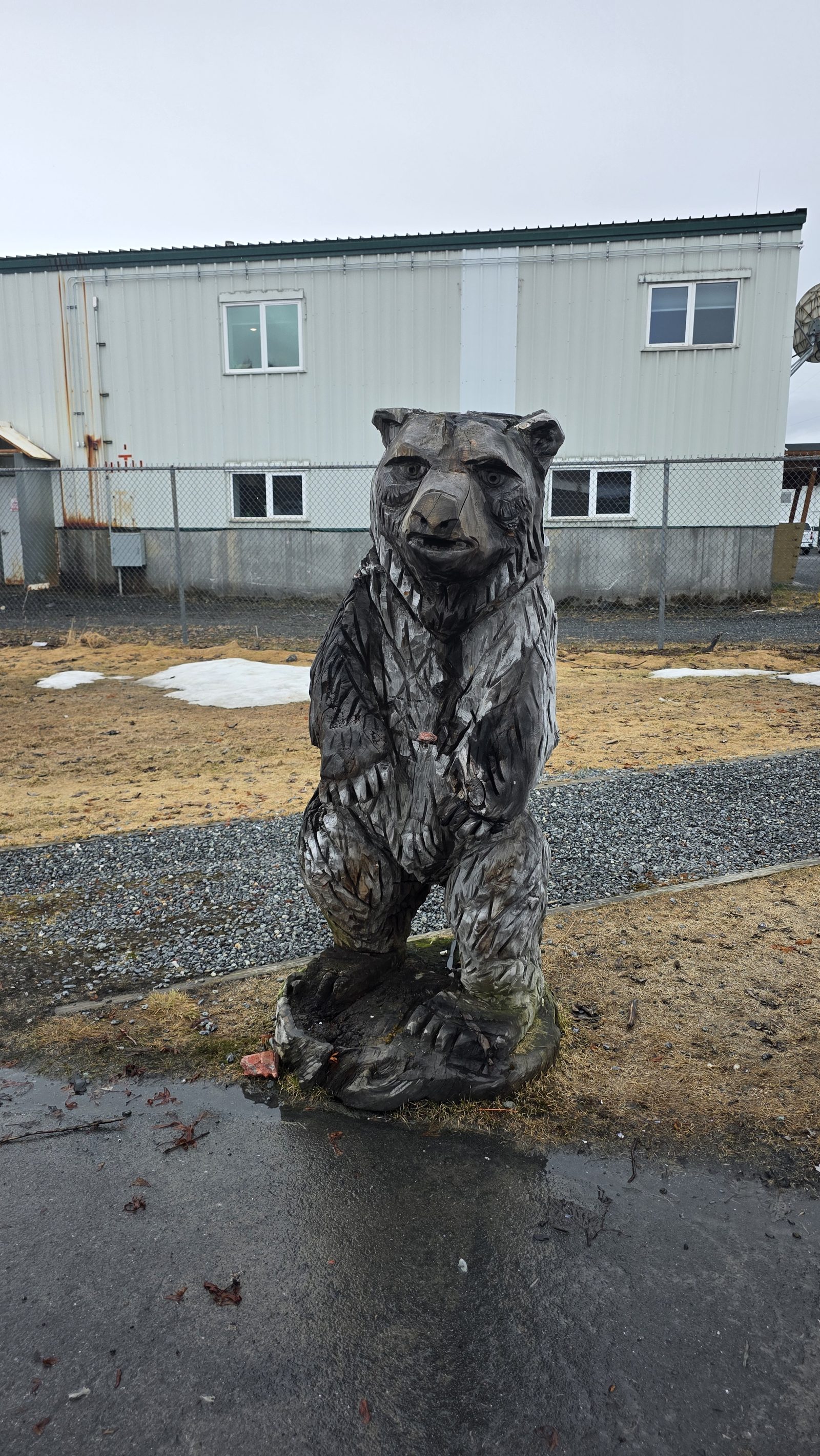
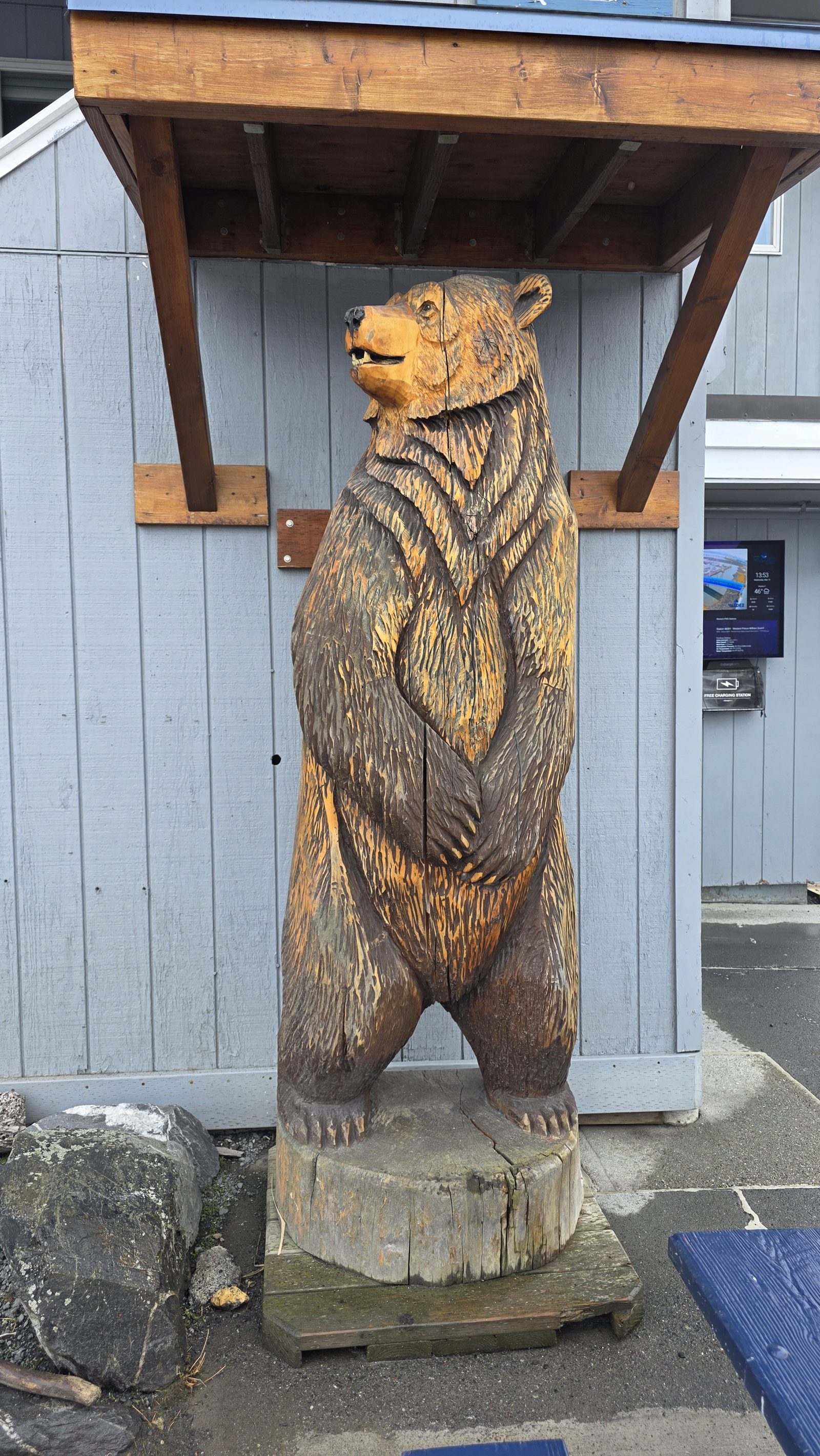
Valdez's bears do not come one at a time; they come one after another. First, a dark carved wooden bear by the roadside, standing, every chisel mark still visible in its fur, a pale building and patches of snow behind it. It is not finely carved, and that is exactly why it looks like something the people here made themselves.

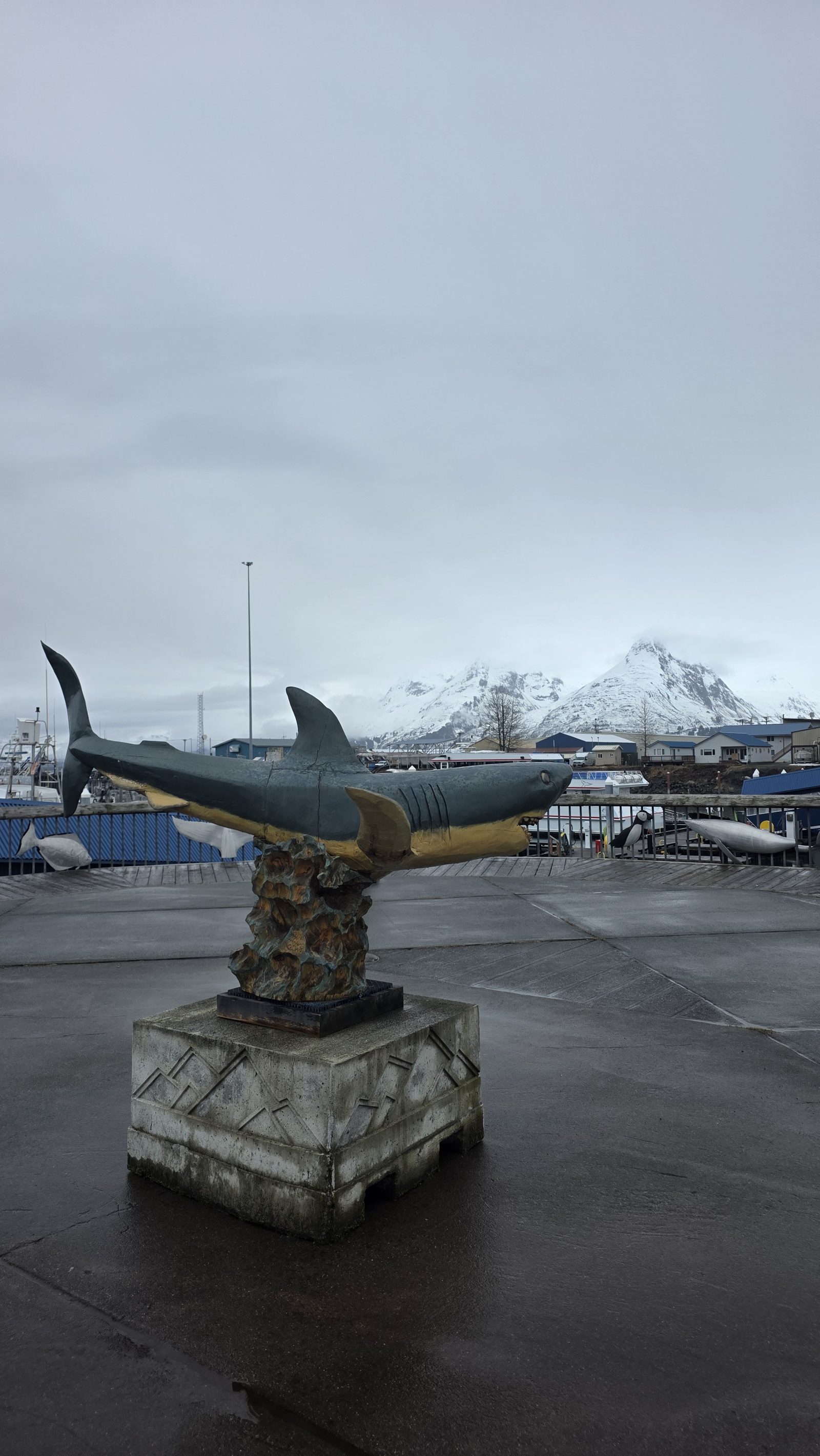
On the harbour walk stood a shark sculpture on a stone base, with a whale's tail poking out behind it. A fishing port's sculptures do not aim for elegance; they say what this place lives on: fish, whales, the sea.

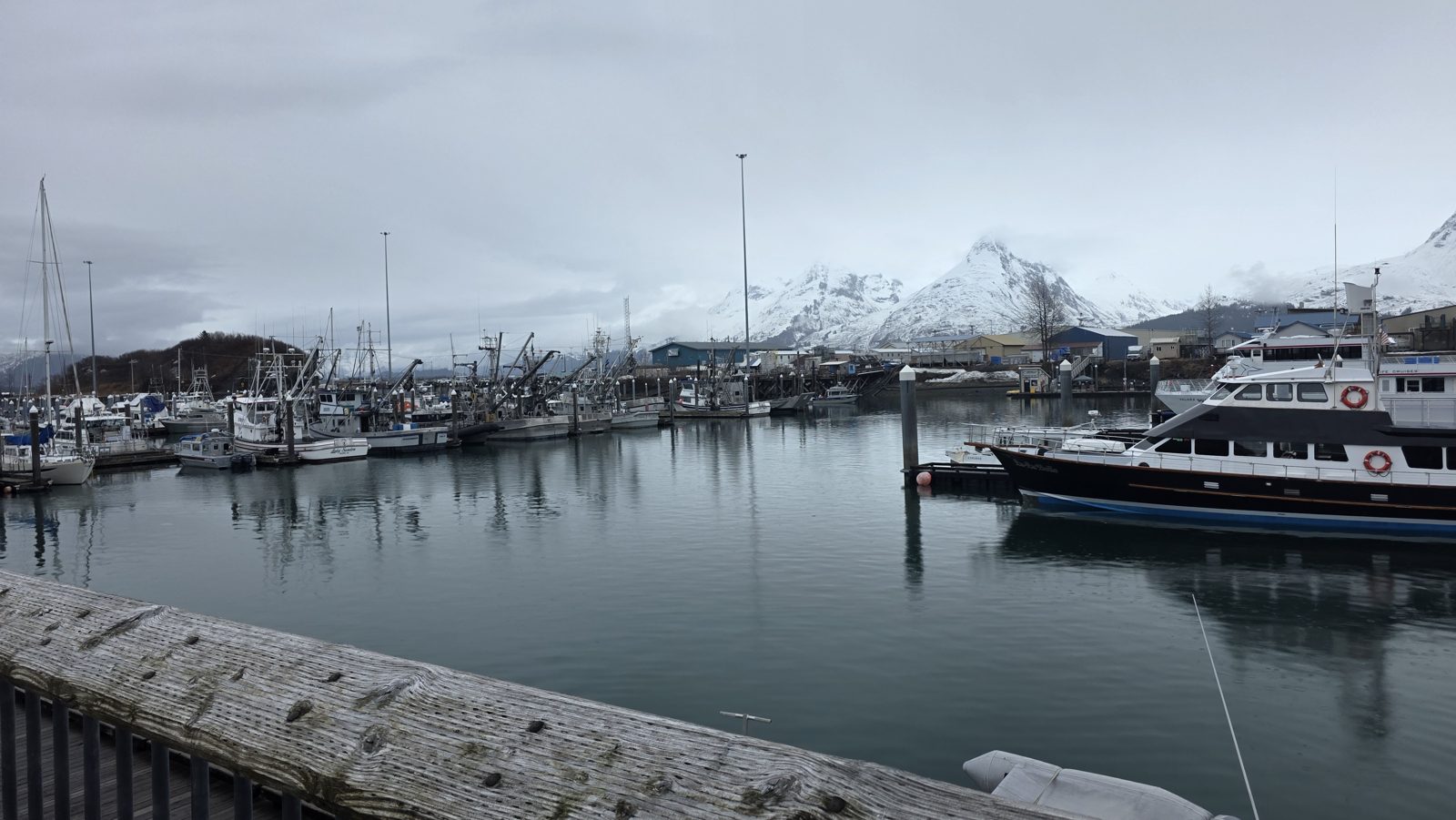
The fishing harbour itself was better than the sculptures. Fishing boats lined the water, masts and hulls reflected in the calm surface, snow mountains pressed under the clouds, and a black-and-white yacht moored on the right. Valdez's harbour has no tourist gloss: a boat is a boat, water is water.

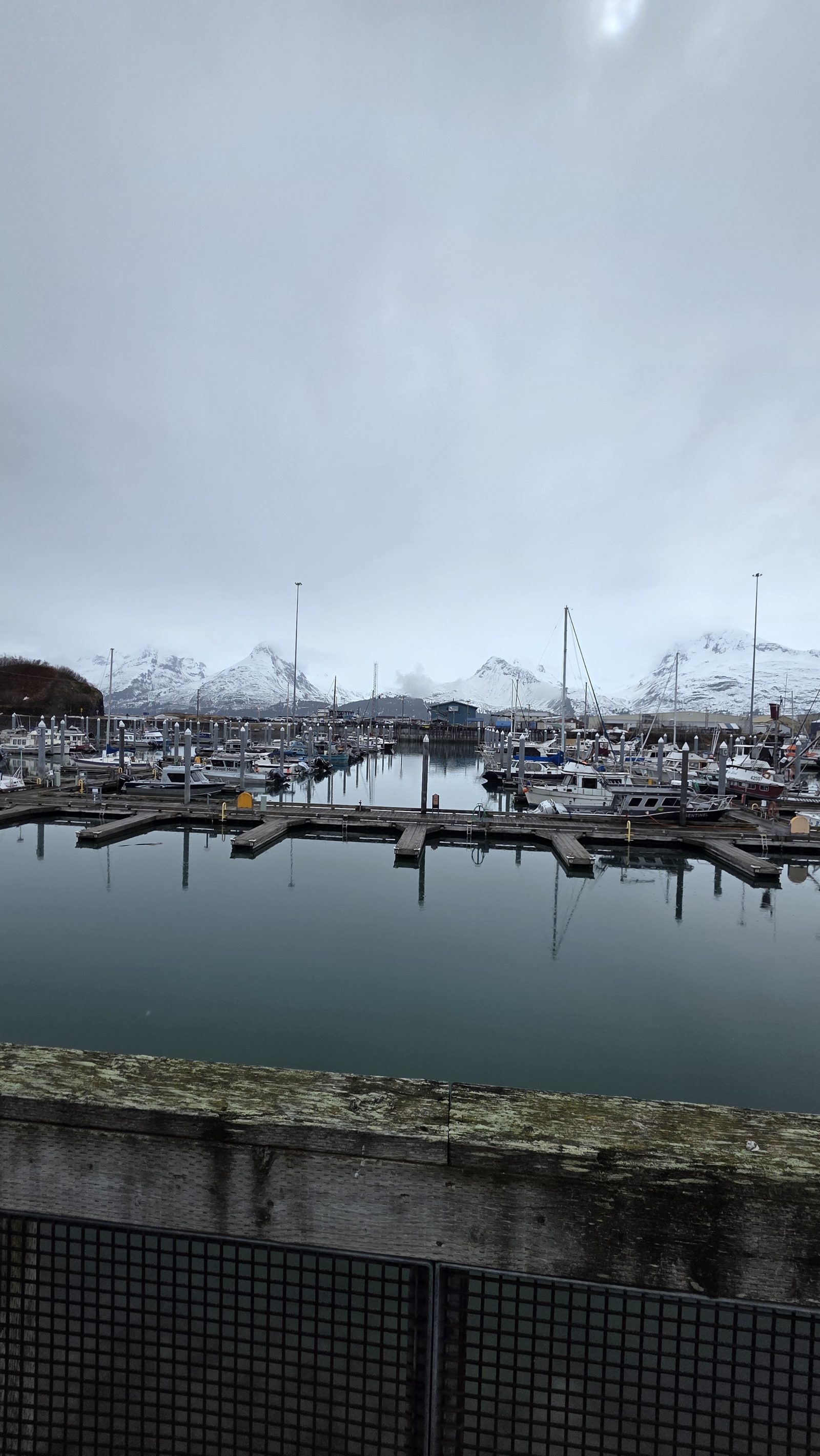
At the other end of the docks were empty berths: pontoons in neat rows, water as flat as a mirror, distant snow mountains reflected in it. With the boats away, the marina was easier to see for what it is.

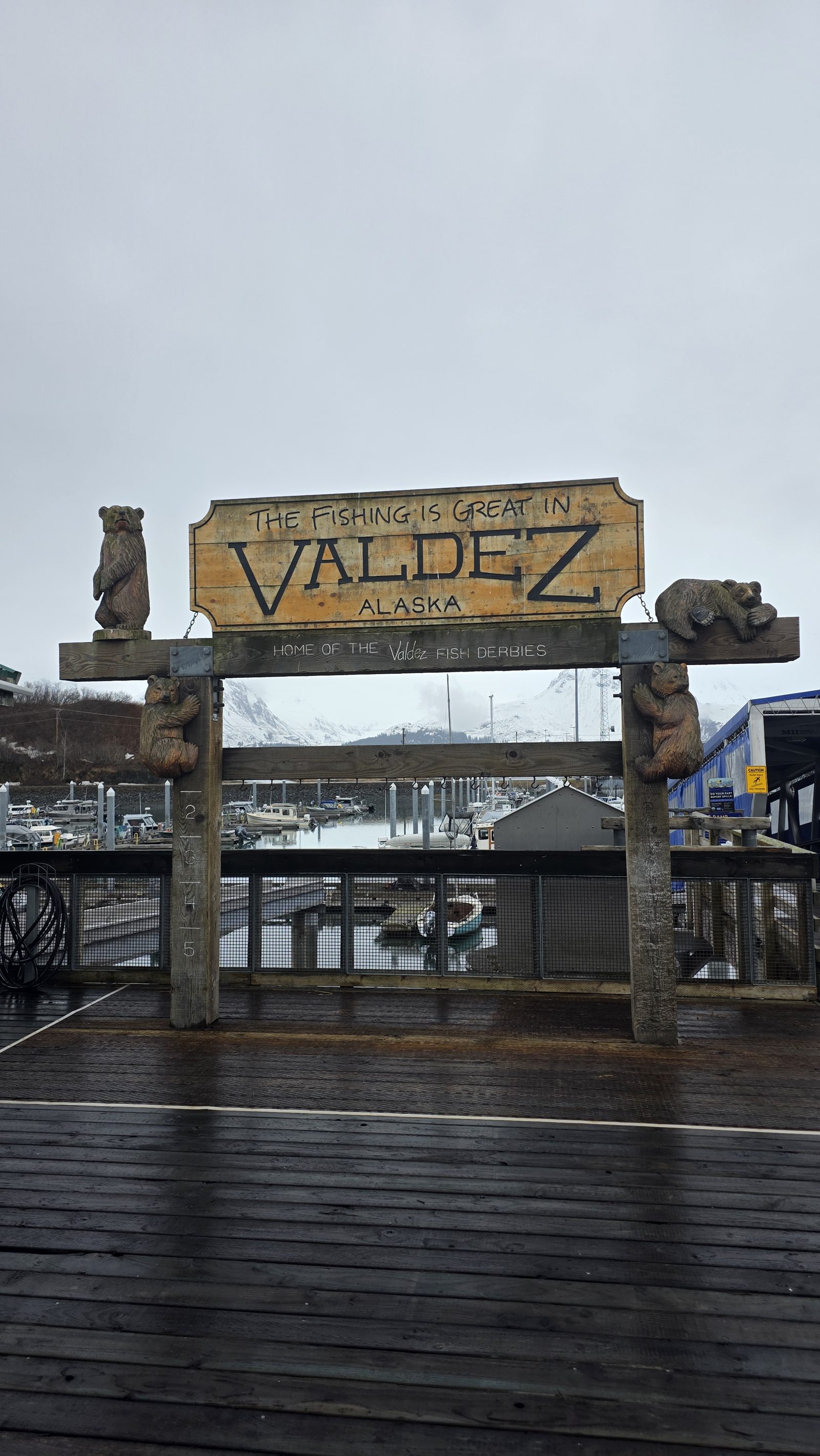
On a wooden boardwalk, a large sign read THE FISHING IS GREAT IN VALDEZ ALASKA, with HOME OF THE Valdez FISH DERBIES below, and a small carved wooden bear at each of the four corners of its frame — some standing, one lying down. Valdez makes its calling card like this, without any shyness.

Outside a shop stood another carved bear, lighter in colour, yellowish, on a wooden base, a blue table beside it. Bears like this work as signposts in Valdez: see a bear, and you know you are on the right track.

Indoors, the bears continue
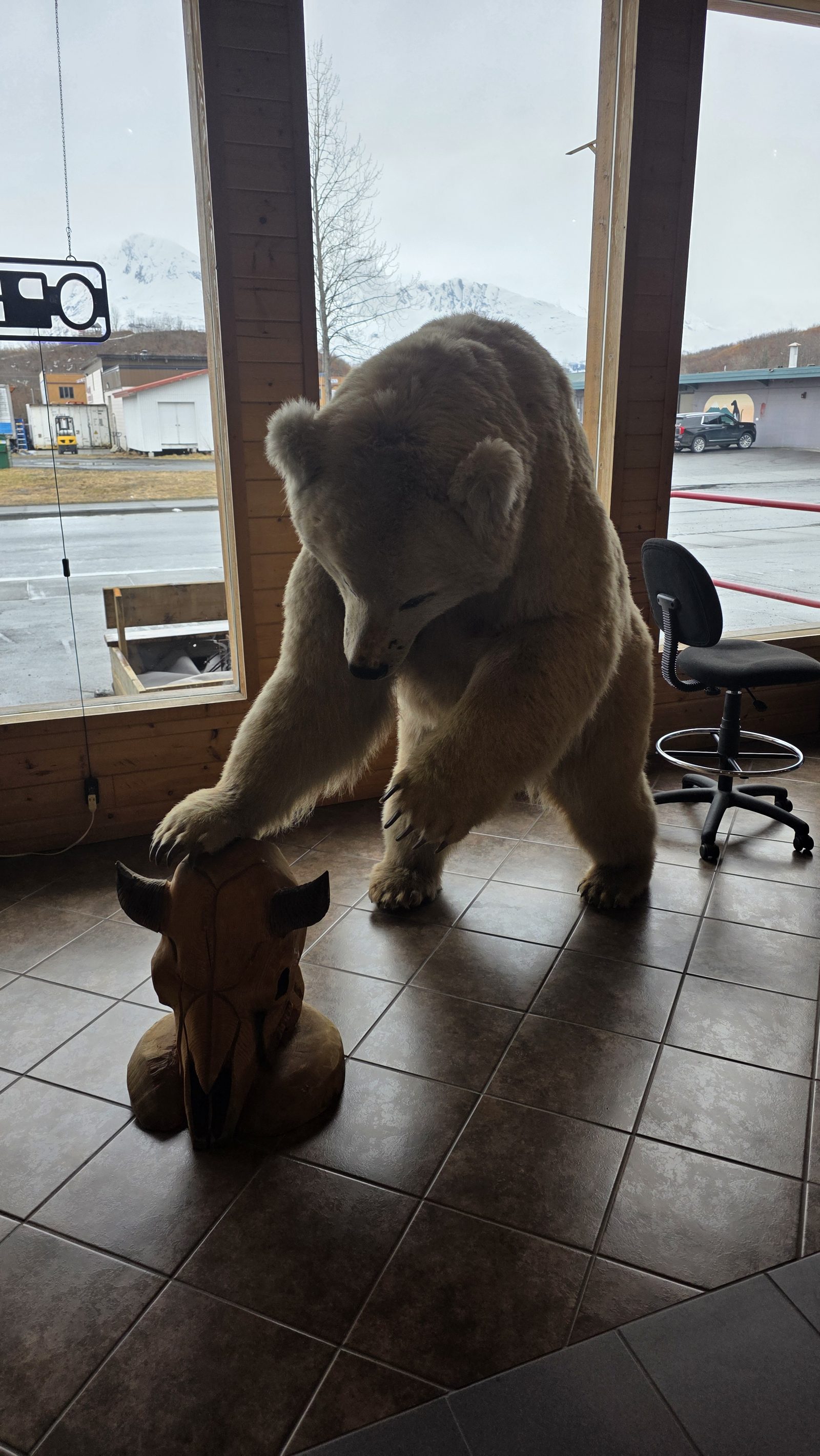
The indoor bears are different. The first was pale, its front paw resting on a wooden carving, the street and snow mountains visible through the window, dark tiles underfoot, an office chair beside it. Its pose was so lifelike that we found ourselves stepping softly.

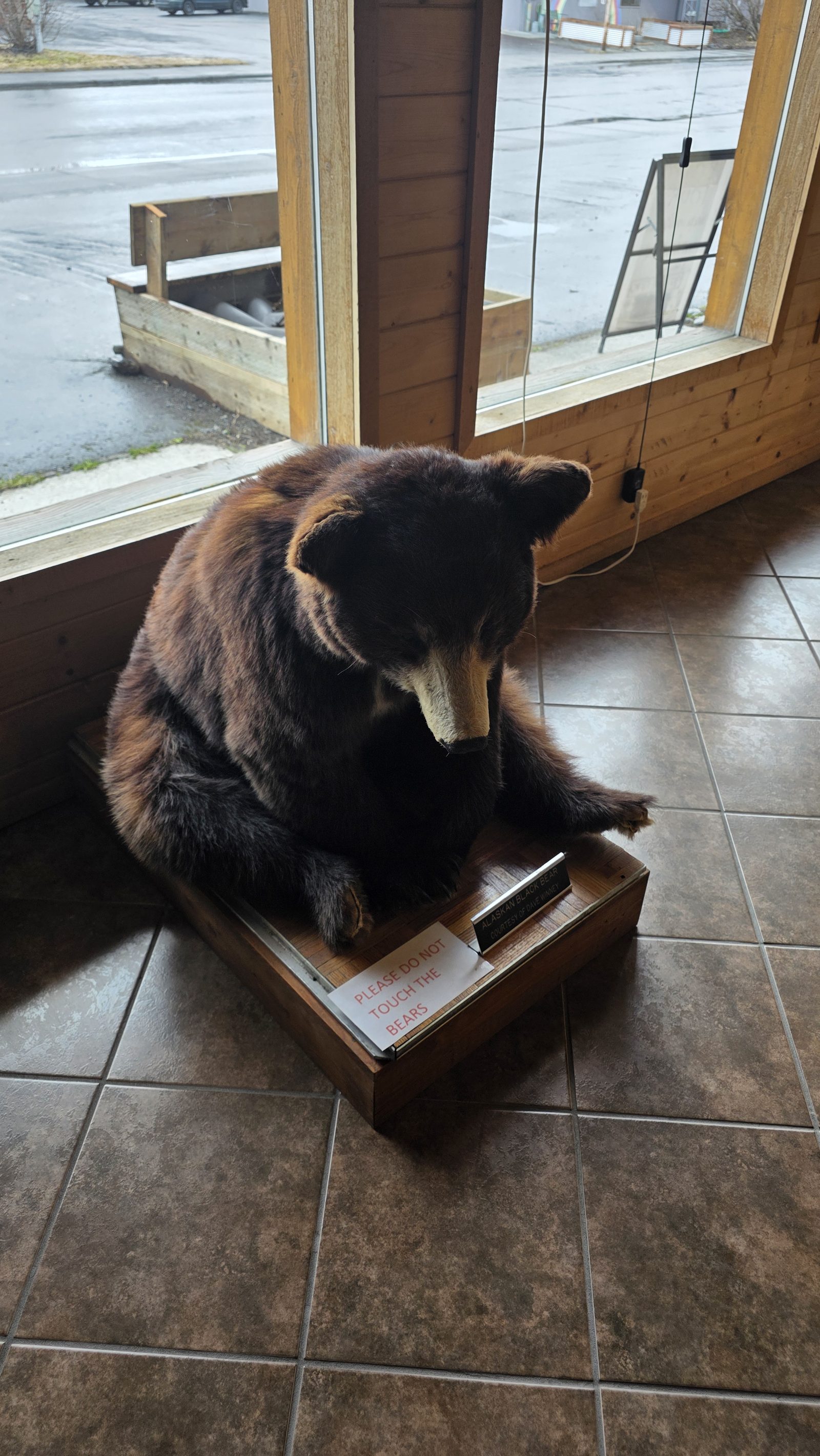
The second was a seated black bear, its plaque reading ALASKAN BLACK BEAR, with a sign beside it: PLEASE DO NOT TOUCH THE BEARS. It sat low, dark-furred, the rain-wet street reflected in the glass. In Valdez, even indoors, the message is the same: bears can be looked at, not touched.

Looking back from above
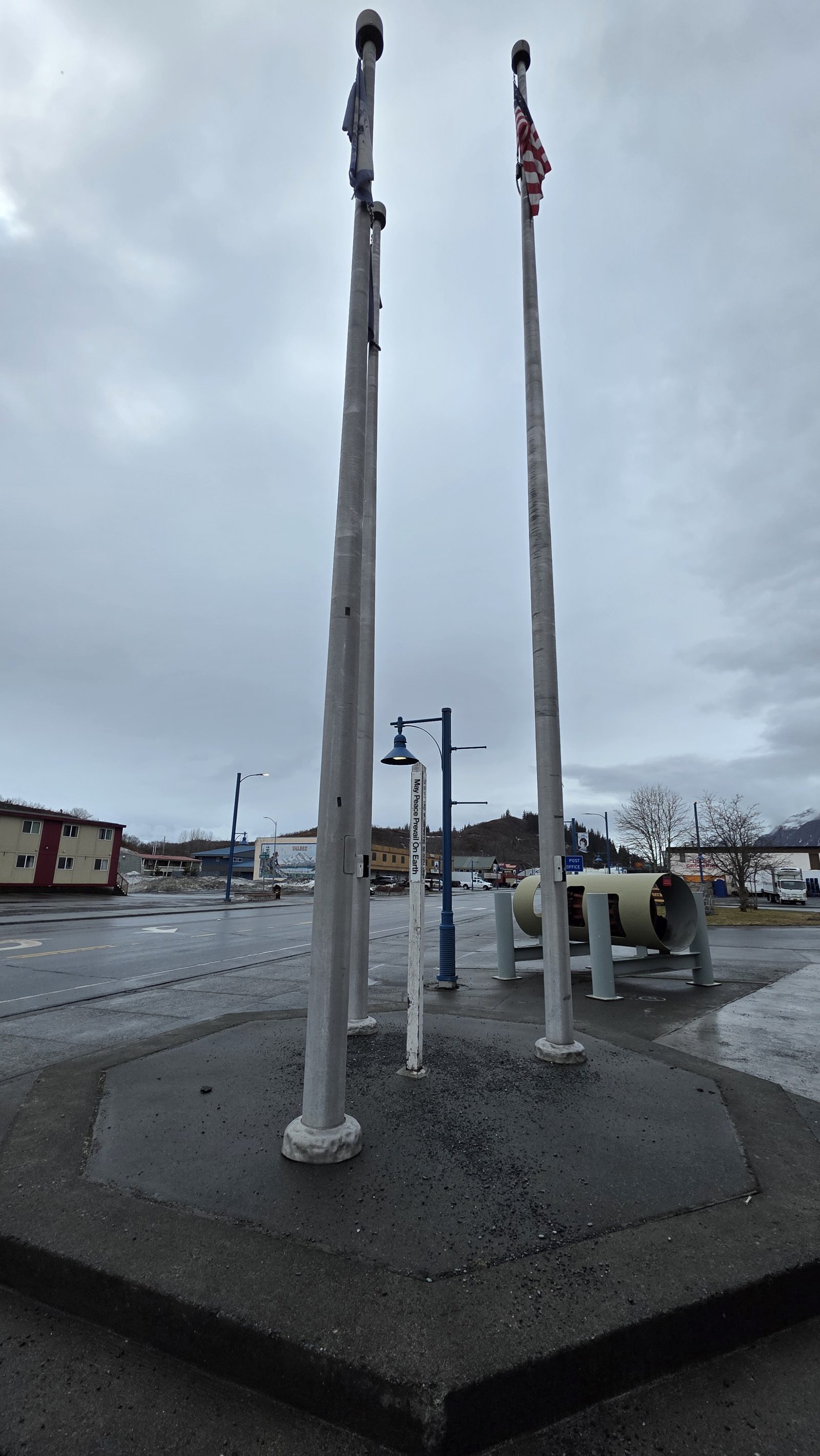
Back on the street, two tall flagpoles stood by the road, the US flag and the Alaska state flag hanging in the overcast light, a peace pole between them reading May Peace Prevail On Earth, a length of pipe lying beside it. Valdez's street scenes are like that: practical, direct, with no extra decoration.

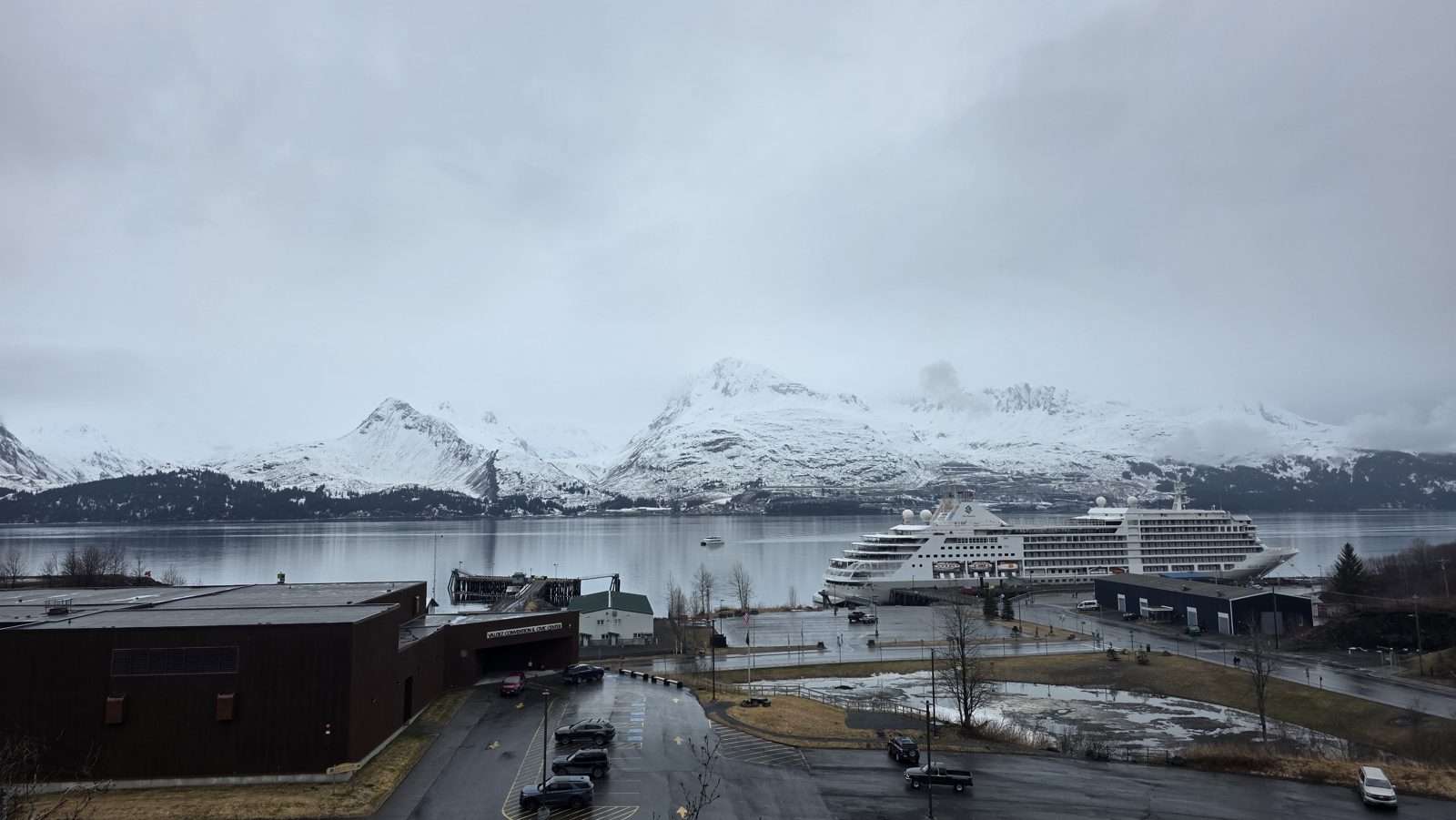
From higher up, Silver Moon lay whole along the pier, the Valdez Convention & Civic Center on the left, snow mountains and the bay spread out behind, cars in a small row in the parking lot. This is Valdez's most complete panorama: ship, town, and snow mountains in a single frame.

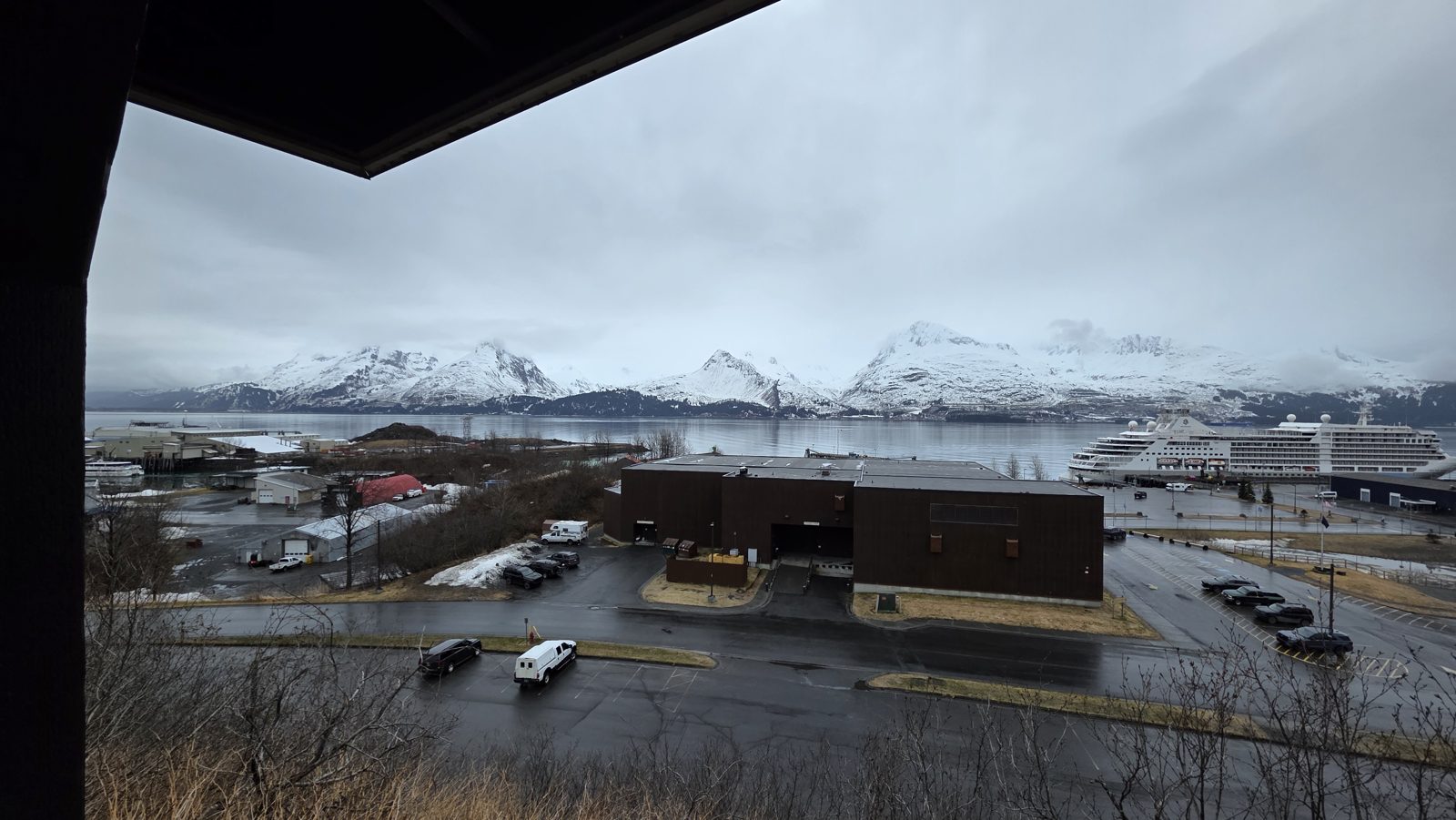
From another high spot, under a roof edge, the same view rearranged itself: the parking lot and the civic building in front, Silver Moon on the right, snow mountains across the bay. The same port, seen from a little higher, falls into a different order.

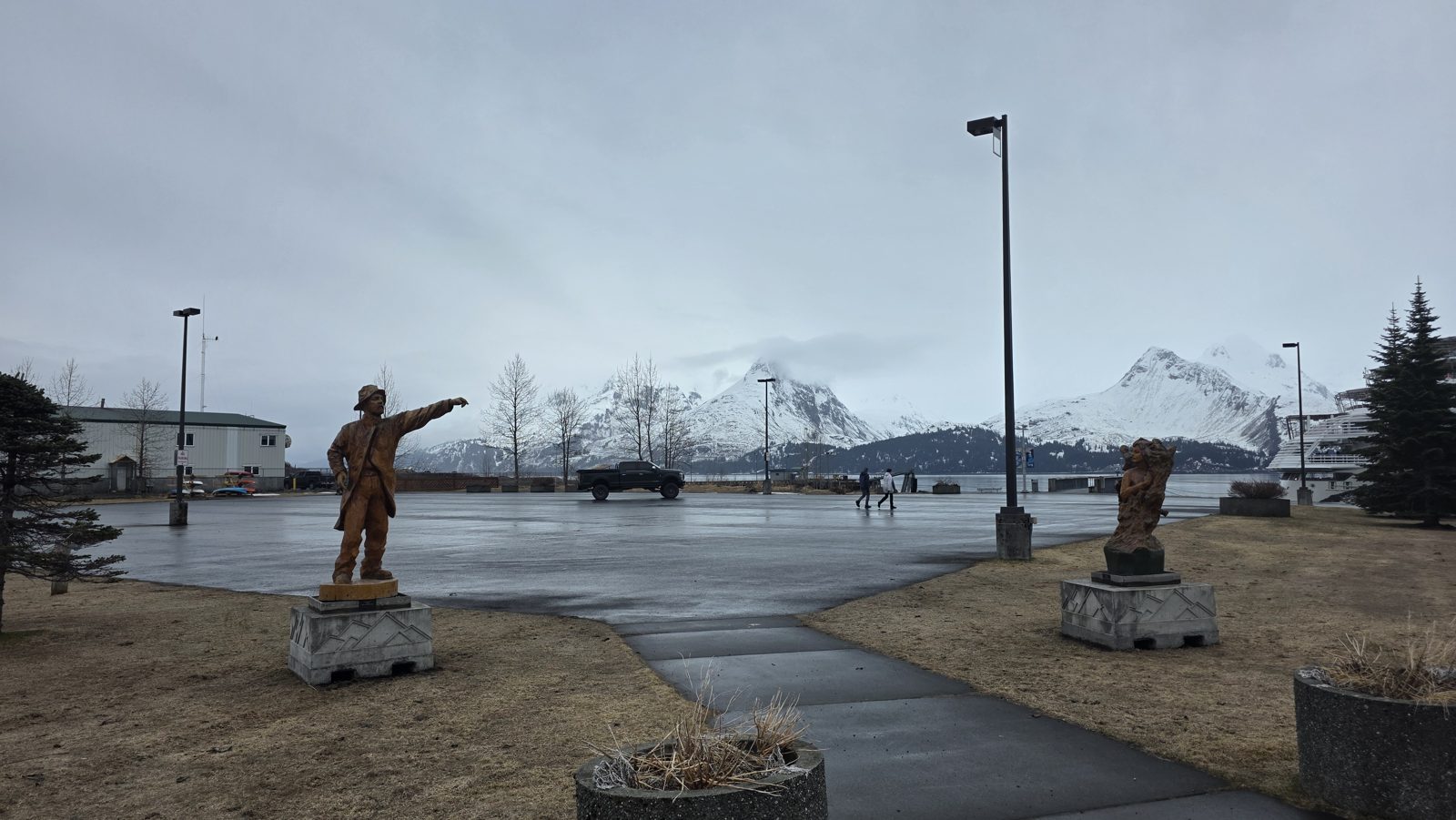
Finally, back at the harbour square, two wooden sculptures stood on dry grass: a hatted figure pointing into the distance, and a mermaid-shaped figure, snow mountains behind, a few walkers in the distance. That is where the Valdez day stops: the ship in port, bears by the road, snow mountains under the clouds, nothing more needing to be said.