 SELENE
InterContinental Taichung, the Midtown Suite — the kind with a rack rate of NT$65,000 printed on the evacuation plan behind the door. This post gives the room the whole stage: from the living room all the way to the bathroom, every detail a suite should be judged by, looked at properly.

The living room: a living room first, a bedroom second
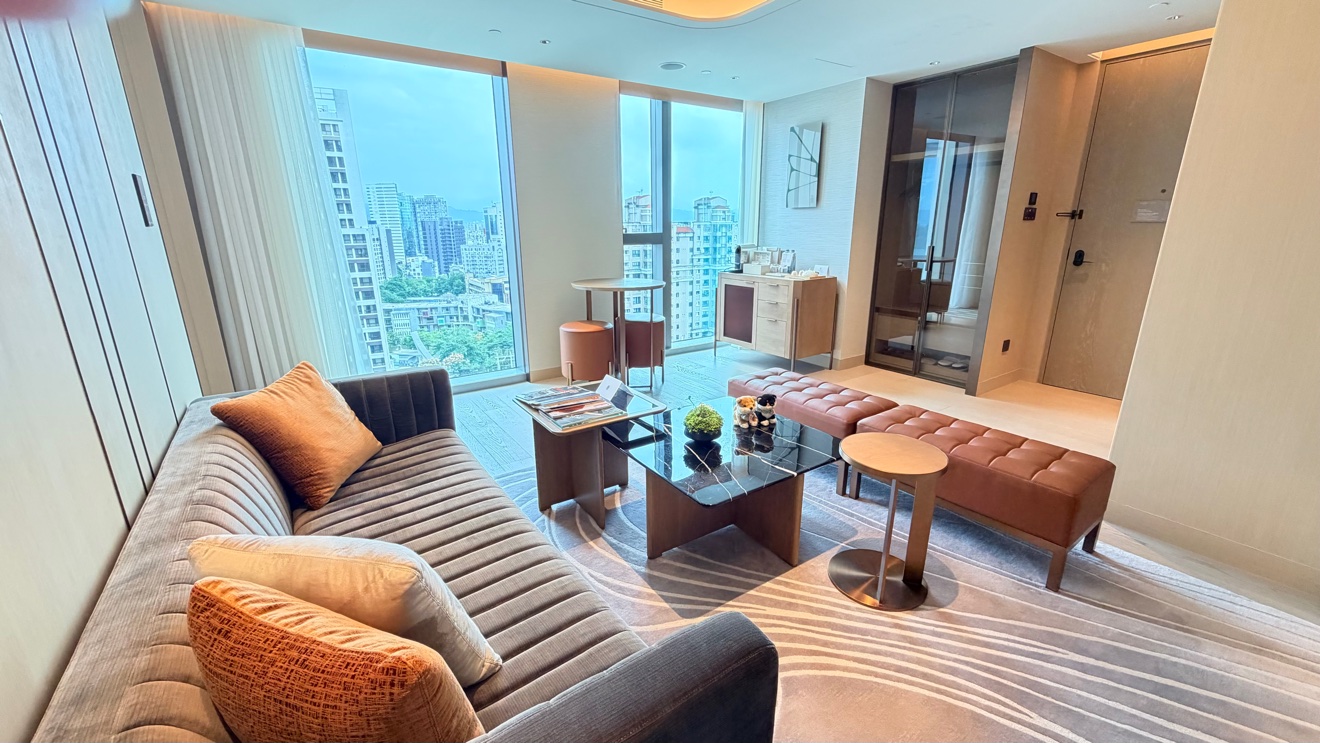
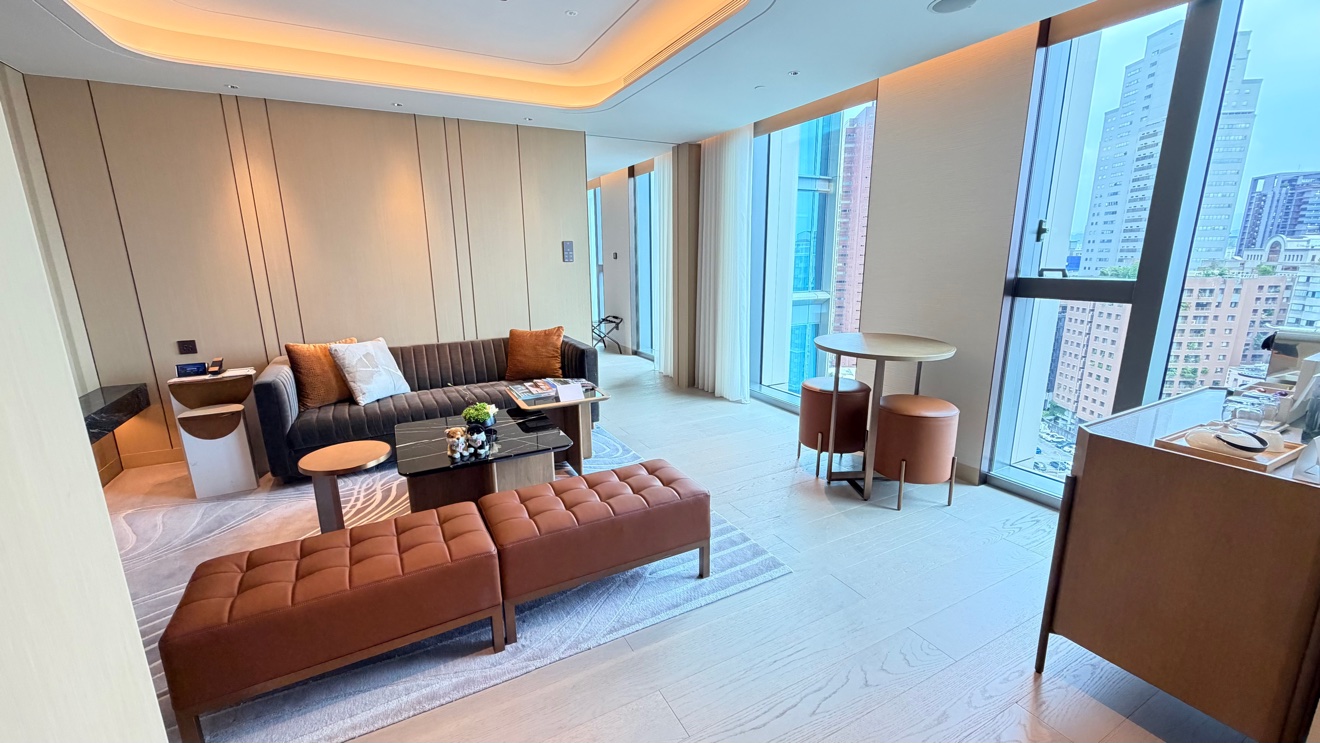
The layout is the honest, old-fashioned kind: living room at the front, bedroom inside, bathroom in its own zone. A dark grey ribbed sofa with two orange leather stools, a black stone coffee table on pale wooden legs, and by the corner windows a small round table with two round stools facing the Taichung skyline. Big suites often fail by being big and empty; this one does not — every corner knows what it is for.
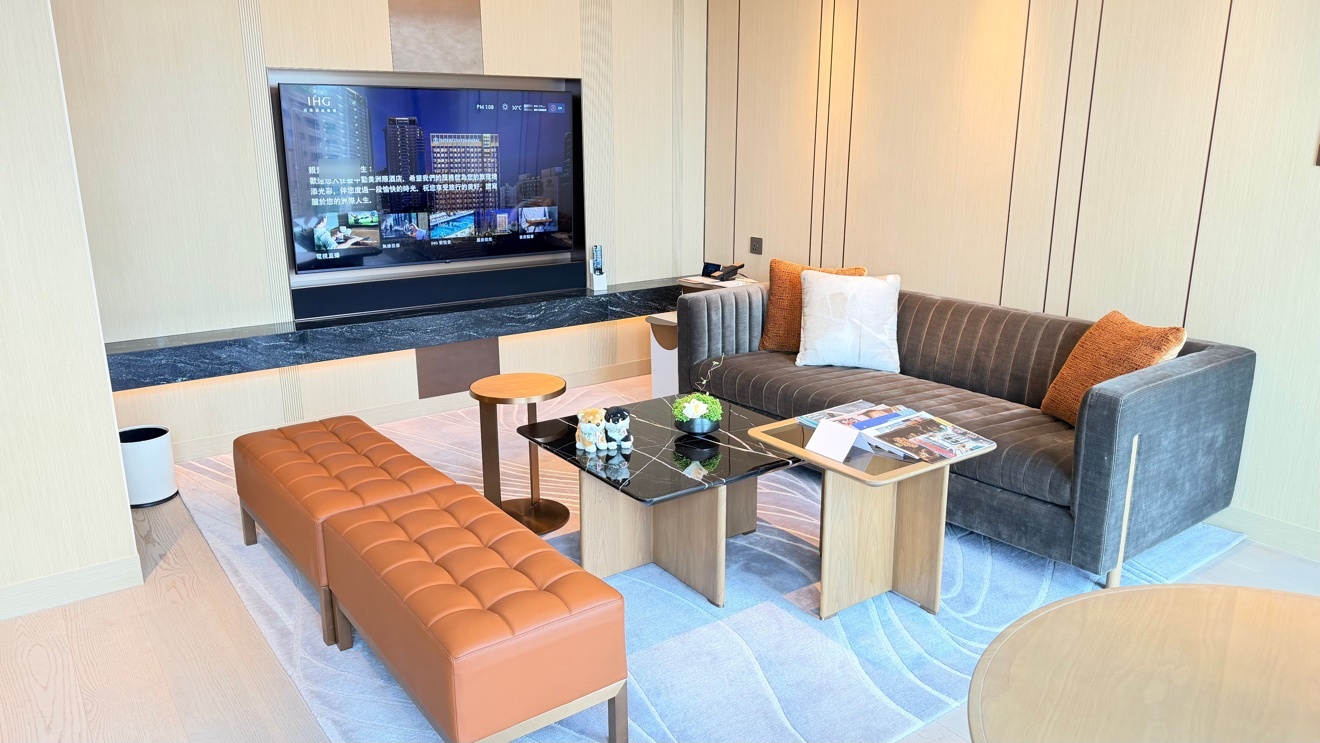
The TV sits in a dark stone wall and boots up to the IHG welcome screen, with a row of live TV, hotel information and facility thumbnails underneath — a hotel eager to introduce itself, written all over the screen.
The bedroom: the rug is the star
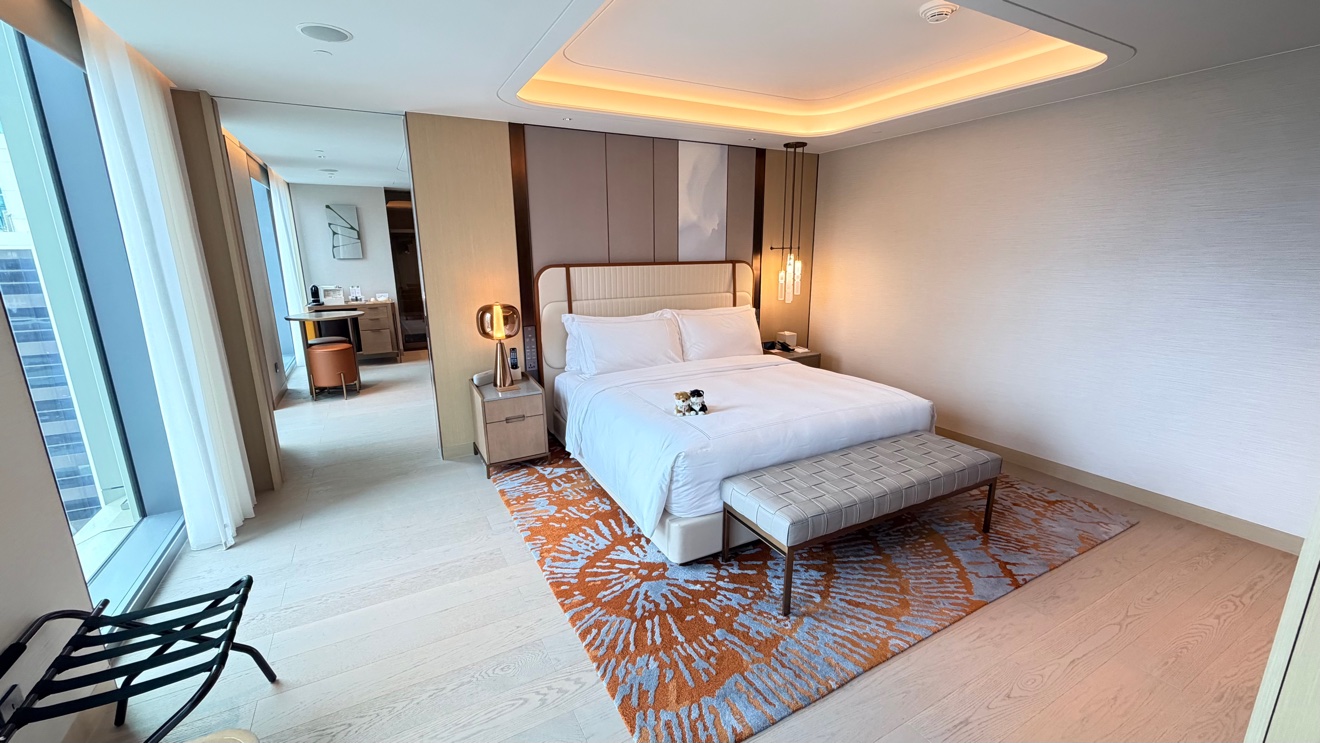
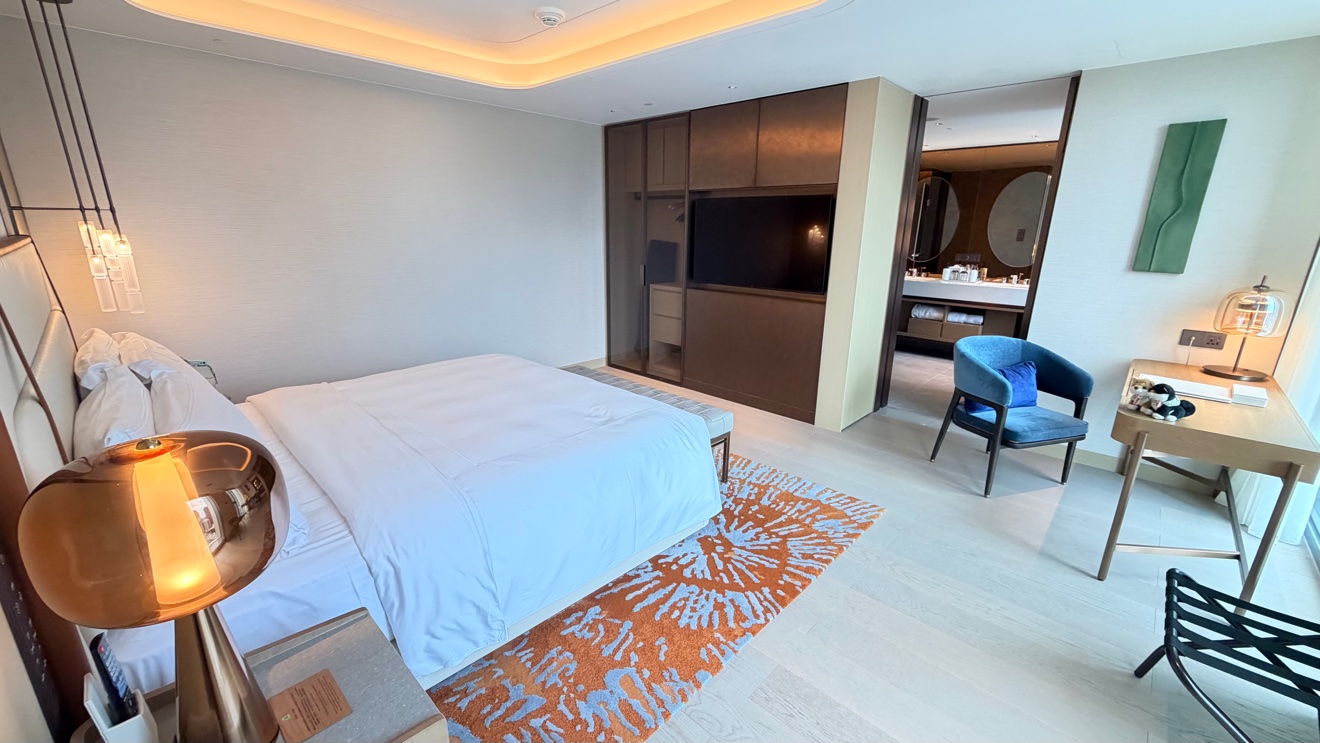
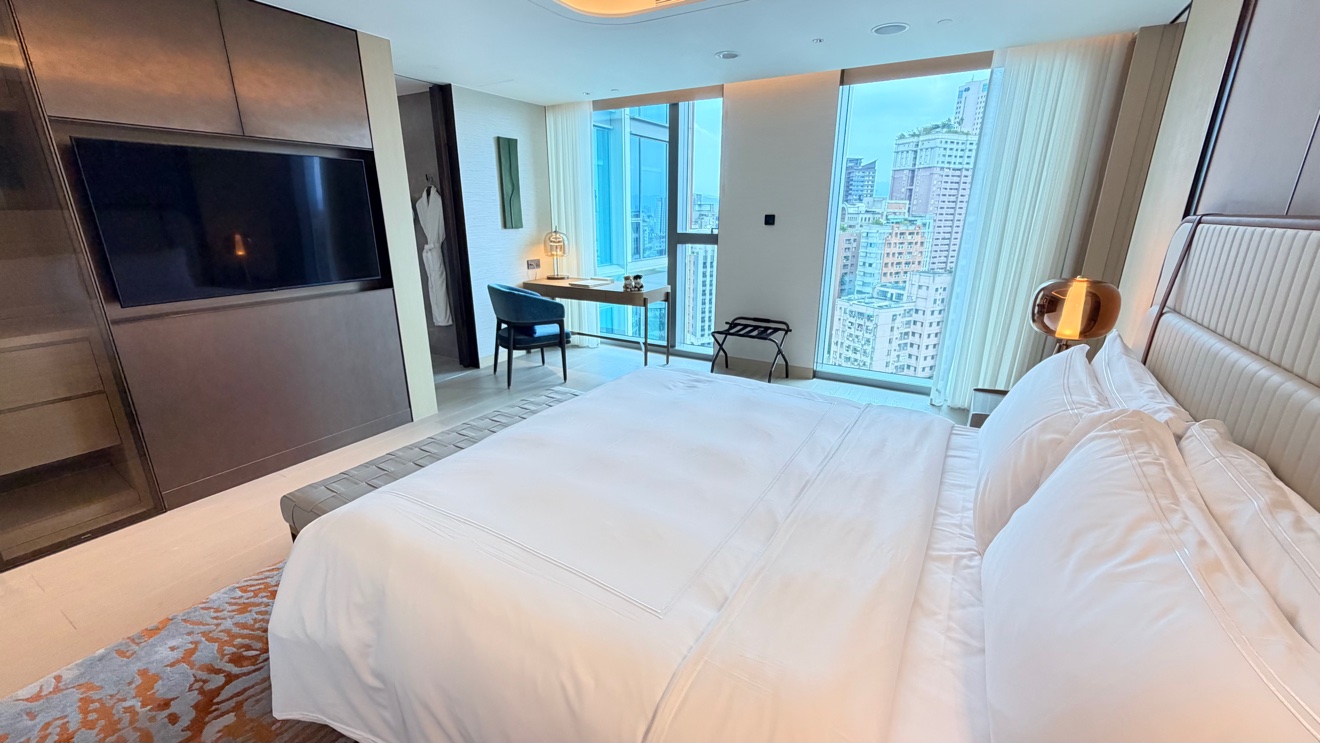
The star of the bedroom is not the bed. It is the rug under it: huge orange and slate-blue flowers, echoing the orange leather stools in the living room. The headboard wall is pale leather; the lighting refuses symmetry — an amber glass table lamp on one side, a cluster of slim tube pendants on the other. A woven bench sits at the foot of the bed, the TV is set into the dark wall opposite, the desk takes the corner window, and at the far end the bathroom light spills out from behind its door.
Desk and bedside: the small things give it away
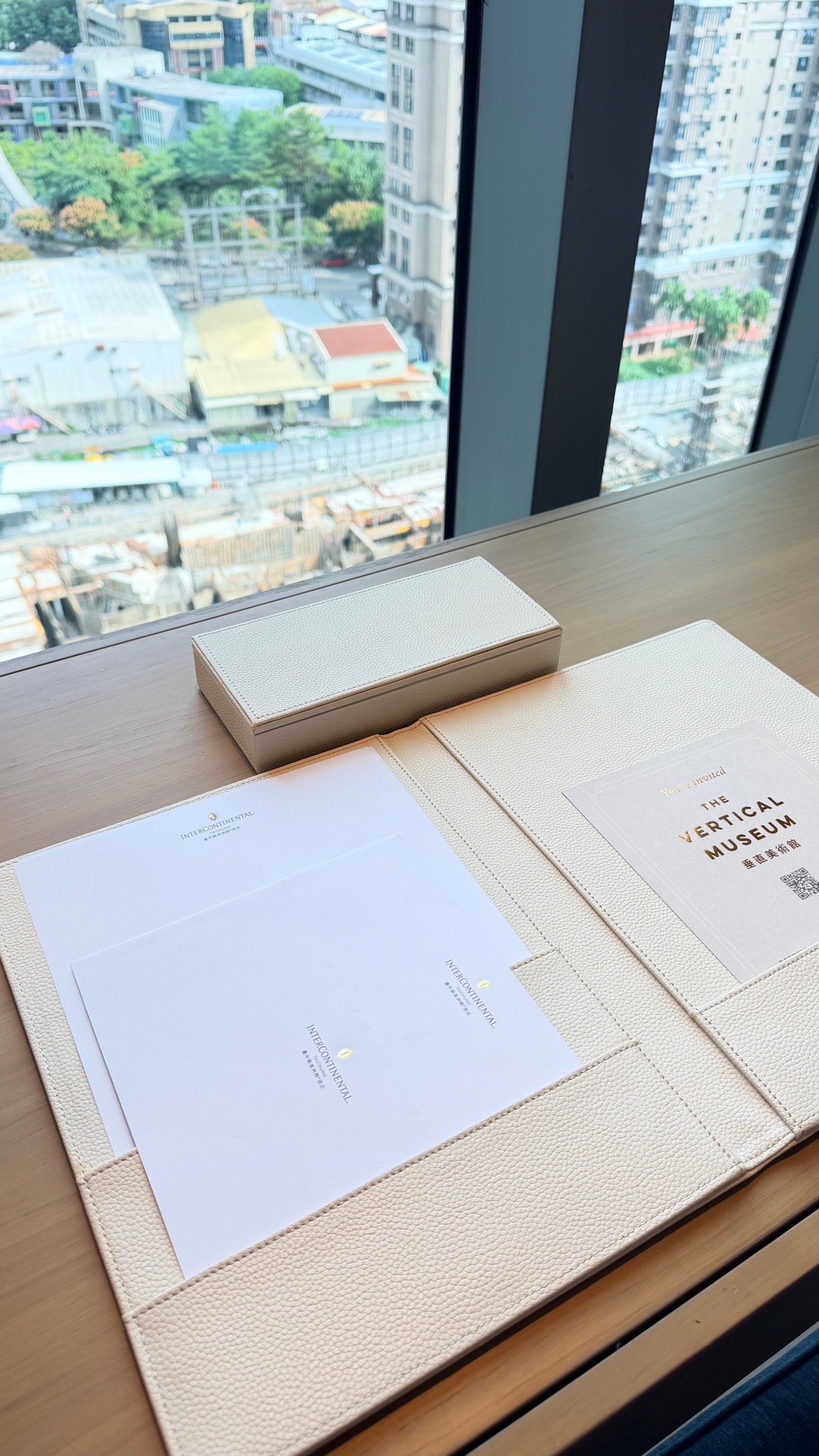
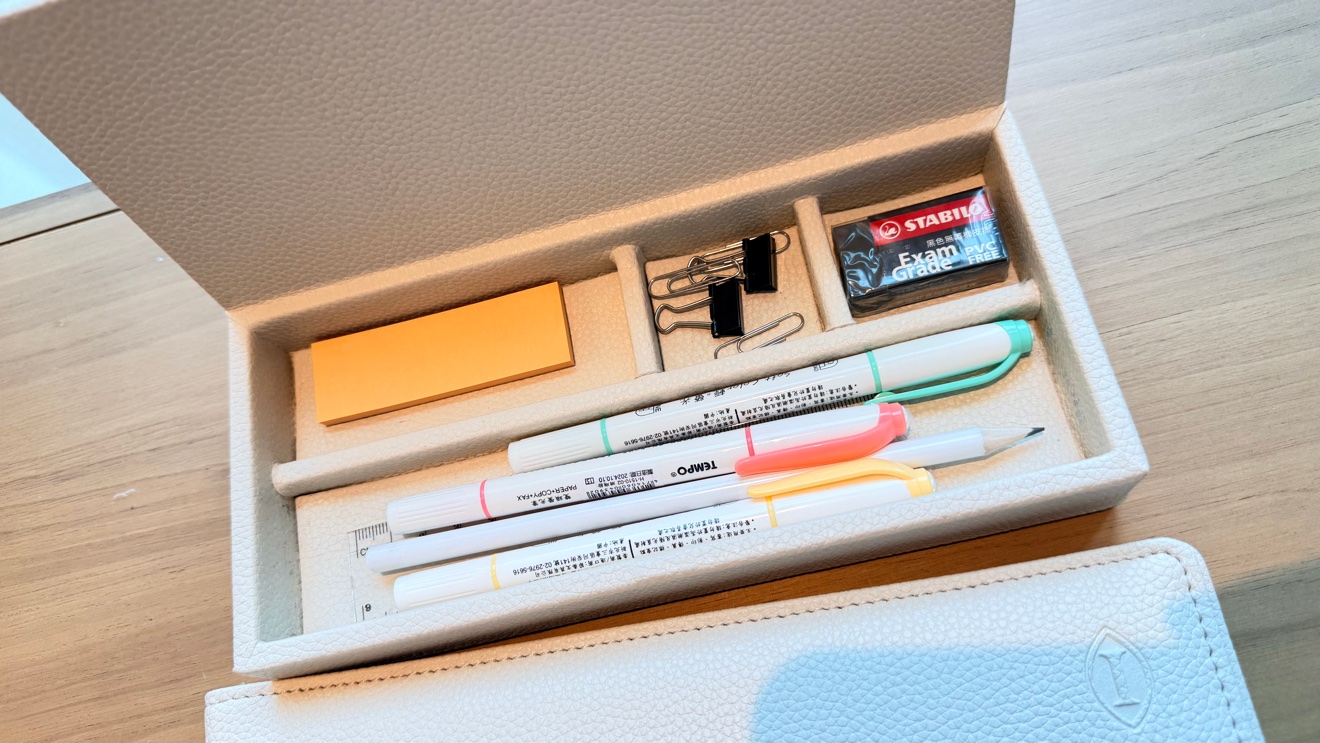
On the desk, a cream leather portfolio holds the hotel's letter paper and envelopes in perfect order; in the matching leather box beside it sits an invitation card for THE VERTICAL MUSEUM — the hotel's conceit of running the whole building as a museum, delivered to guests from the desk onwards. Open the stationery box and it gets better: highlighters, a ballpoint pen, a pencil, a ruler, binder clips, paper clips, sticky notes and a STABILO eraser, every item in its place. That is not an amenity spec; that is a small stationery shop.
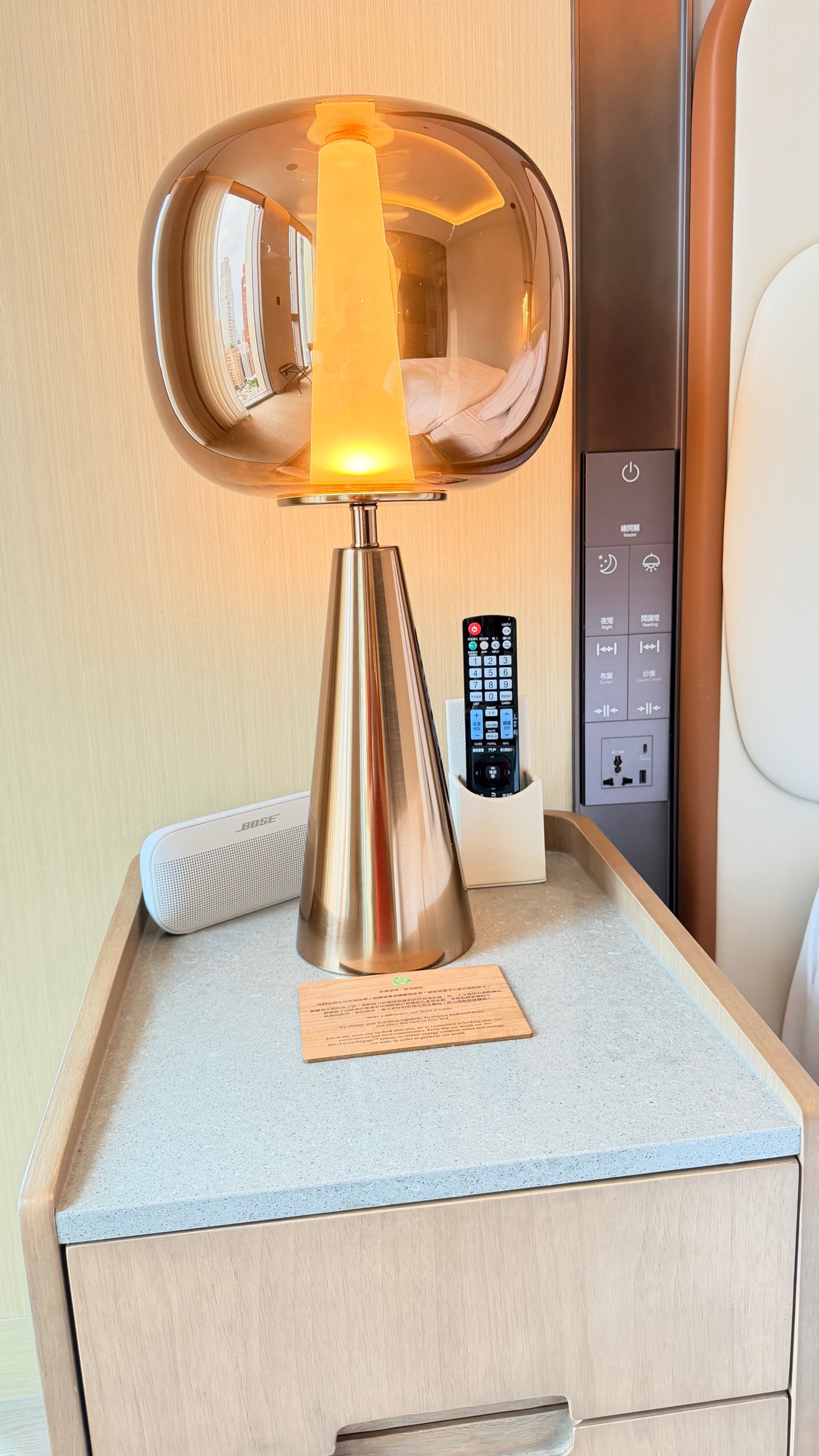
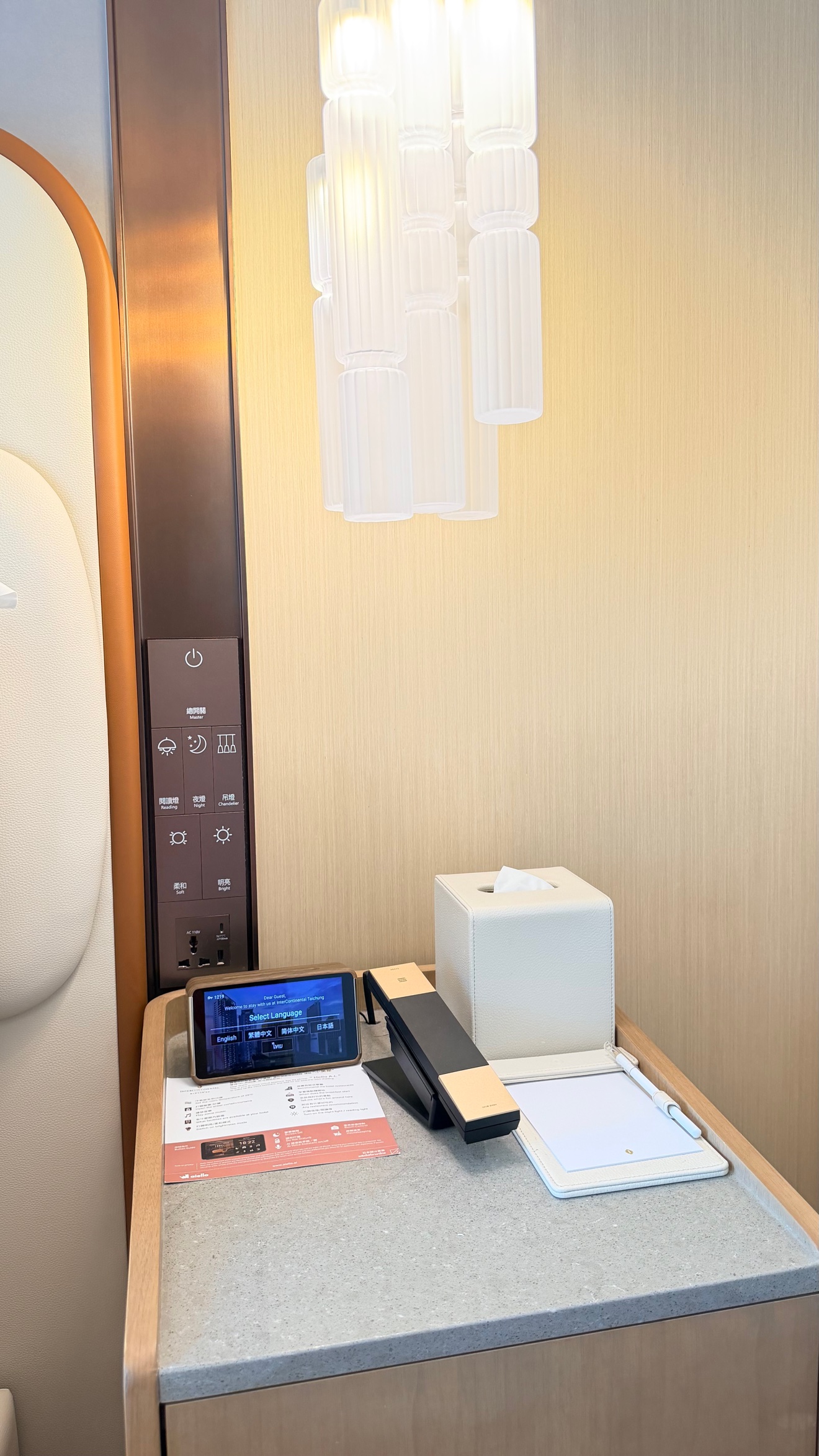
The bedside tables are just as serious. One side gets a BOSE Bluetooth speaker and the TV remote; the other, a smart-assistant tablet named "Xiaomeixi" that first asks which language you would like — English, Traditional Chinese, Simplified Chinese, Japanese or Thai. The touch panel on the wall splits lighting into night light, reading light, soft and bright, and the curtains into sheers and blackout drapes.
The minibar: open the drawers, one by one
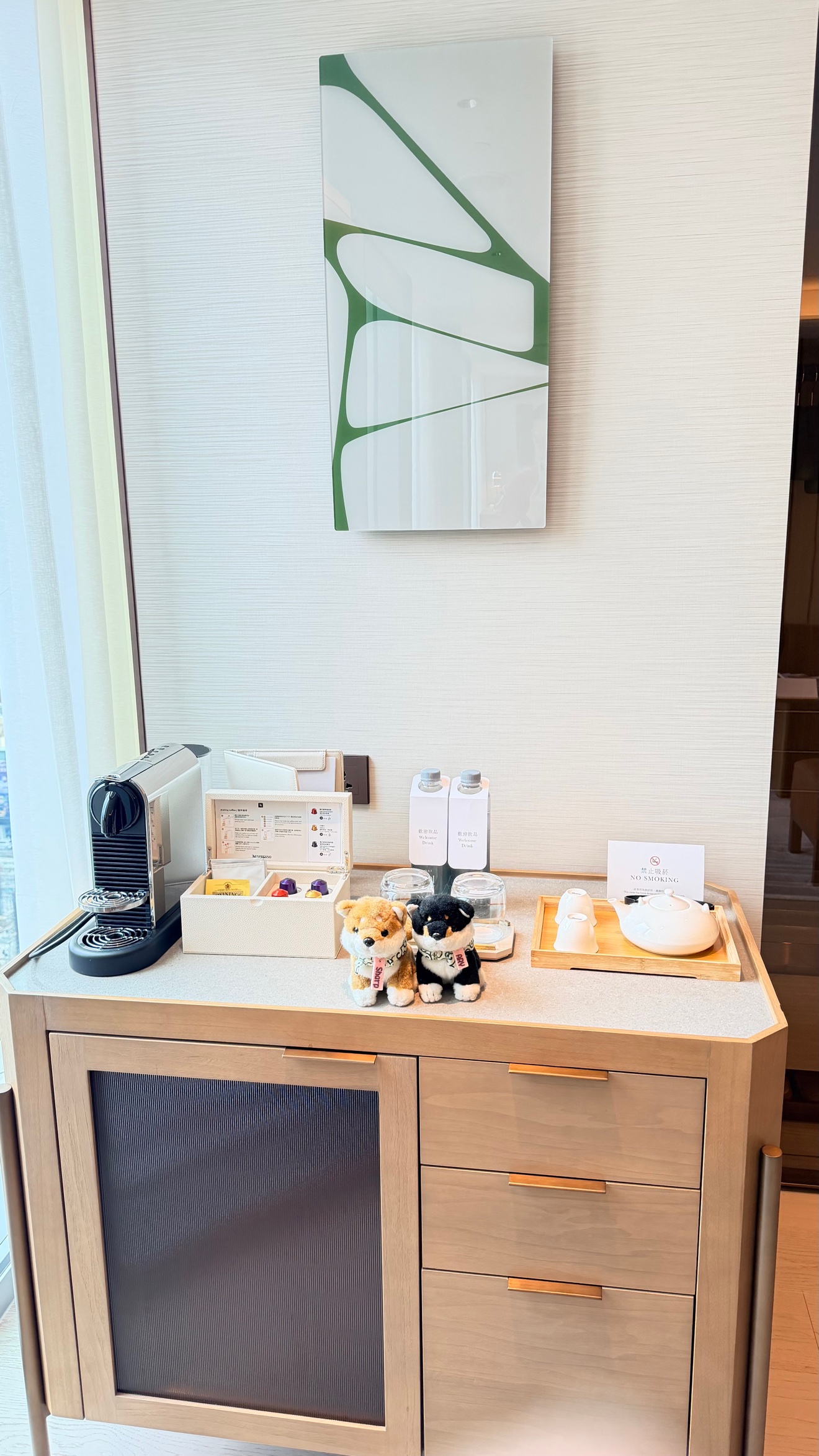
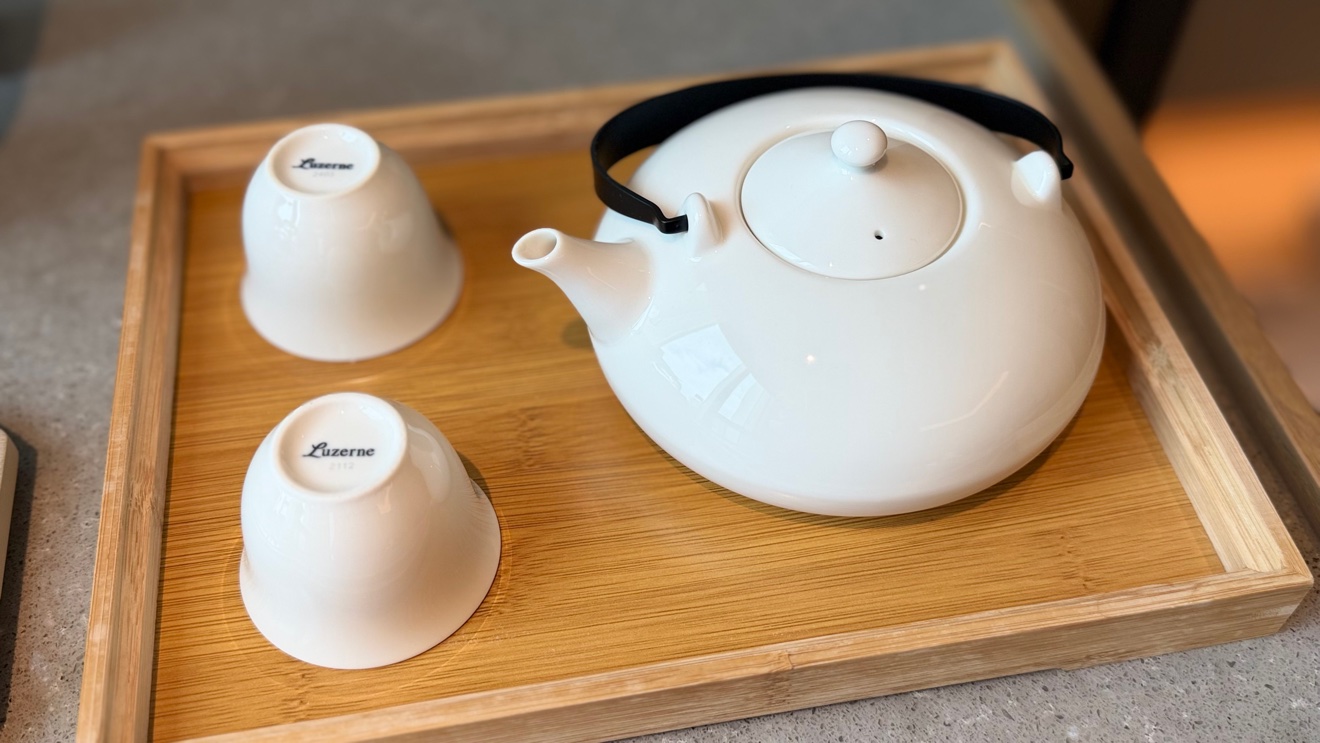
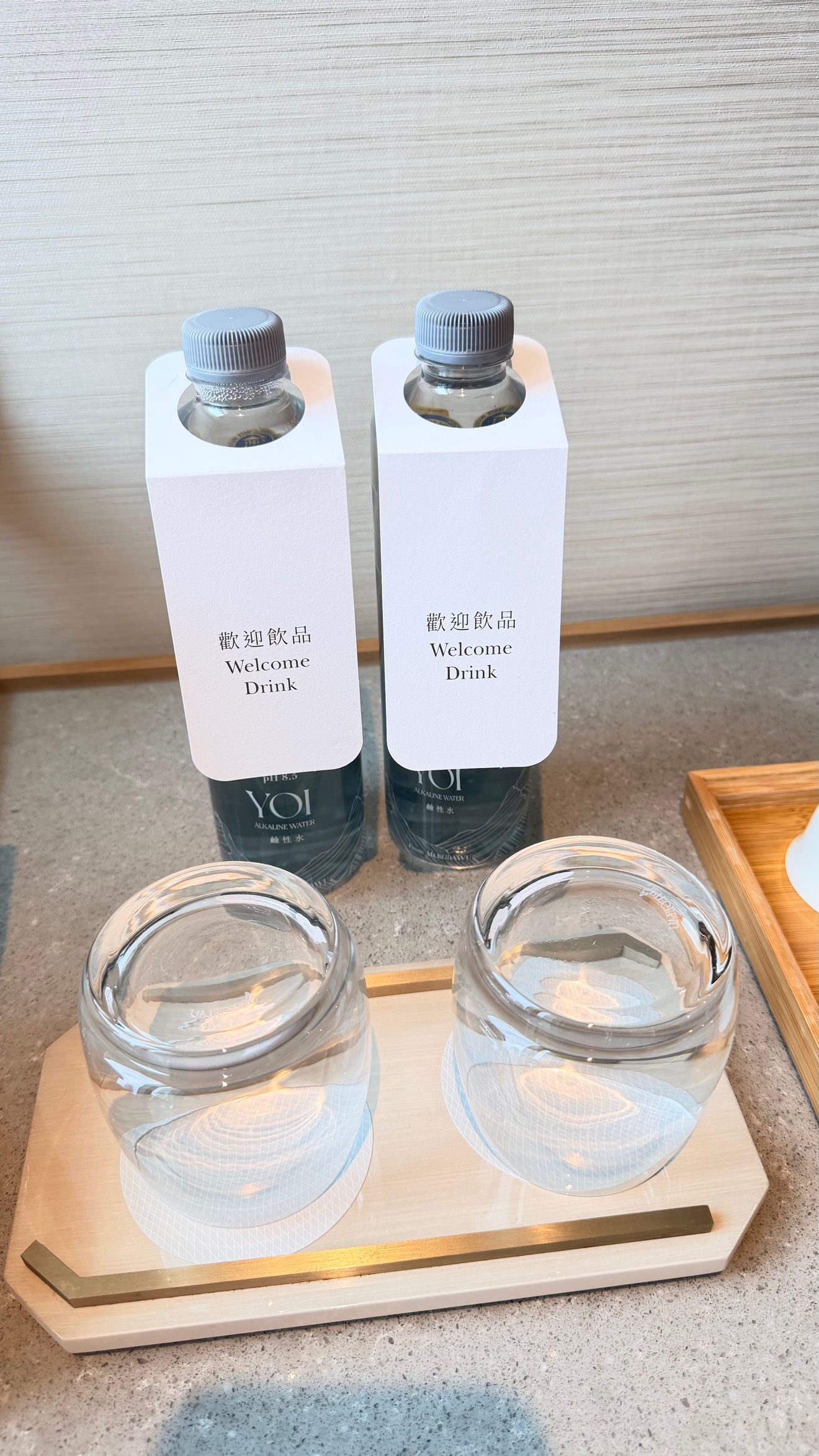
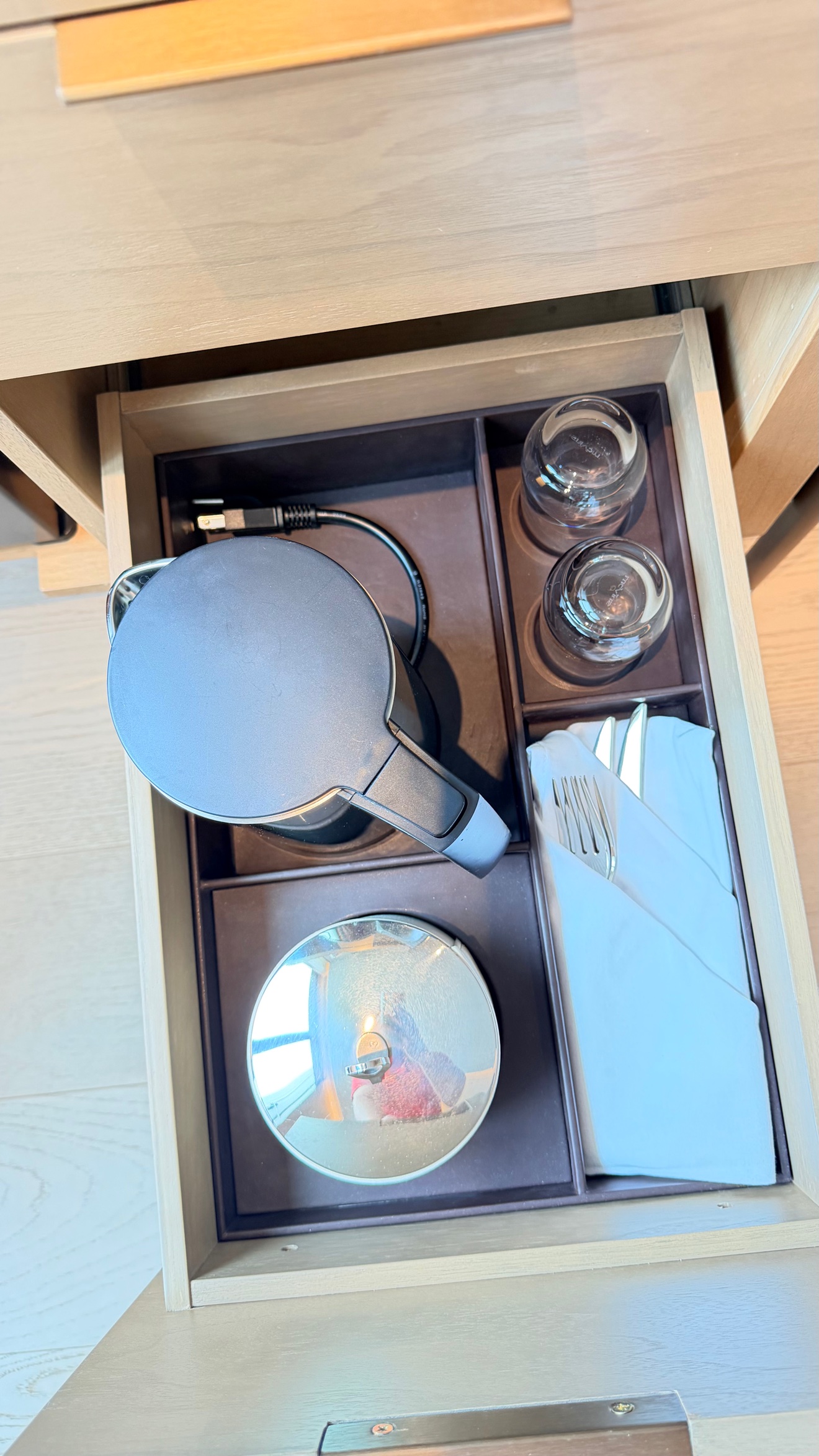
The minibar cabinet stands at the edge of the living room. On top: a Nespresso machine, capsules and tea bags in a leather box, the tea set and the welcome drinks, and a no-smoking card resting quietly against the wall. The tea service goes Chinese: a bamboo tray, a white porcelain teapot and two Luzerne cups, brand marks turned up as if to say they come from somewhere. The welcome drink is two bottles of YOI alkaline water, pH 8.5, each wearing a white "Welcome Drink" collar, with two upturned glasses — ceremony first.
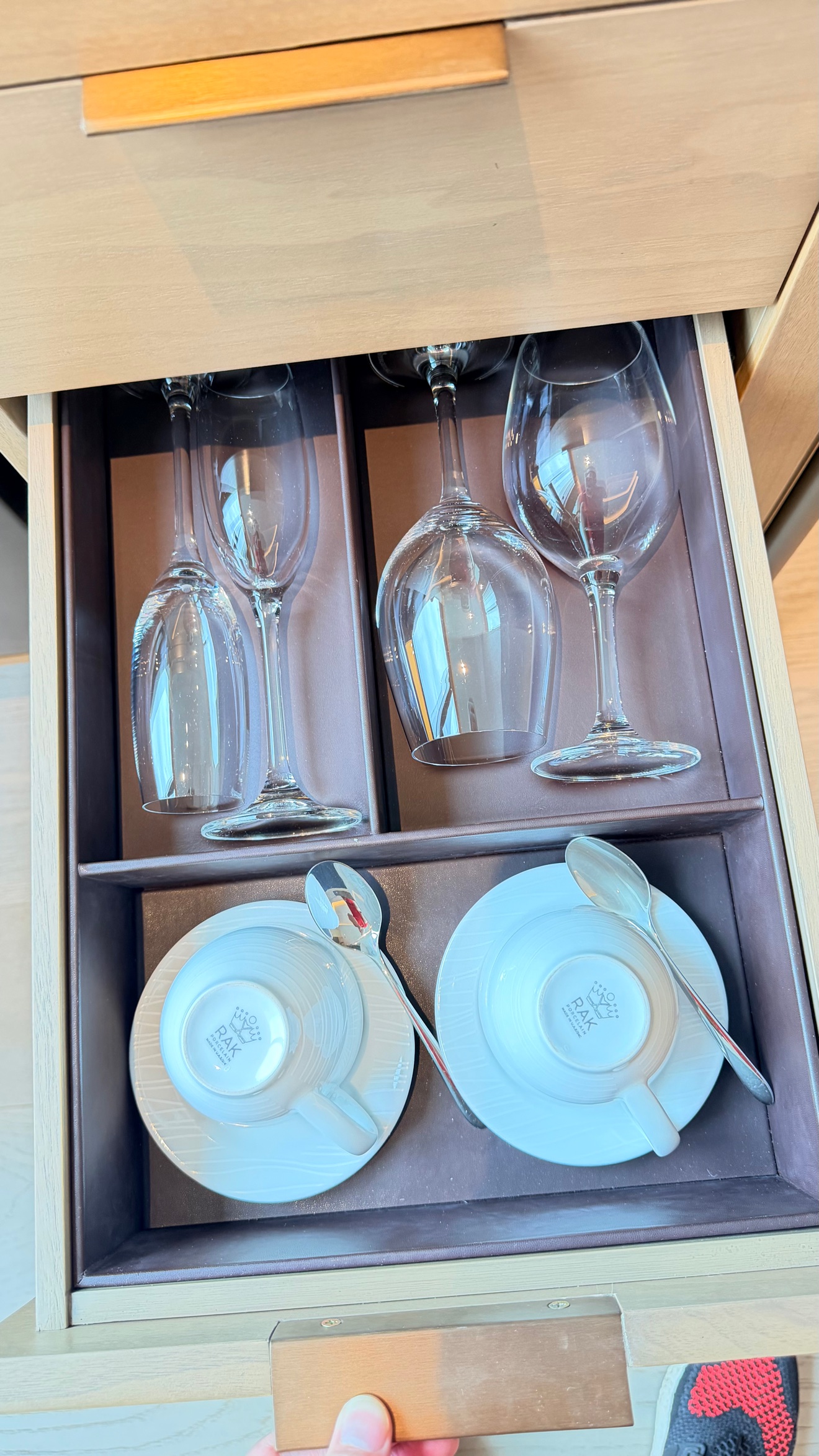
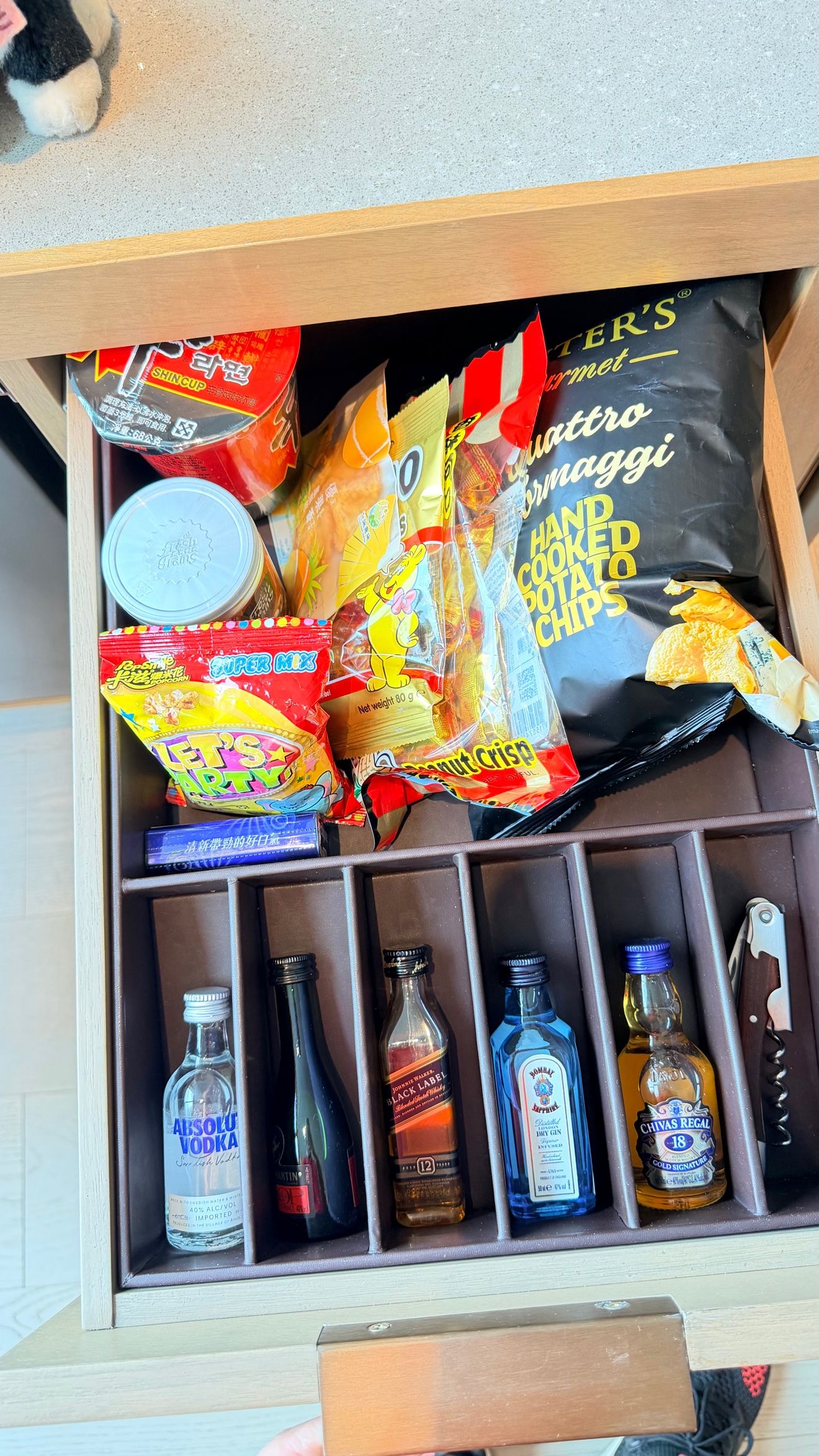
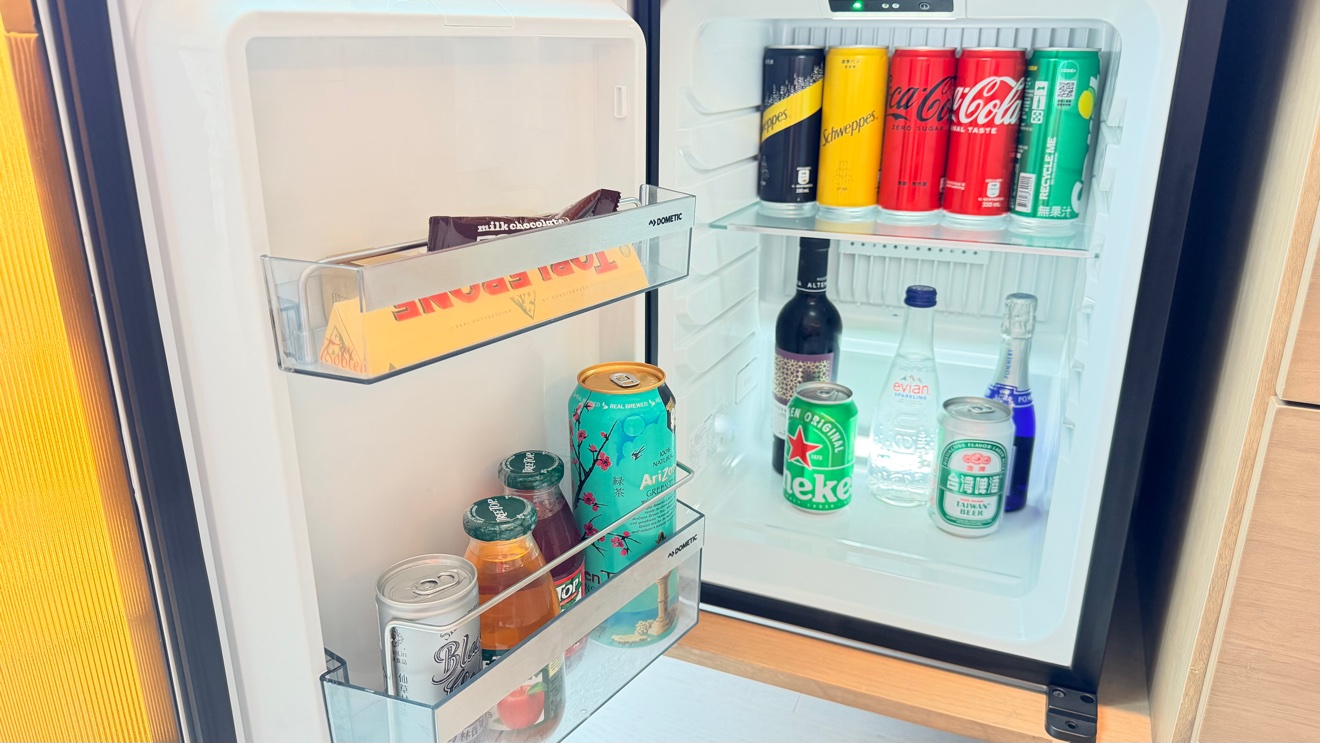
Below the counter, the drawers are the main event. Drawer one: electric kettle, ice bucket, glasses and cutlery. Drawer two: champagne flutes, wine glasses and RAK Porcelain coffee cups in a single row, all facing the same way. Drawer three is the liveliest — a Shin cup noodle, potato chips, peanut crisps and popcorn crowded together, and below them a row of miniatures: Absolut vodka, Johnnie Walker Black Label, Bombay Sapphire gin, Chivas Regal 18, plus a miniature sparkling wine. The fridge does not hold back either: Coke and Coke Zero, Schweppes, Heineken, Taiwan Beer, Evian sparkling water, juices and Toblerone, all present. The conclusion writes itself — this hotel is not afraid you will wake up hungry at midnight; it is afraid you will not wake up at all.
The welcome: a members-only snack formation
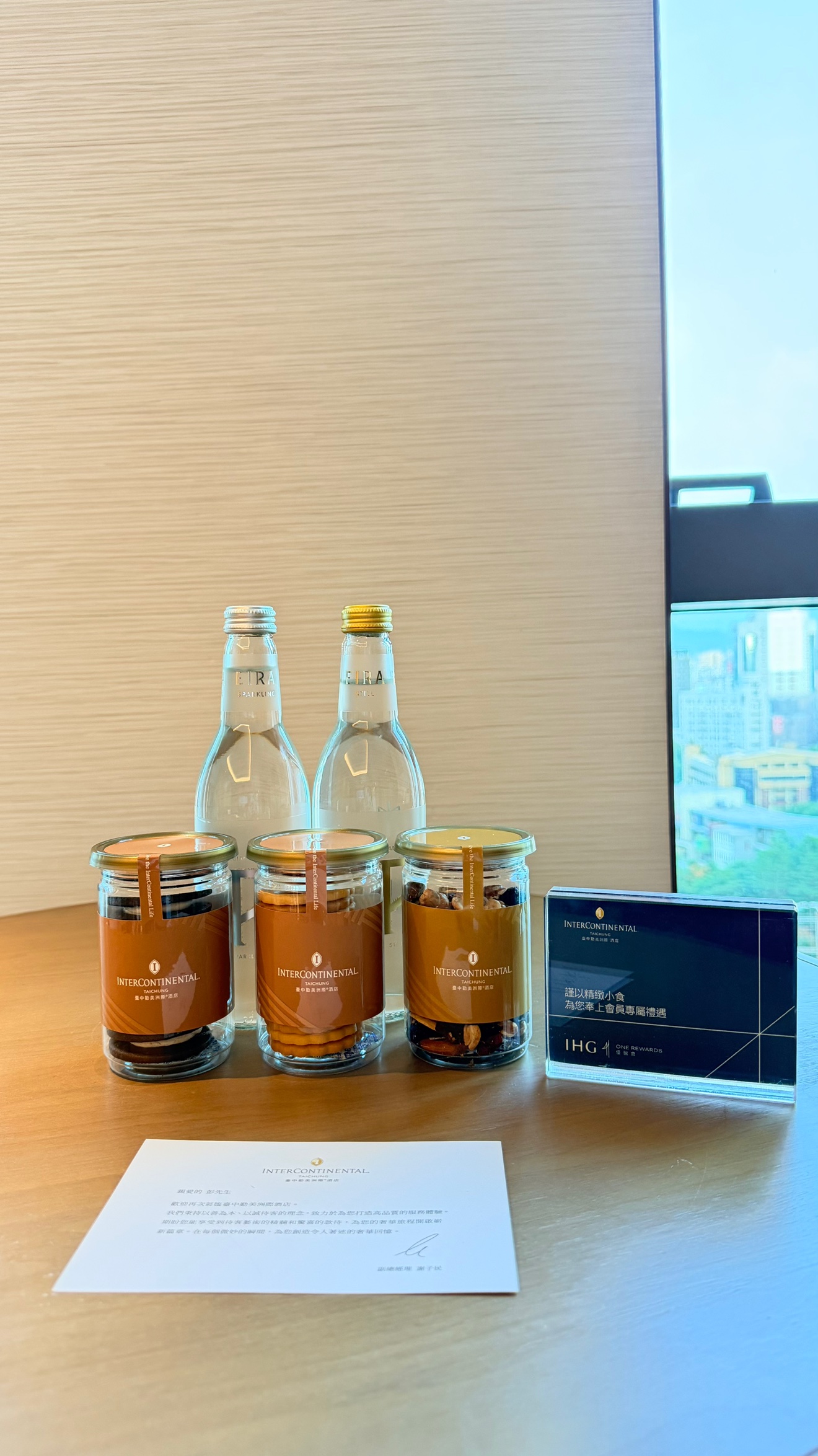
There was also a welcome set waiting on the table by the window: three glass jars in a row, all wearing the hotel's orange InterContinental labels — dark sandwich cookies, round biscuits, and mixed nuts with dried fruit — with two bottles of EIRA water behind them, one sparkling, one still. The acrylic sign beside them is admirably direct: a selection of refined snacks, presented as an exclusive privilege for members, with the IHG One Rewards mark underneath. A welcome card lay in front, beginning with the words "Welcome back." None of it is large, but from jars to bottles to card, everything wears the hotel's own packaging — uniform and considered, and a good first impression.
The wardrobes: there are two, and one holds an umbrella
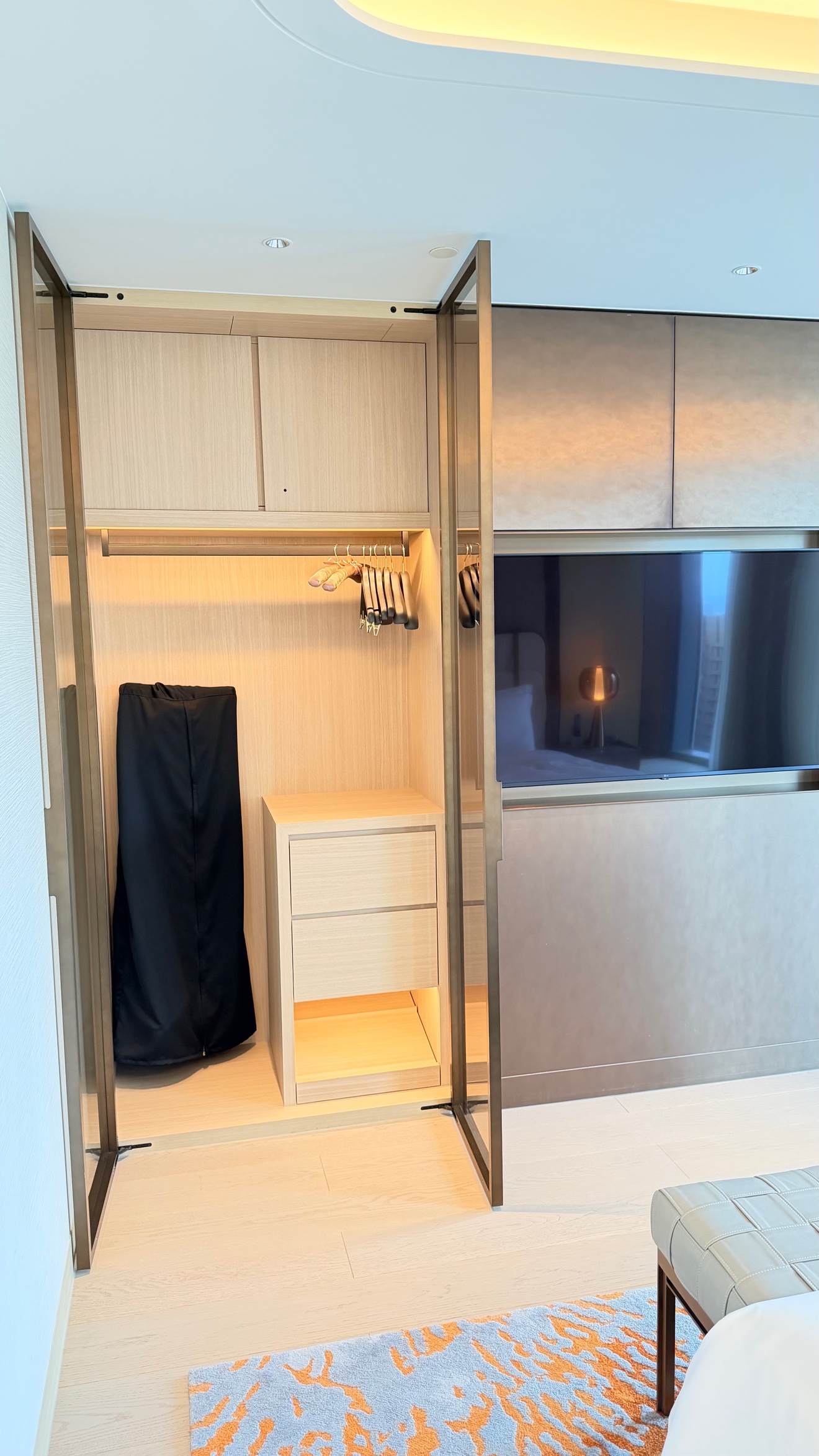
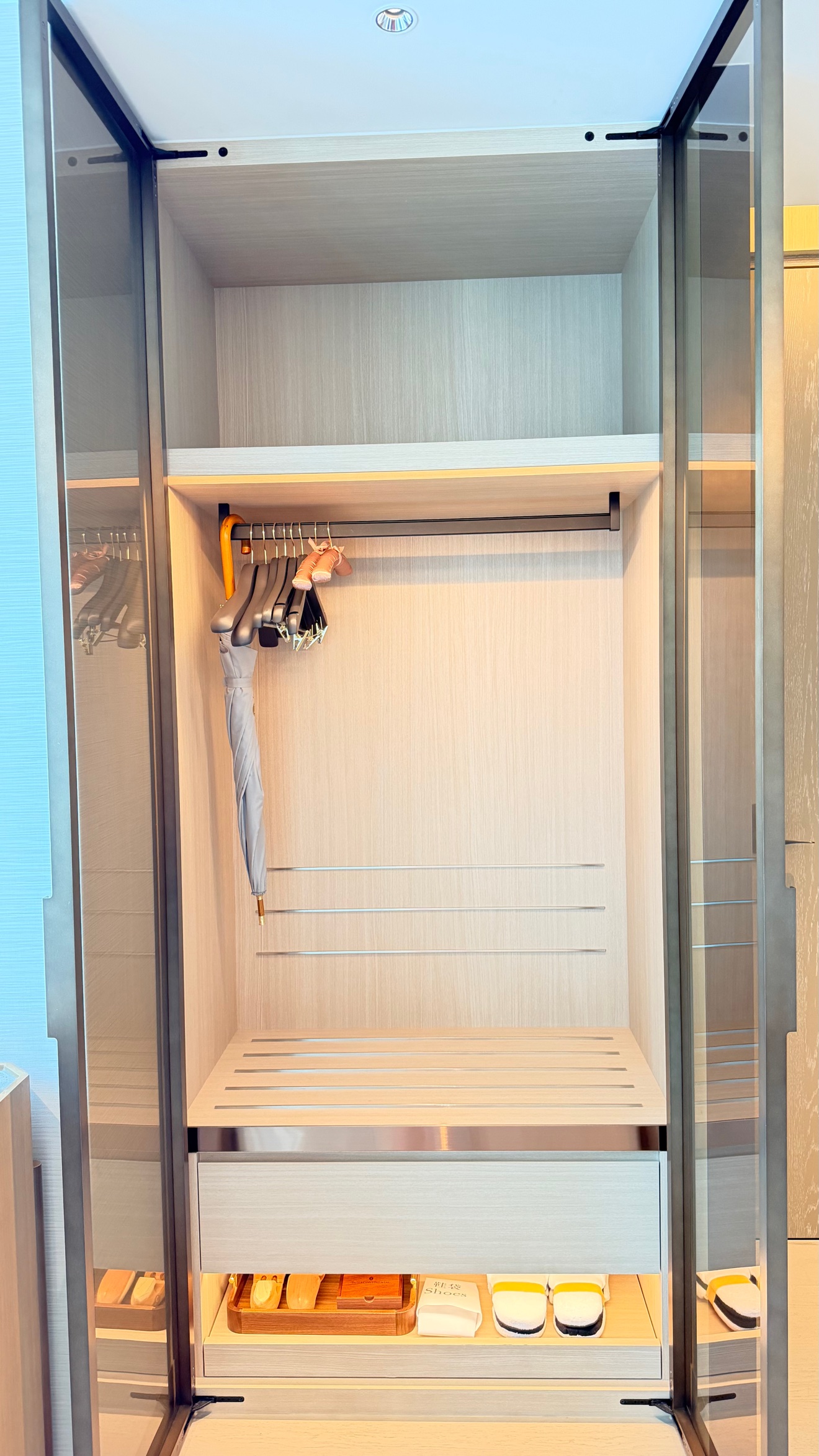
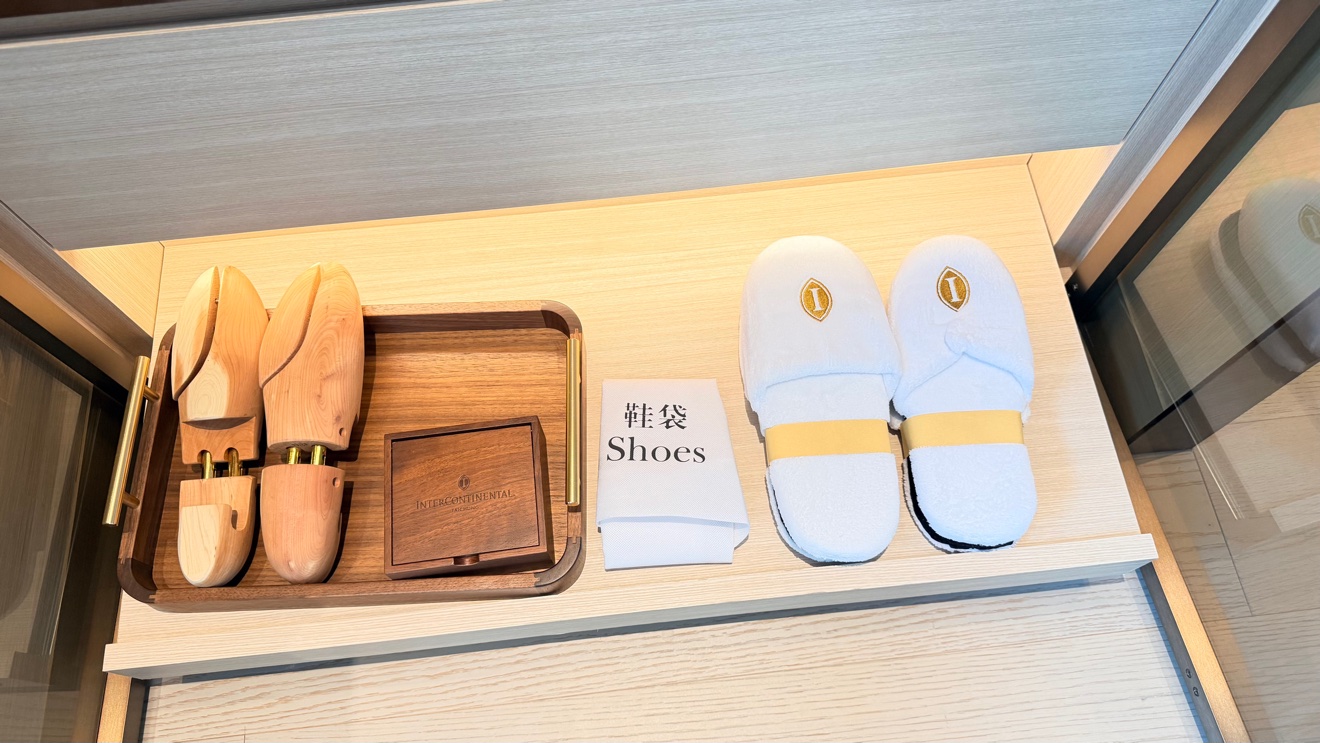
There are two wardrobes, both glass-fronted with pale wood interiors that light up when opened. One holds a black garment bag and a full row of wooden hangers above its drawers; the other, besides hangers, keeps a long grey umbrella — no need to call down for one when it rains; the umbrella waits in the room. On the open shelves and luggage rack below, a wooden tray carries a pair of cedar shoe trees, a wooden box bearing the InterContinental mark, a fabric shoe bag, and white slippers embroidered with a gold "I". Slippers finished to this standard have left the disposable-amenity logic far behind.
The bathroom: unapologetically large
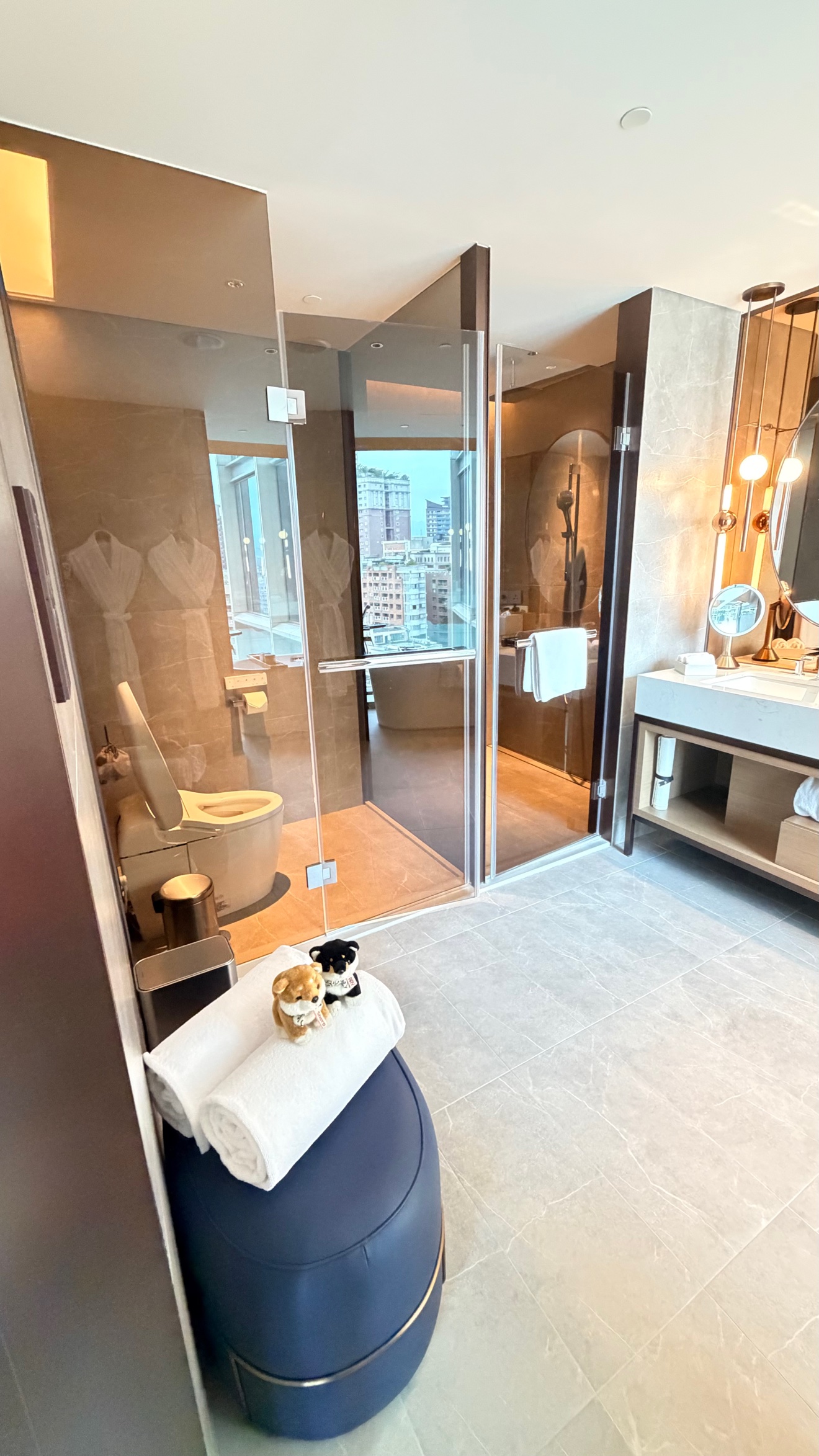
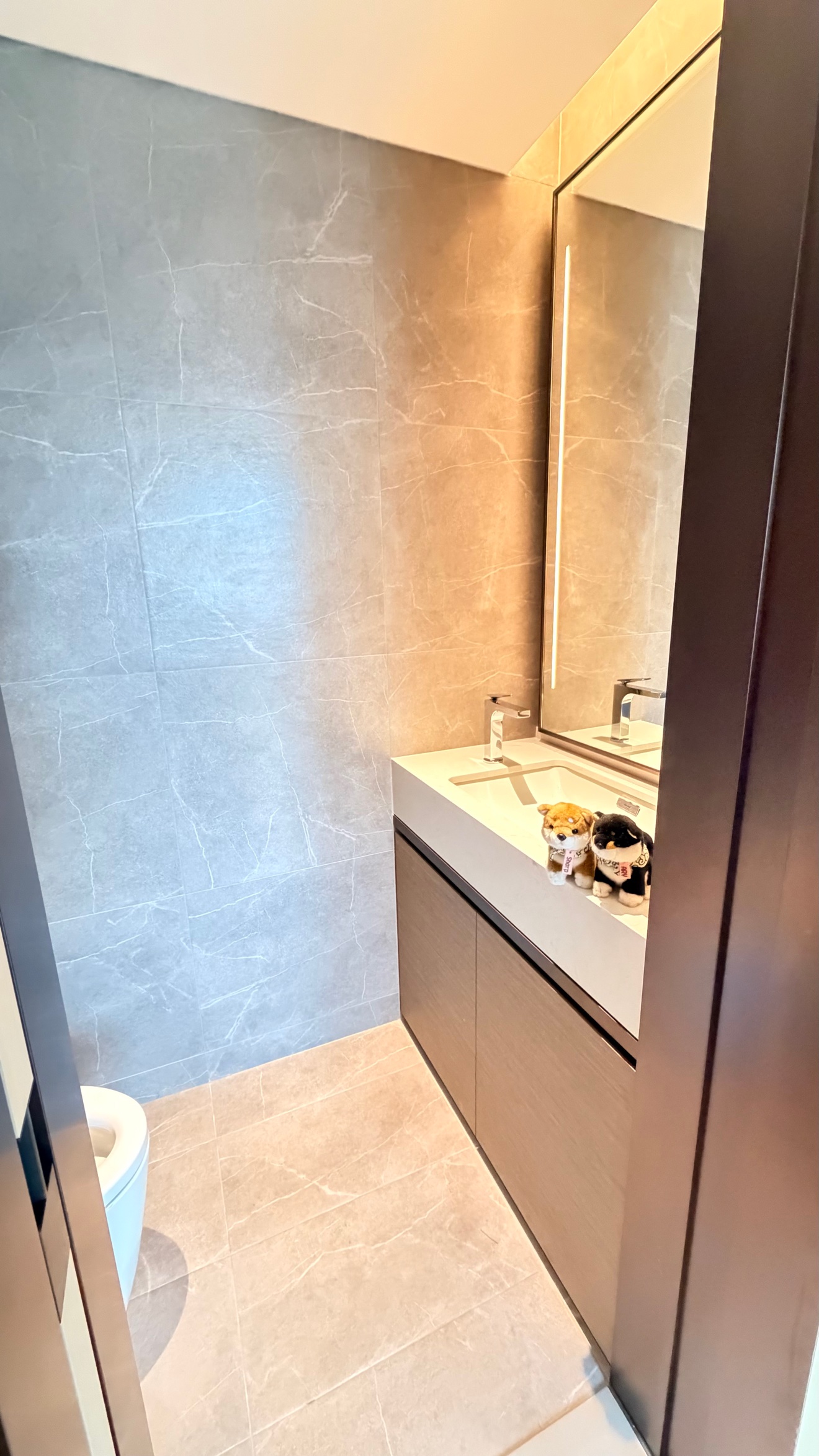
The bathroom is the most self-assured part of the suite. Double sinks in a single run, two oval mirrors on a pale wood wall lit by a row of slim pendants, open shelving below with towels rolled and ready. The space is big enough for a deep-blue round stool in the middle, somewhere to sit while drying your hair; the toilet and shower sit behind frosted glass as two separate rooms, and nobody gets in anybody's way.
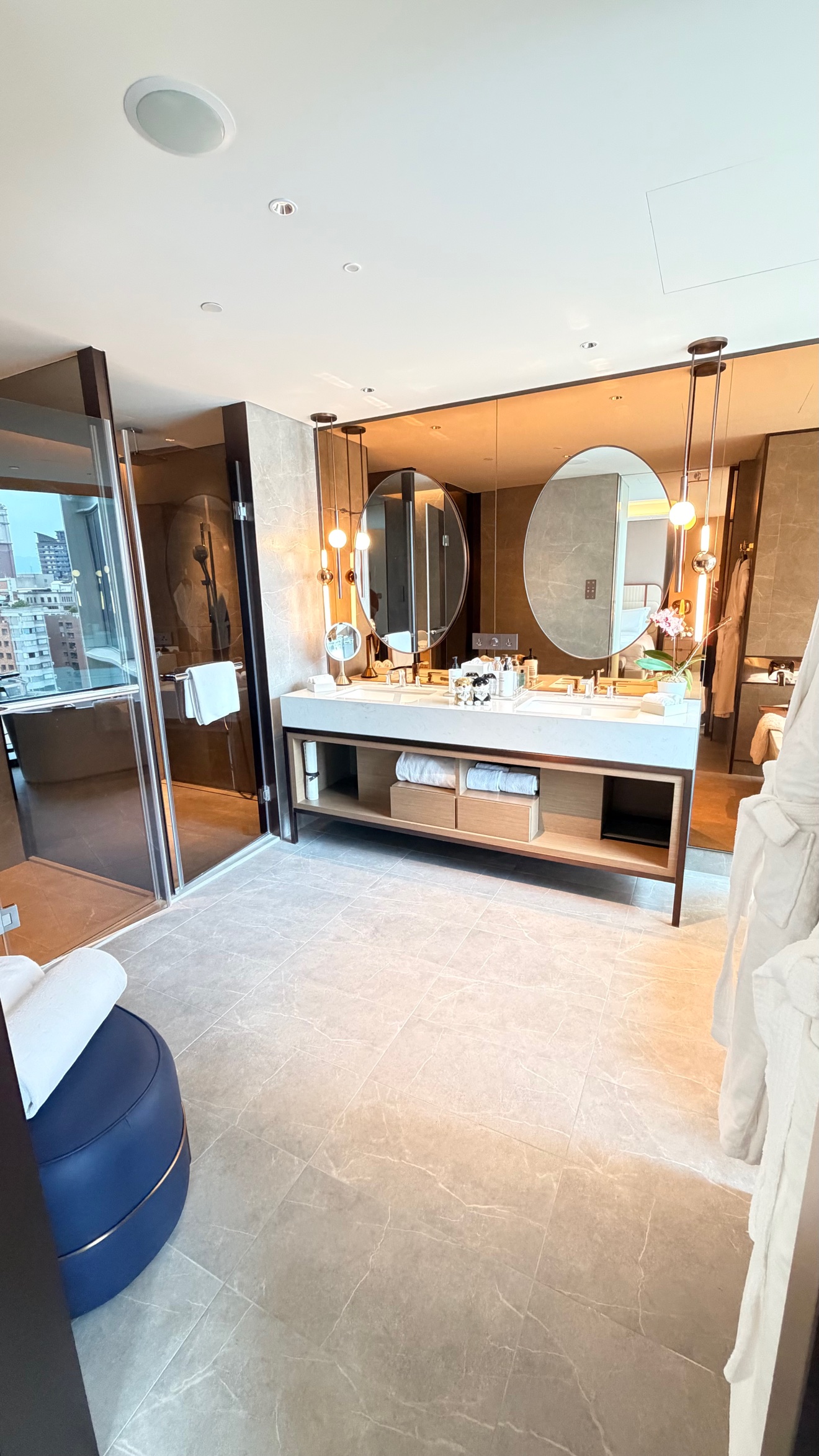
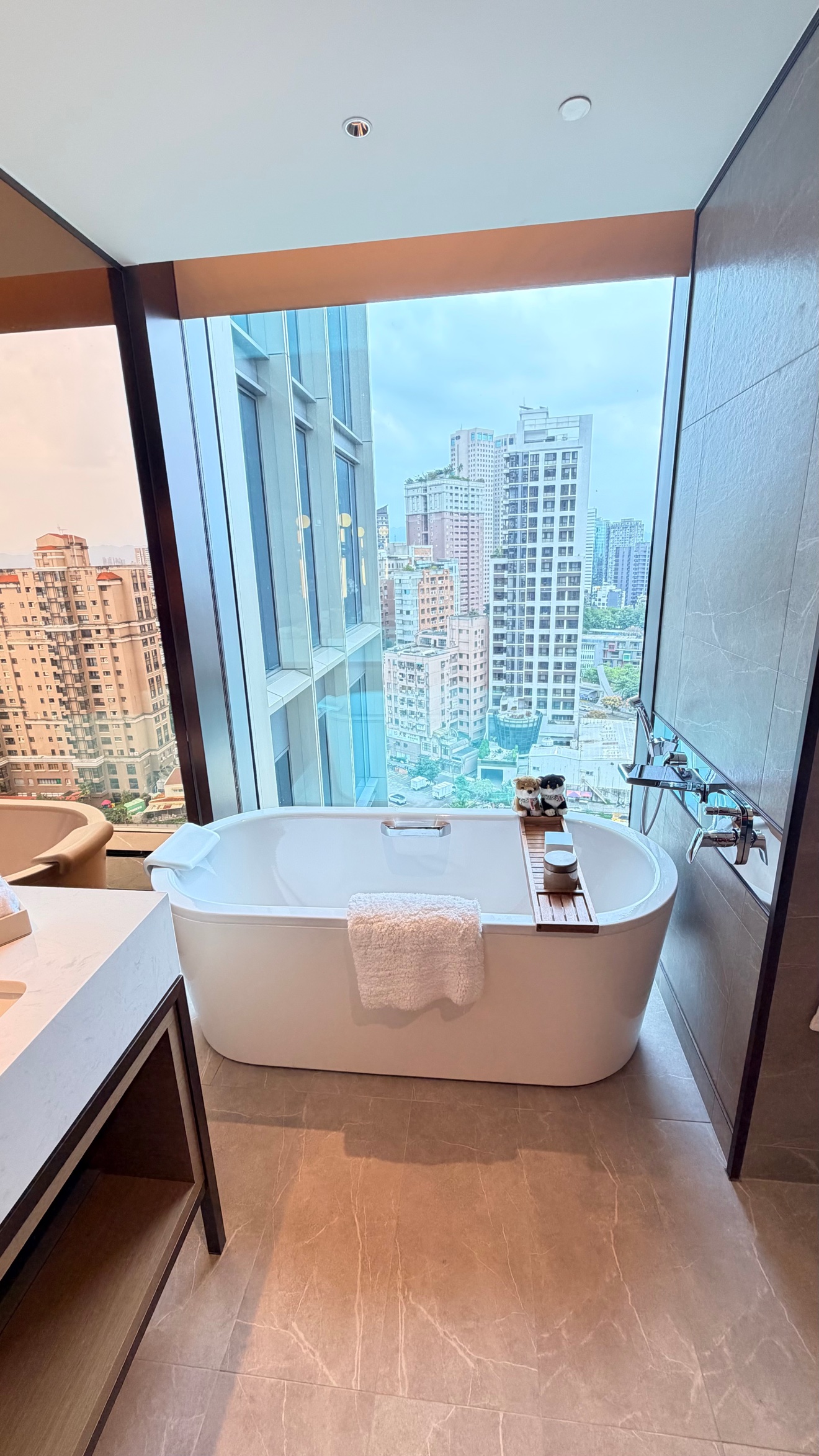
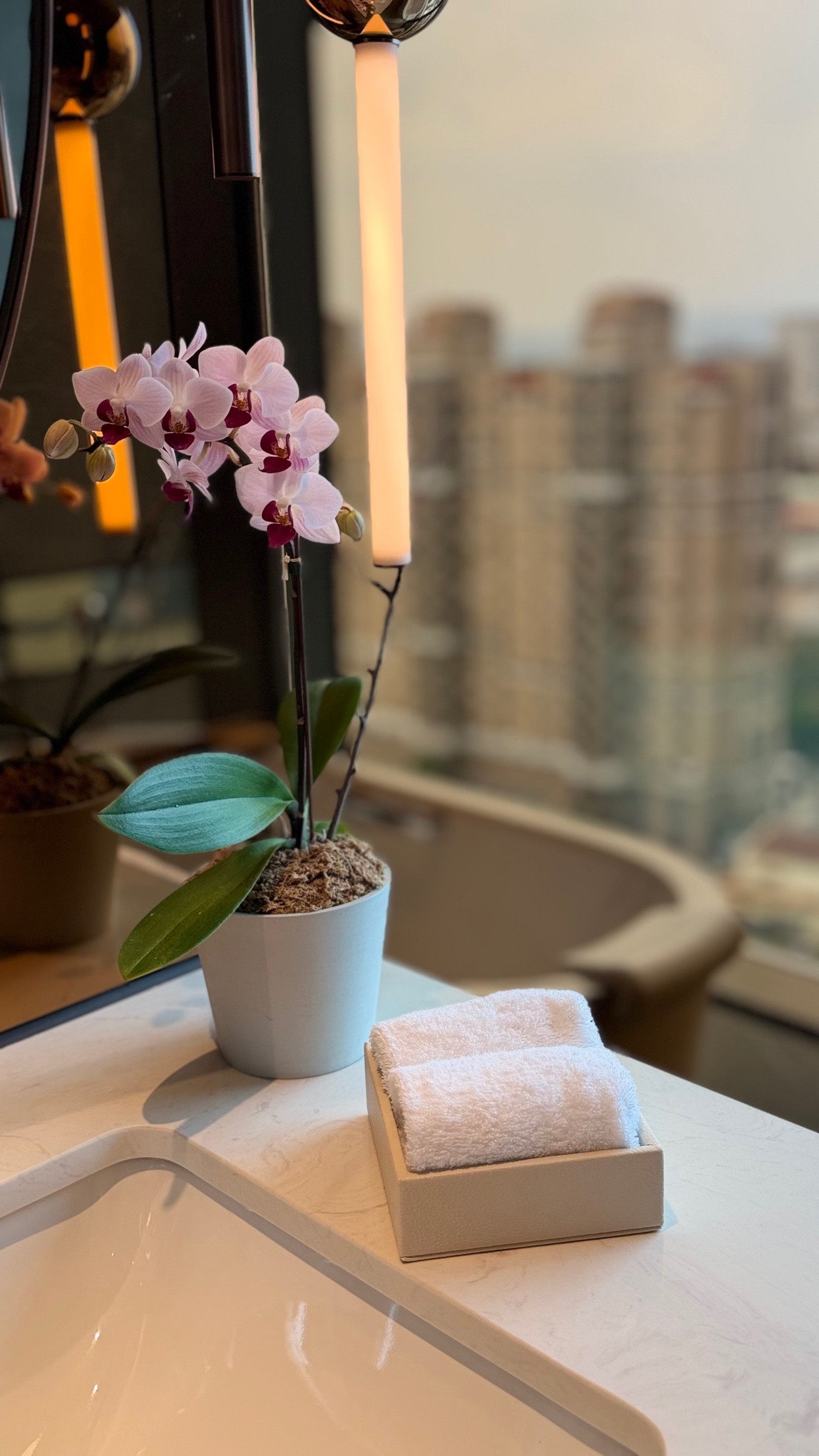
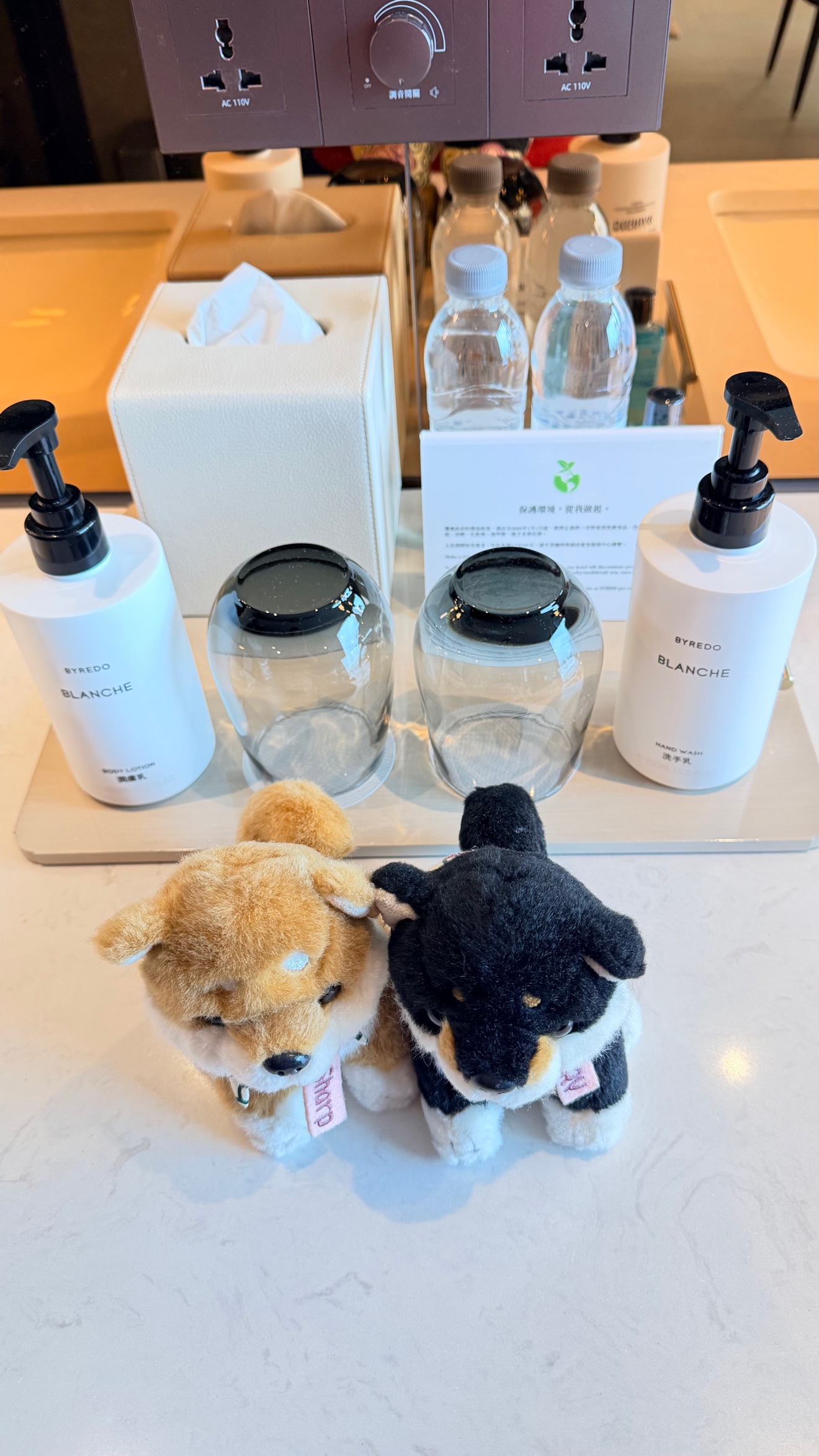
The freestanding tub is pushed right up against a full-height window — bathing comes with a Taichung city view. On the bath caddy: two bath-salt jars and folded towels. The two Shiba Inu plush toys in these photos, for the record, are my own travelling companions, not hotel amenities. By the sink, a pot of pink phalaenopsis orchids and hand towels folded into a leather tray; the amenities are BYREDO's Blanche line — hand wash and body lotion in two white pump bottles behind the taps, good-looking before they are anything else.
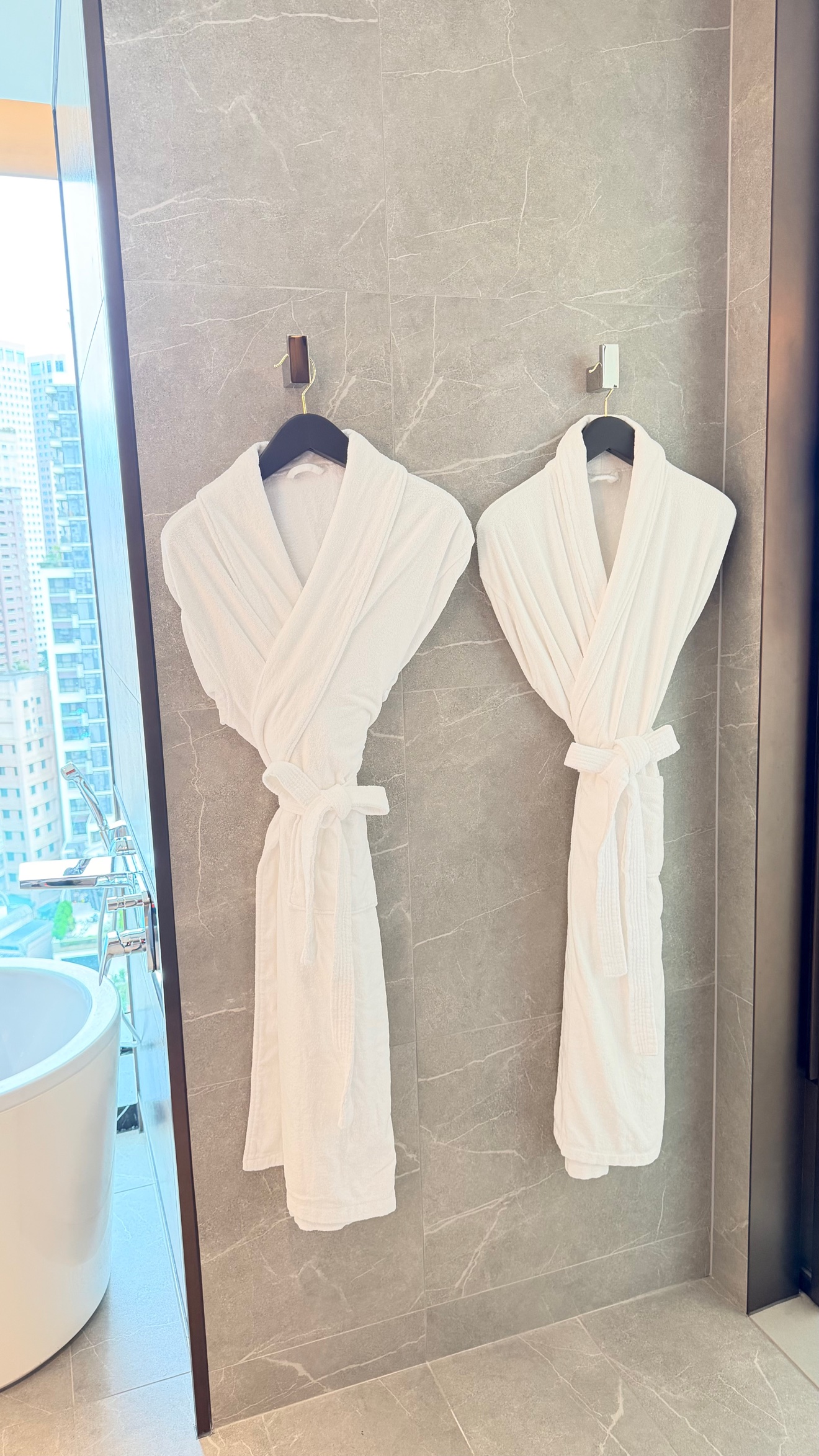
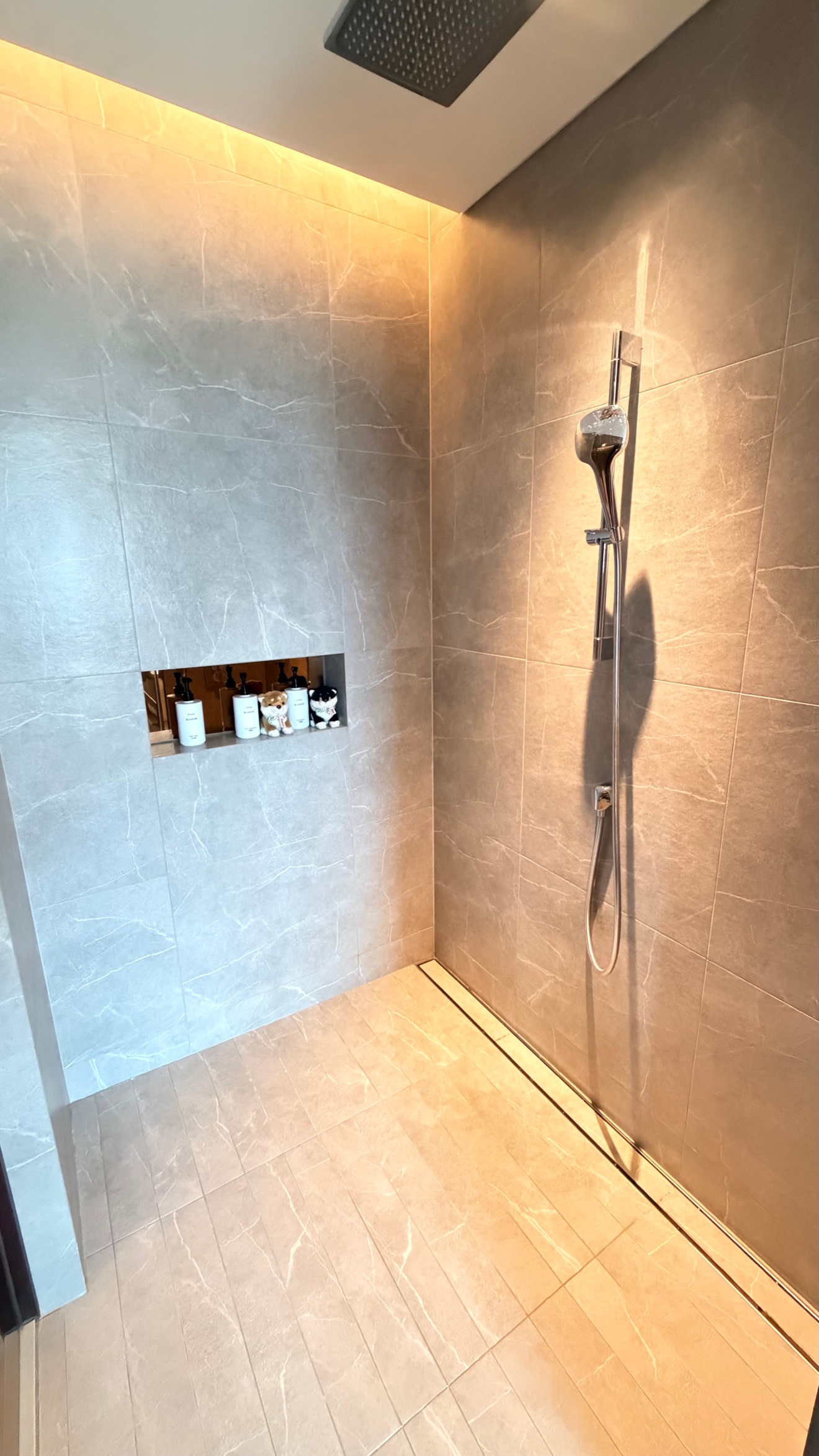
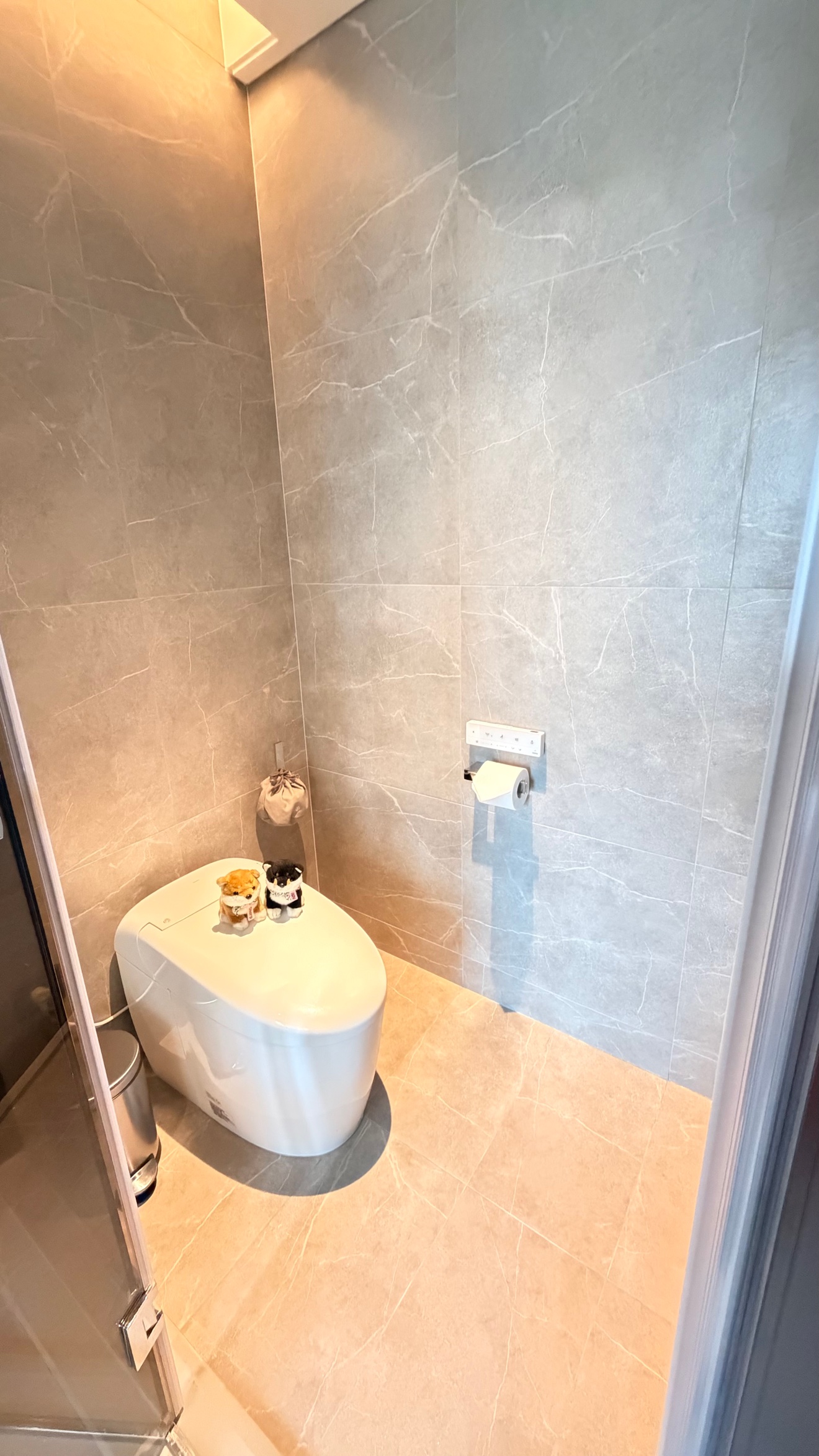
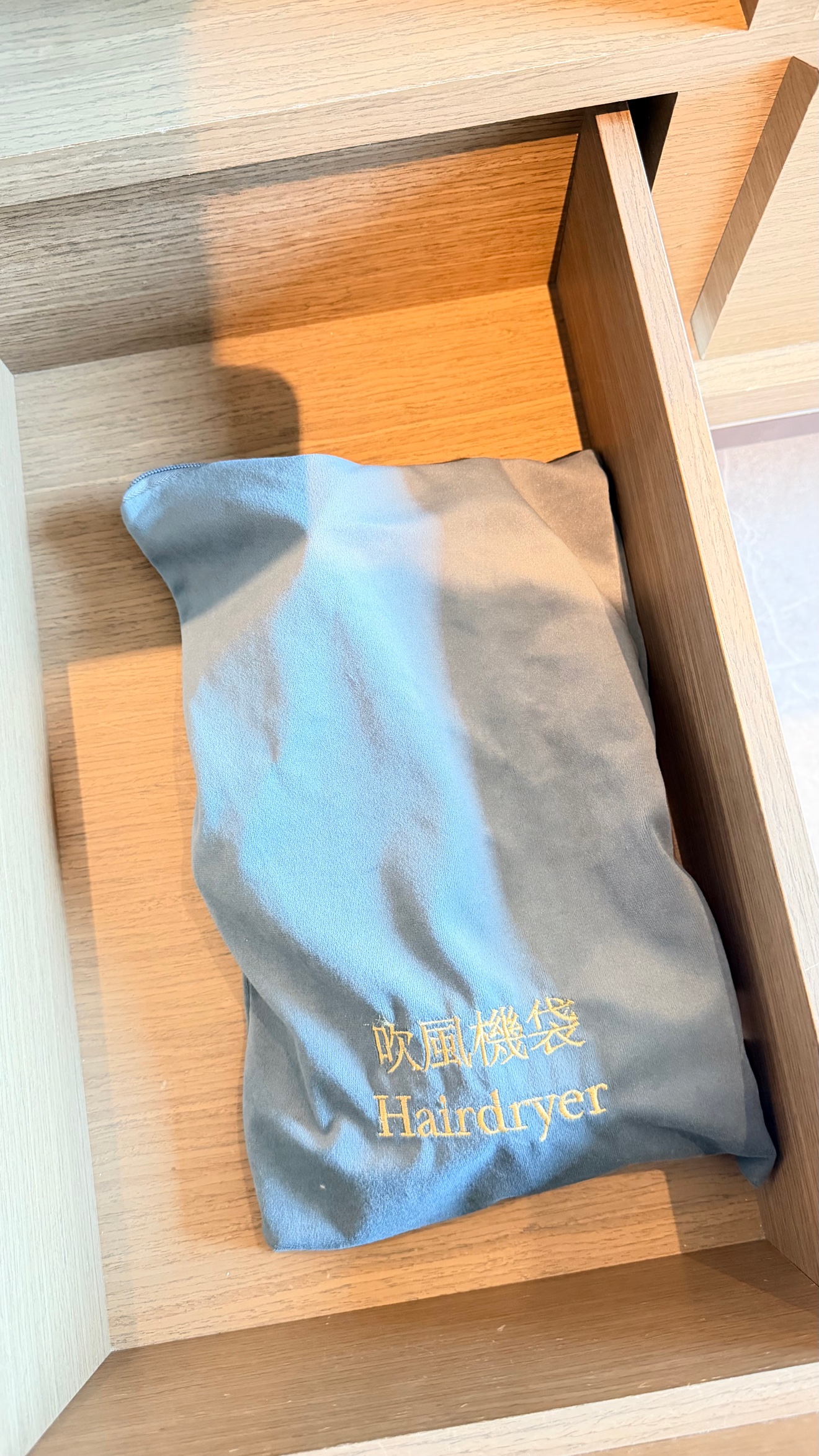
Two bathrobes hang on the grey stone wall, thick and white. The shower pairs a rain head with a handheld, amenities lined up in the niche. The toilet is its own room, with a washlet; and at the other end of the suite there is a second washroom, sink and toilet complete — two people, no queueing, which is a very practical luxury. Even the hairdryer has a uniform: a grey fabric bag in a drawer, embroidered in gold with "Hairdryer" in two languages.
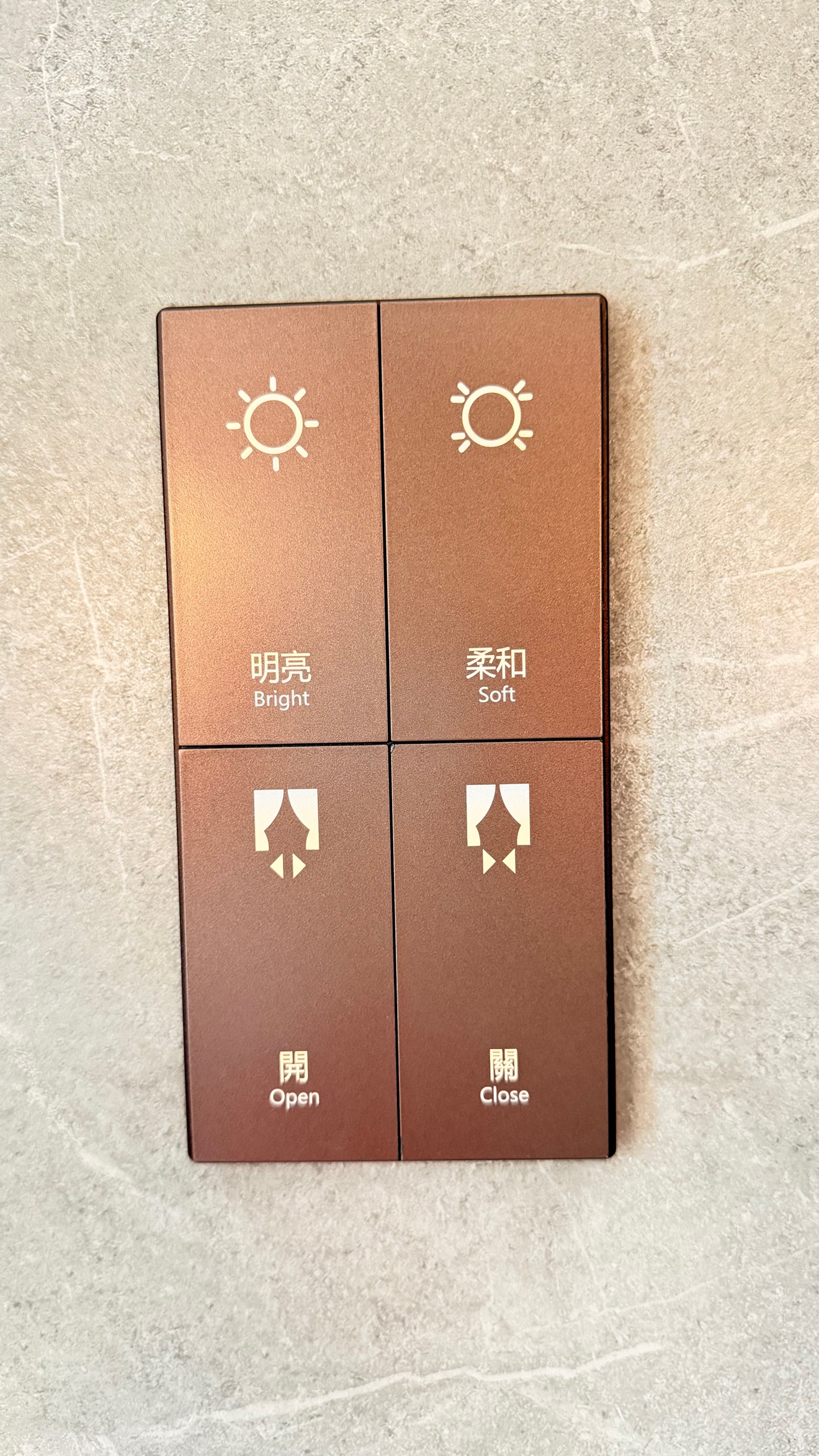
The bathroom also hides my favourite control in the whole suite: four copper physical keys on the stone wall — Bright and Soft for the lights, Open and Close for the blind by the window. With wet hands, soaking in the tub, there is no guessing where the touch panel is. Physical keys are the truth.
Closing: tea by the window, and the skeleton of the building
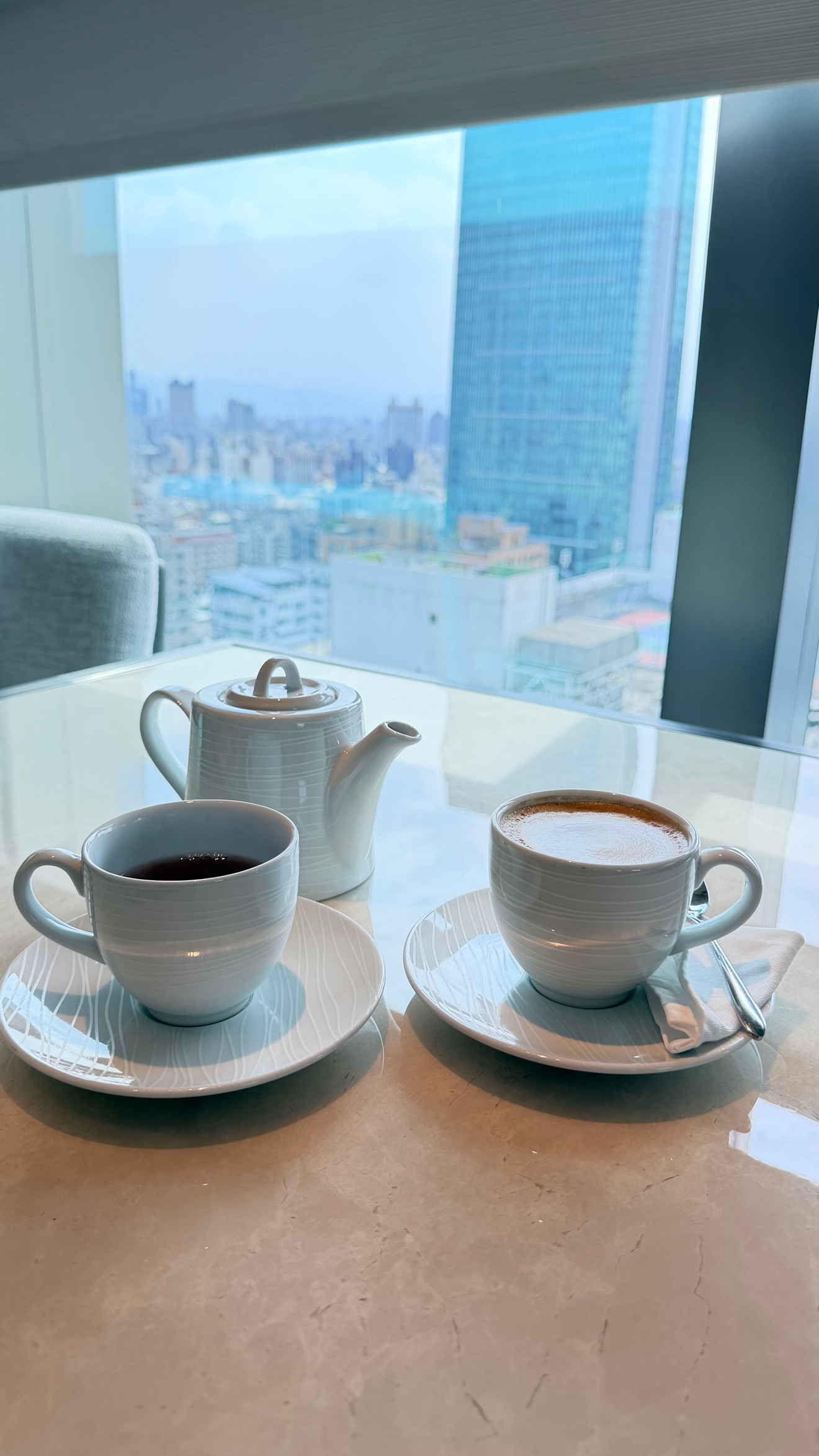
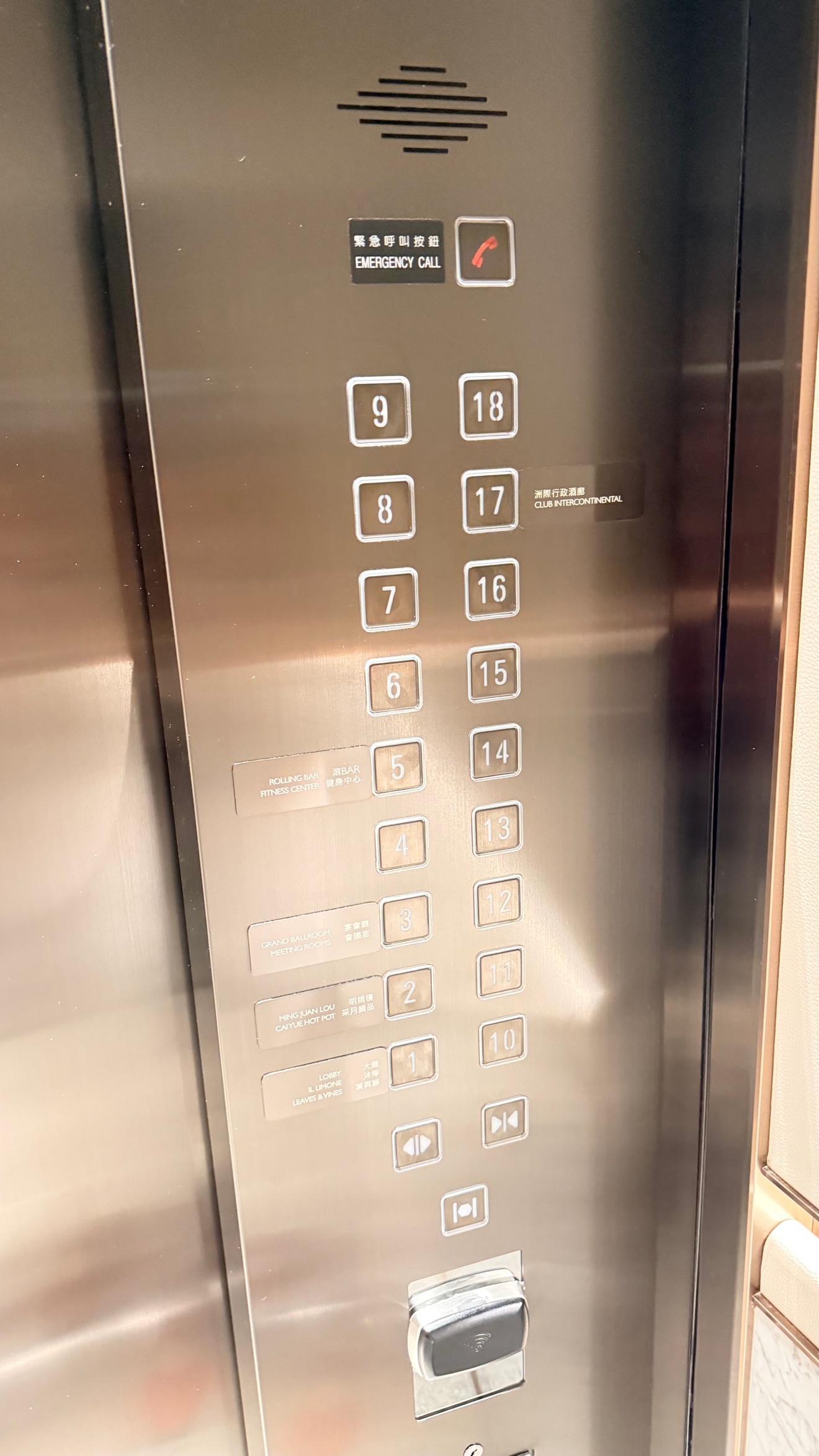
Tour over, sit down by the window: a pot of tea, two coffees, and Taichung in the mid-afternoon. The skeleton of this hotel reads best on the elevator panel — lobby, Il Limone and Leaves & Vines on 1F; Ming Juan Lou and Caiyue Hot Pot on 2F; the grand ballroom and meeting rooms on 3F; Rolling Bar and the fitness centre on 5F; and Club InterContinental up on 17F.
Verdict
The hardware of the Midtown Suite is finished to a high standard: a proper layout, good light, a seriously large bathroom, and not a single careless note in the minibar, the stationery or the wardrobes. At a rack rate of NT$65,000, the room itself justifies the InterContinental name. Sharp Index for the room: 90.