For most travellers, Inuyama means one thing: its castle. But after three nights at Hotel Indigo Inuyama, right beside the Urakuen garden — home to Jo-an, a National Treasure tea house — I realised the hotel is part of the sight itself, facing the castle keep across the Kiso River. I checked into the Inuyama View Suite on 15 March 2026, and for three nights the room had a river at one end and a castle at the other.
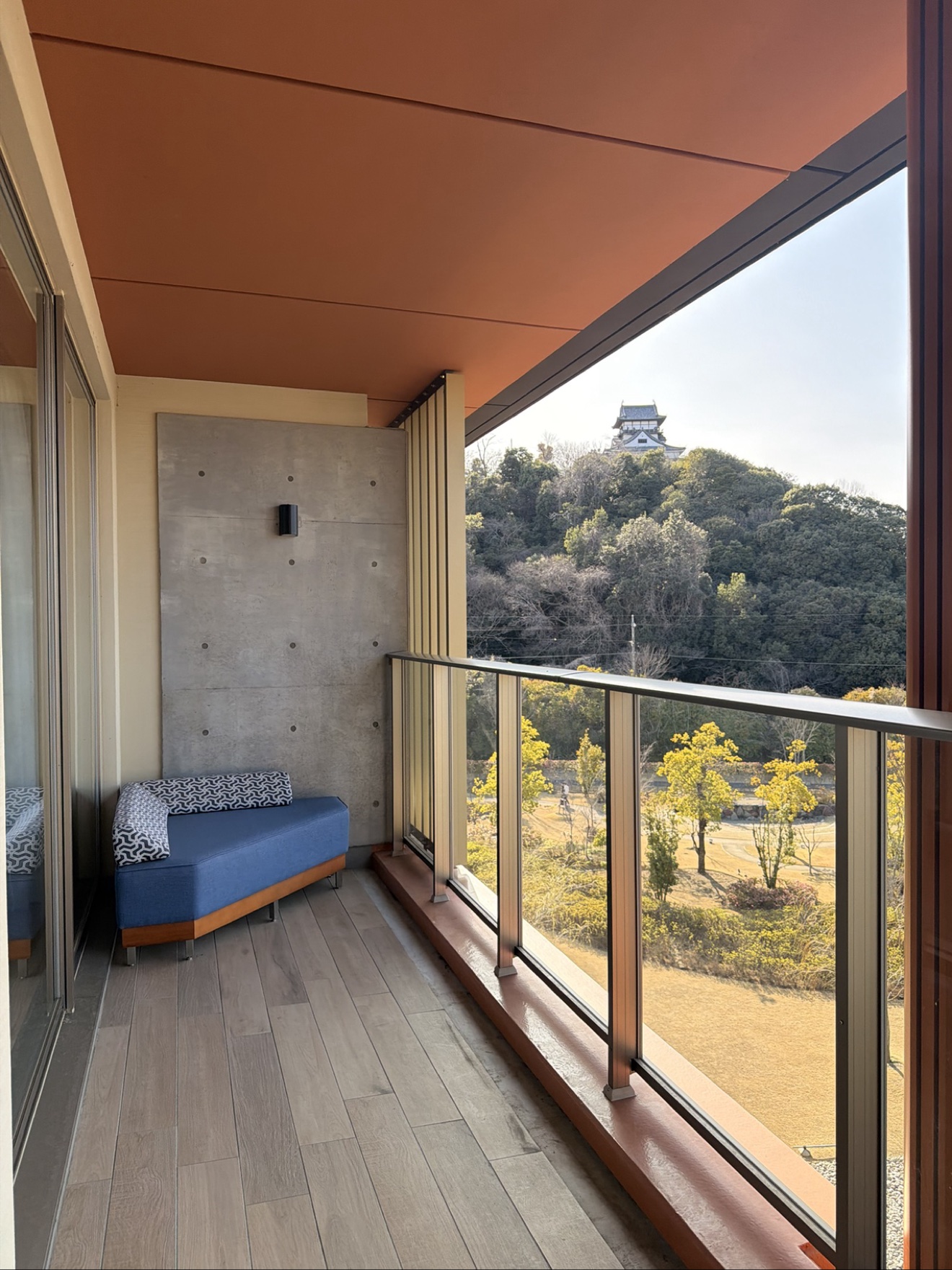
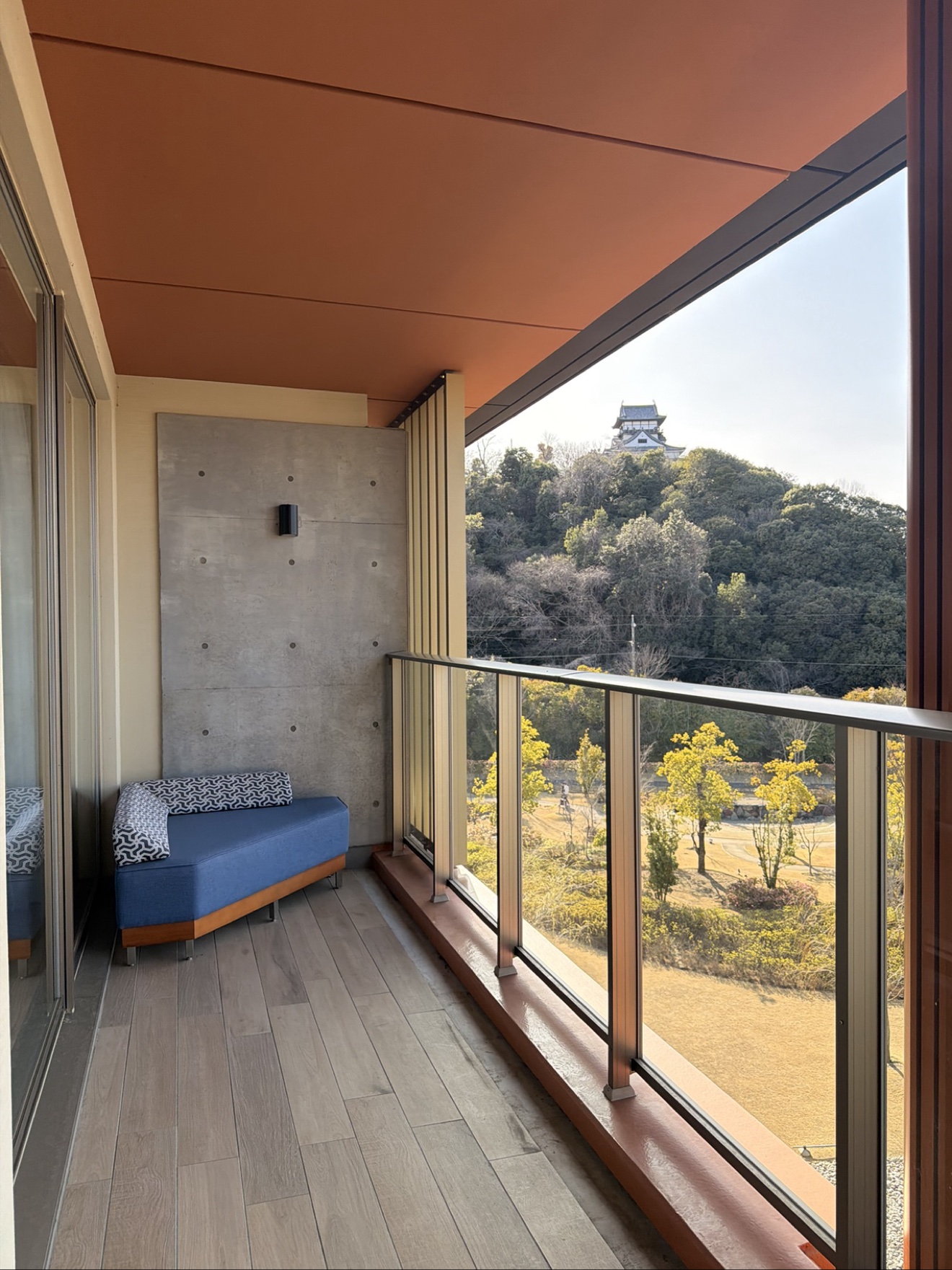 The balcony's blue daybed faces the keep of Inuyama Castle on its hill — the view this suite is named for.
The Room: Sleeping Inside an Old Map
The Inuyama View Suite is one long, open-plan space: sleeping and living areas flow into each other, stretched between a TV wall at one end and floor-to-ceiling glass at the other. The showpiece is the wall behind the bed — a full antique map of the Inuyama castle town, the keep drawn at the left, streets and the course of the Kiso River unrolling to the right, finished with a red seal stamp. It is not artwork hung above the bed; the town's history is the headboard.
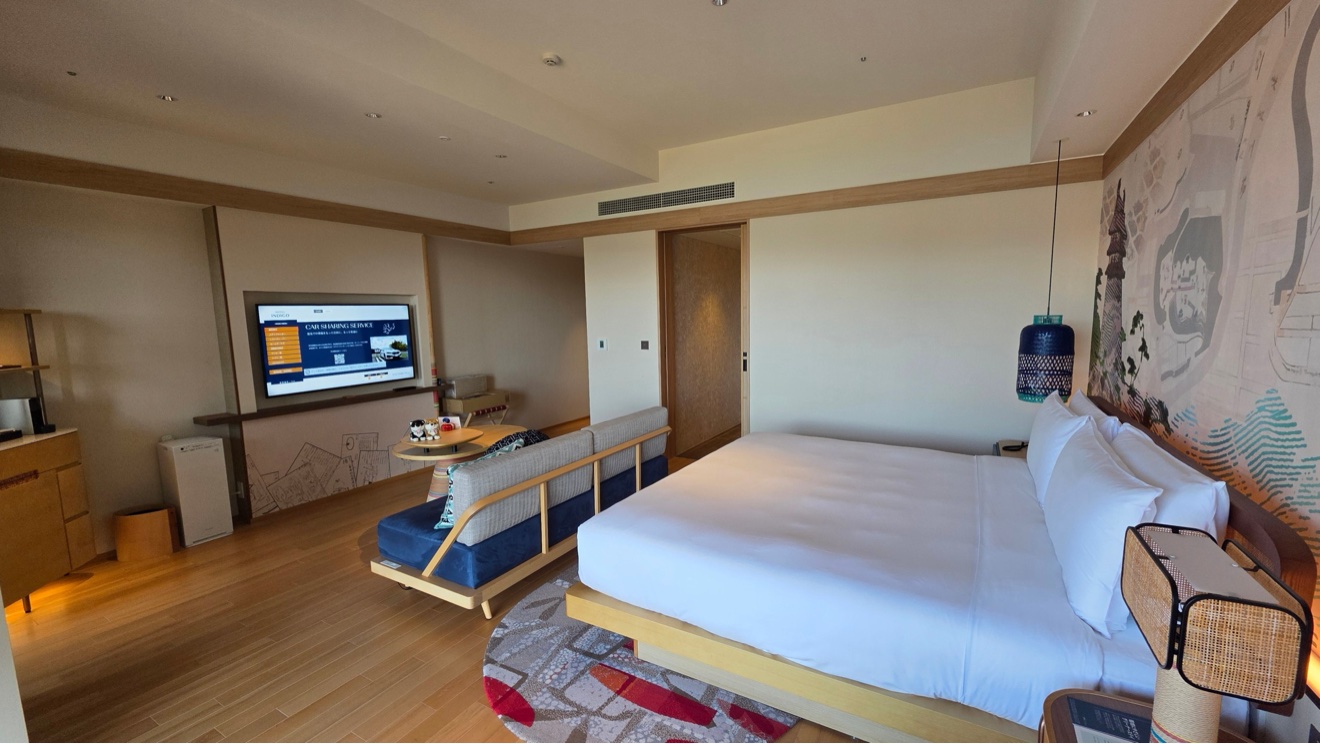 The long open plan: bed, sofa and TV wall in one sweep. The wall beneath the TV is printed with vintage Jo-an tea house documents.
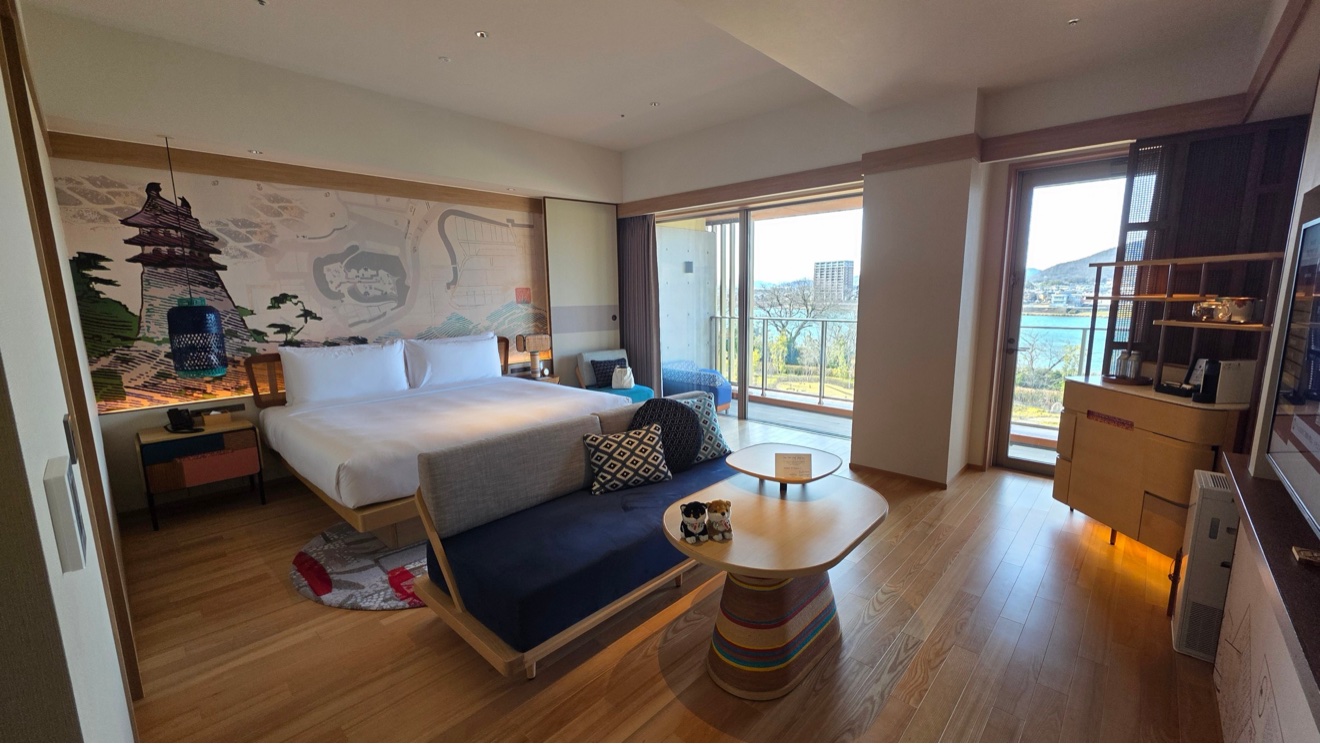 From the entrance: mural wall, living area and pantry cabinet in a row, with the Kiso River beyond the glass on the right.
The furniture is pure Indigo — not formulaic luxury, but local storytelling. A blue woven pendant lamp and a rattan table lamp, a two-tier round table with a colourfully wrapped pedestal, geometric cushions: saturated colours that somehow stay calm. On the nightstand sit a Bose Bluetooth speaker and a small wooden alarm clock. In the age of phone alarms, a real clock is a stubborn, charming choice.
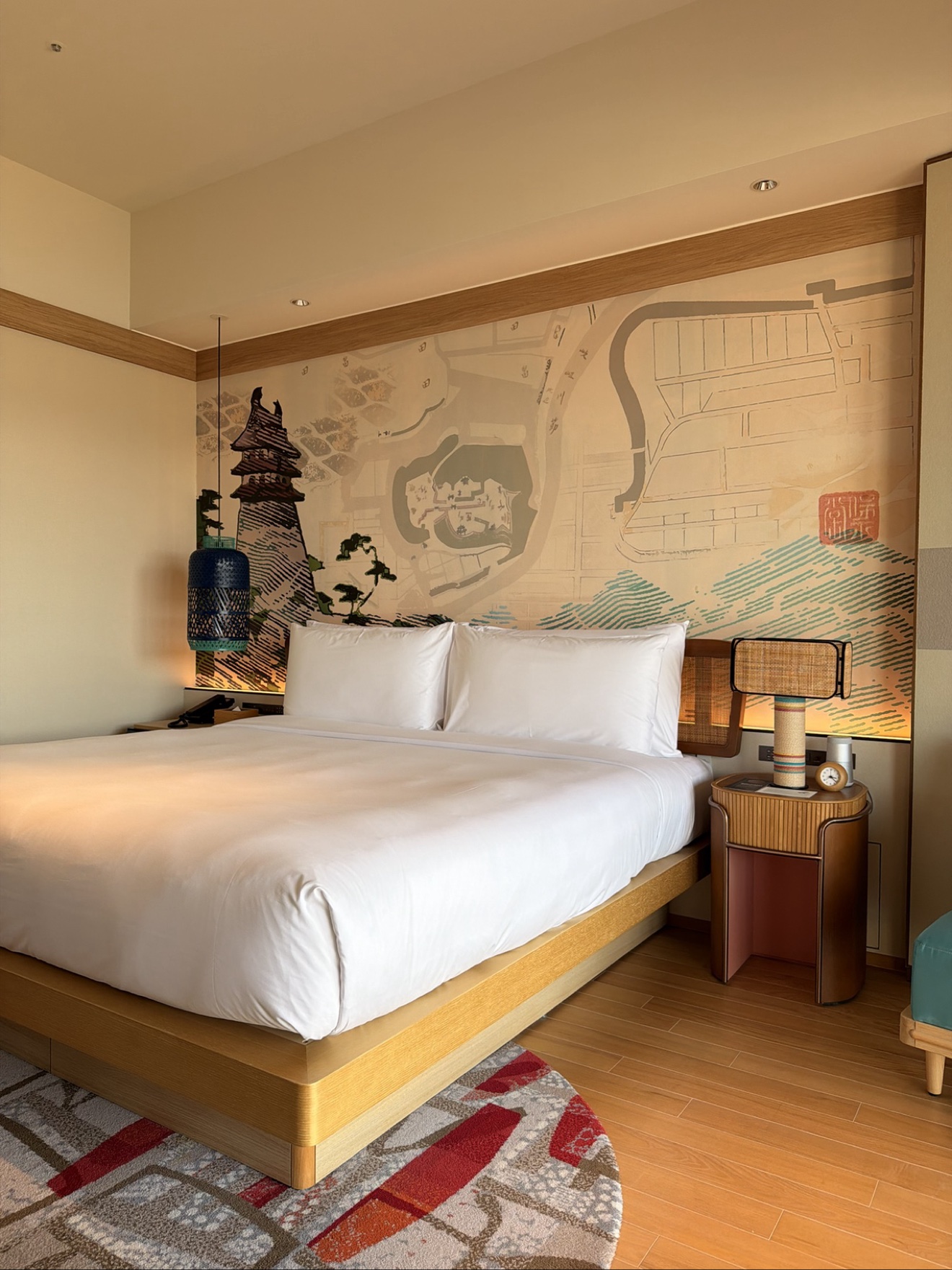 The mural up close: the keep, the castle-town grid and the river's waves, sealed with a red stamp.
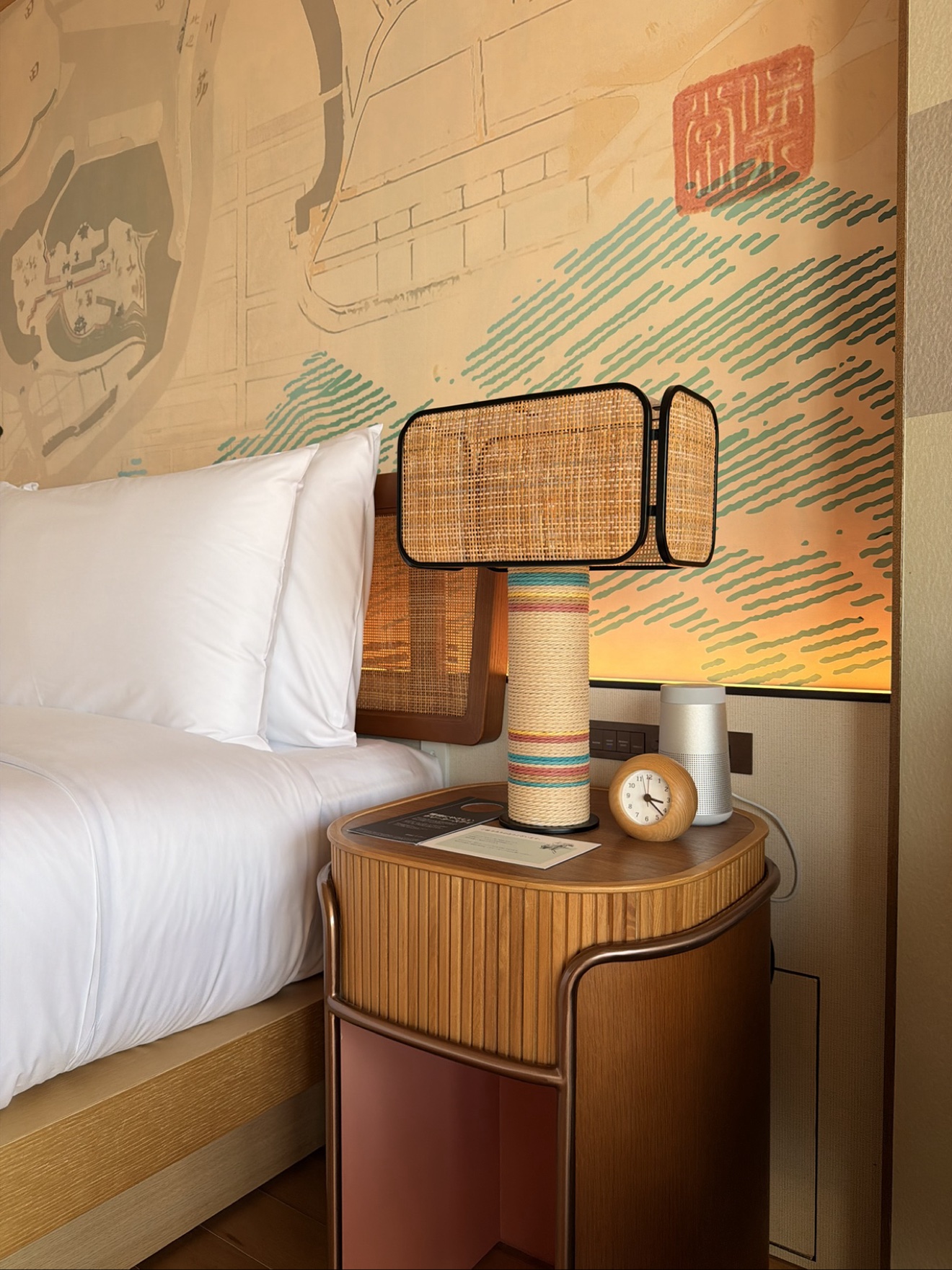 Rattan lamp, Bose speaker, wooden clock — and the mural's red seal glowing behind them.
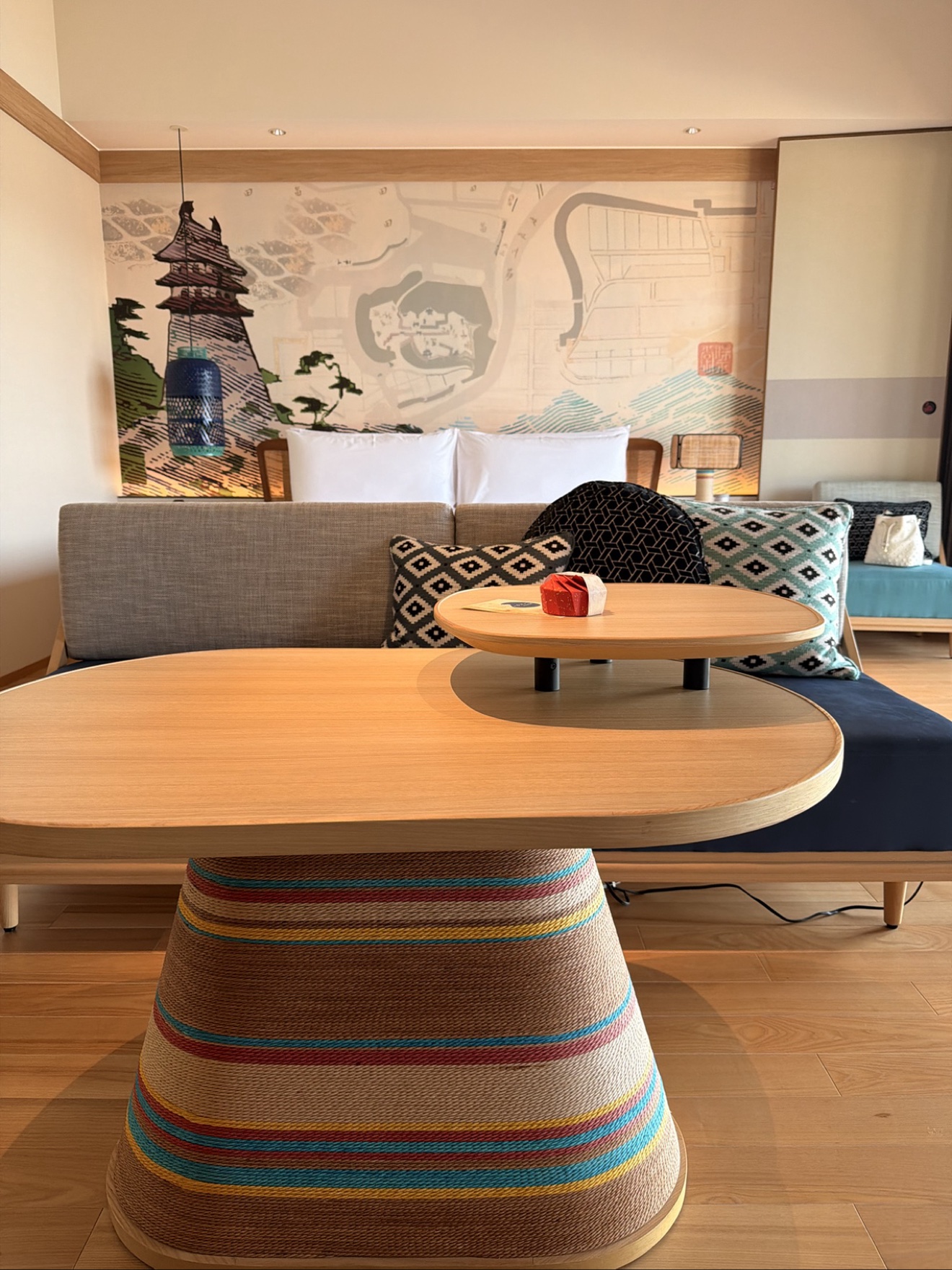 The two-tier table anchors the room, its pedestal wrapped in woven colour; the sofa turns its back to the bed and faces the river.
The Balcony: The Kiso River on One Side, the Castle on the Other
This room type looks two ways. Bed and sofa face the Kiso River — a broad sheet of water with mountains stacked behind the far bank. Walk to the other end of the balcony and the view swings inland: the keep of Inuyama Castle, a National Treasure and one of Japan's twelve original castle towers, standing above the trees. Mid-March was too early for cherry blossom and the riverbank trees were still bare, but stripped of decoration, the layers of river, mountain and castle read even more clearly.
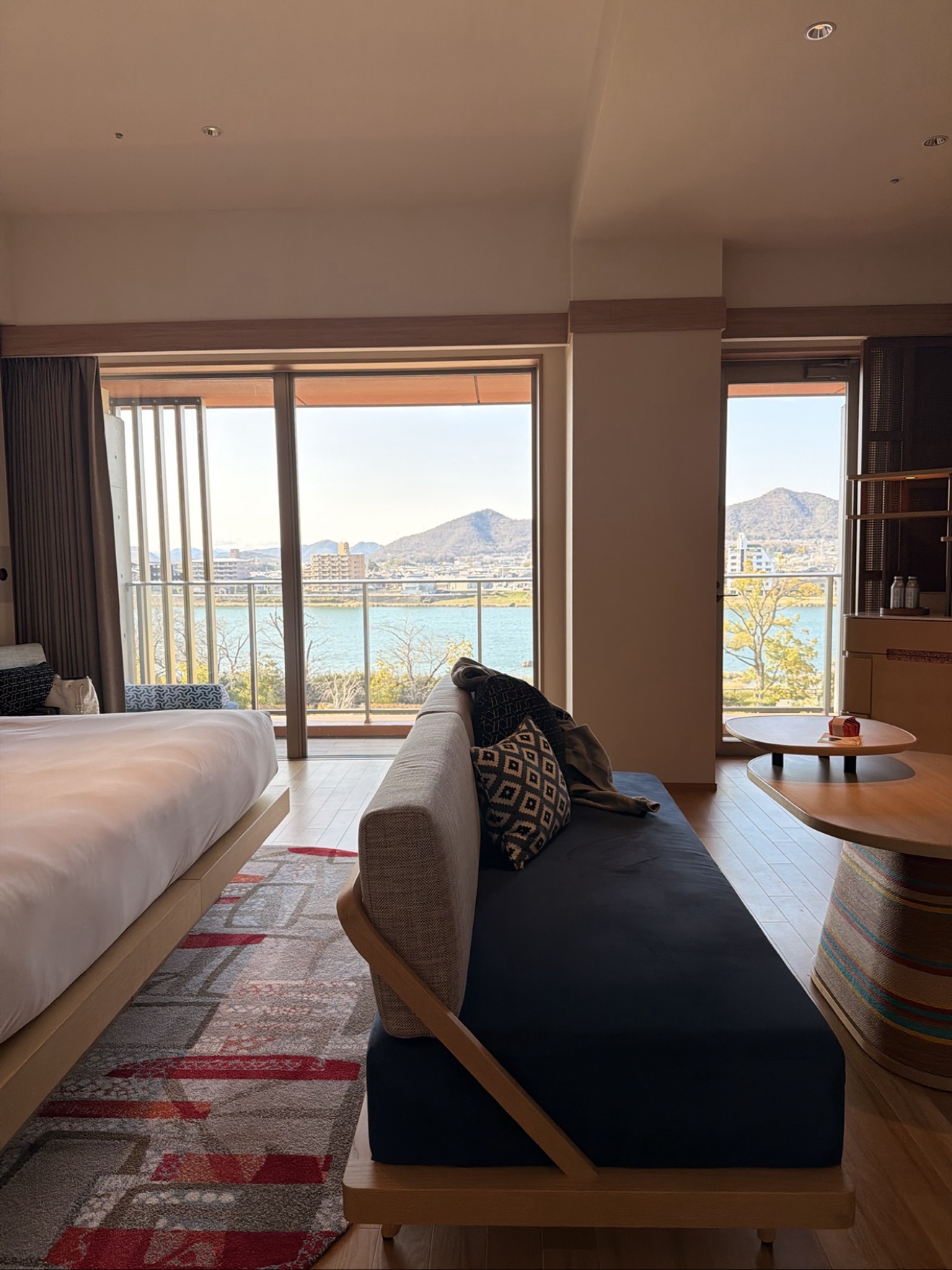 From the sofa, the Kiso River fills the window — wide enough to quiet the whole room.
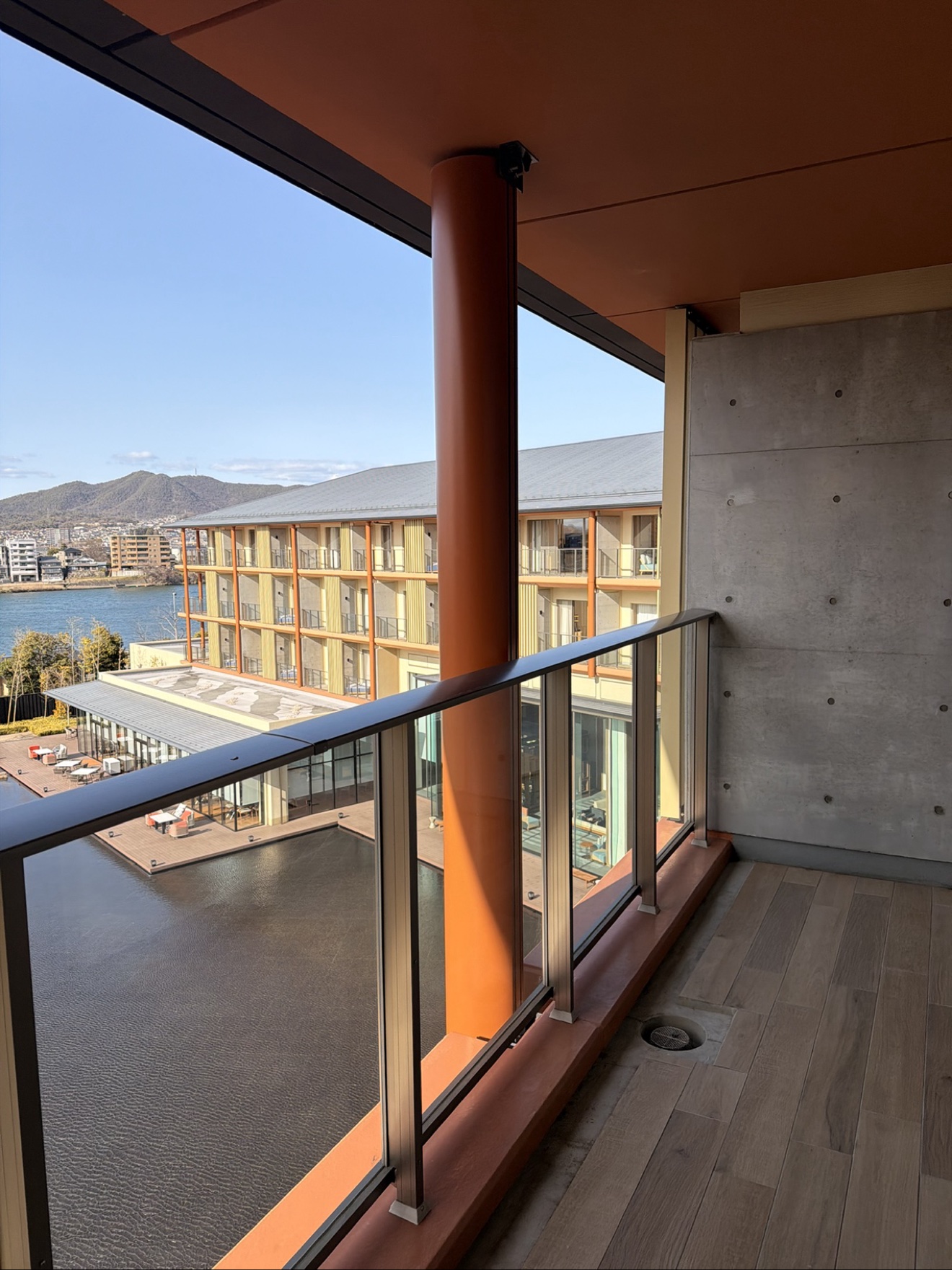 Below the balcony: the hotel's reflecting pool and restaurant terrace, with the river beyond.
The Welcome: Even the Candy Is Local
On the table stood a welcome card and a single sweet wrapped in red origami-style paper: Fujisawa Genkotsu, Inuyama's traditional candy, folded up like a tiny paper ball. The TV's "Local Discoveries" page runs on the same logic — the same Fujisawa candy, Nagoya's Moriguchi-zuke pickles, and the hotel's own boule de neige cookies. Indigo's brand promise is the neighbourhood story; this property wraps it into a candy wrapper.
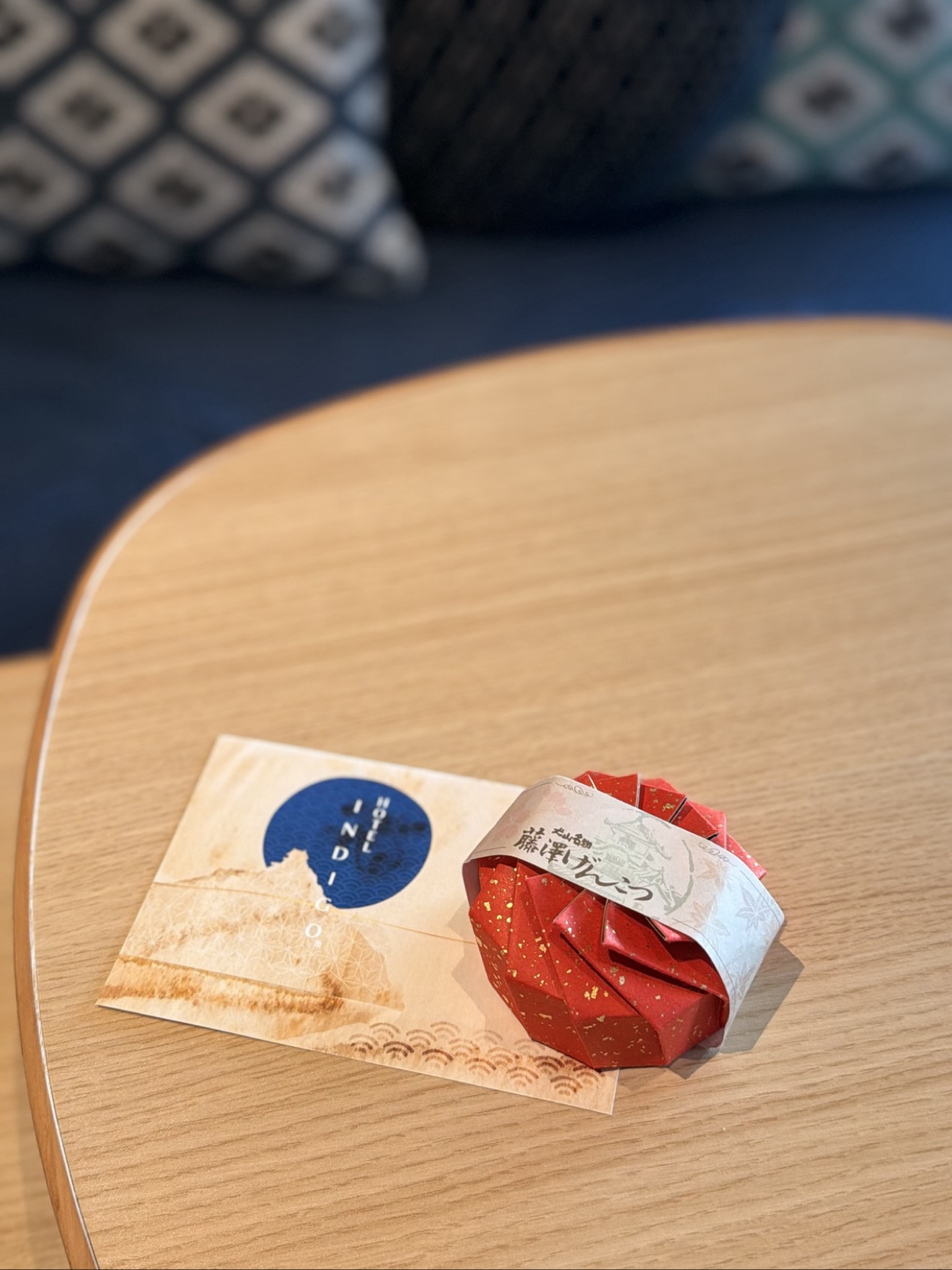 The welcome gift: Fujisawa Genkotsu, an Inuyama speciality, in its red folded-paper wrapping.
 Local discoveries on the TV: Fujisawa candy ¥680, house-made boule de neige ¥1,800, Moriguchi-zuke pickles ¥1,200.
The Pantry: Not a Minibar, a Small Tea Room
The pantry cabinet rewards a slow unpack. The top shelf is a proper tea set — painted ceramic cups, a glass teapot, a hammered tin canister — with sencha sachets; beside it, a Nespresso machine and 400ml aluminium bottles of mineral water. The drawers divide the labour: glassware and Art of Tea bags in one, snacks in another, spirits in a third, and even the electric kettle gets a drawer of its own. Snacks run to white-truffle mixed nuts and black-truffle crisps; the spirits are Roku gin, Johnnie Walker Black Label and Bacardi. All chargeable, but chosen with unusual care for a minibar.
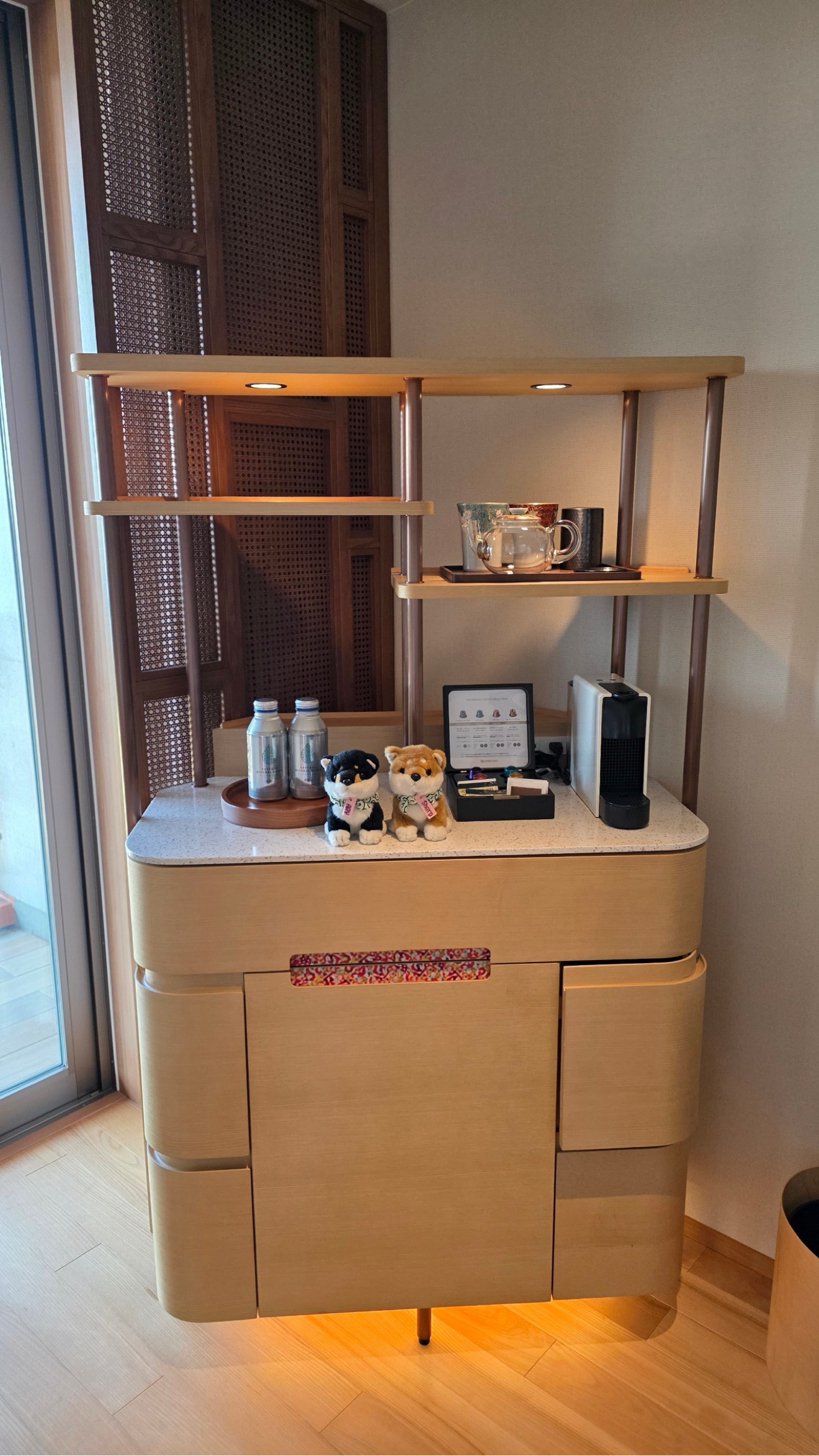 The pantry in full: tea set above, coffee machine and water in the middle, drawers below.
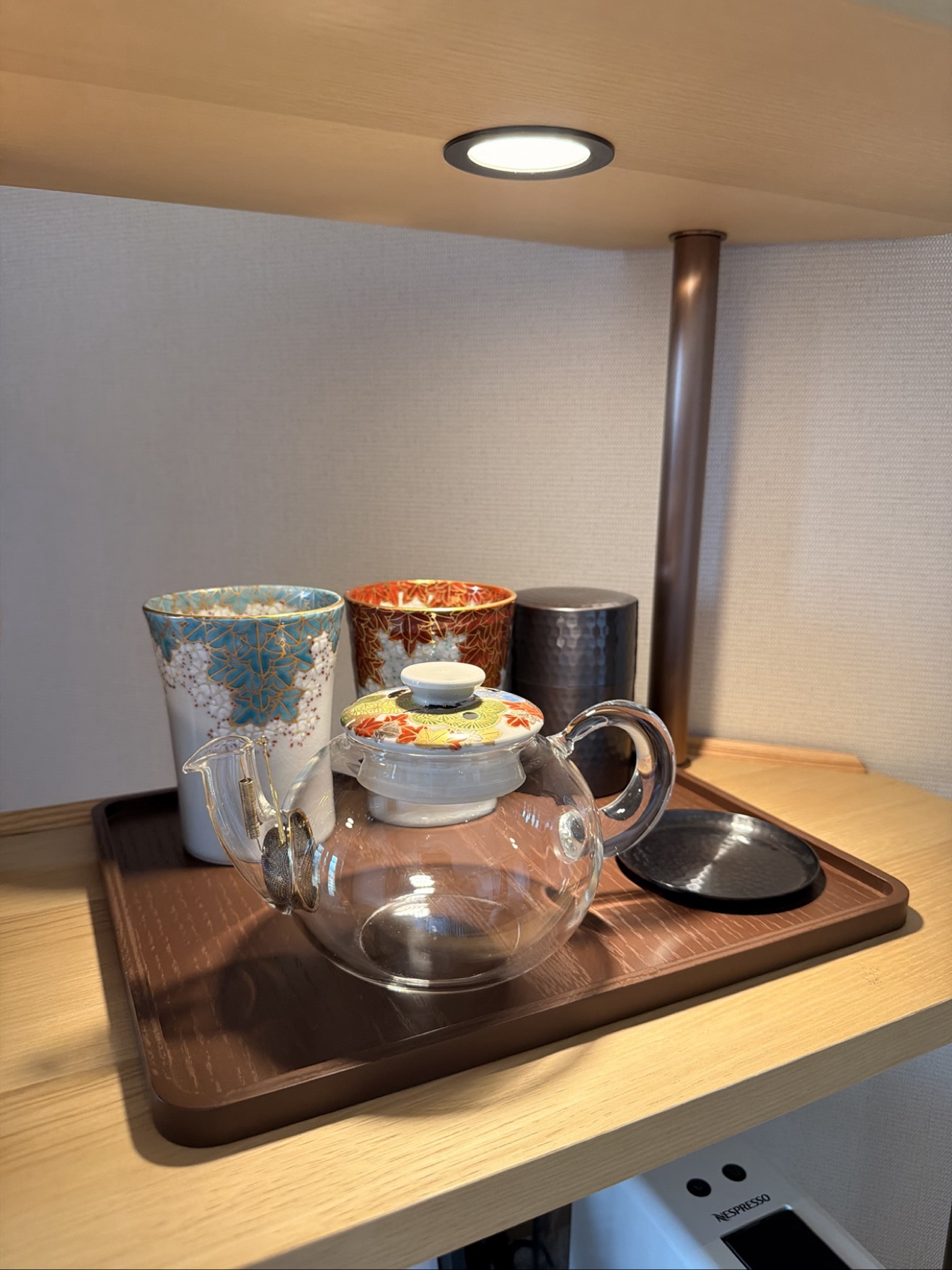 Painted ceramic cups and a glass teapot — tea in the room is a small ceremony here.
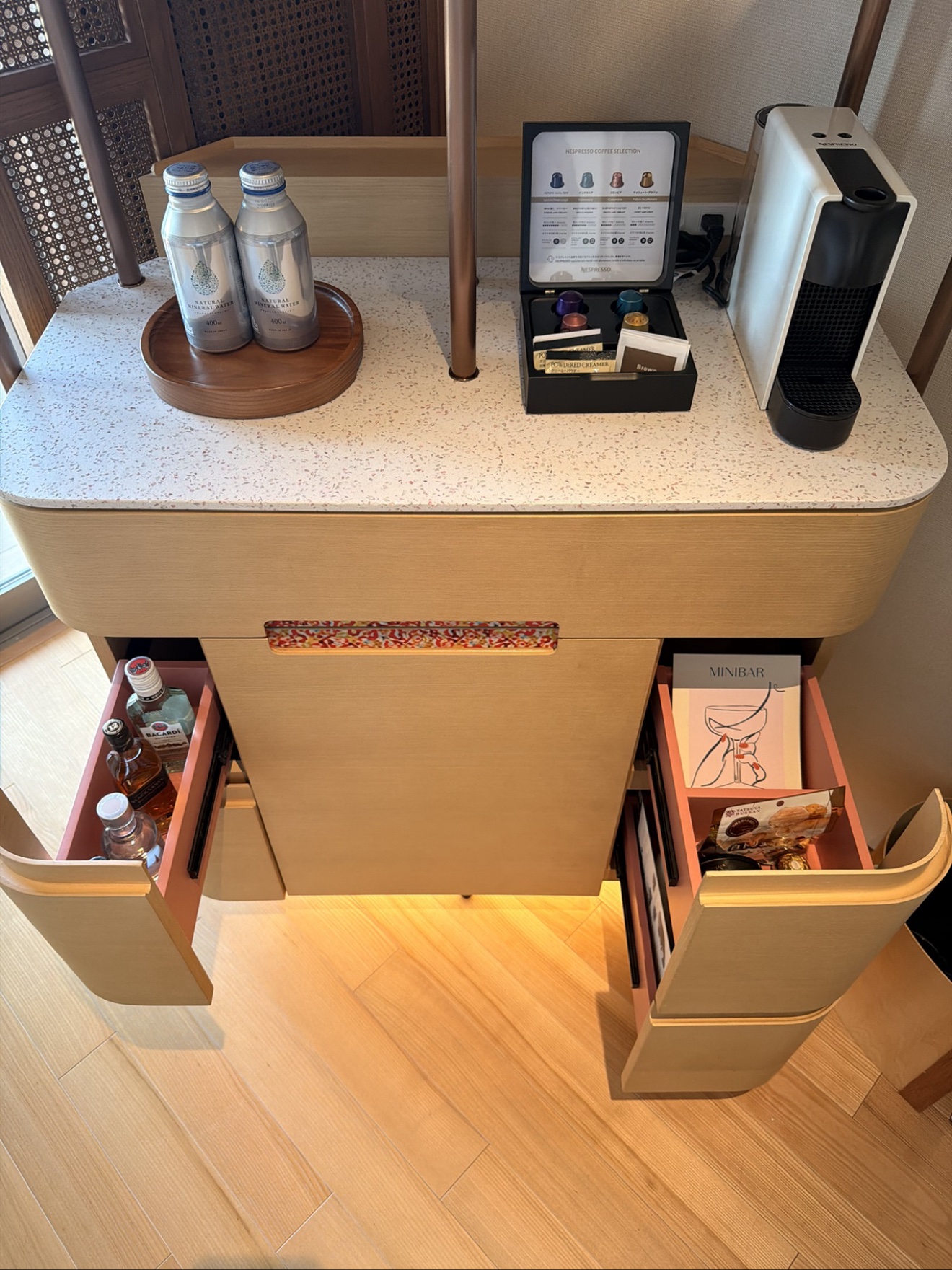 From above: spirits on the left, snacks on the right, pink-lacquered drawer interiors throughout.
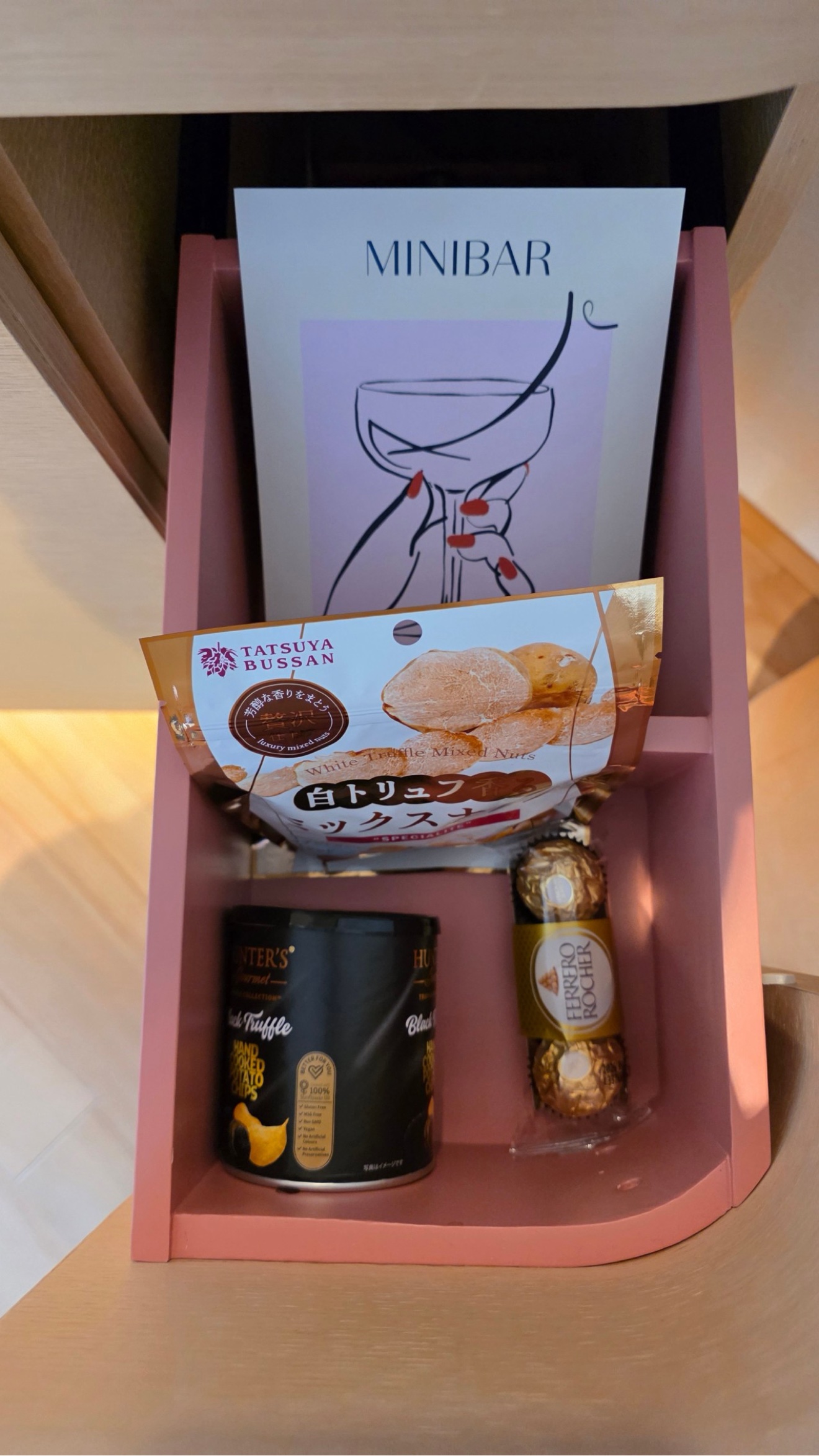 The snack drawer: white-truffle nuts, black-truffle crisps and Ferrero Rocher.
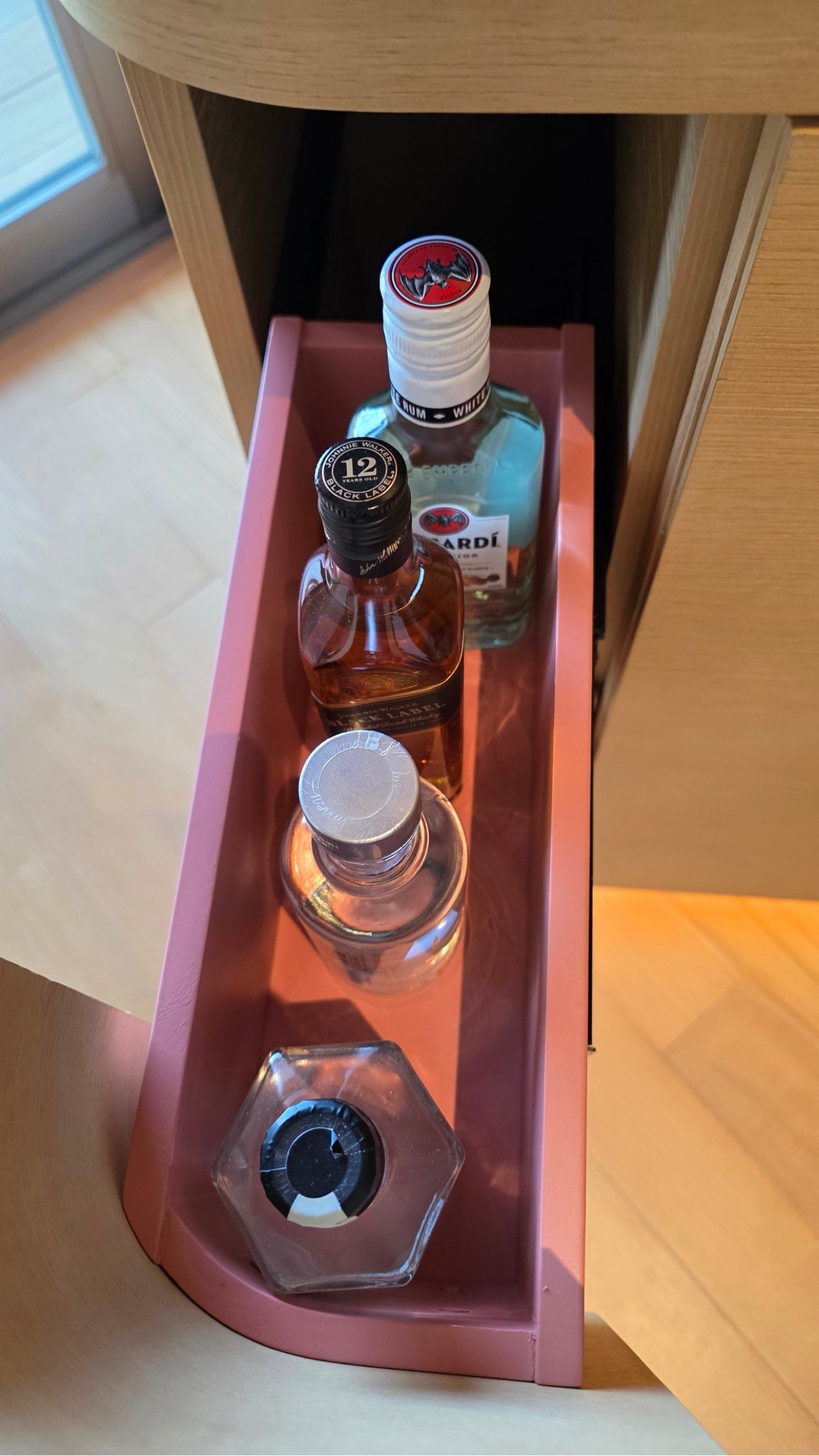 The spirits drawer: the hexagonal Roku gin bottle lying on its side, Black Label and Bacardi behind.
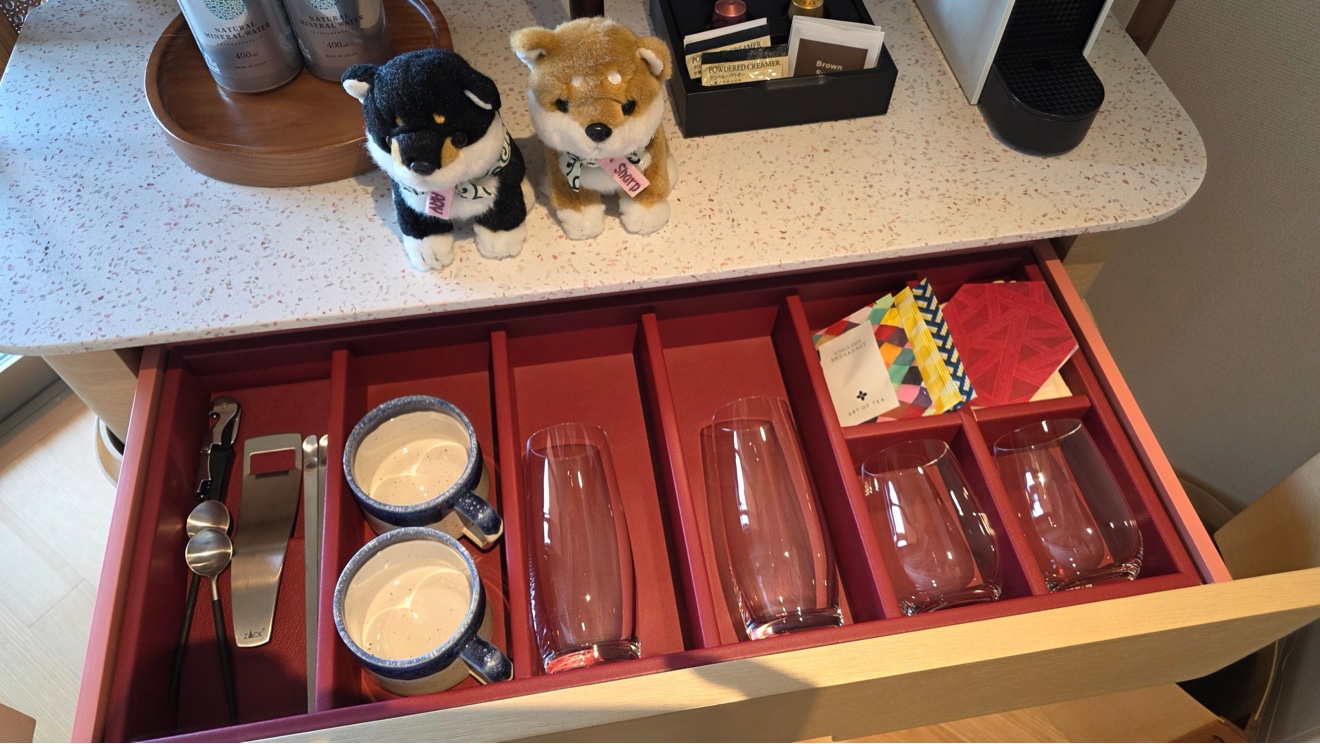 Glassware and tea bags in a red-lacquered drawer, bottle opener tucked neatly alongside.
The fridge keeps the same philosophy: n.e.o Premium sparkling and tonic waters, and 100% Shinshu apple and peach juices, sharing space with a Heineken and a glass-bottle Coke. If it isn't local to Inuyama, it is at least Japanese — drinking it, you know where you are.
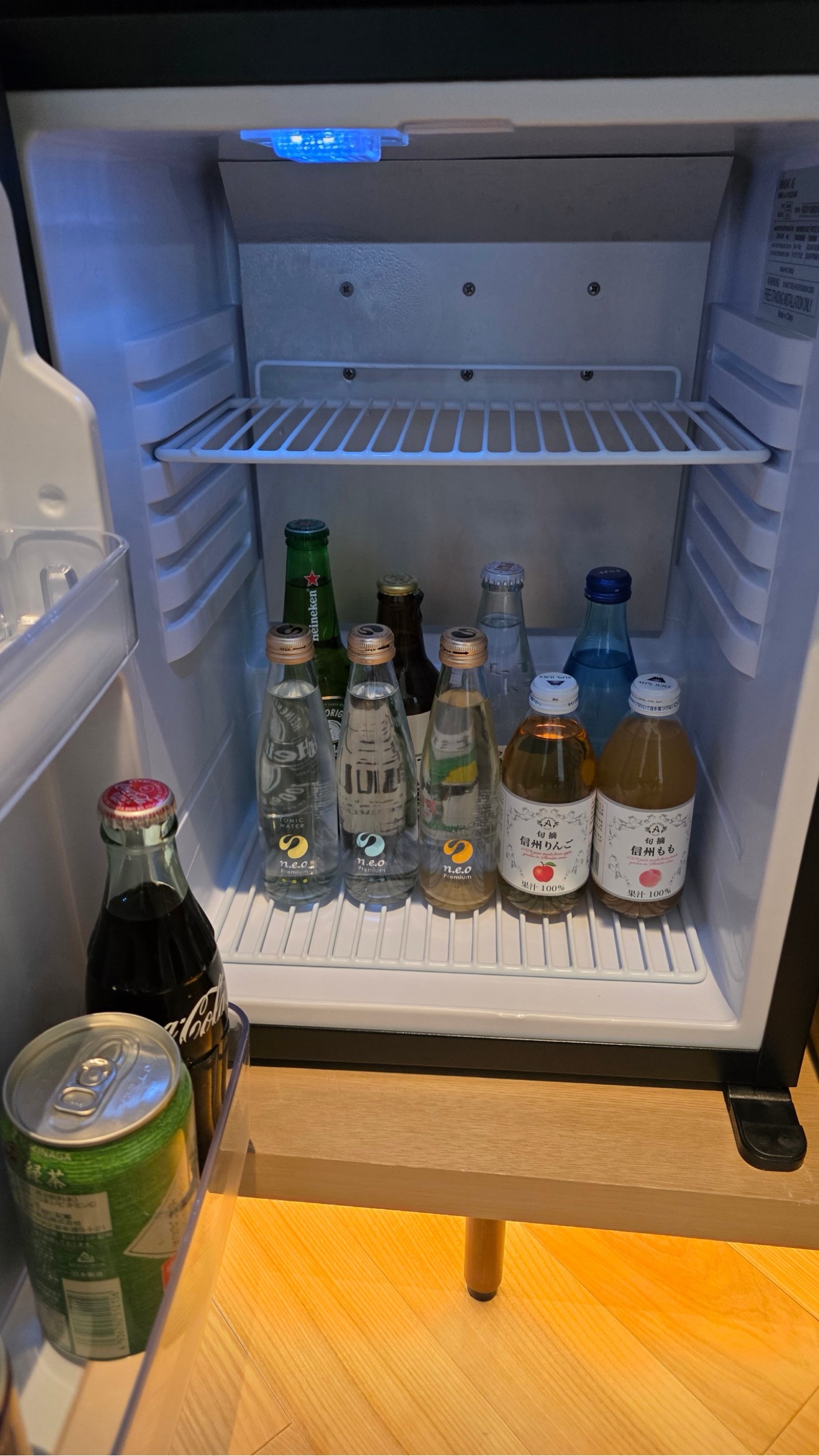 The Shinshu juices are the highlight: apple and peach, both 100% juice.
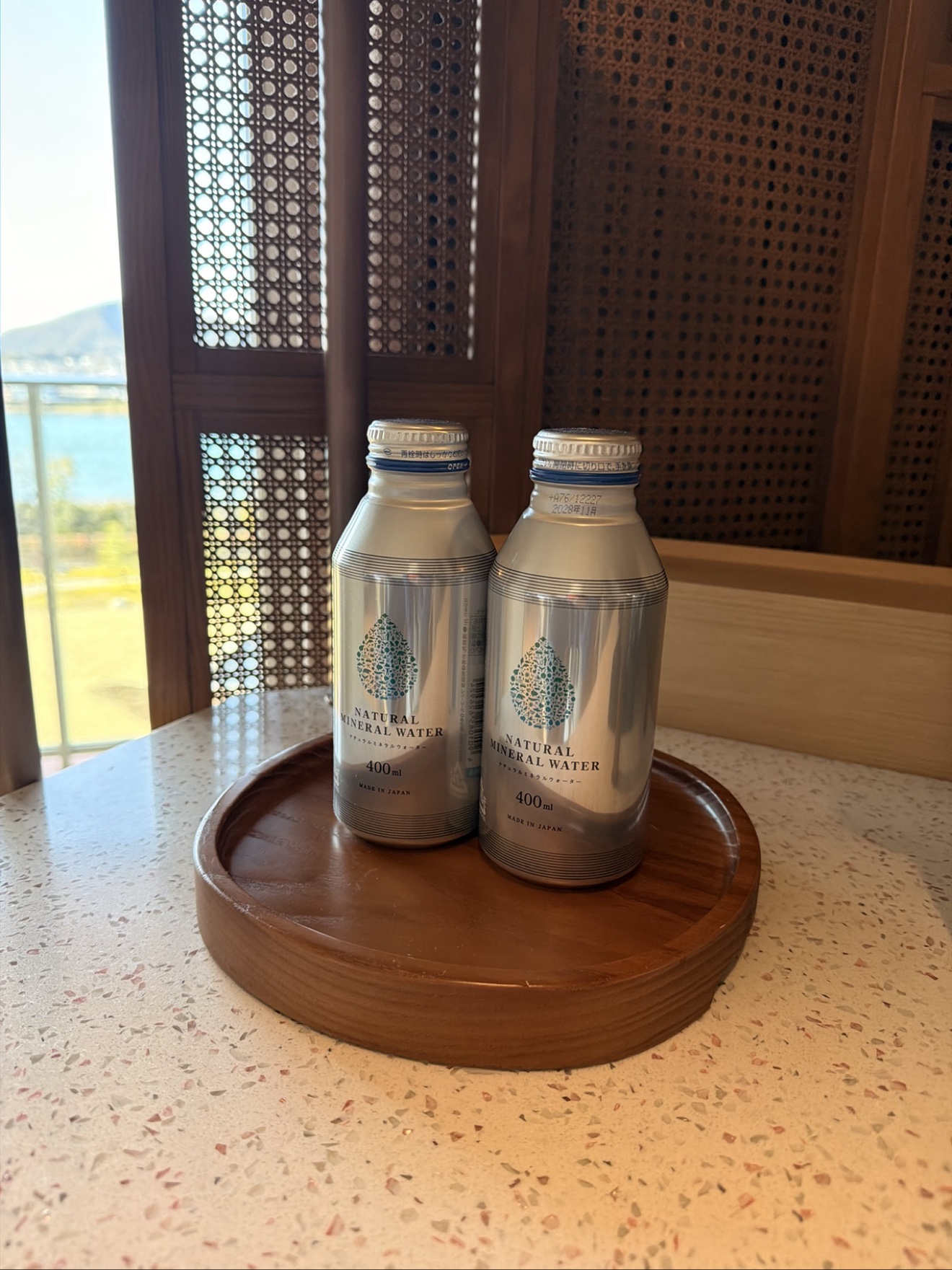 400ml aluminium bottles of natural water, with the actual Kiso River outside the window.
Dining: Dinner and Breakfast at YAMATERAS
The hotel's restaurant is YAMATERAS. We had dinner there on the second night, and waiting on the table was a handwritten welcome card — several members of the team had taken turns filling it with messages, plus a small sketch of Inuyama Castle. That kind of thoughtfulness lands before any food does.
Dinner runs on Japanese set menus, and between two of us we ordered two different ones. The first centred on a sashimi platter: sea bream, tuna, salmon and sweet shrimp arranged over crushed ice in a big blue bowl, with rice, miso soup and small side dishes. The best detail was the soy-sauce dish — pour in the soy sauce and the silhouette of a dog appears at the bottom. "Inu" means dog; even the sashimi gets the pun. The second set was a Nagoya-style feast: miso nikomi udon bubbling over its own little tabletop flame, thick red miso crowned with a soft egg; a rice bowl topped with eel and grilled meat; a prawn fried in rainbow-coloured crumbs; a salad; and a dessert plate — strawberry roll cake, chocolate cake and a strawberry tart — to finish. The wine list leans Italian, with Bellavista Franciacorta by the glass at ¥3,000 and an Umbrian white at ¥2,500, alongside sake, shochu and plum wine. We opened a bottle of Moët & Chandon Brut Impérial, which turned out to pair surprisingly well with red miso.
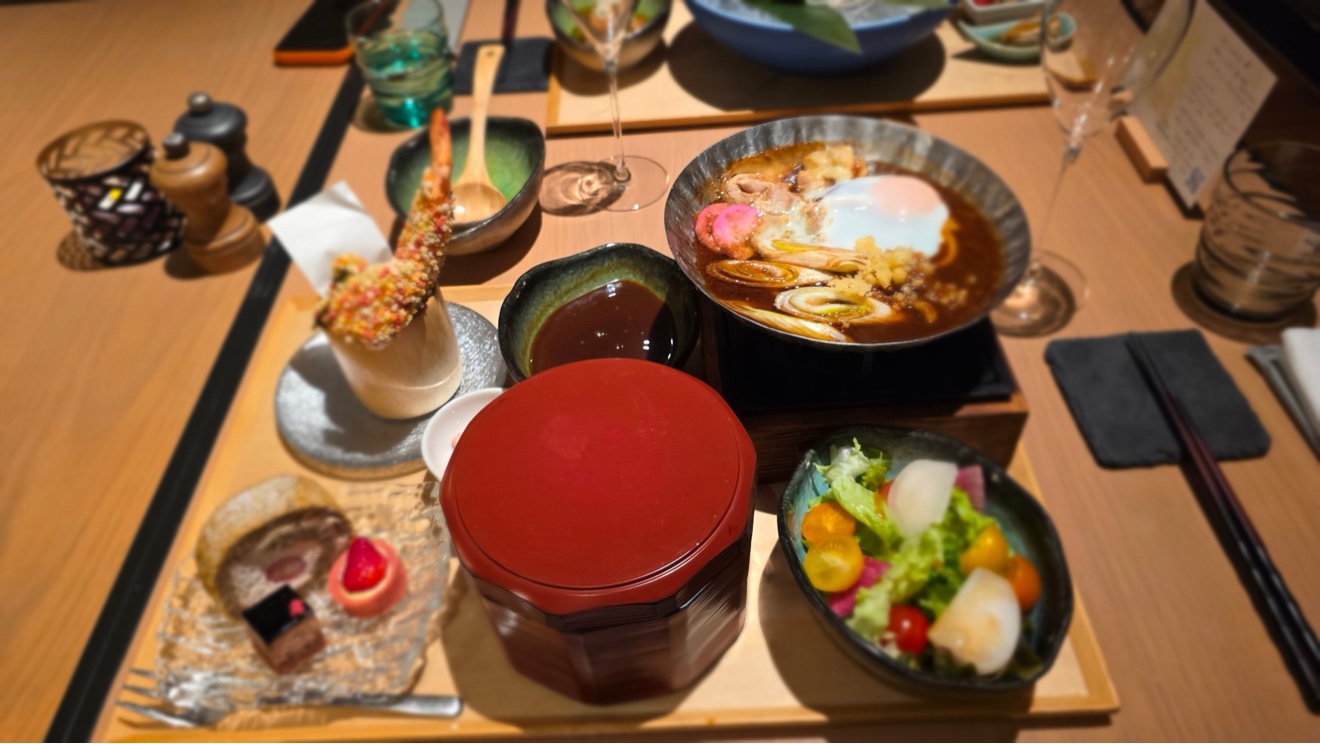 The second night's table: two set dinners, two glasses of sparkling wine, the lit garden outside.
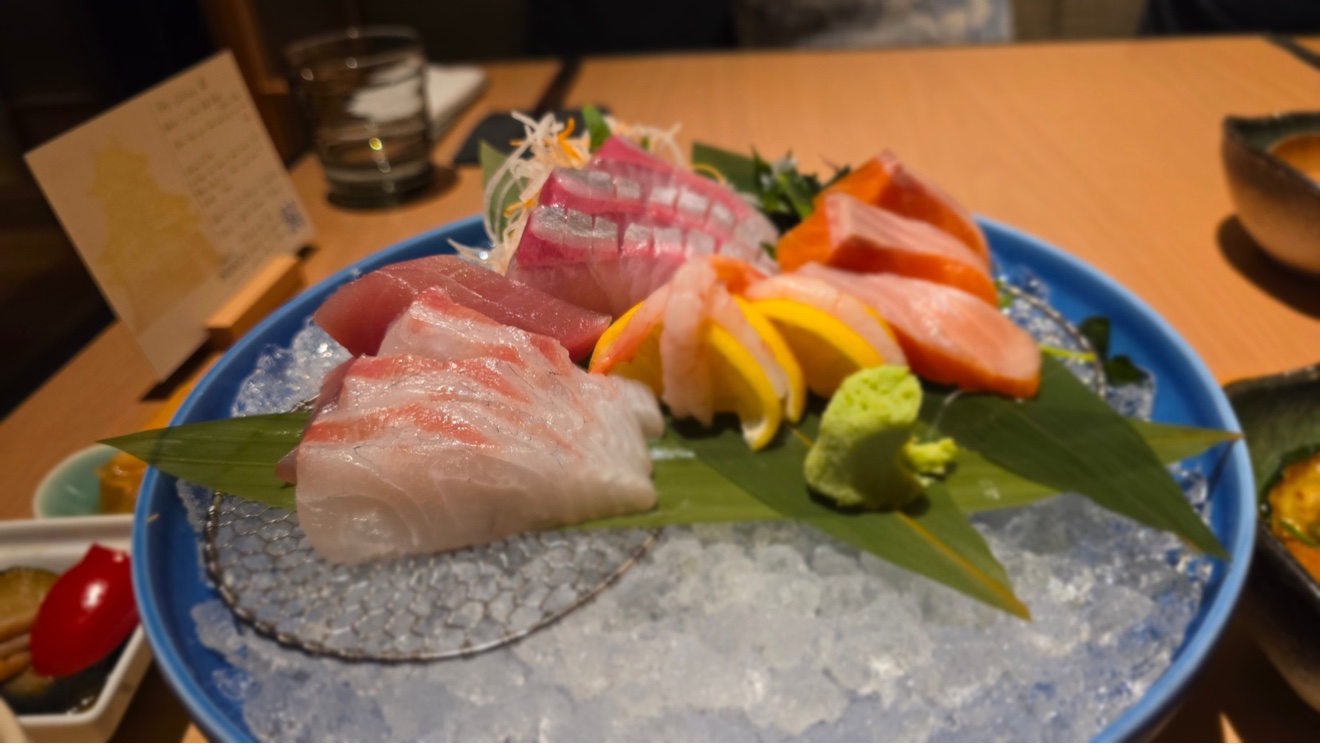 The sashimi platter: sea bream, tuna, salmon and sweet shrimp over ice, with a generous mound of fresh wasabi.
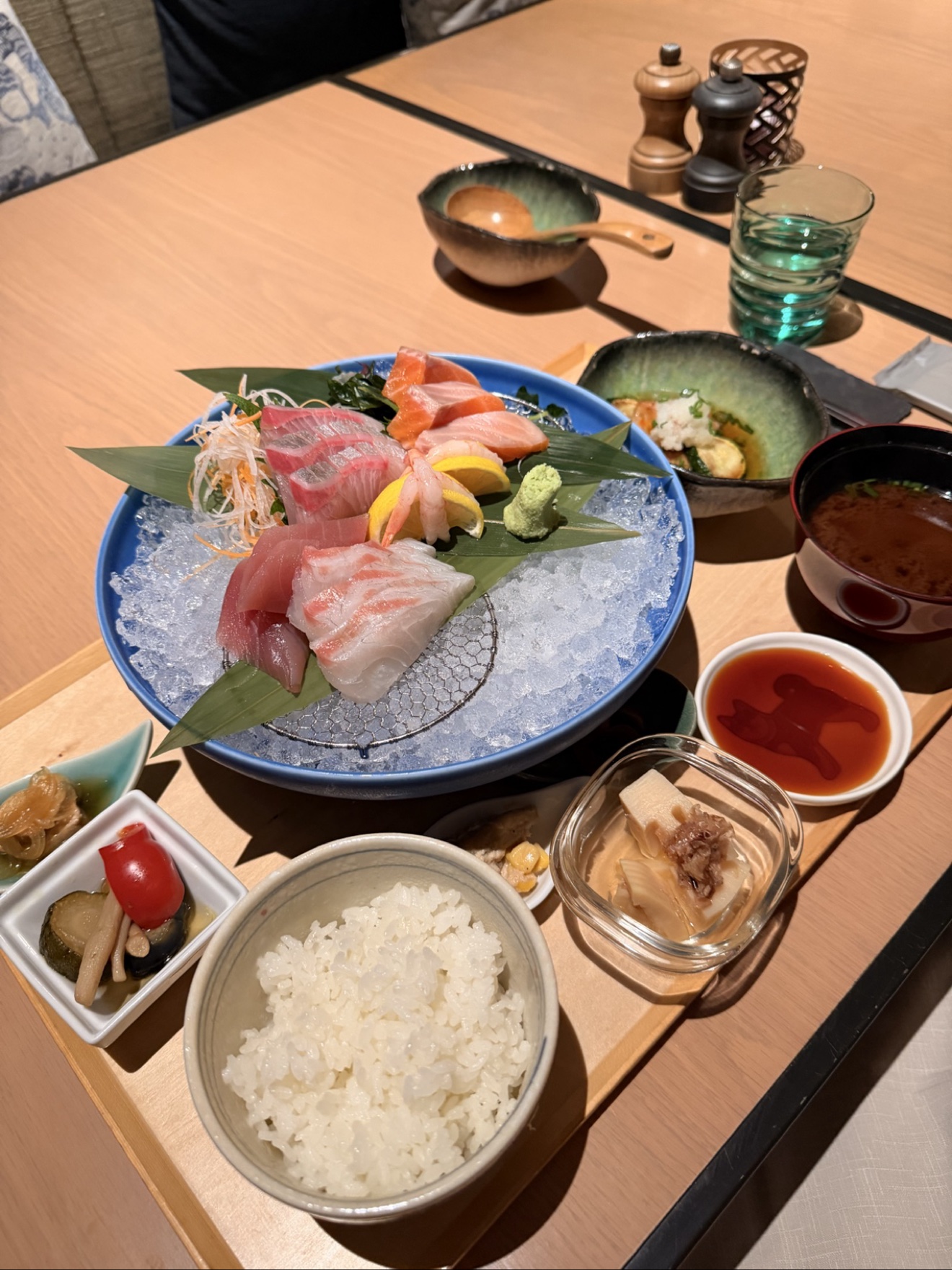 The full sashimi set: rice, red miso soup, side dishes — and that soy-sauce dish with the hidden dog.
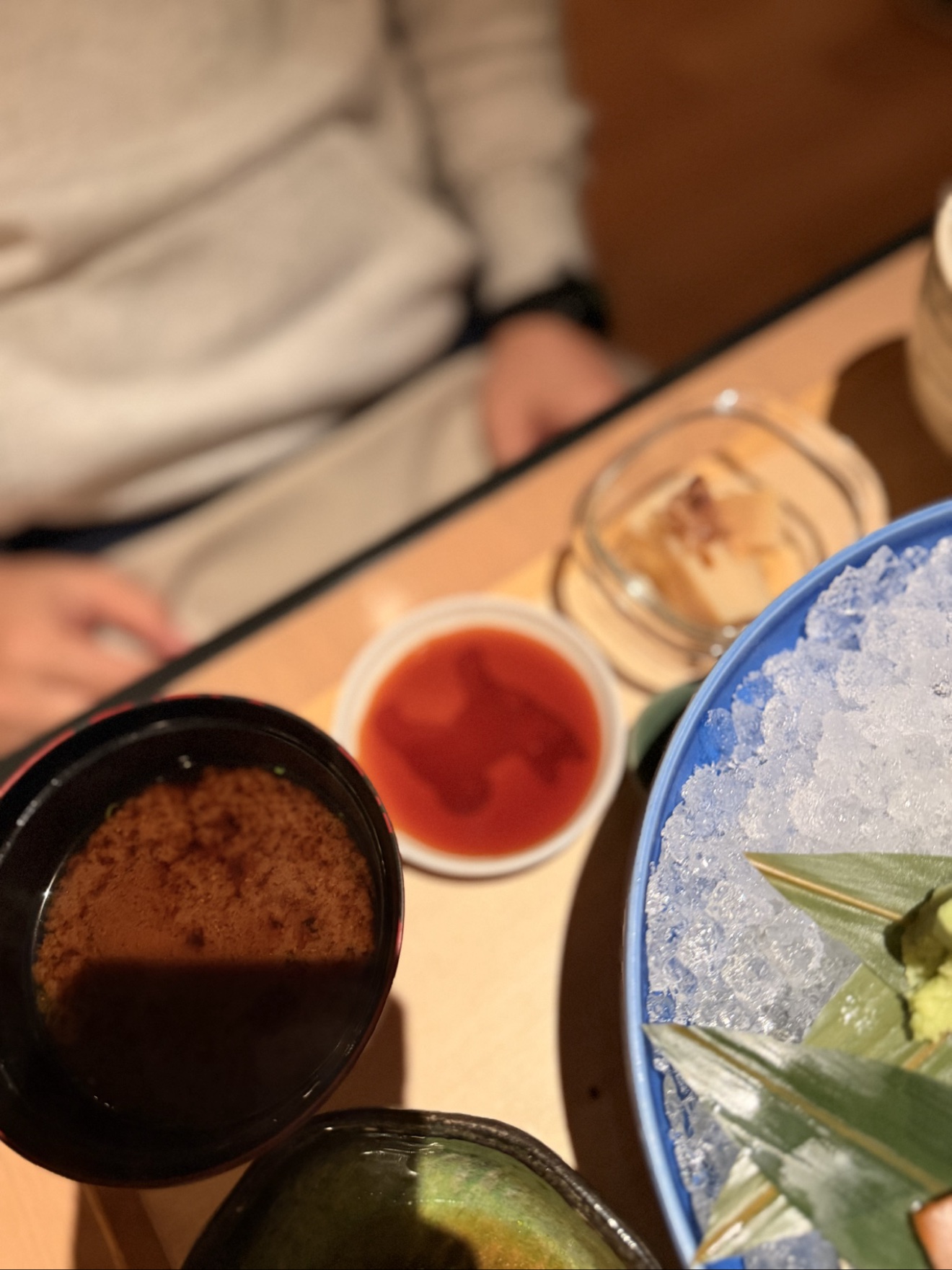 The MVP of the meal: pour the soy sauce, and the dog appears.
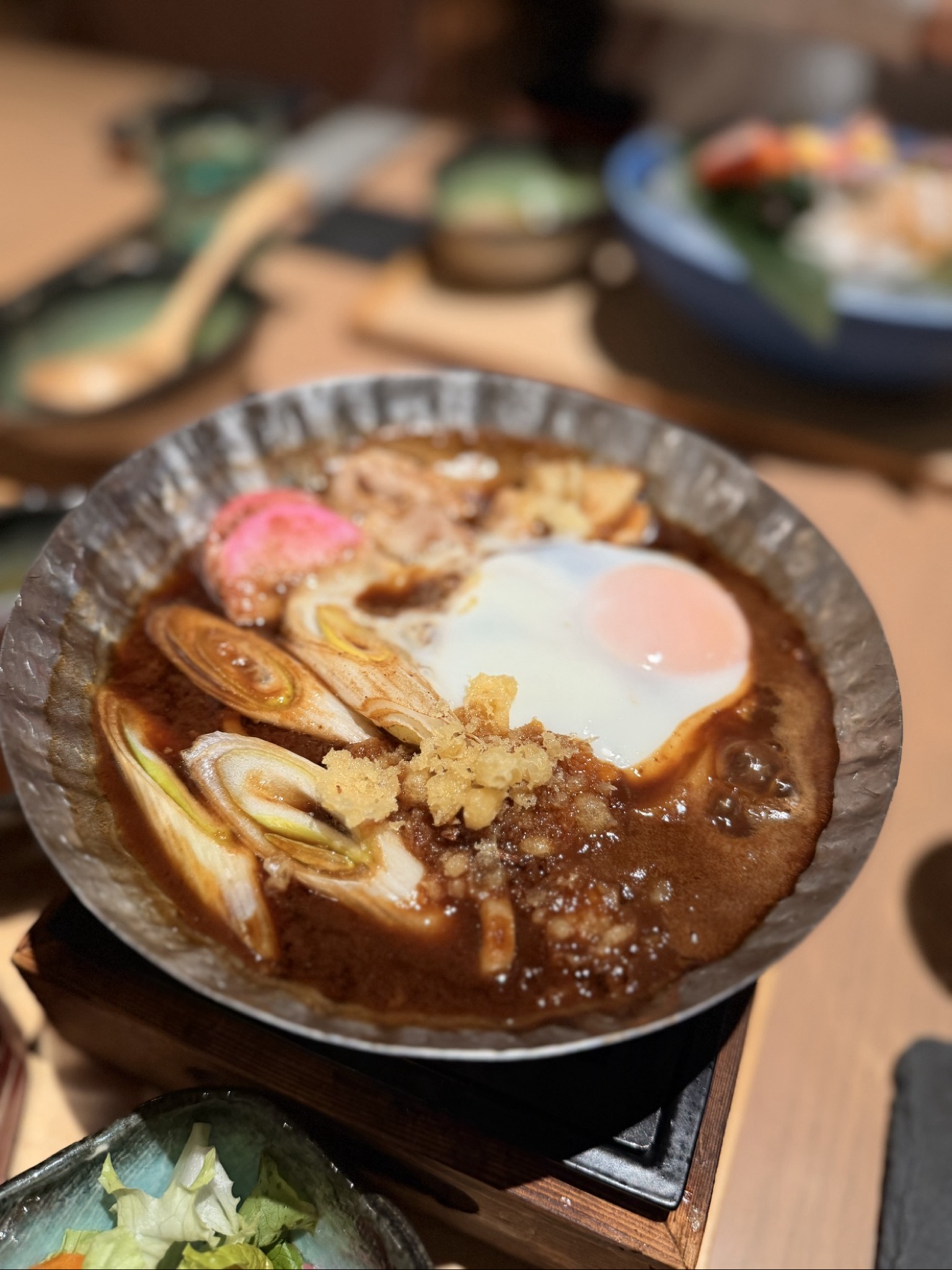 Miso nikomi udon: red miso, leek, chicken and a soft egg, still bubbling on arrival.
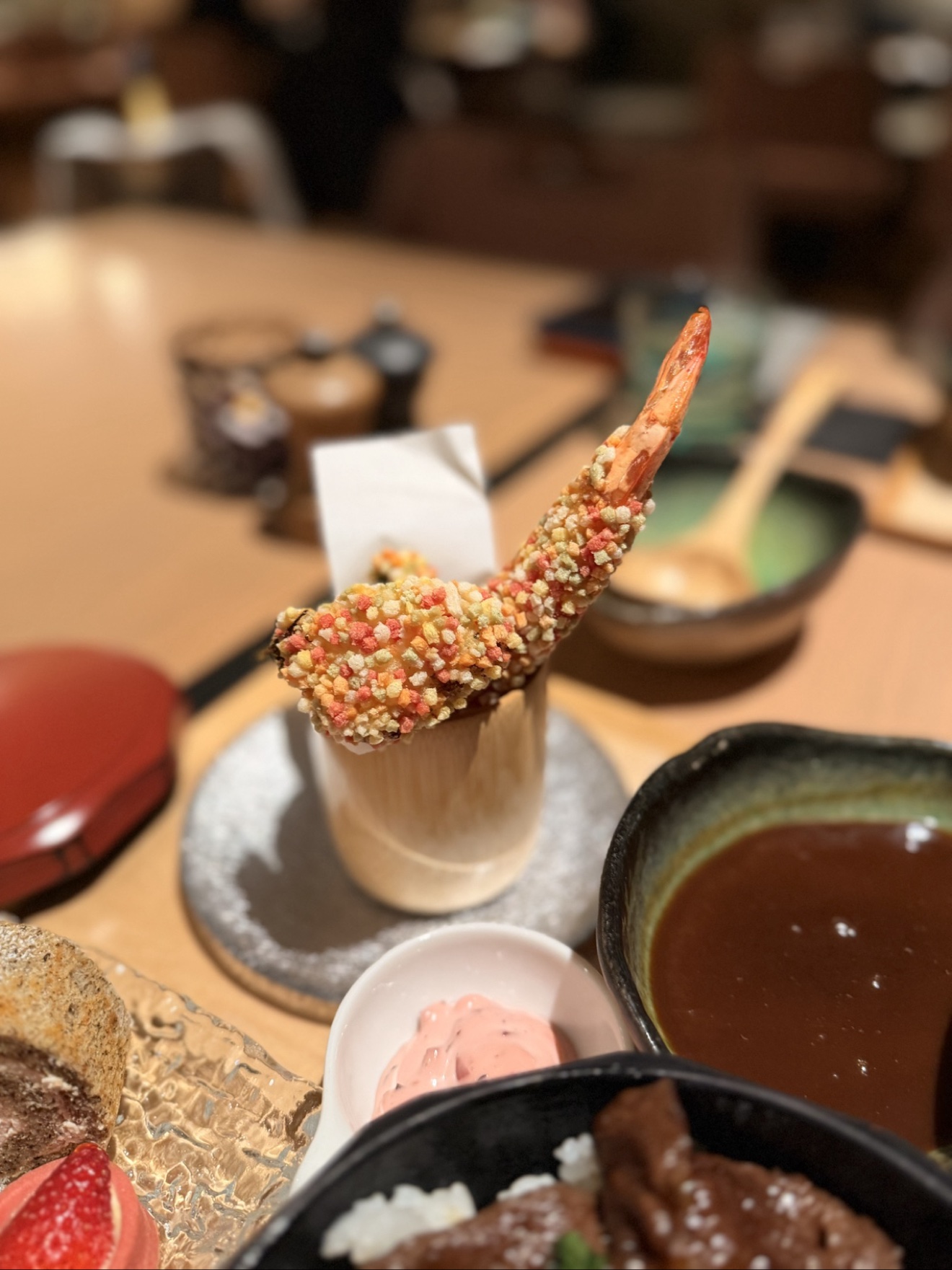 The prawn in rainbow crumbs, served upright in a bamboo cup — a small firework on the tray.
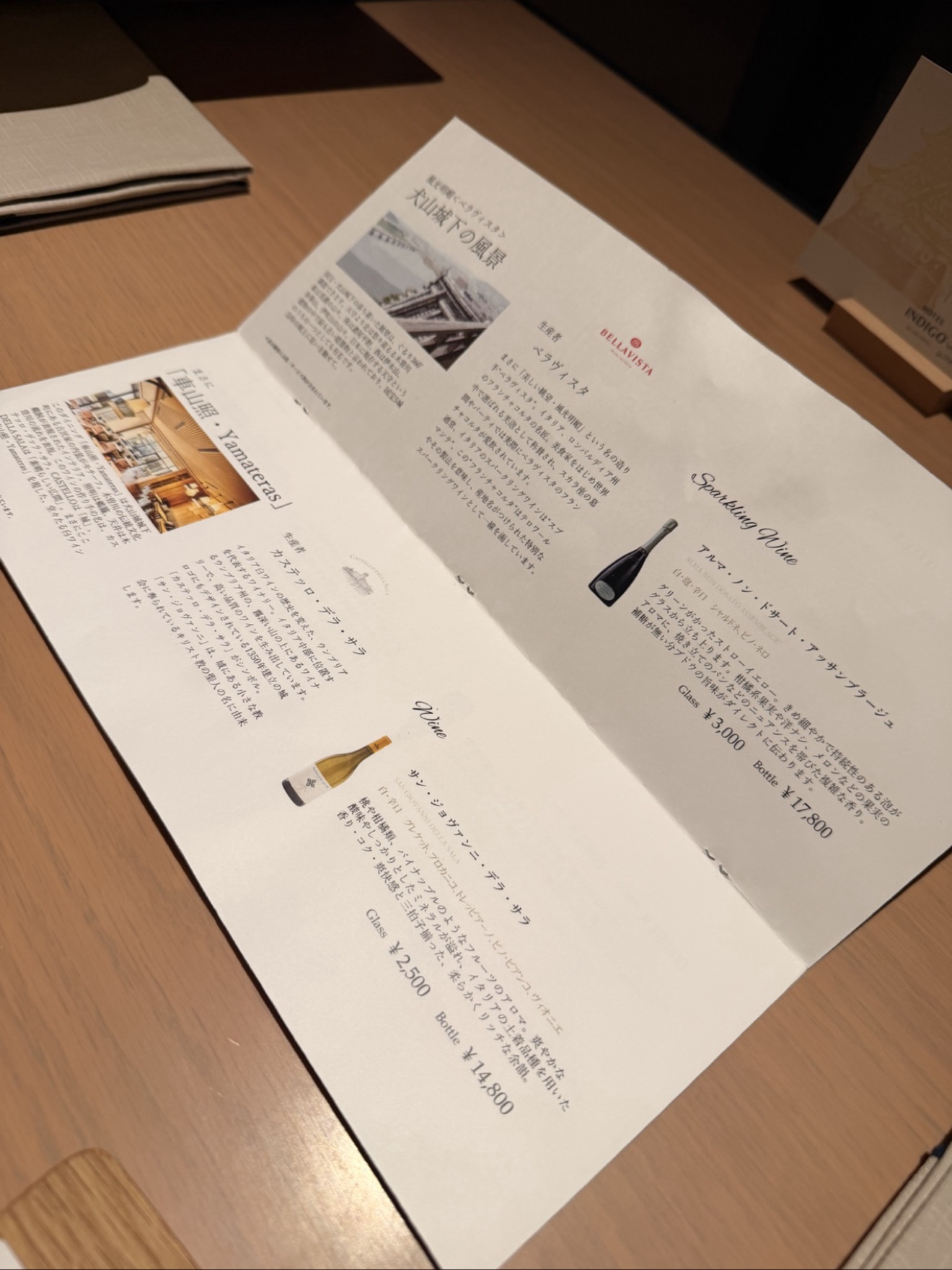 The list leans Italian: Bellavista Franciacorta by the glass at ¥3,000.
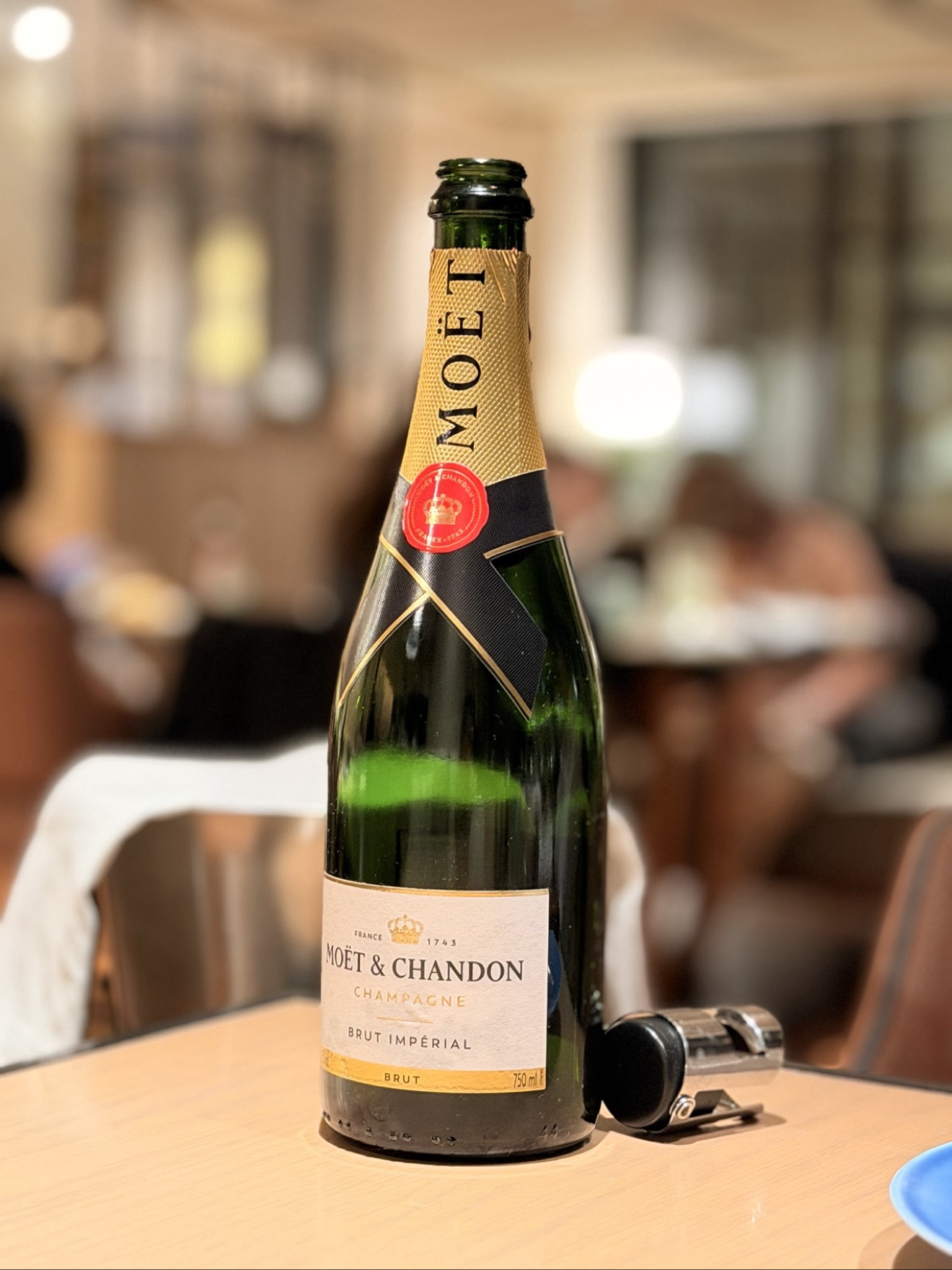 The evening's bottle: Moët & Chandon Brut Impérial — no clash with a Japanese set dinner at all.
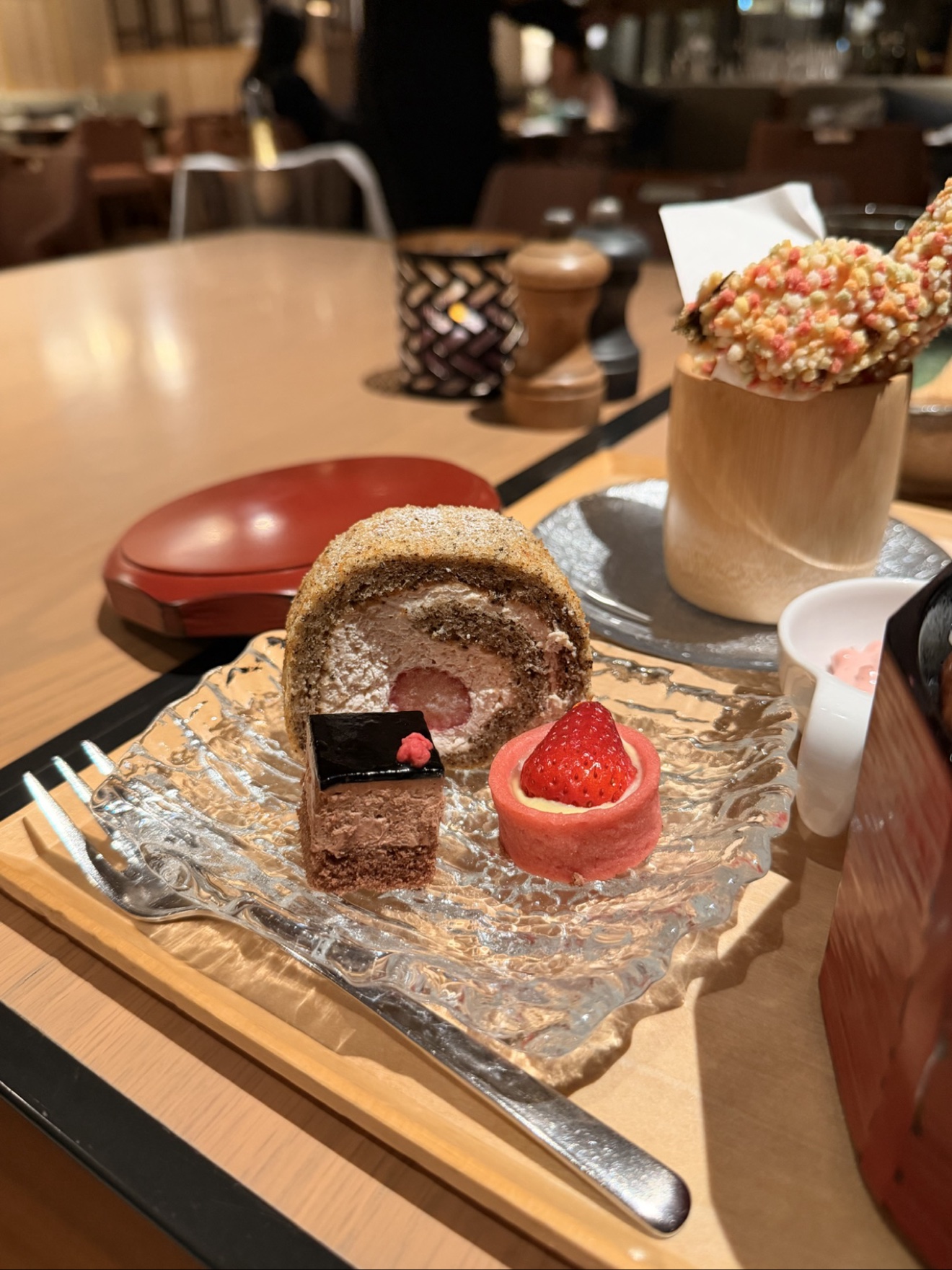 The finish: strawberry roll cake, chocolate cake and a strawberry tart, three at once.
Breakfast is served at YAMATERAS too, as a buffet running alongside a proper Japanese set. The set arrives complete — grilled fish, tamagoyaki, sliced scallop, fish cakes, rice, miso soup and small bowls — in quantities that mean business. The buffet keeps the local thread: Shinshu Alps salmon on the cold counter, a salad bar whose sign simply says "Inuyama vegetables," and Tama-konnyaku from neighbourhood maker Komatsuya with a miso dressing. Breads — croissants and cinnamon Danishes in wooden boxes — sit in front of a wall of coloured fish-scale tiles, and the chiller lines up cold cuts, cheese, yoghurt and fruit cups; even the coffee comes with latte art. This breakfast would not embarrass a five-star hotel in Tokyo.
 The Japanese breakfast set: grilled fish, tamagoyaki, scallop and fish cakes — a full start to the day.
 Croissants, a cinnamon Danish and raisin bread in their wooden box — the buffet's most popular corner.
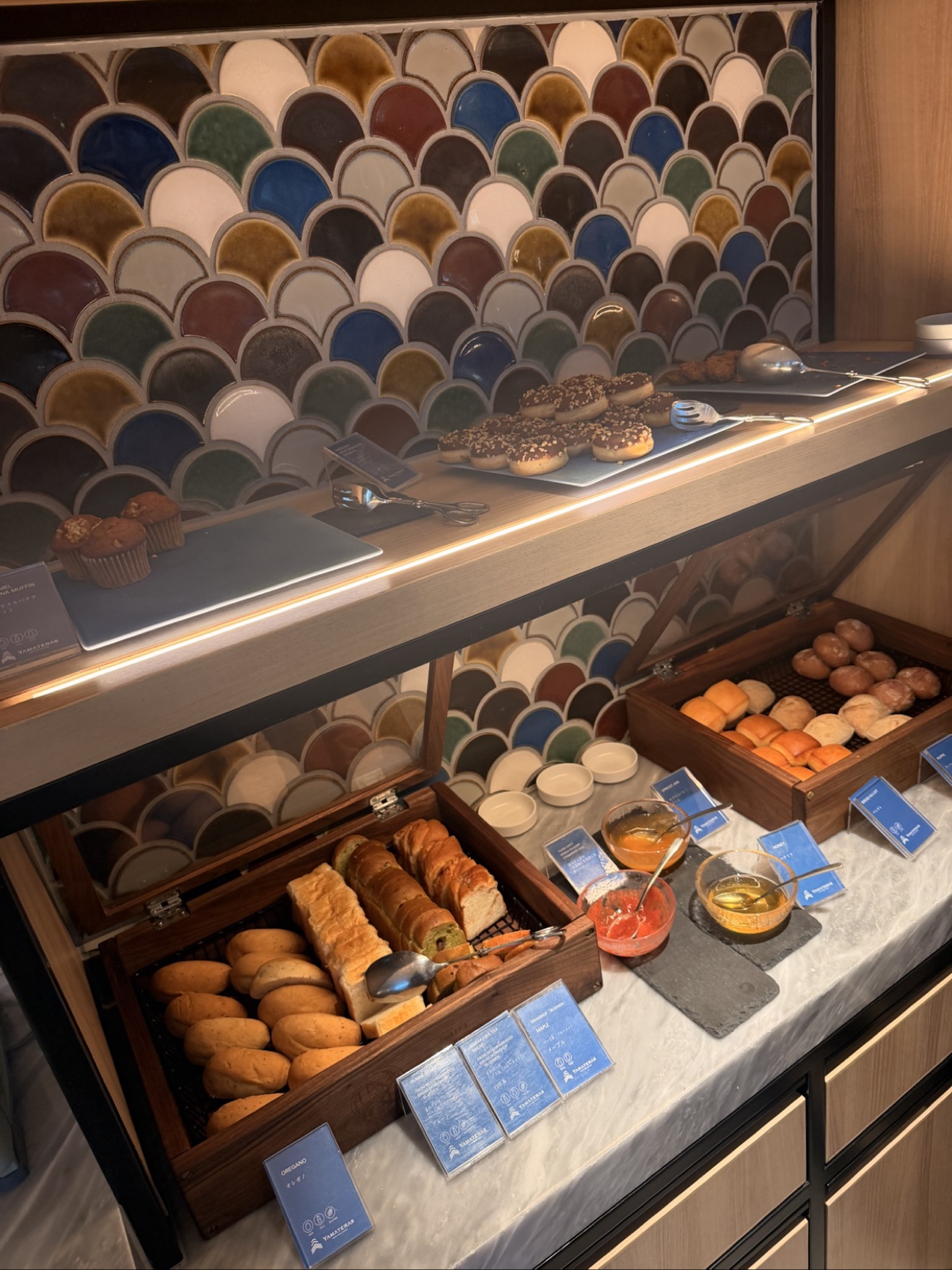 Muffins, doughnuts, honey and jam in front of the fish-scale tile wall.
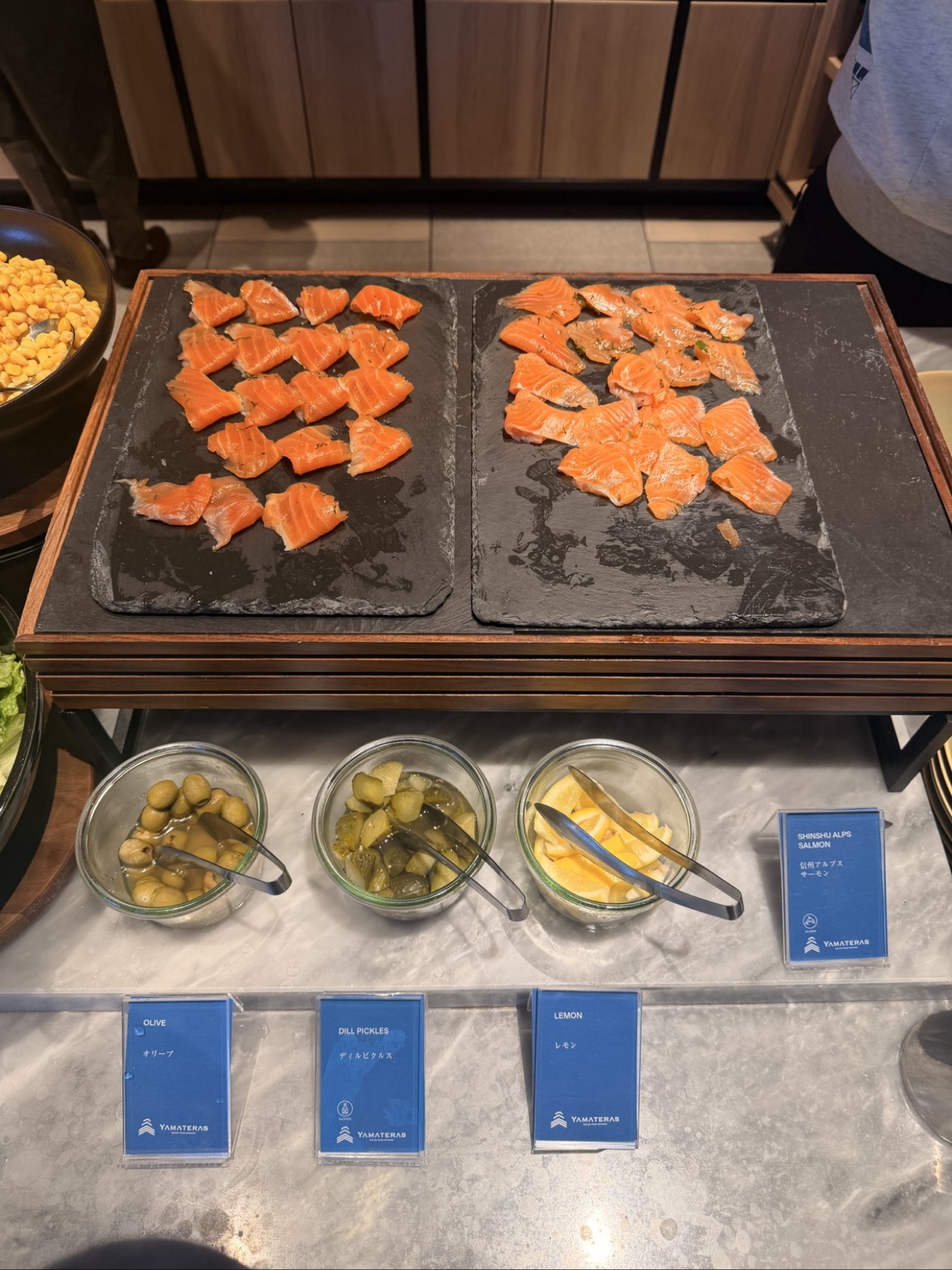 The cold counter's star: Shinshu Alps salmon with olives, cornichons and lemon.
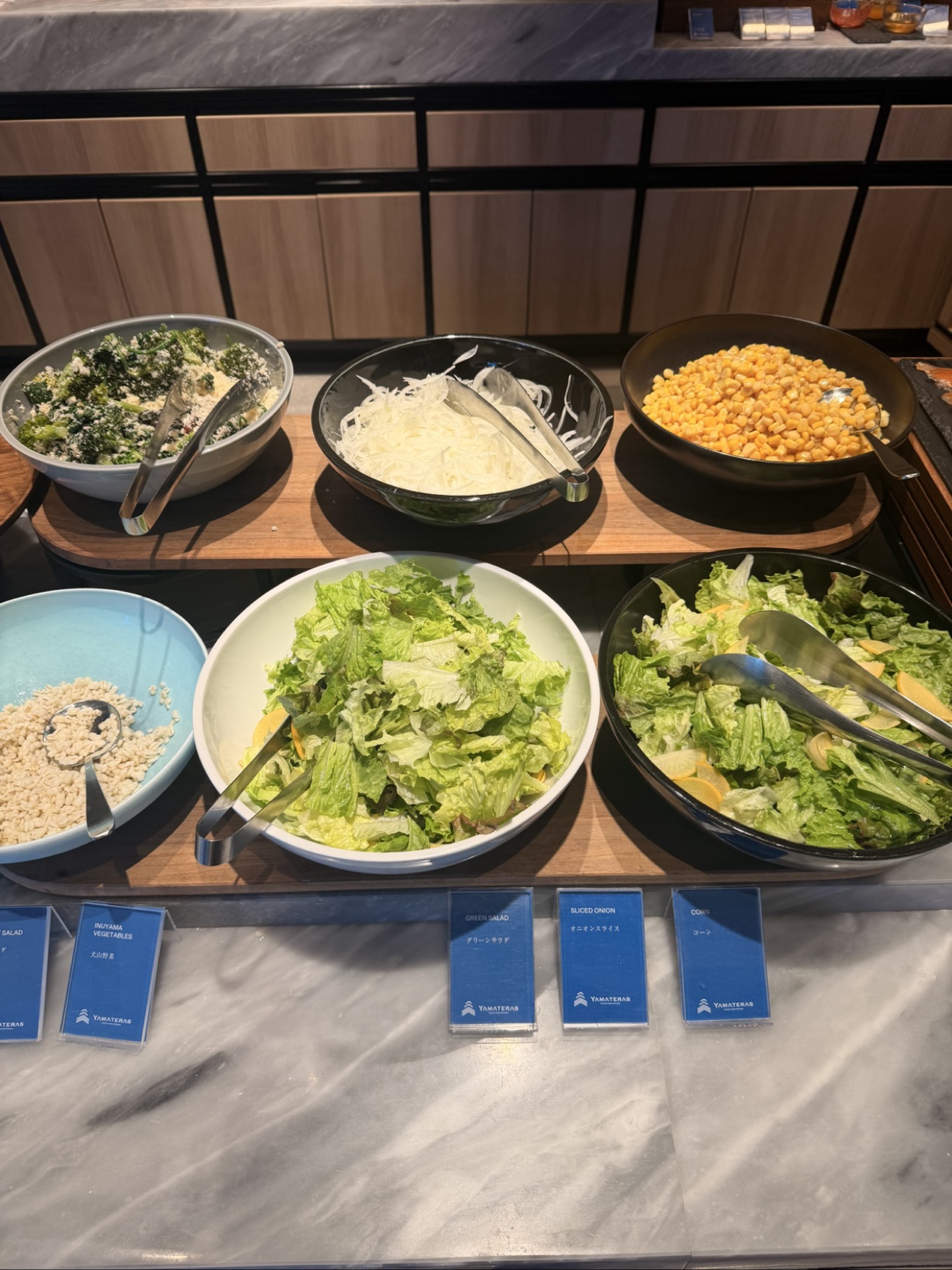 The salad bar, its vegetables labelled as coming from Inuyama, with half a dozen dressings.
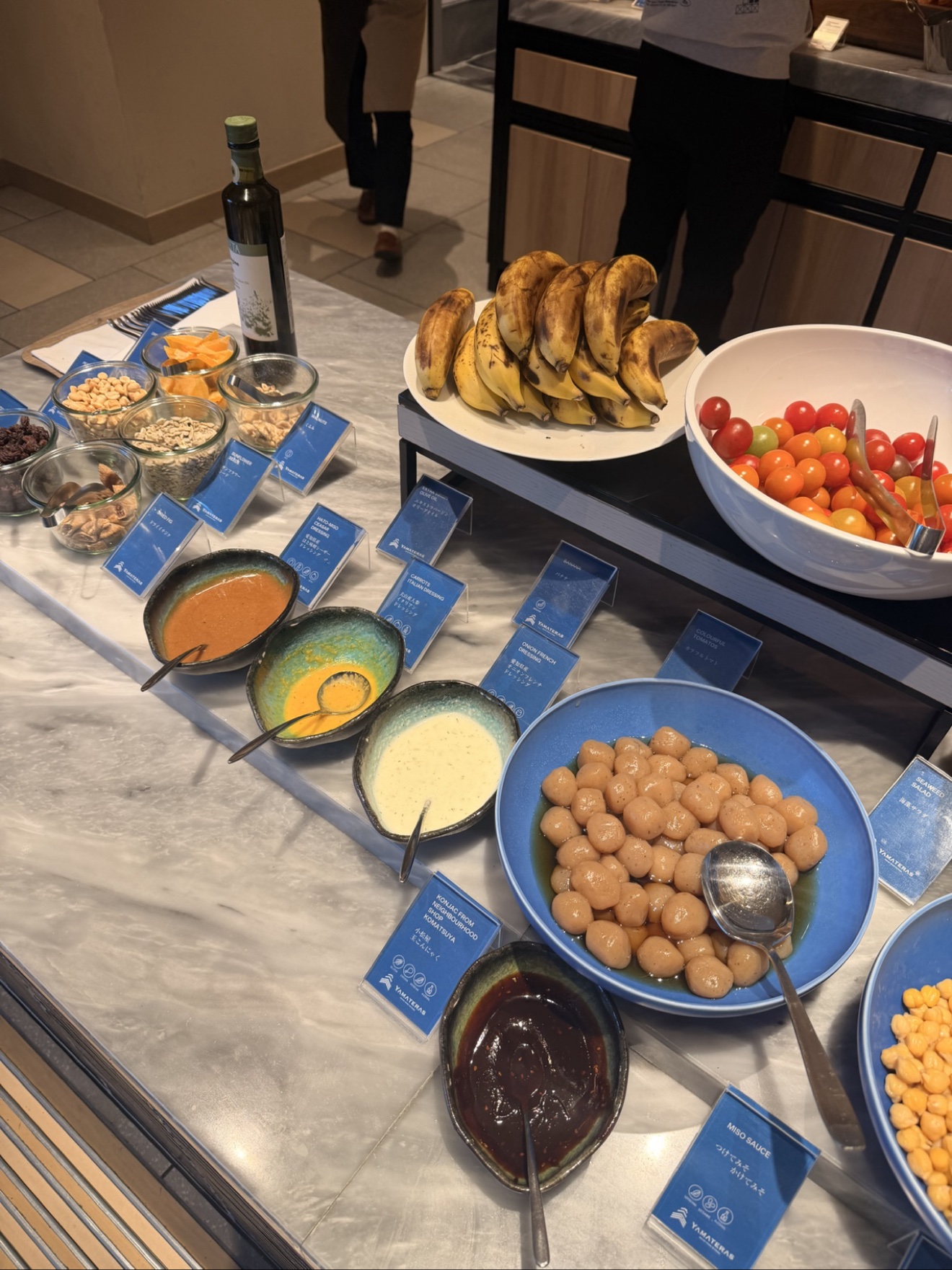 Komatsuya's Tama-konnyaku with miso dressing — even breakfast tells the neighbourhood story.
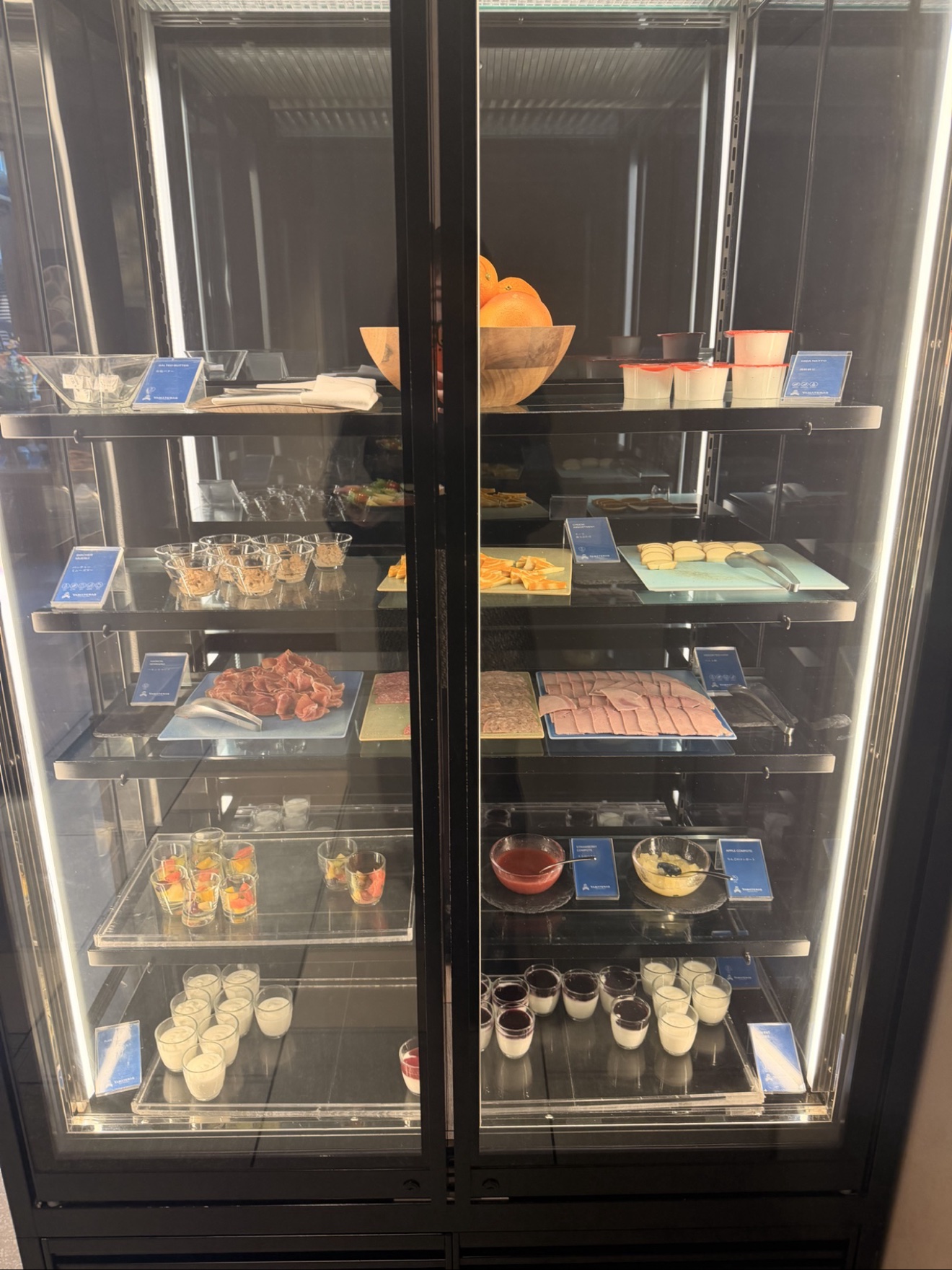 The chiller: cold cuts, cheese, yoghurt-and-fruit cups and little jars of jam.
 To finish: a warm croissant and a yoghurt-and-fruit cup.
The Bathroom: Deep Soaks, Geta and Yukata
The bathroom is generously split three ways: a deep soaking tub, a separate rain-shower room and a separate WC. The open-shelf vanity carries a round mirror topped with a wooden gear motif — a nod to the floats of the Inuyama Festival — and Biology amenities. The ceiling-mounted square rain shower delivers properly. But the detail that made me smile is in the closet area: red and blue geta sandals lined up in a row, yukata folded in a lacquered drawer with two colours of sash, pyjamas sharing a drawer with the hairdryer case. A few steps across the room in wooden geta, and the holiday feeling is complete.
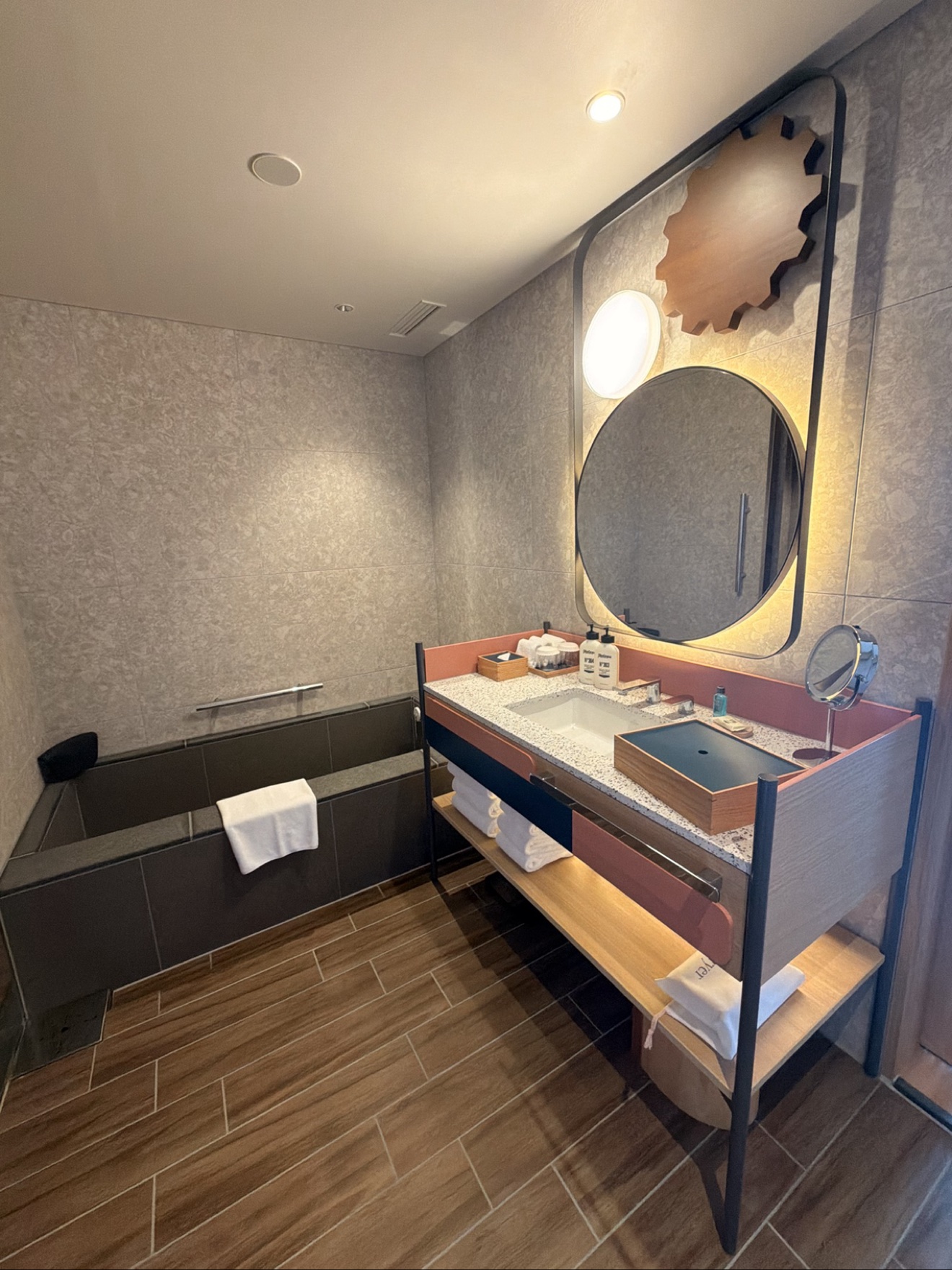 The bathroom: deep soaking tub on the left, open vanity on the right, everything in its own zone.
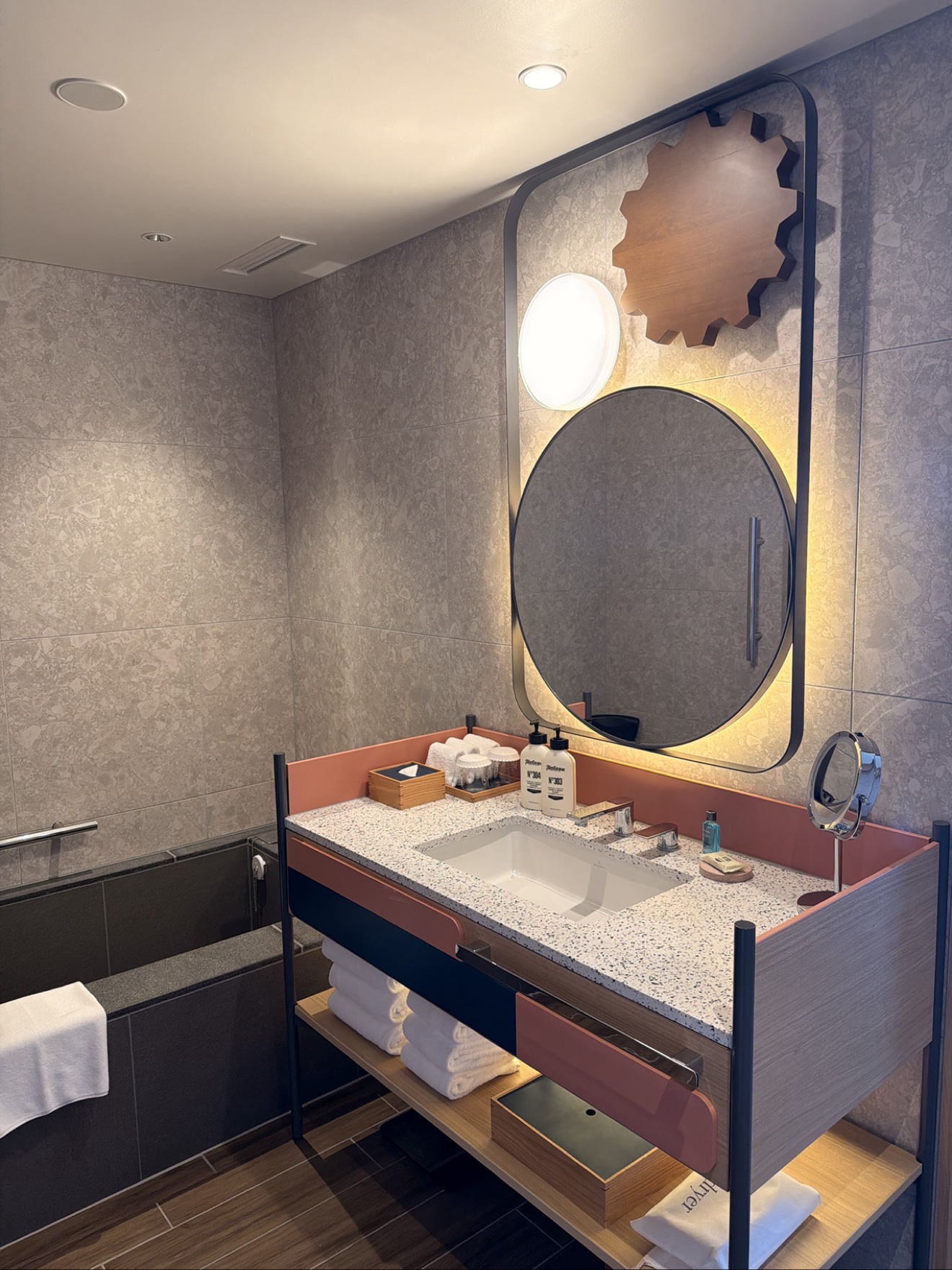 The gear-shaped wooden motif above the mirror references the Inuyama Festival floats; amenities are by Biology.
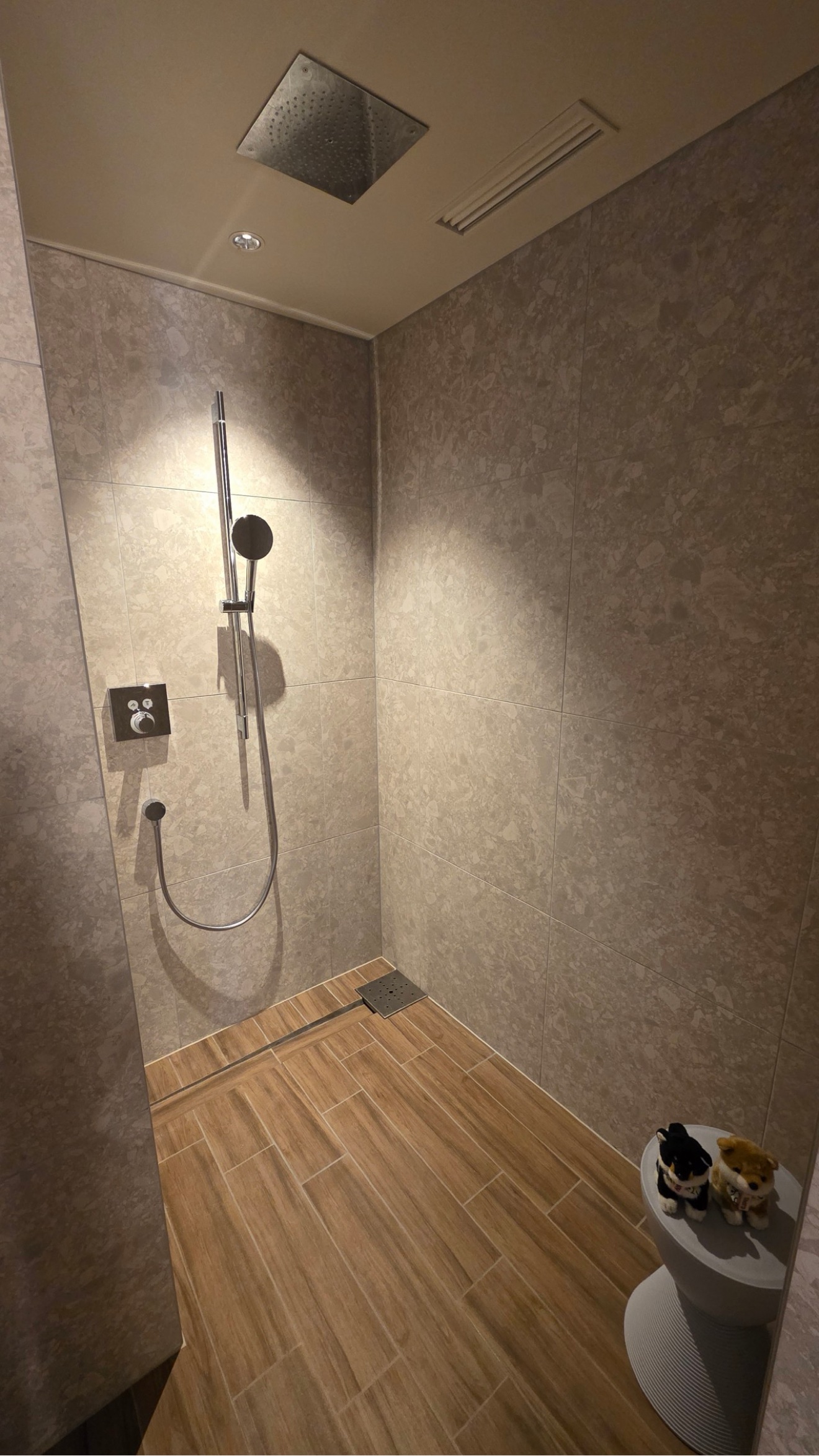 The separate shower room, with a ceiling rain shower and a handheld wand.
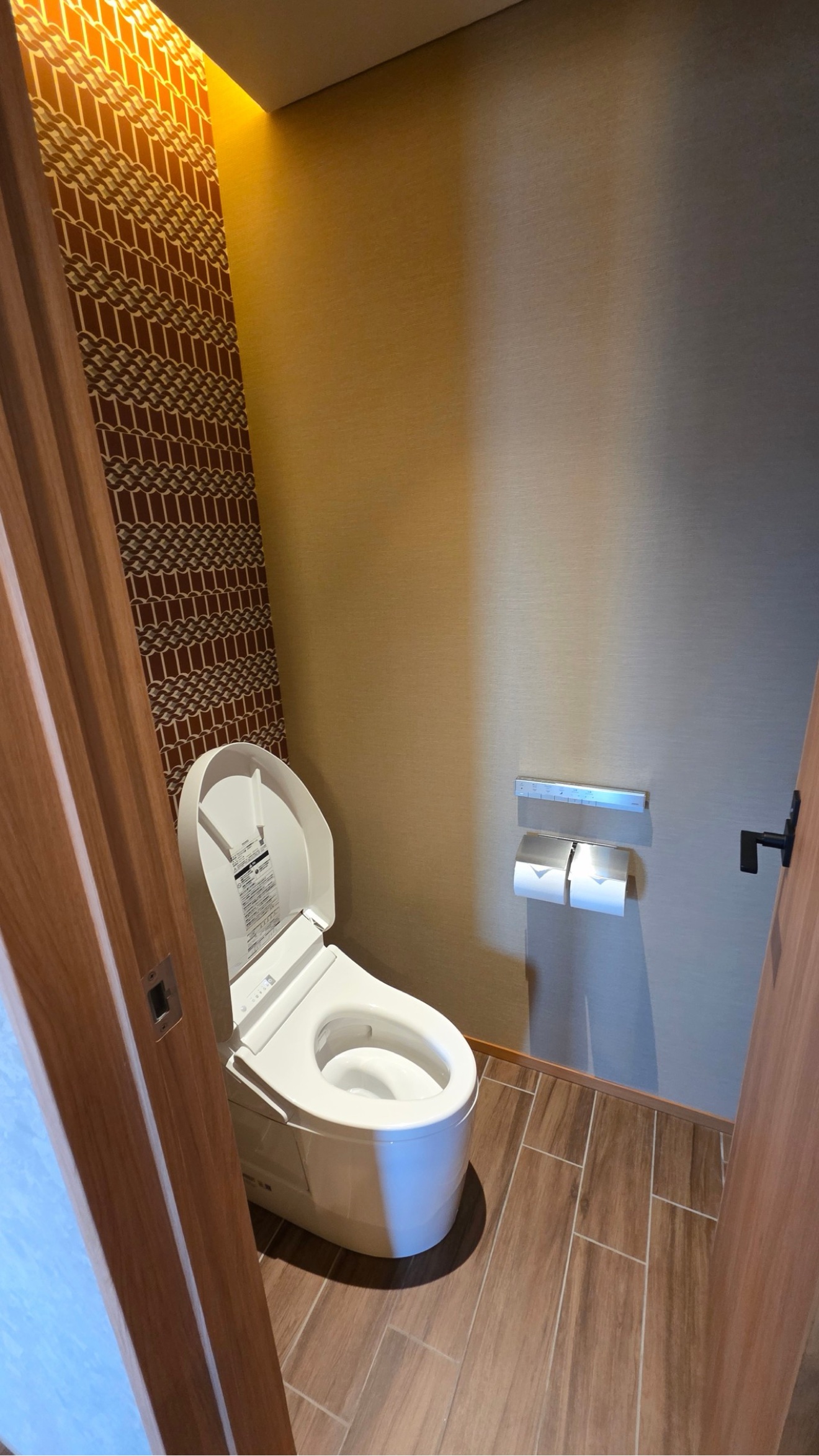 The separate WC, its geometric wallpaper carrying the room's design language through.
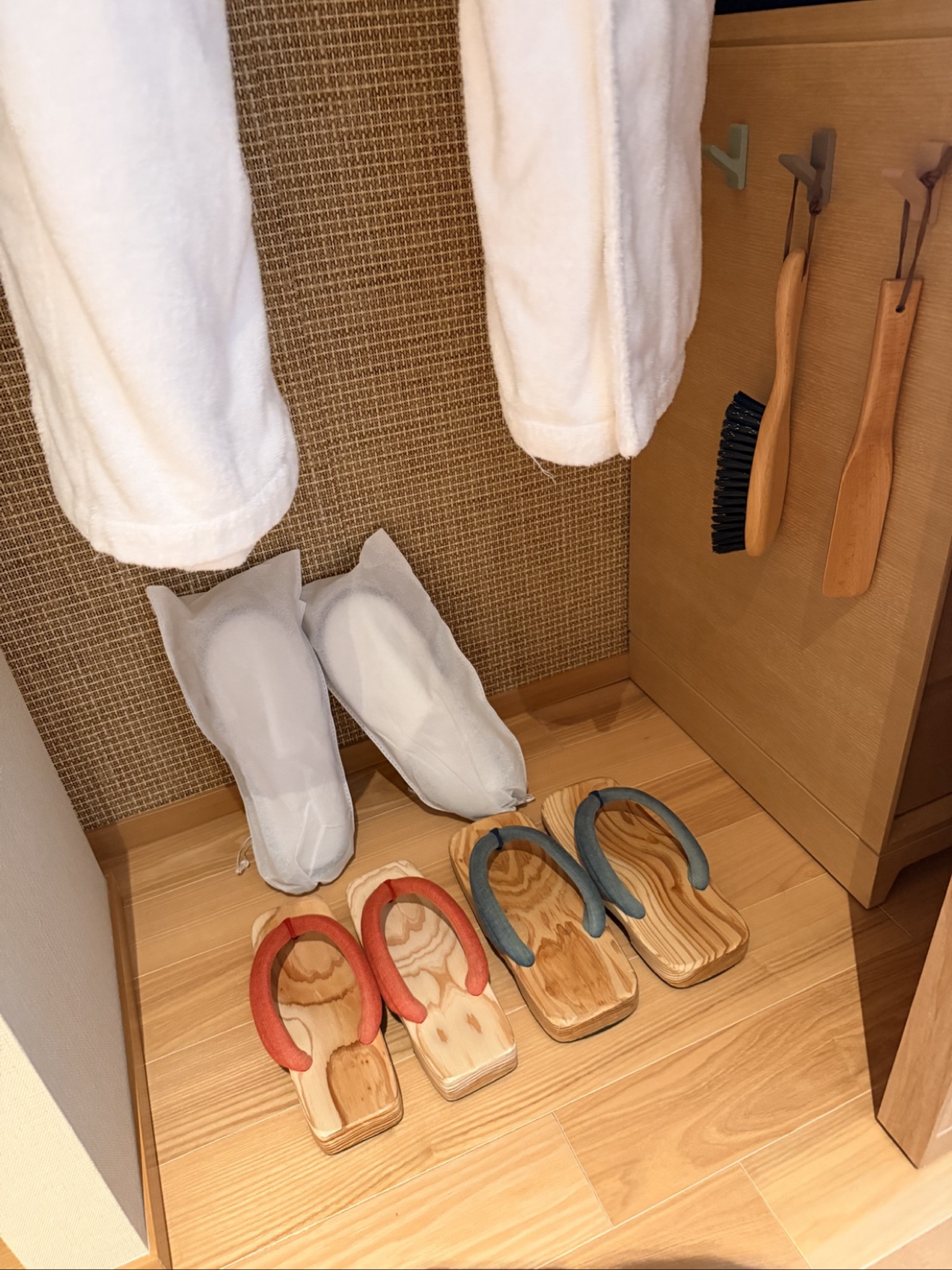 Red and blue geta in a row, with clothes brush and shoehorn hanging beside them.
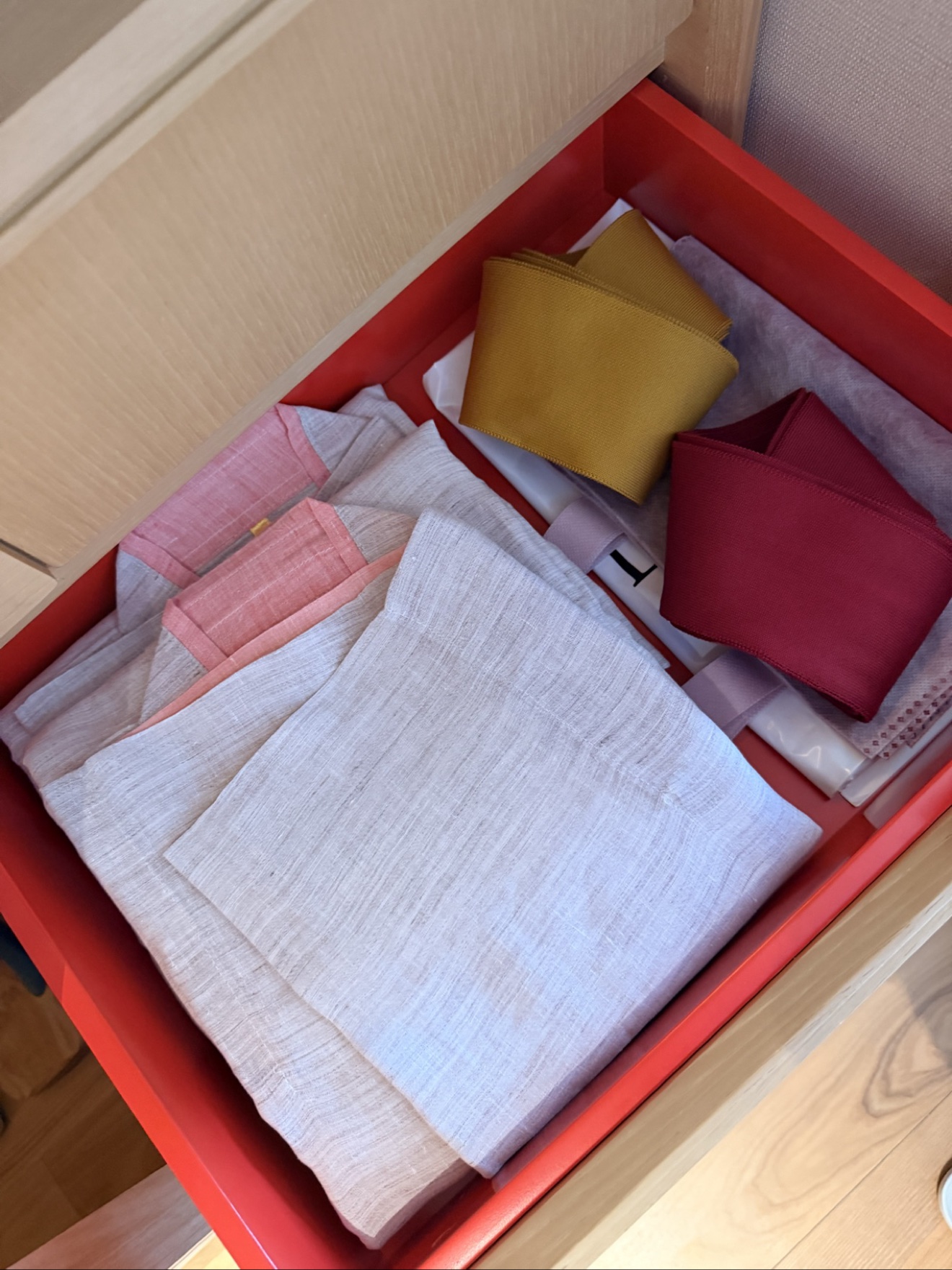 Yukata in the red-lacquered drawer, with gold and burgundy sashes to choose from.
Out the Door: Corridors, Gardens and a Shrine
The hotel lies low in its gardens, and the covered walkways linking the buildings pass raked-gravel dry gardens, bamboo and still pools — the walk itself is part of the stay. In the evening, Haritsuna Shrine stands quietly next door, its torii gate in the dusk; the shrine's cherry trees were not yet in bloom, but wandering over before heading back to the room became a nightly habit. The castle and the old castle-town streets are also within walking distance. At this property, the location is the biggest facility of all.
 The covered walkway between buildings, flanked by dry gardens and bamboo.
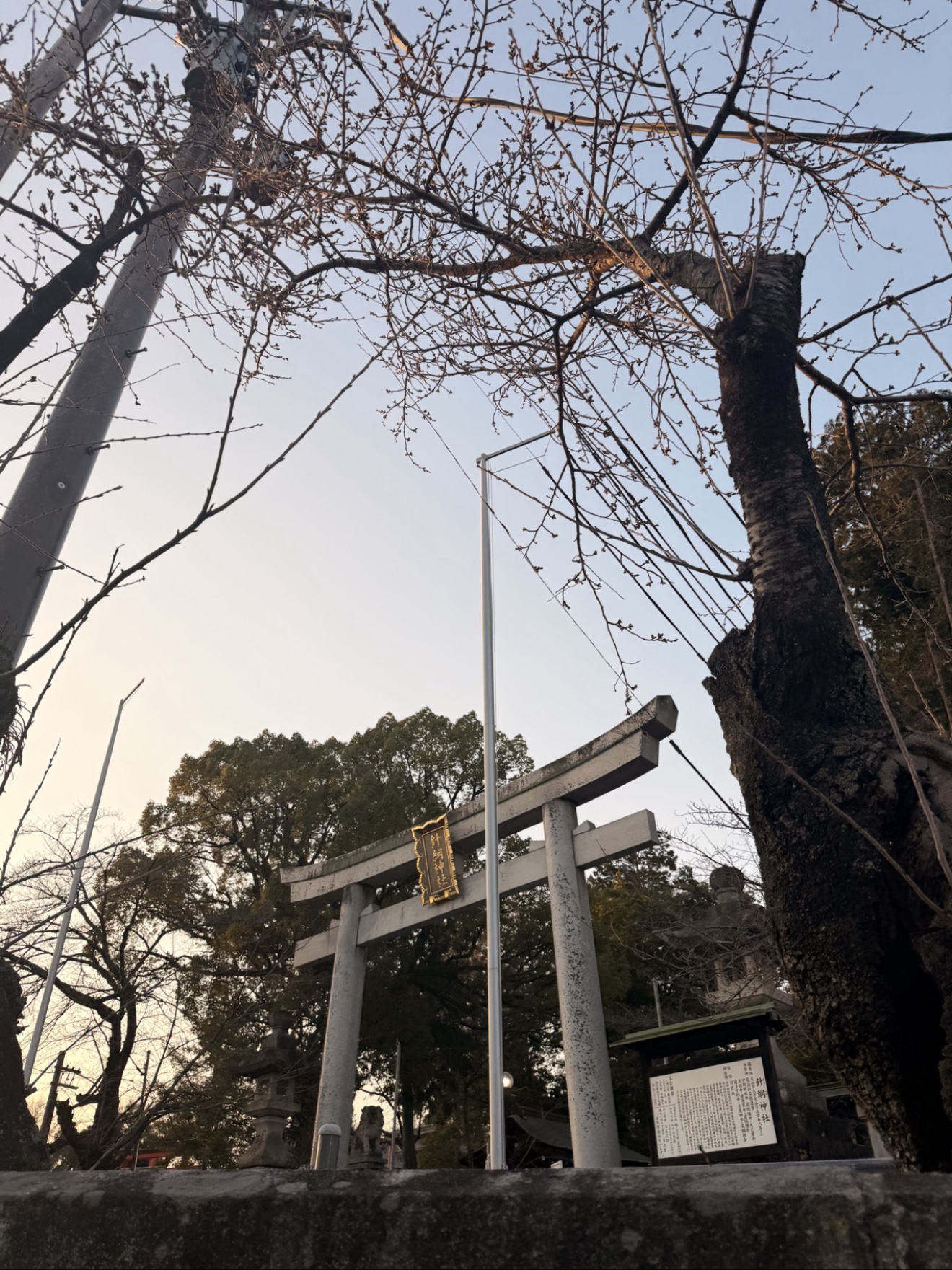 Haritsuna Shrine at dusk, right beside the hotel — it must be something else entirely in cherry blossom season.
The Verdict: 80 — Beaten by the Season, Saved by the Attitude
I score this stay 80: Room 84, Dining 82, Service 82, Facilities 74. Most of the deductions were out of the hotel's control — mid-March Inuyama is still in late winter, the blossom hadn't come, the riverbank was bare, and the view was missing its final ingredient; over three nights, the open plan's lack of separation between sleeping and living wore slightly thin; and the property has no large-scale facilities — the gardens and the location are its entire estate. But everything the hotel does control, it does completely: the antique-map mural, the Fujisawa candy, the Shinshu juices, the dog in the soy-sauce dish, the welcome card handwritten in relay by the staff — every detail tells the same story: you are in Inuyama. That is what Indigo does best, and what is hardest to copy. Come back in cherry blossom or autumn colour season, and this suite scores higher still.
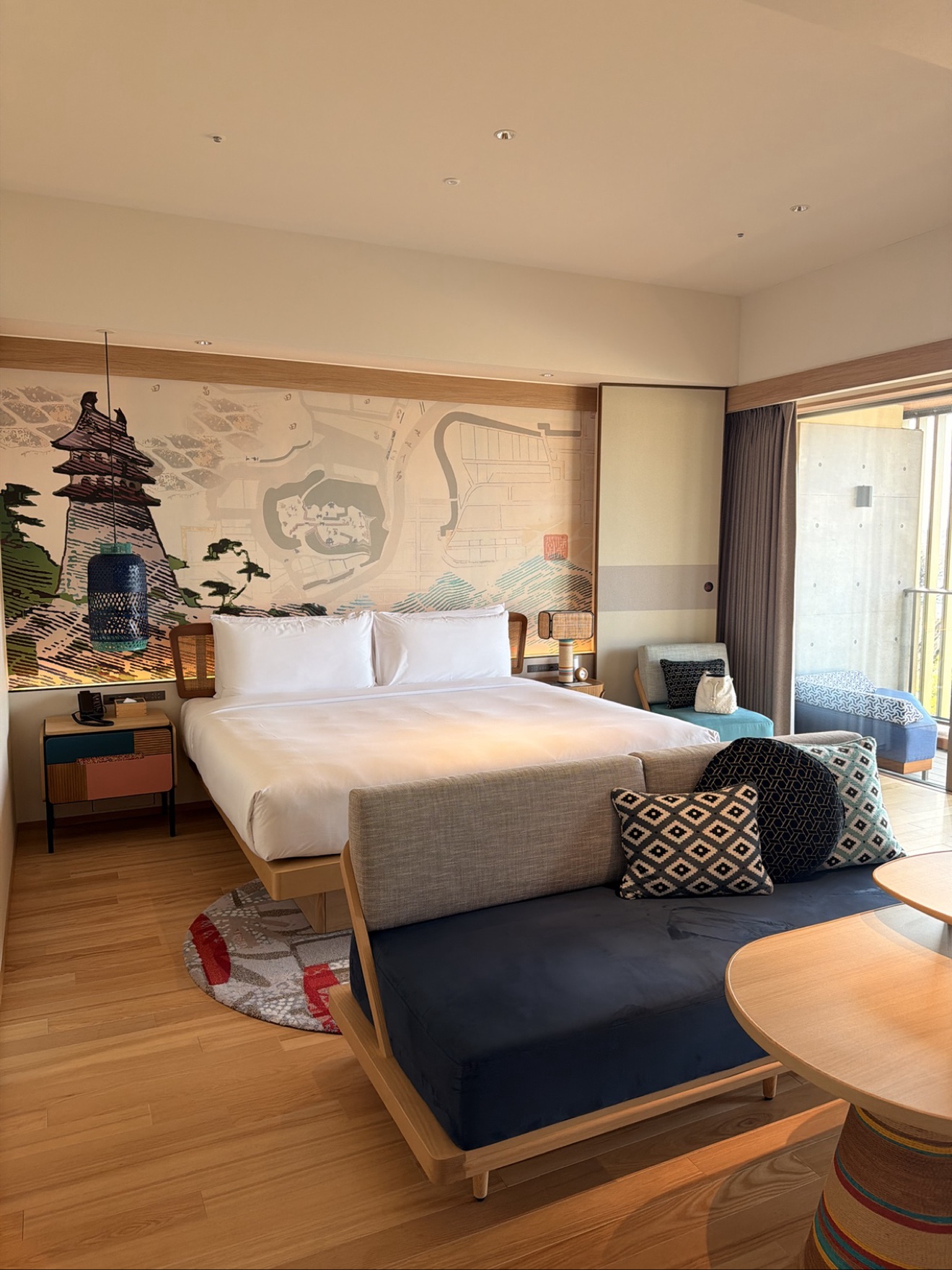 Our room for three nights: bed, sofa and balcony, between an old map and the Kiso River.