Toward the Colosseum
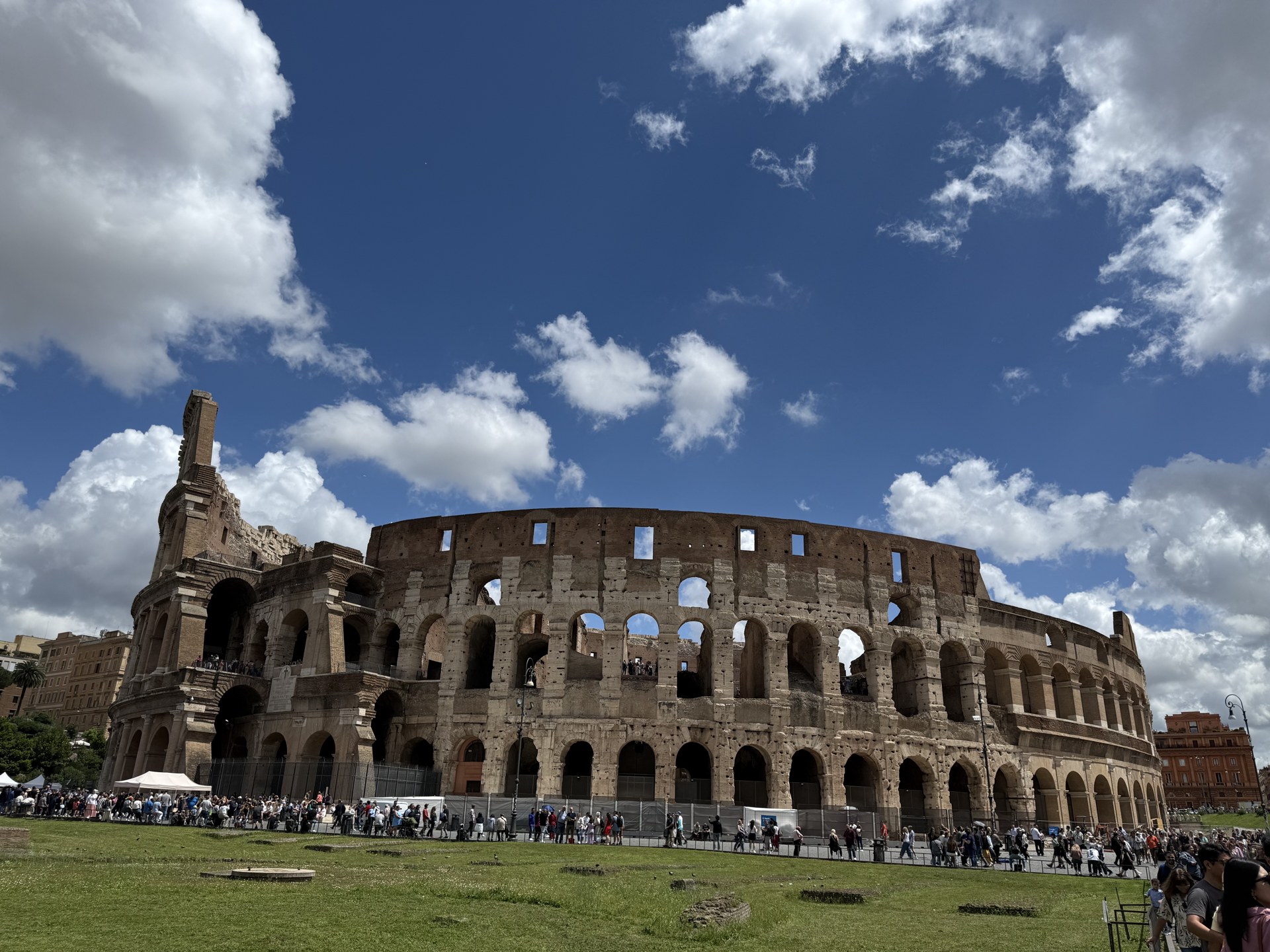
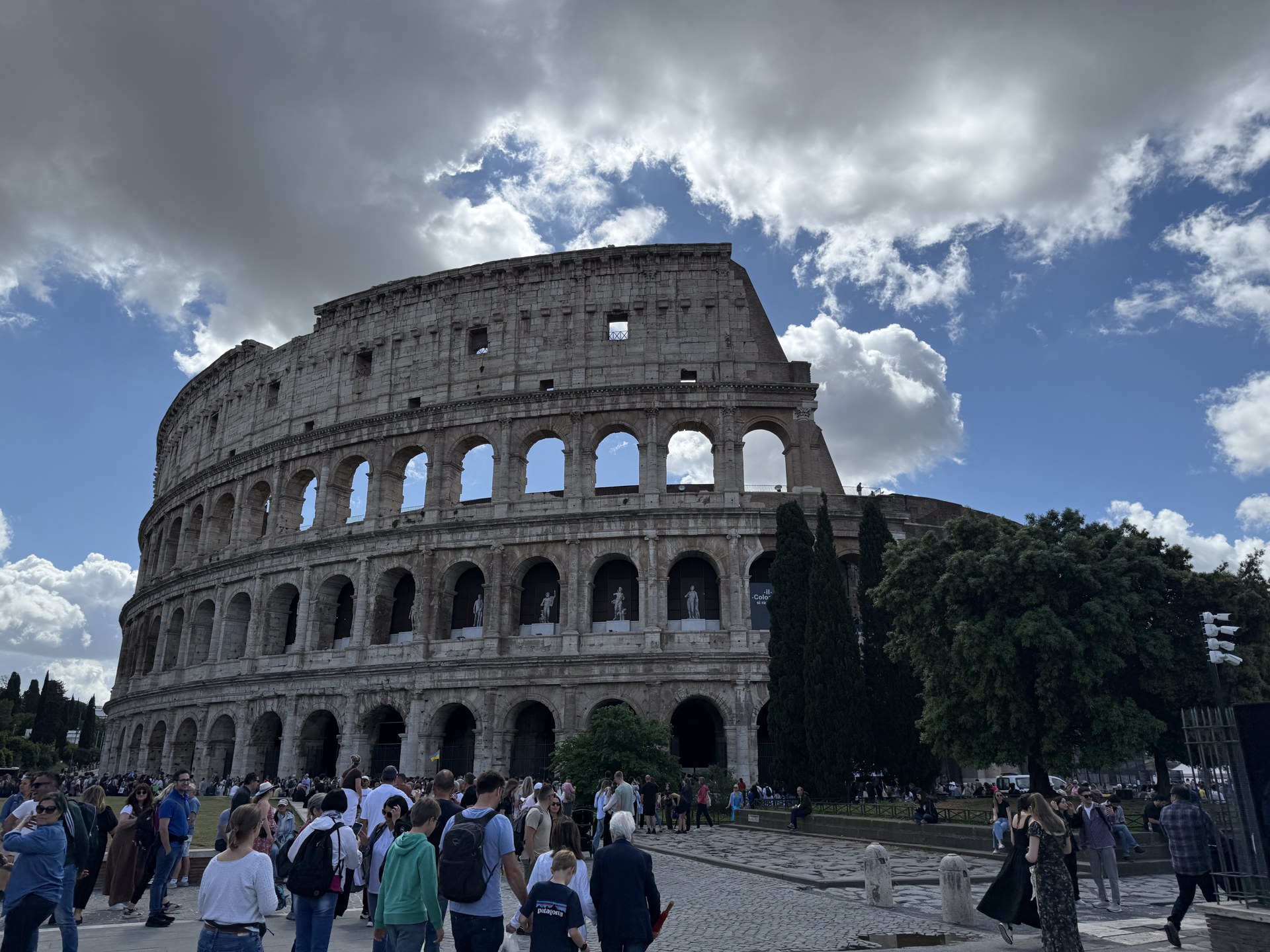
On our first full day based in Rome after the cruise, we gave the whole day to the ancient city. At 10:51 the crowds were already streaming across the piazza toward the Colosseum — the oval amphitheatre completed in AD 80, once the beating heart of the empire, and the starting point of everything that follows.

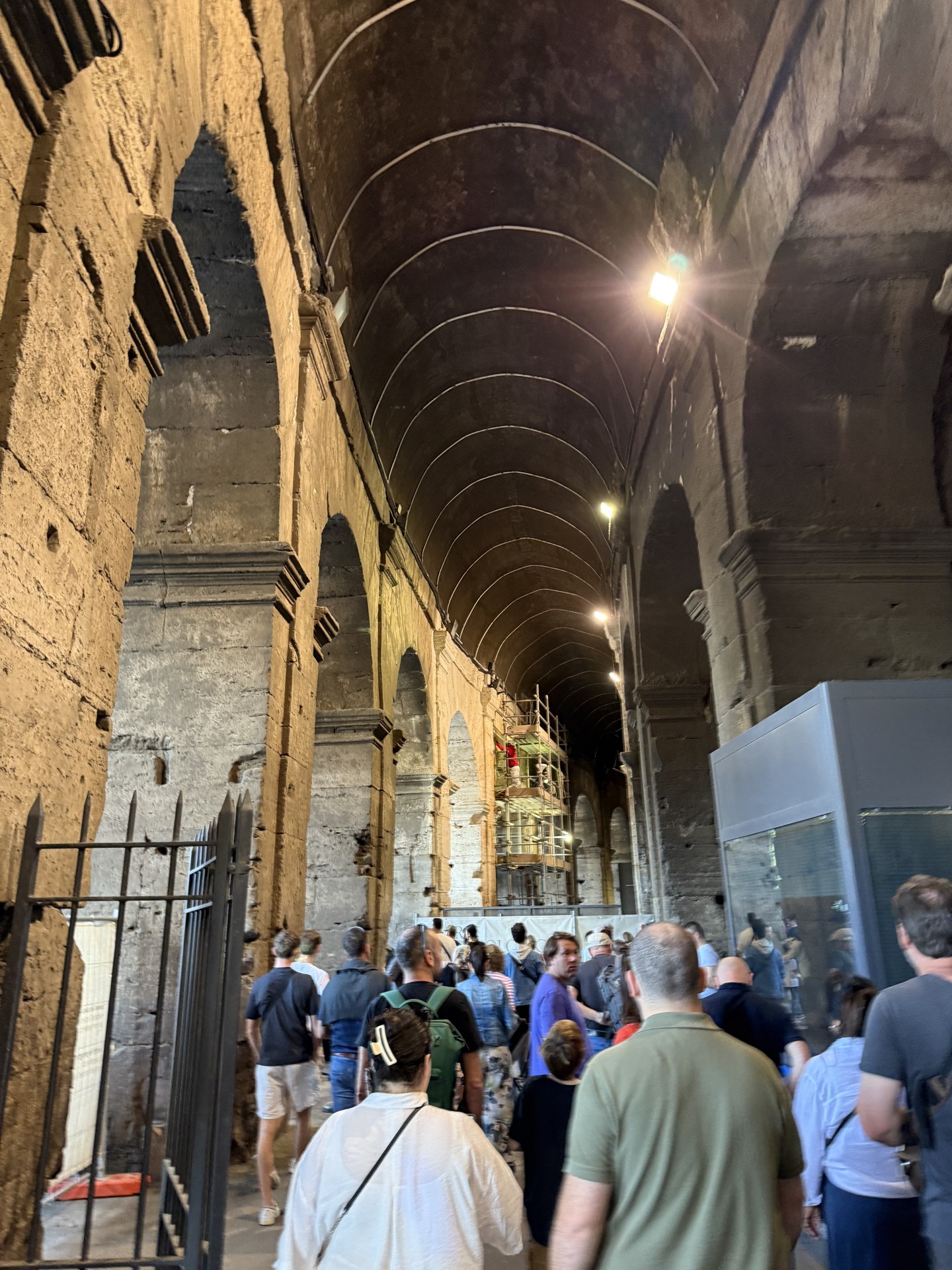
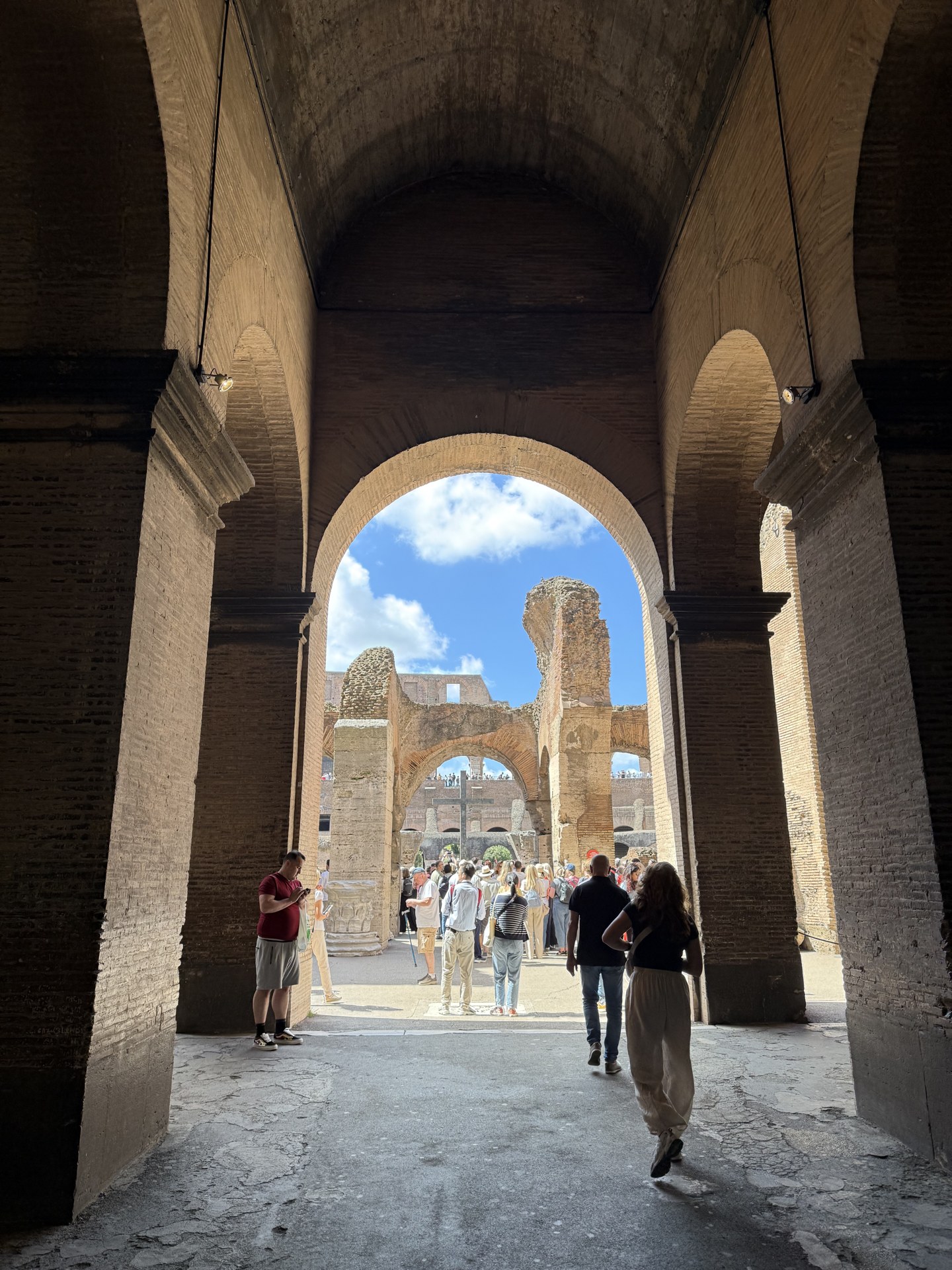
At eleven we stepped into the ground-floor arcade. The choreography is modern — ticket checks, display cases, tour groups — but the stone above and around us is two thousand years old. Passing through archway after archway, sunlight cutting in by turns, the inner wall of the amphitheatre opened up ahead.
First Sight of the Arena
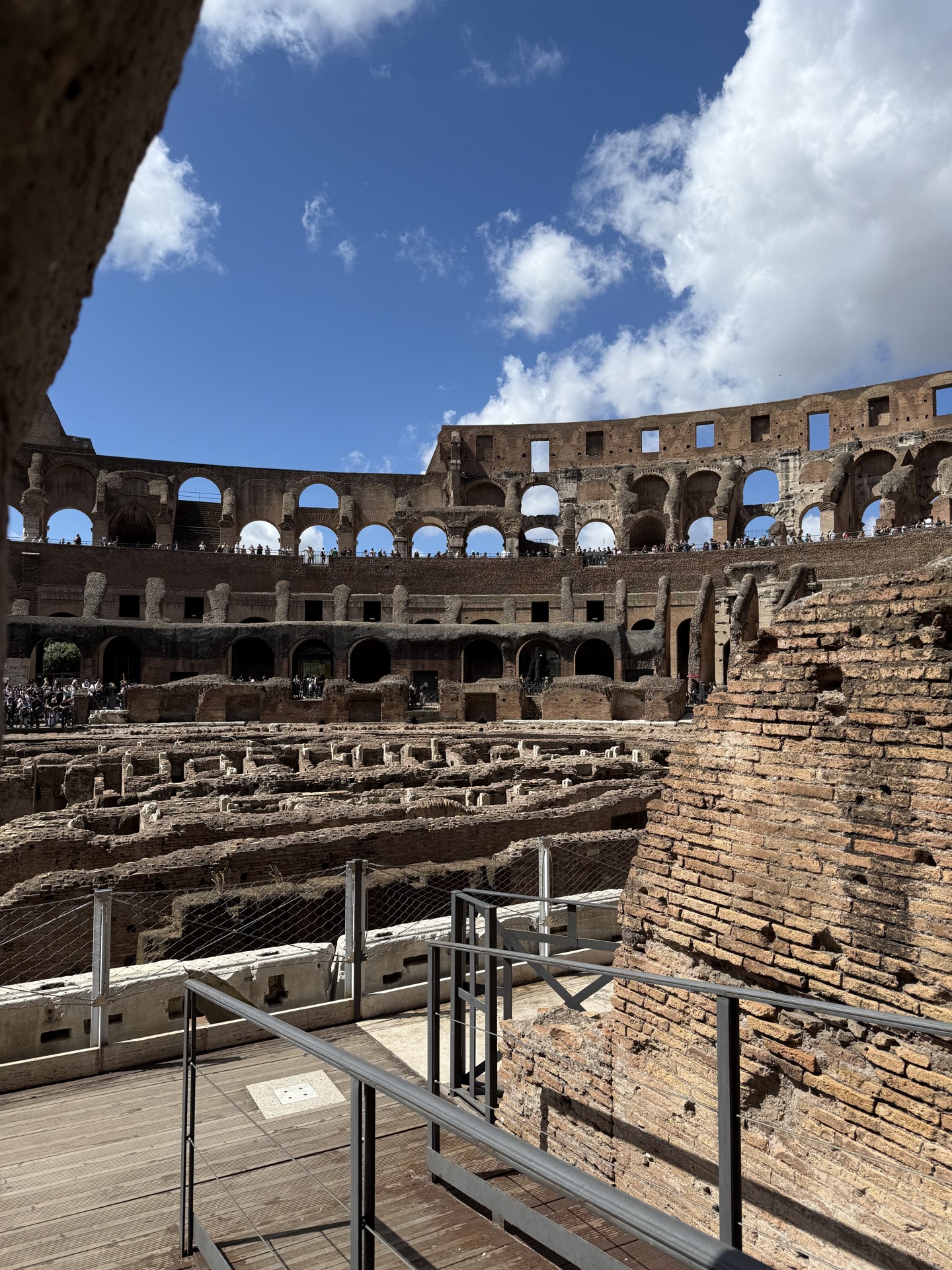
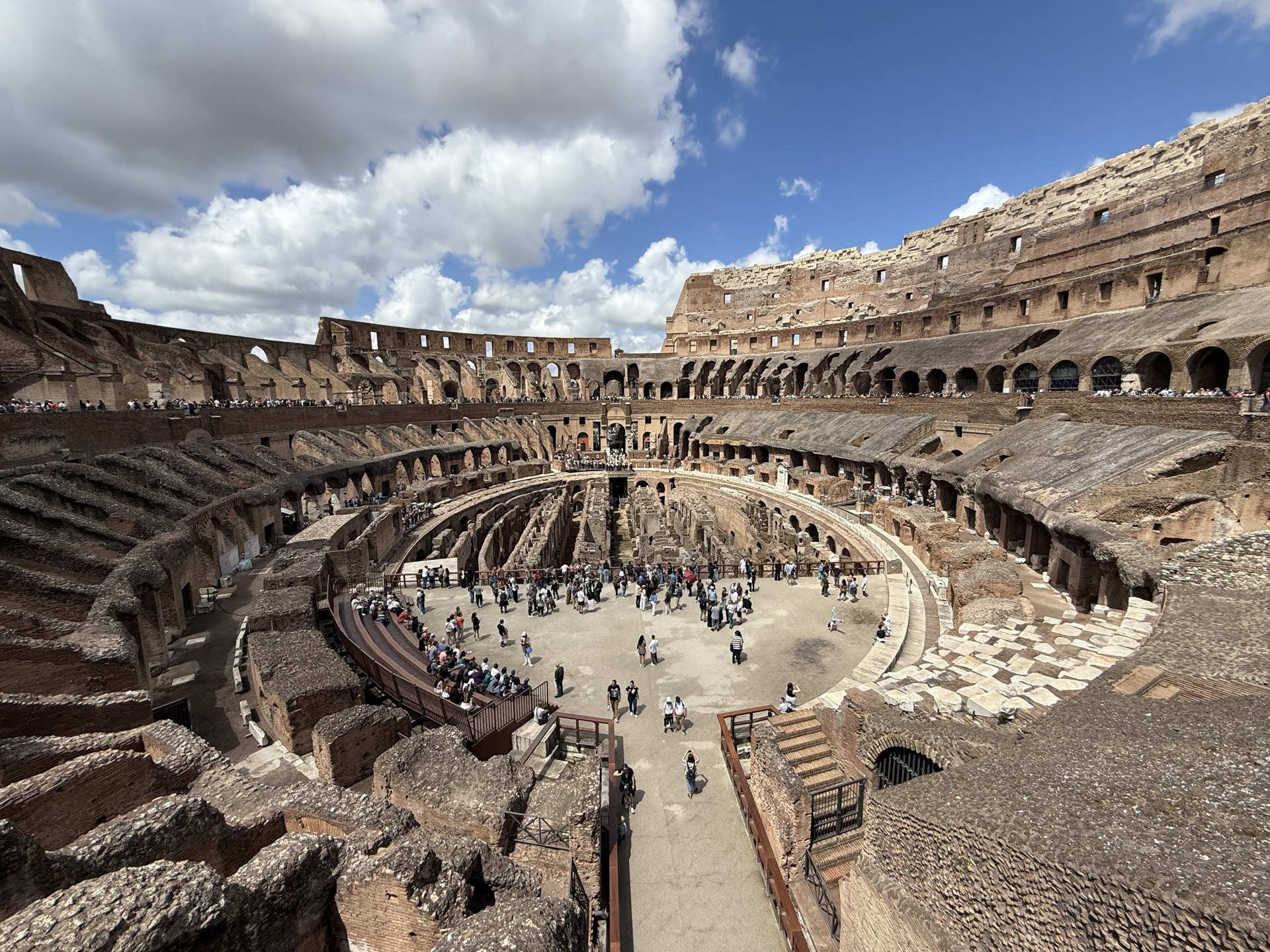
From the first viewing level, the arena lies exposed: the wooden floor is long gone, the seating is broken, and the walls and passages of the hypogeum — the underground backstage where beasts and gladiators waited to be lifted into the light — are spread out under the open sky.
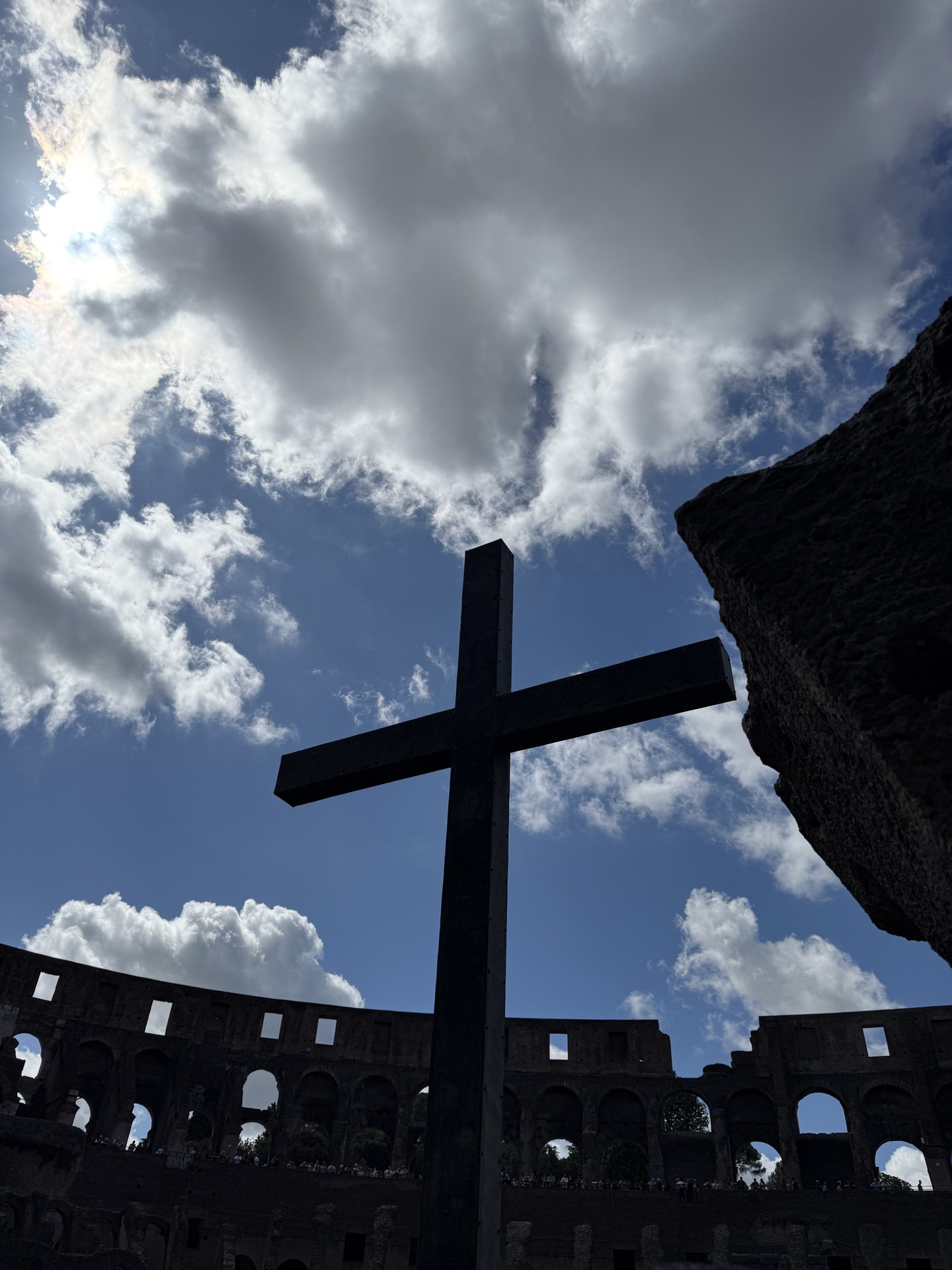
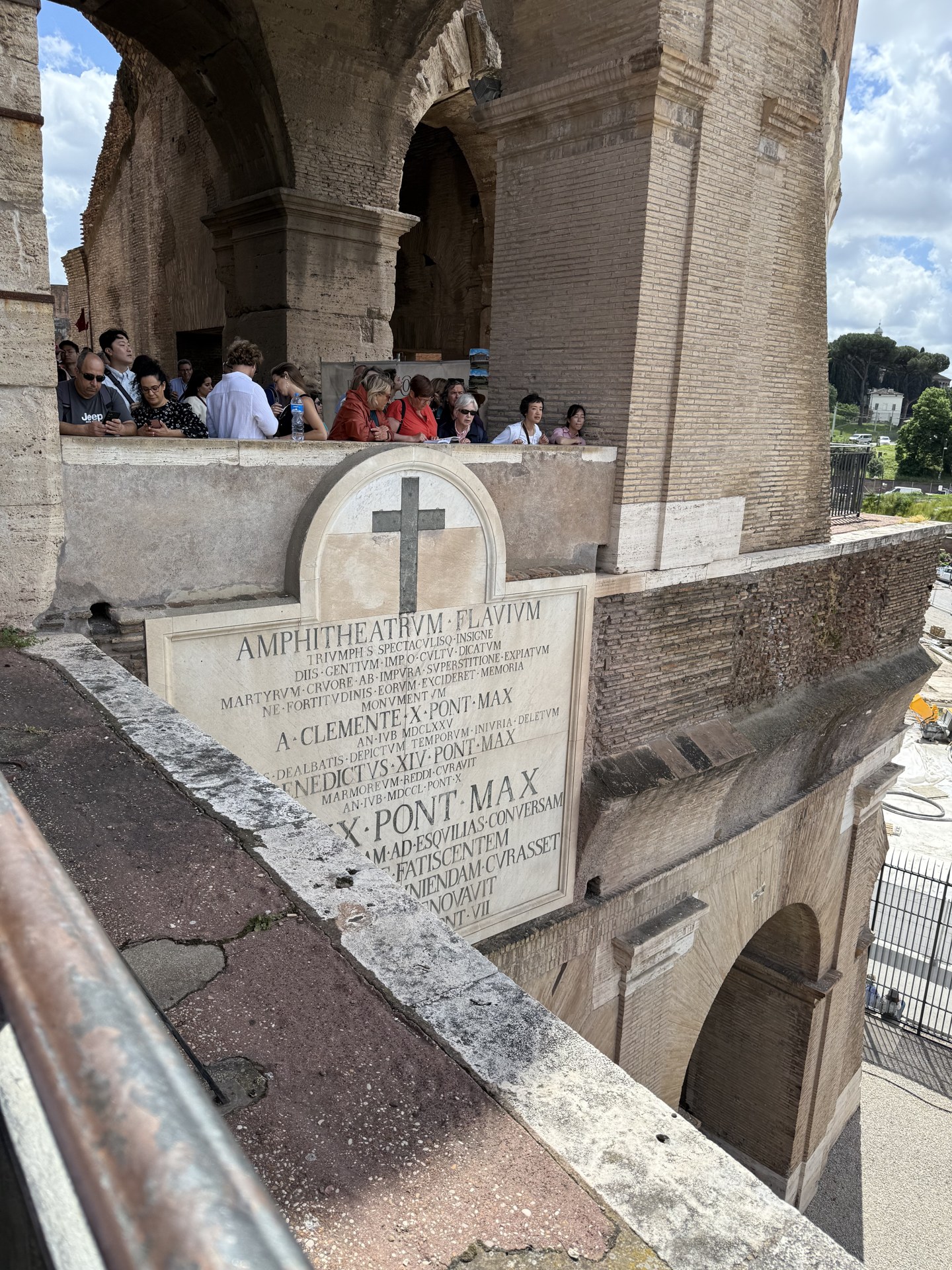
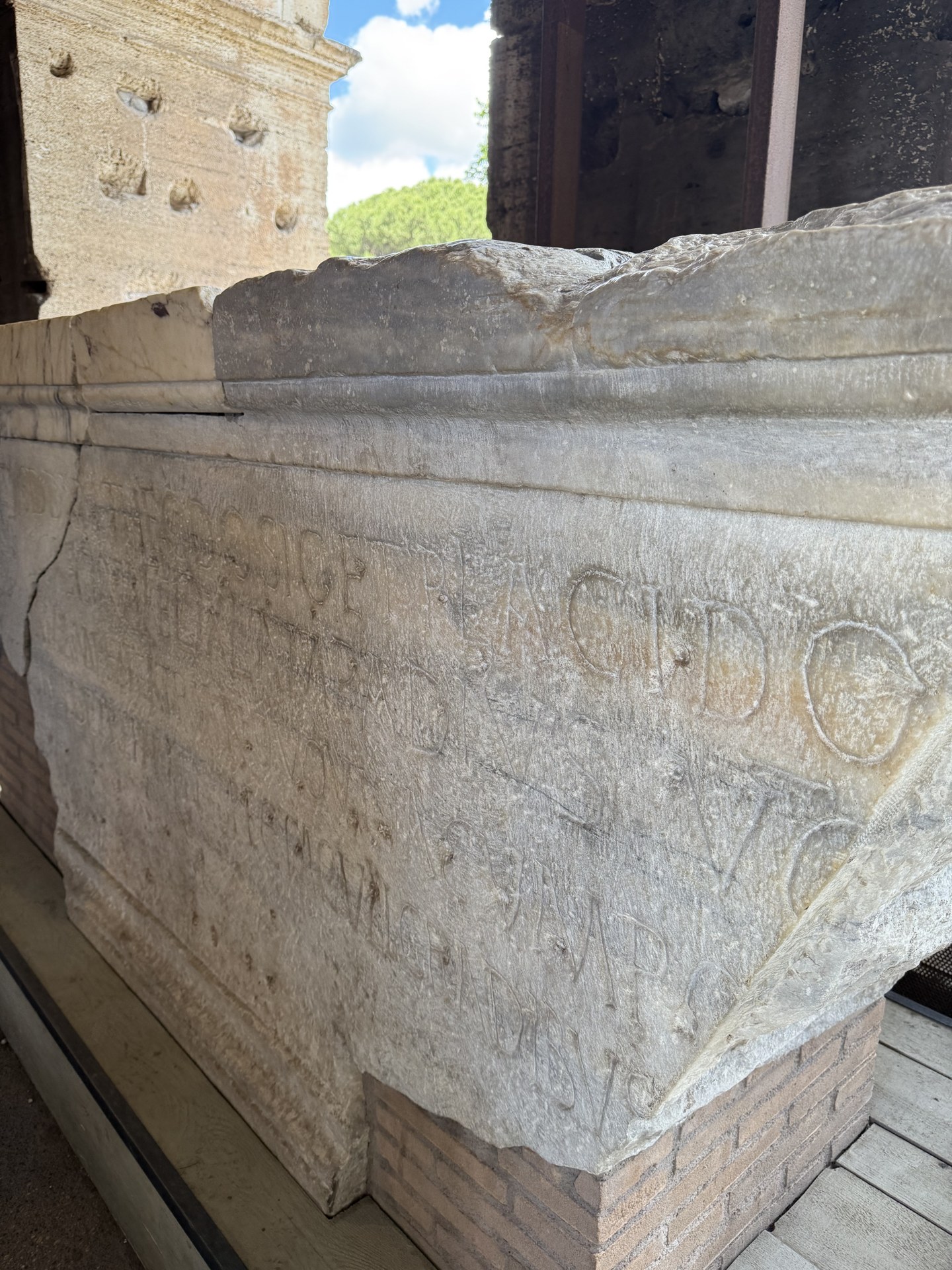
Beside the arena stands a great cross. In the 18th century Pope Benedict XIV consecrated the ruin in memory of the martyrs, giving the Colosseum a second life as a sacred site; the memorial tablet nearby records exactly that act.
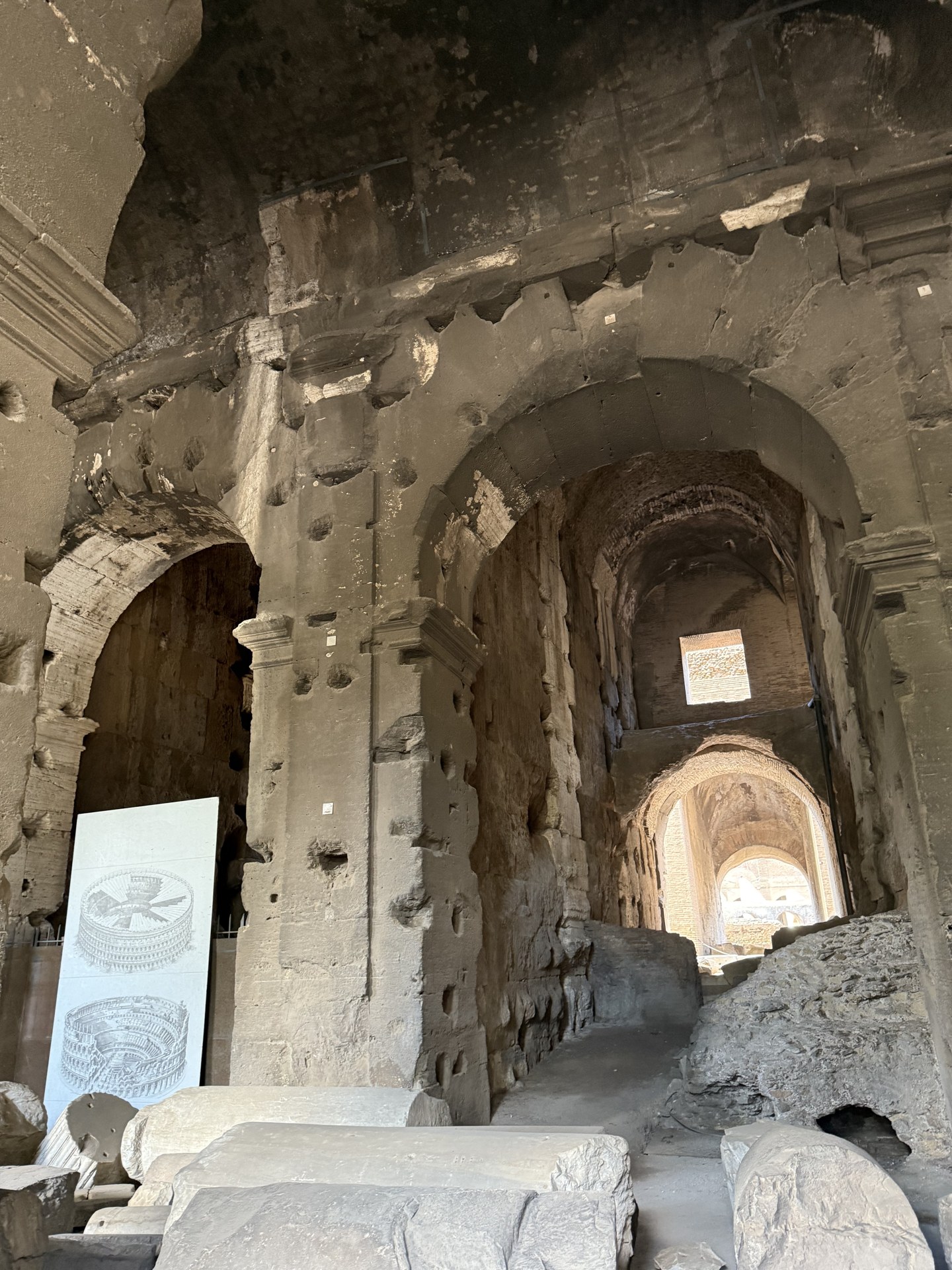
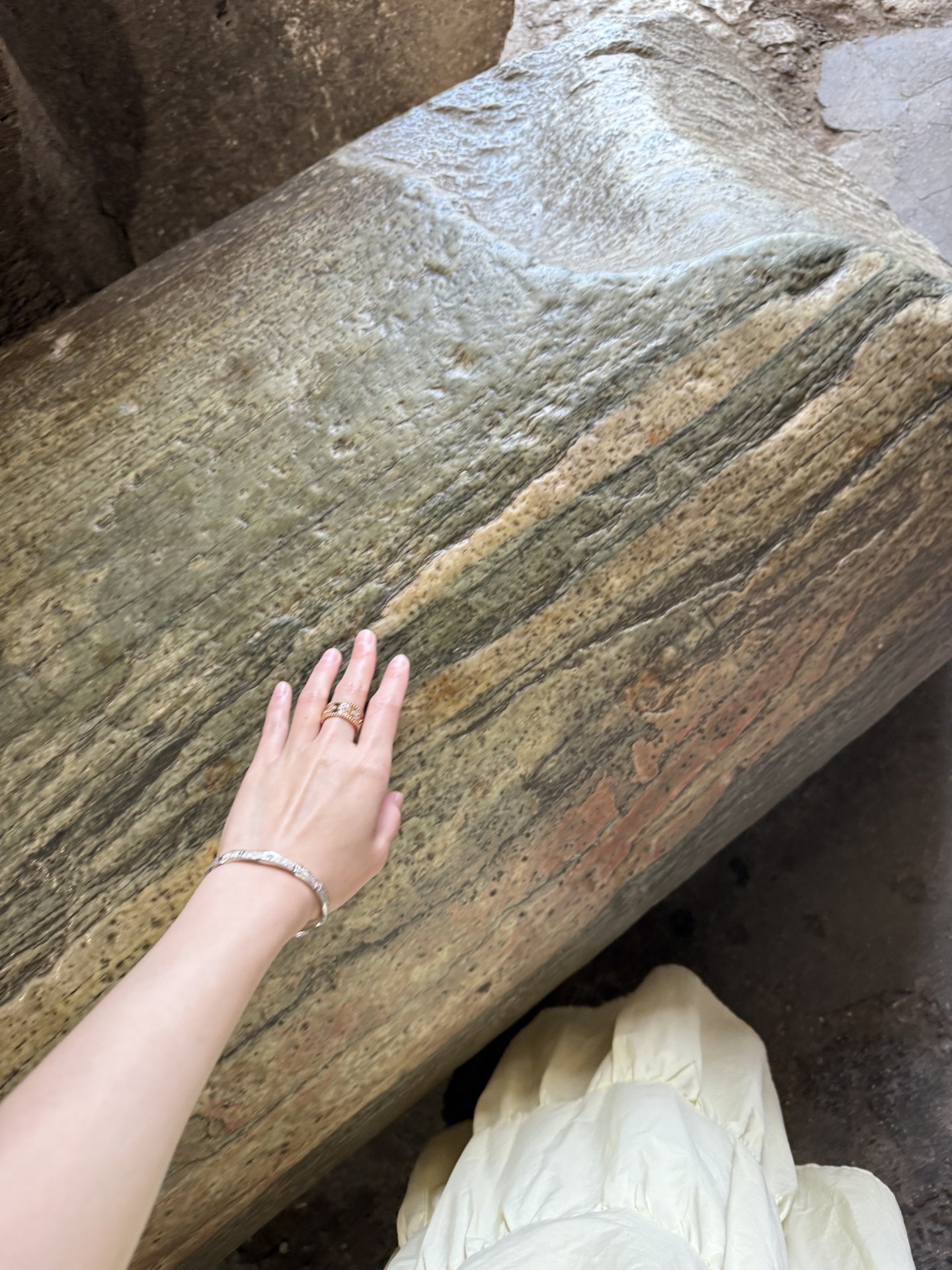
In the vaulted chambers the light falls in slashes from small windows onto rough tuff walls. Someone rested a hand on a fallen marble column — arguably the most honest souvenir in the building: nothing to buy, just touch two thousand years.
A Museum in the Arcade
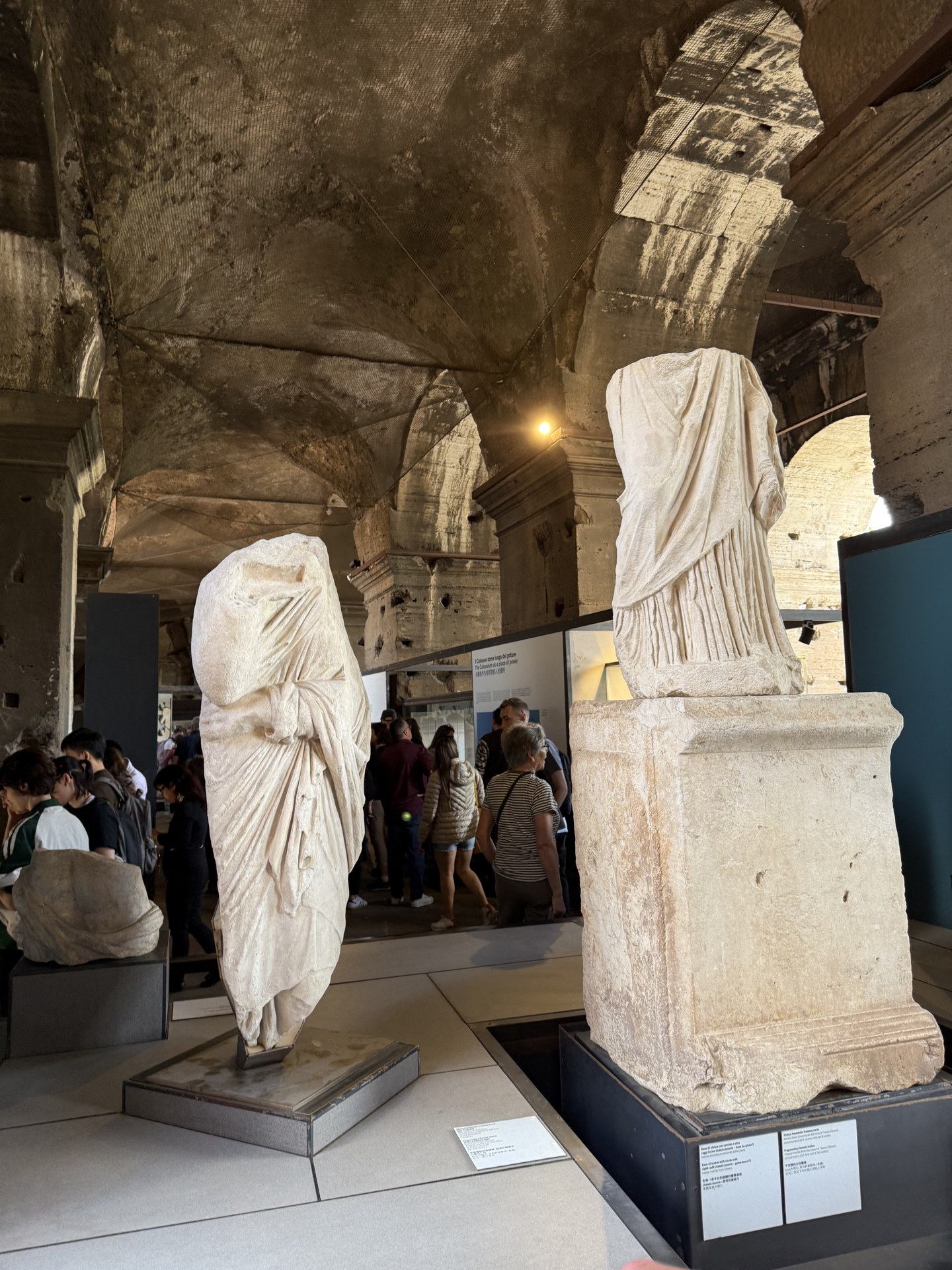
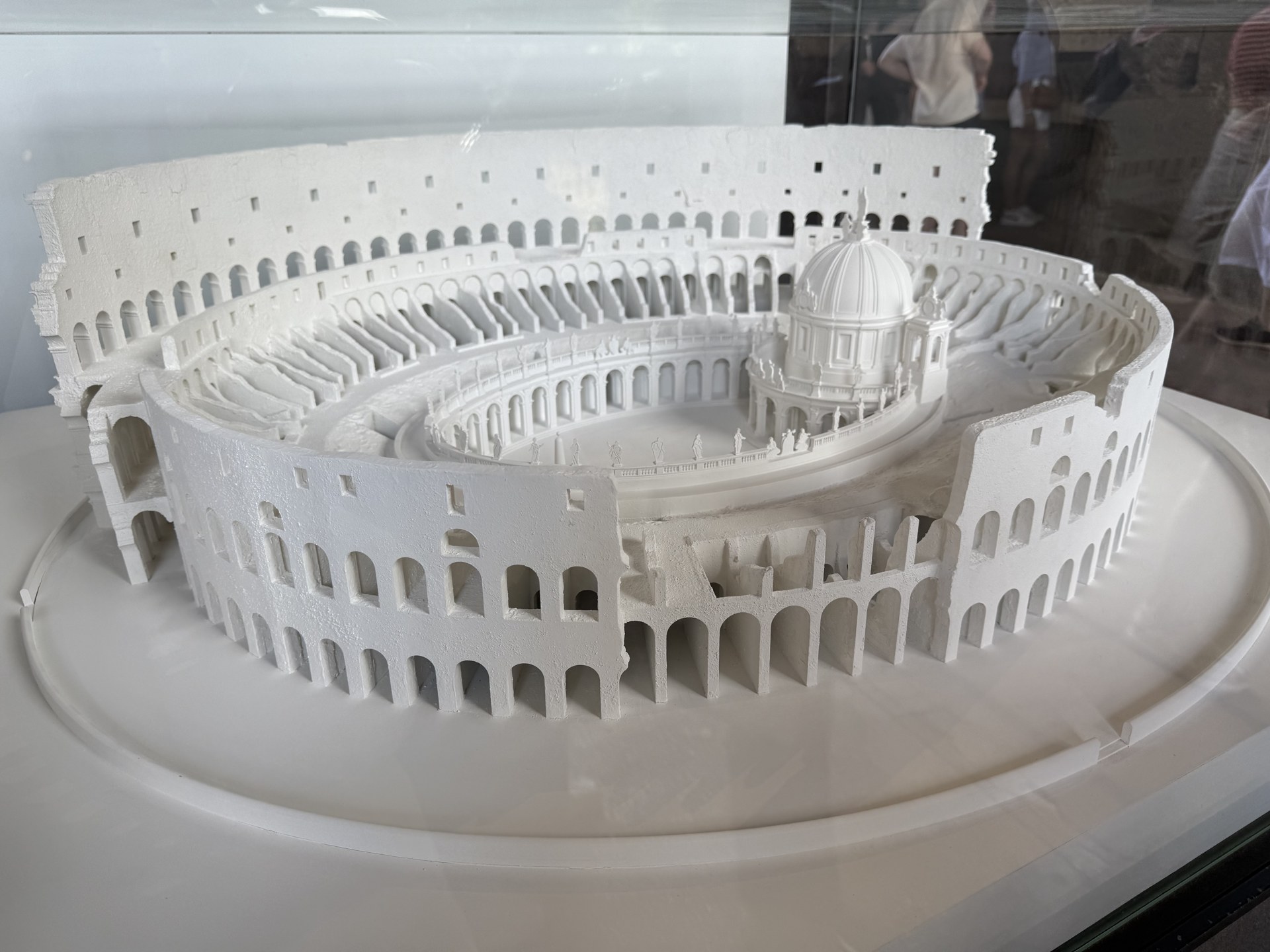
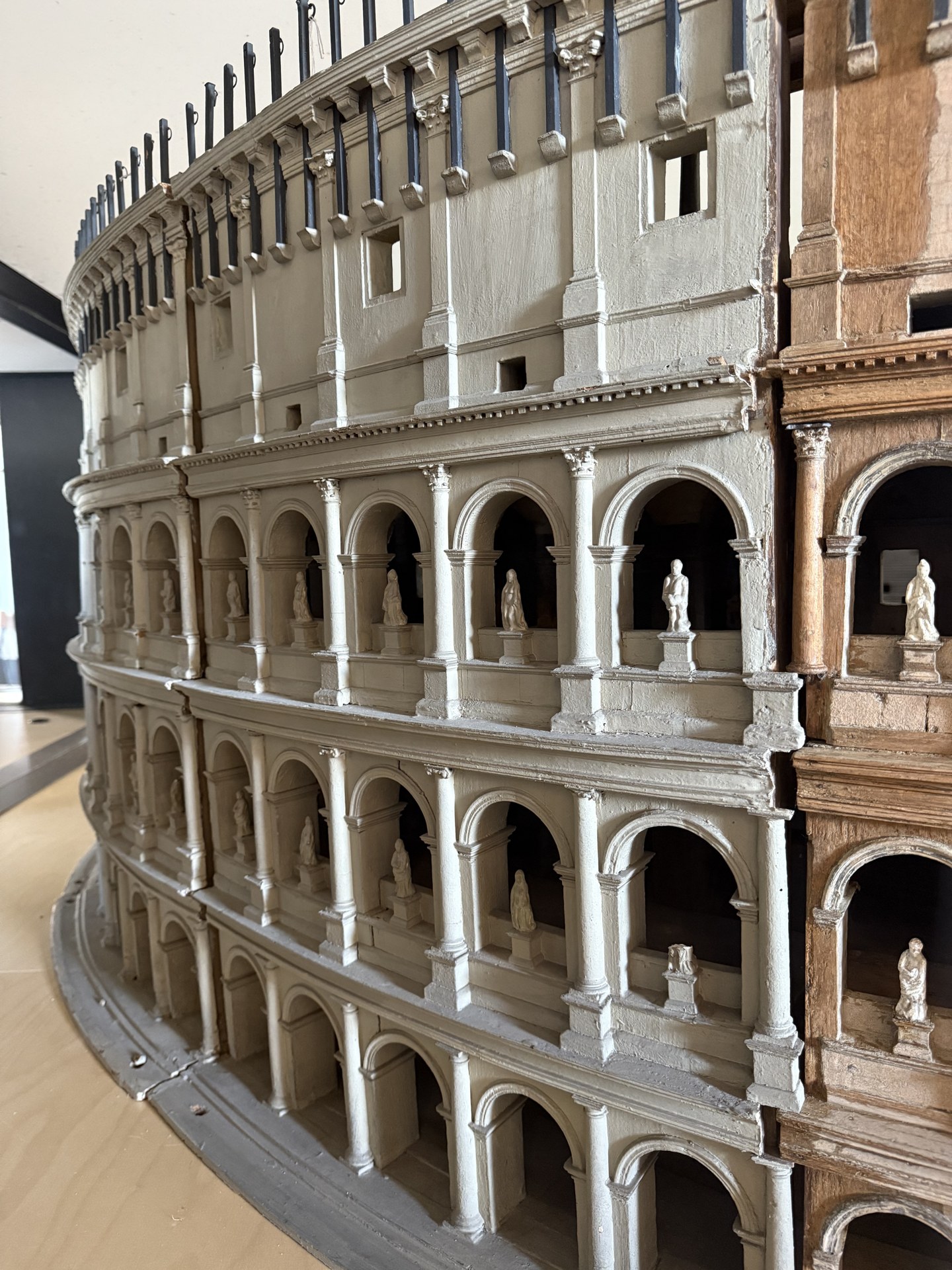
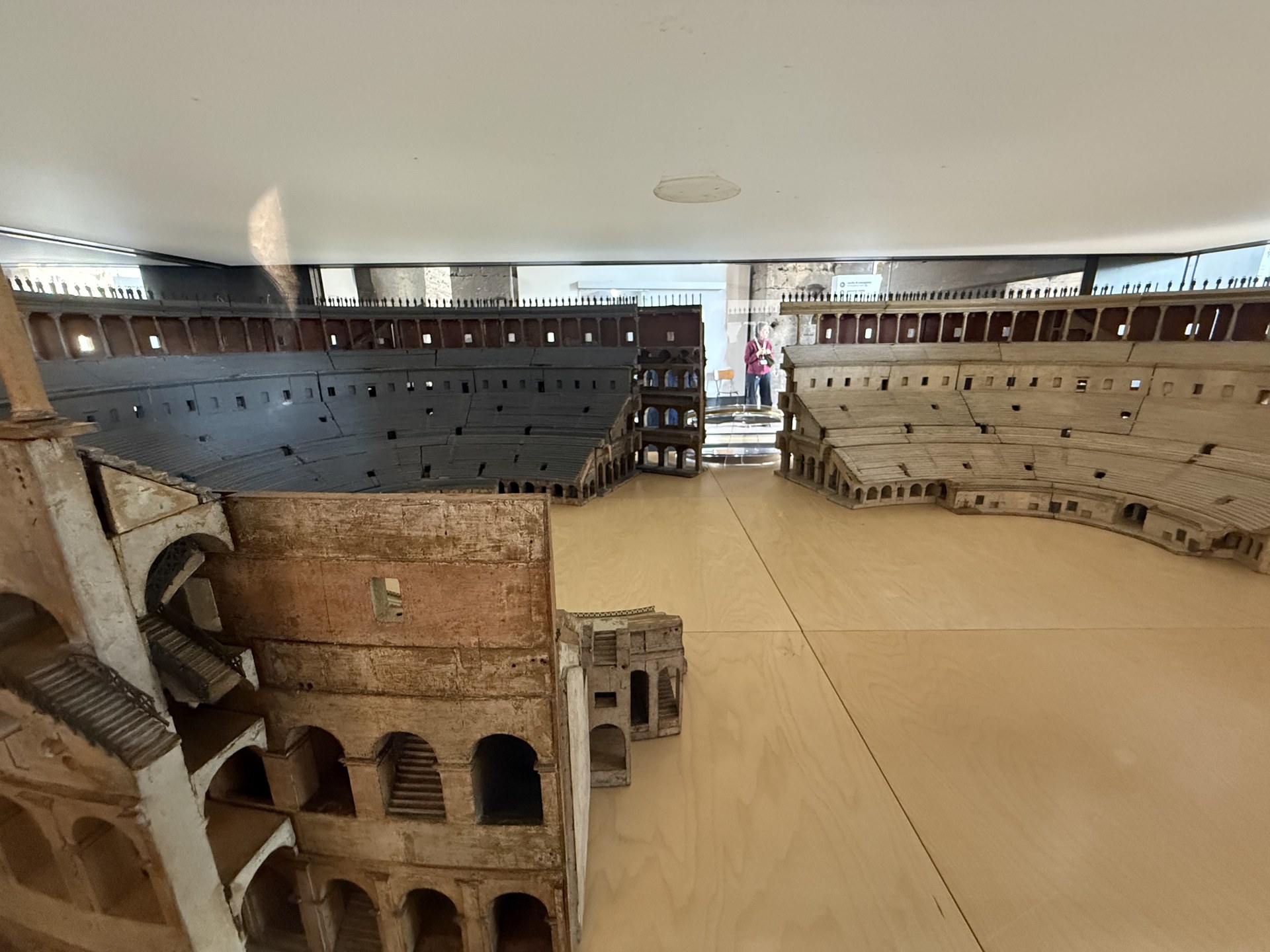
The upper arcade doubles as a museum. Headless marble statues, fragments of inscribed blocks and architectural pieces line the route — but two models are what really stop people.
One, in white, revives an idea that was never built: a church rising in the middle of the arena. The other is the great wooden model by the carpenter Carlo Lucangeli, its three tiers of arches filled with tiny carved statues; cut it open and the seating slope and radial structure explain themselves. Study the model, then look up at the real thing — the scale suddenly makes sense.
Up in the Stands
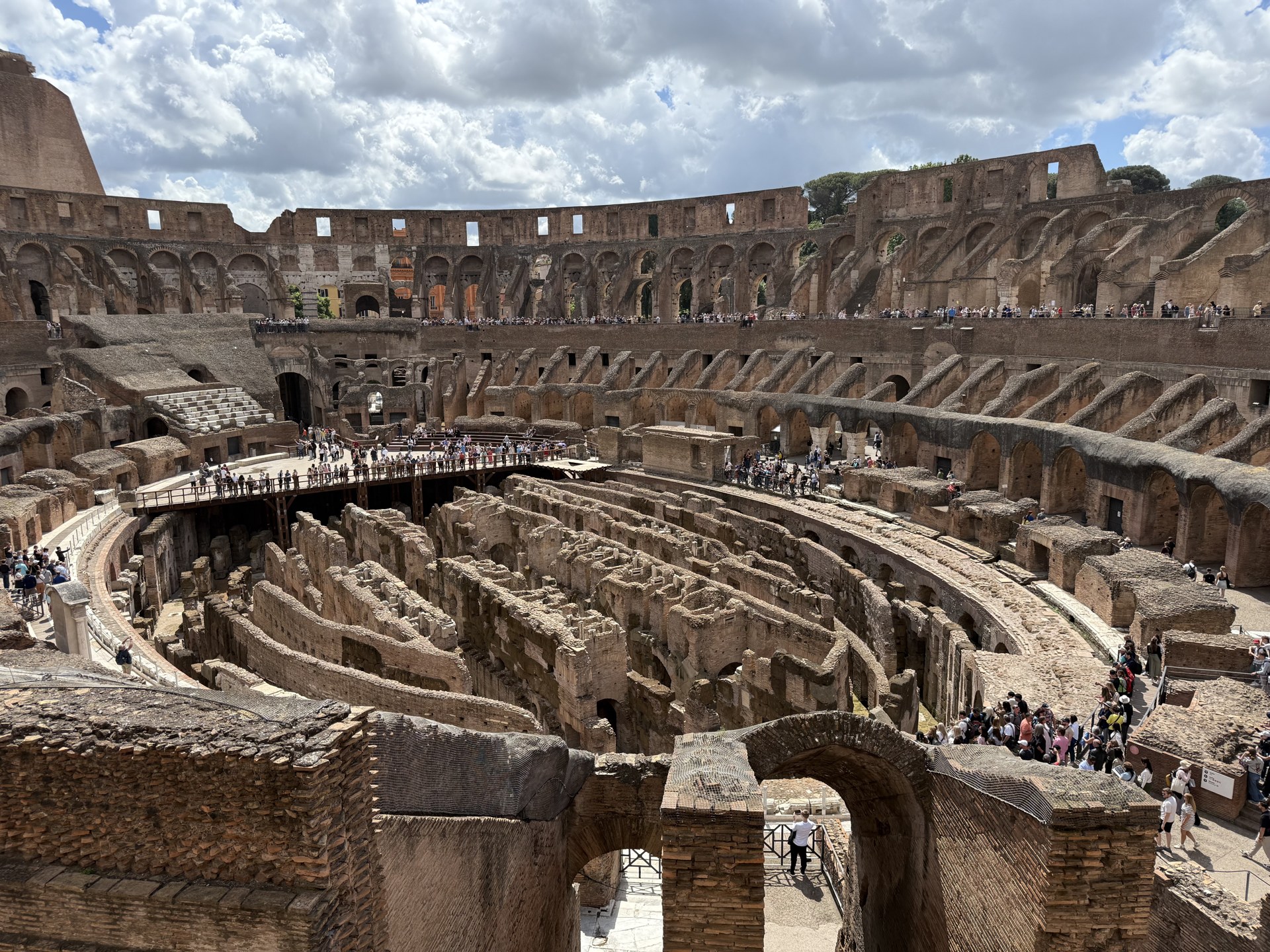
From the upper level the whole oval opens at once. The hypogeum is a maze of stone; the reconstructed wooden platform marks the sanded floor where the fights happened — today's visitors posing for photos are standing precisely on the gladiators' stage.
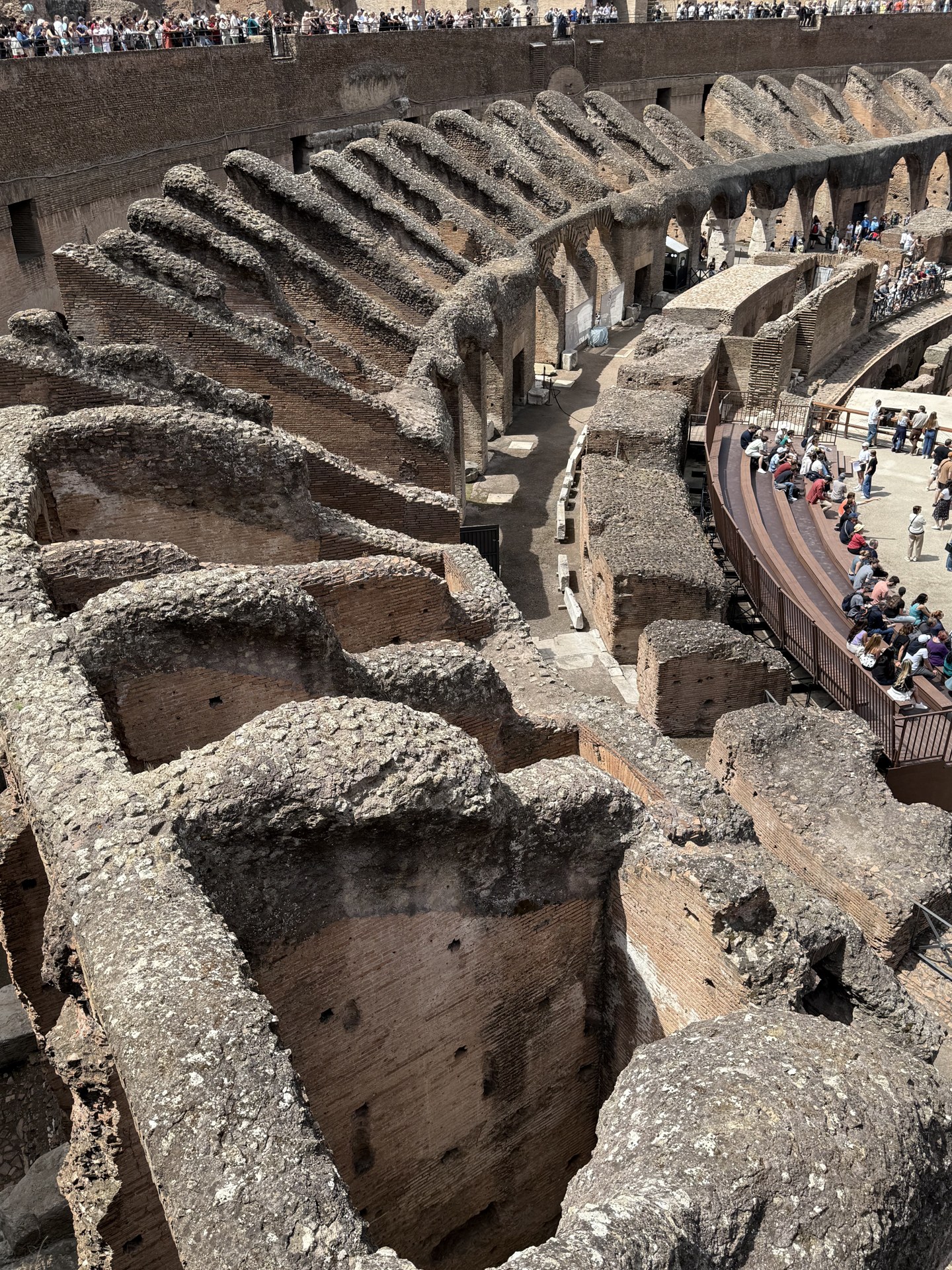
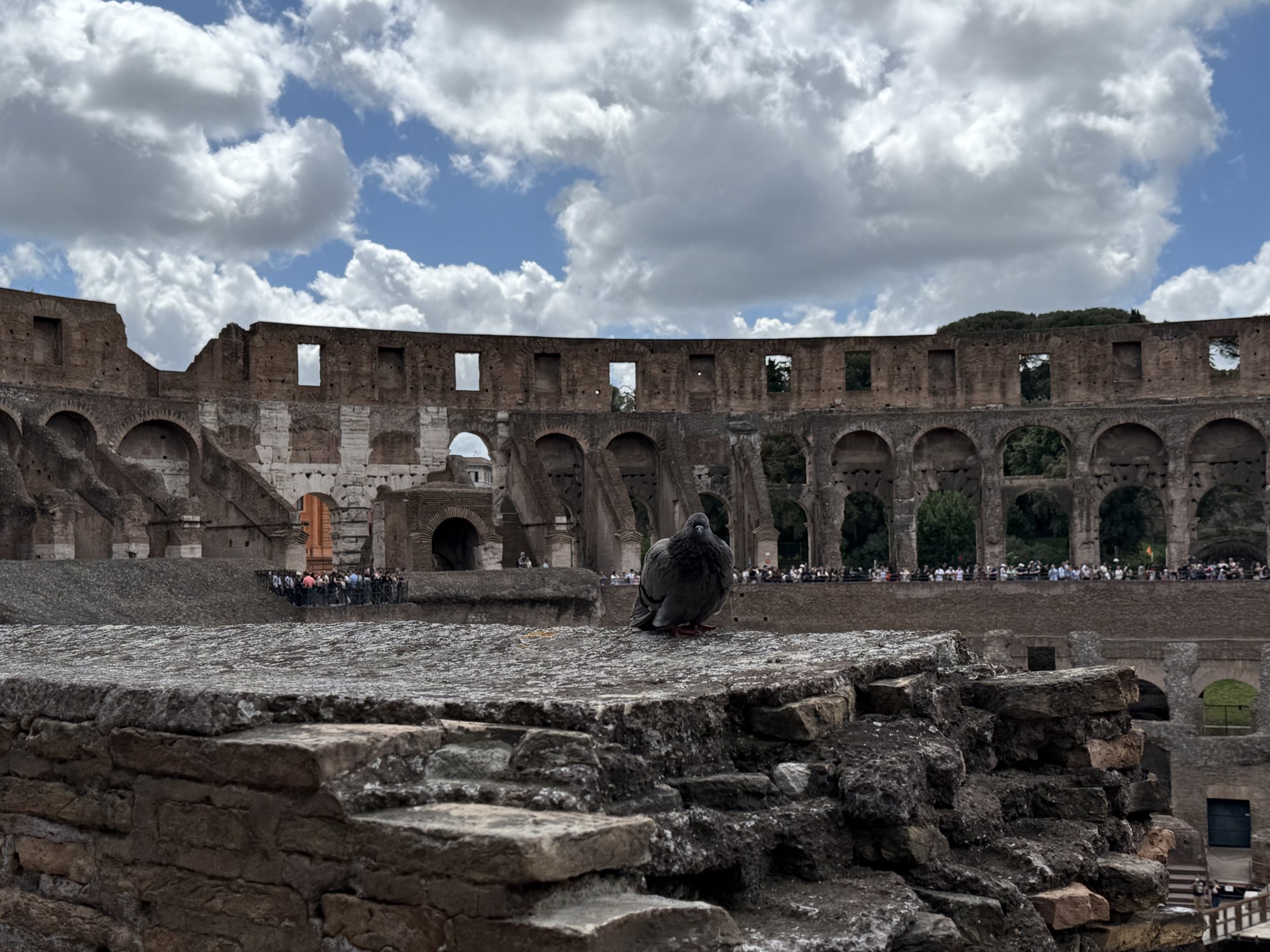
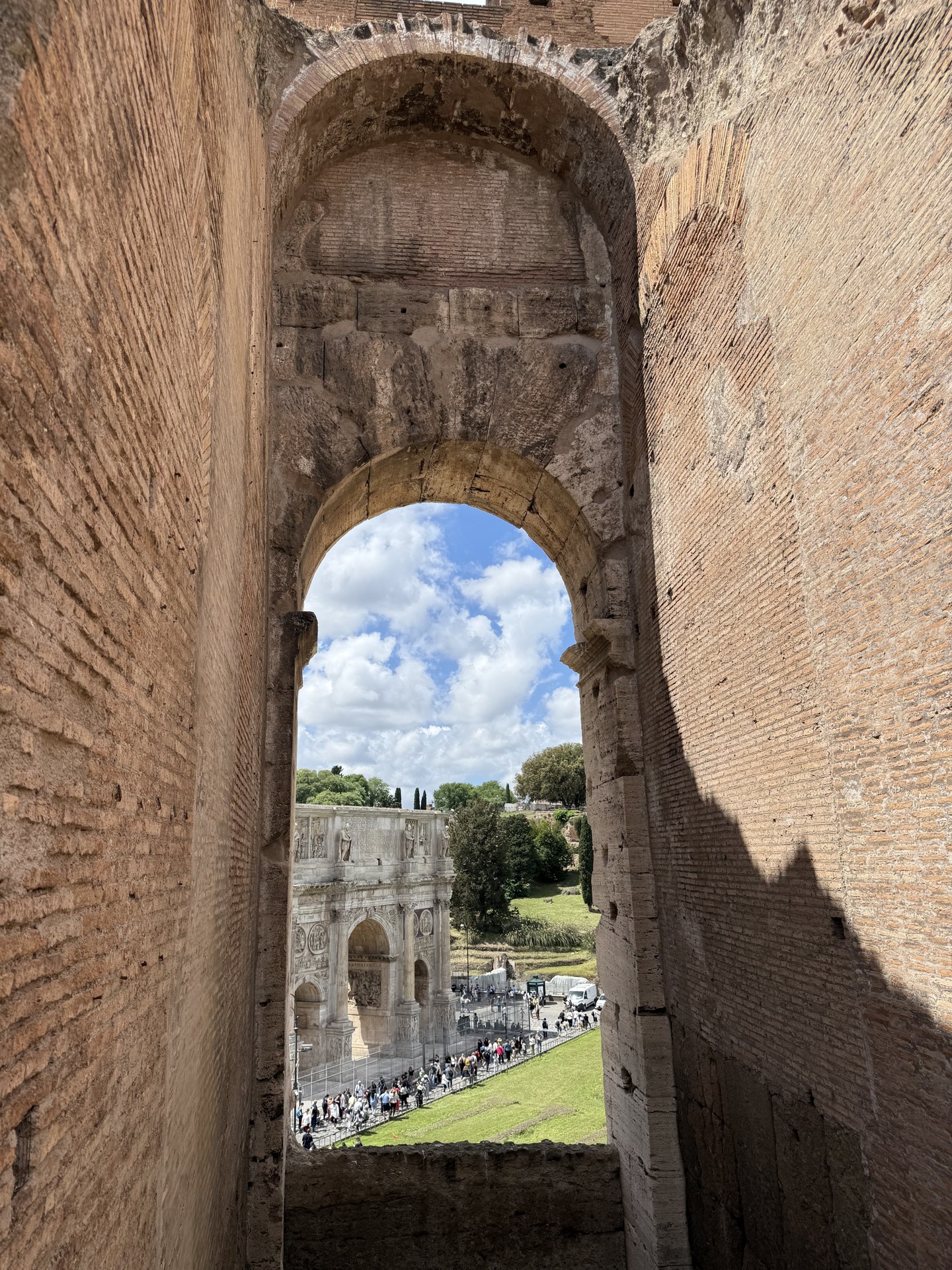
The details reward a closer look: a brick arch of the underground level, the rough stone of the radial walls, and one pigeon sunning itself on the ancient masonry, utterly unbothered by the shutters. Through a Colosseum archway, the Arch of Constantine stands perfectly framed — two monuments of the late empire, gazing at each other.
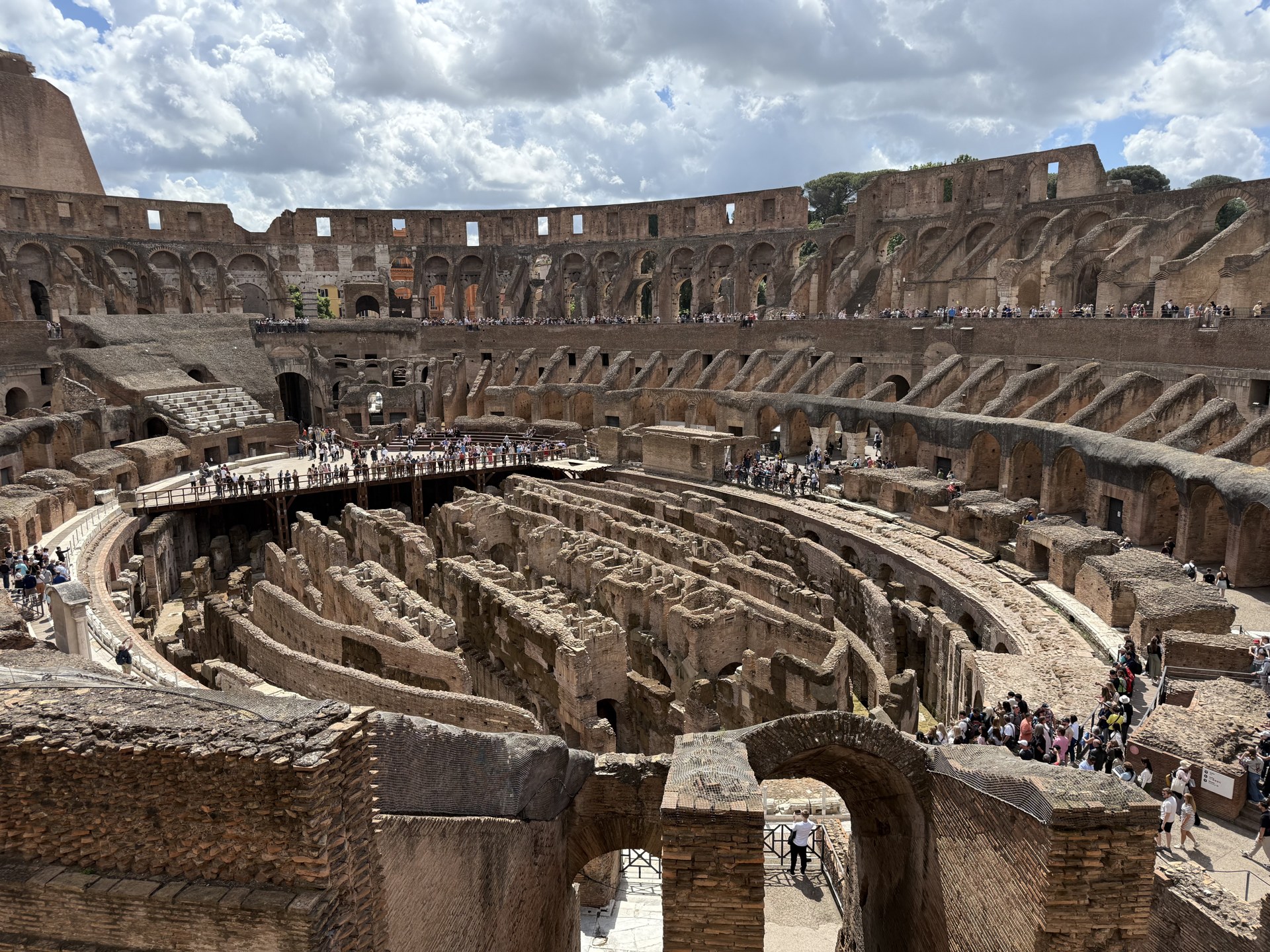
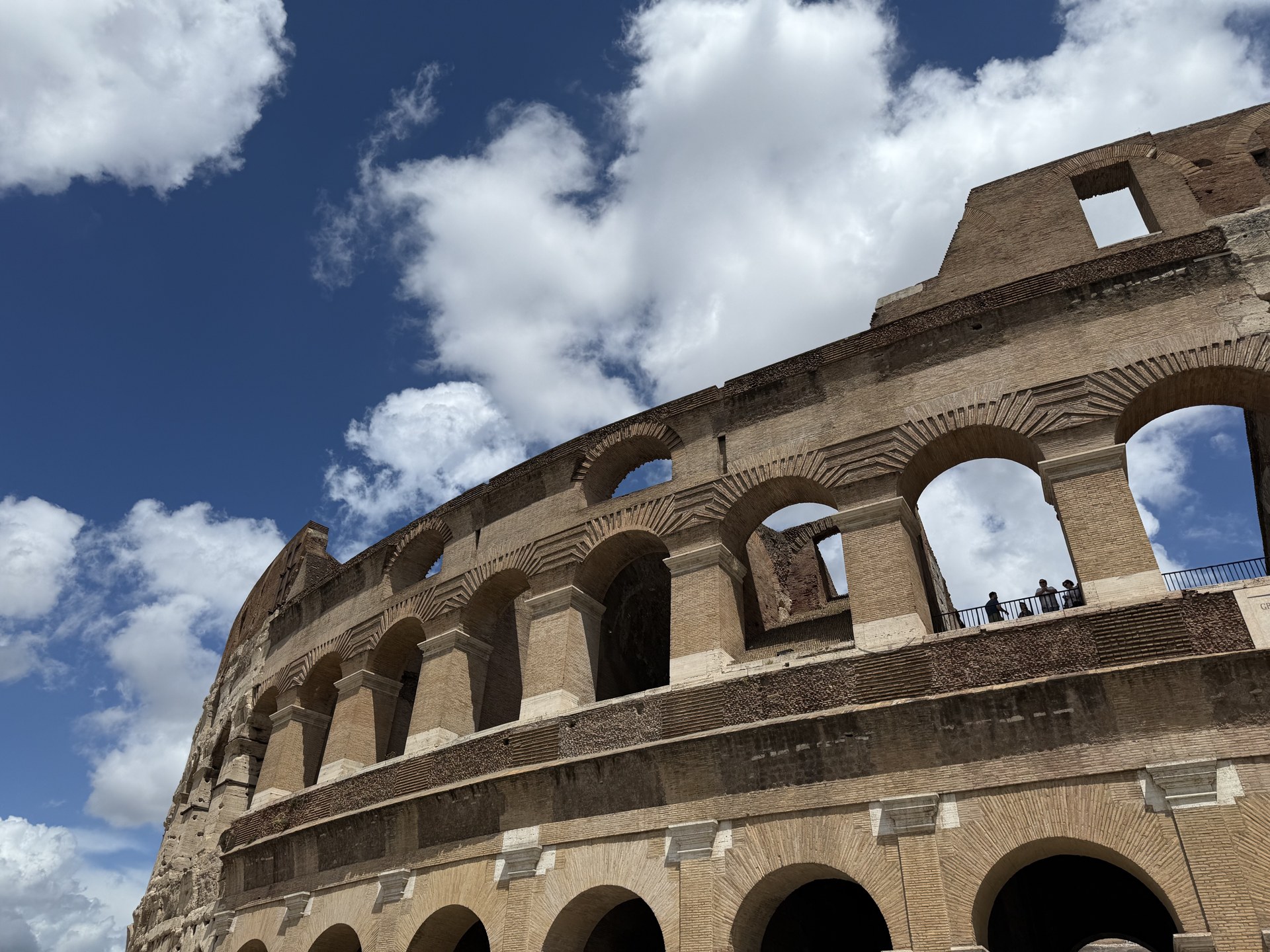
Before leaving, look straight up the facade — Doric, Ionic and Corinthian stacked tier on tier — then take the final wide view. That broken silhouette is Rome's skyline in a single line.
The Palatine and the Forum
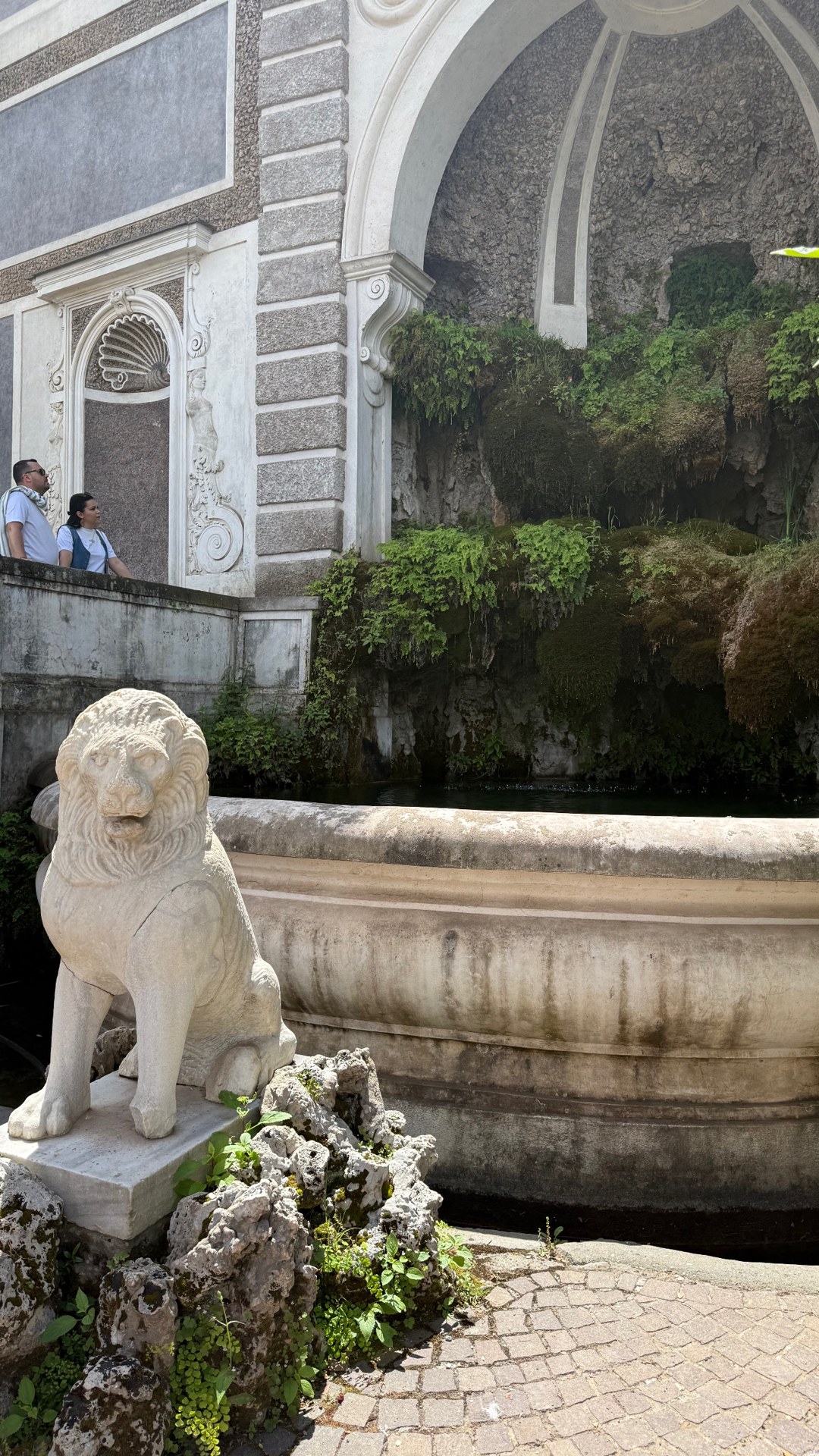
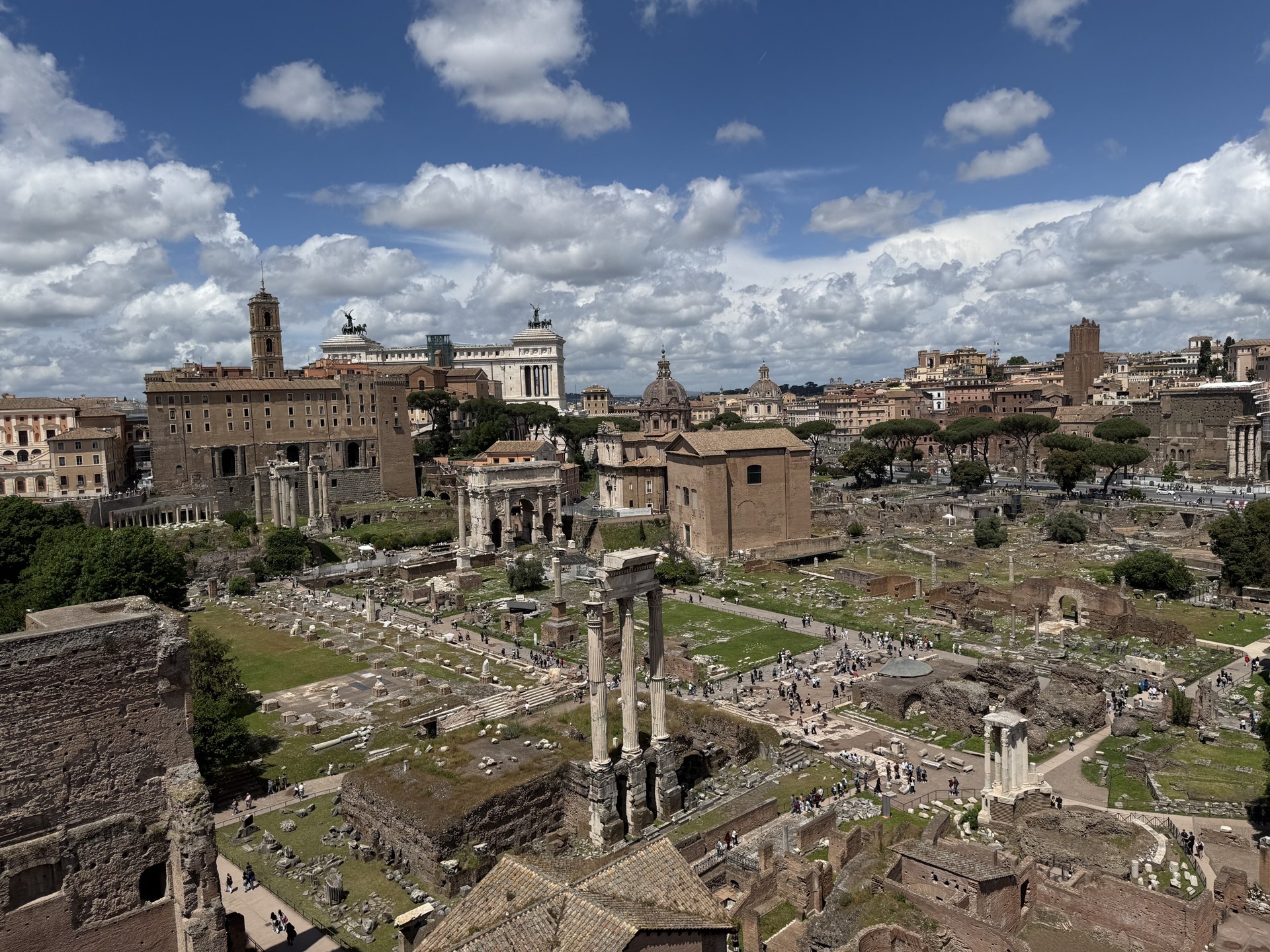
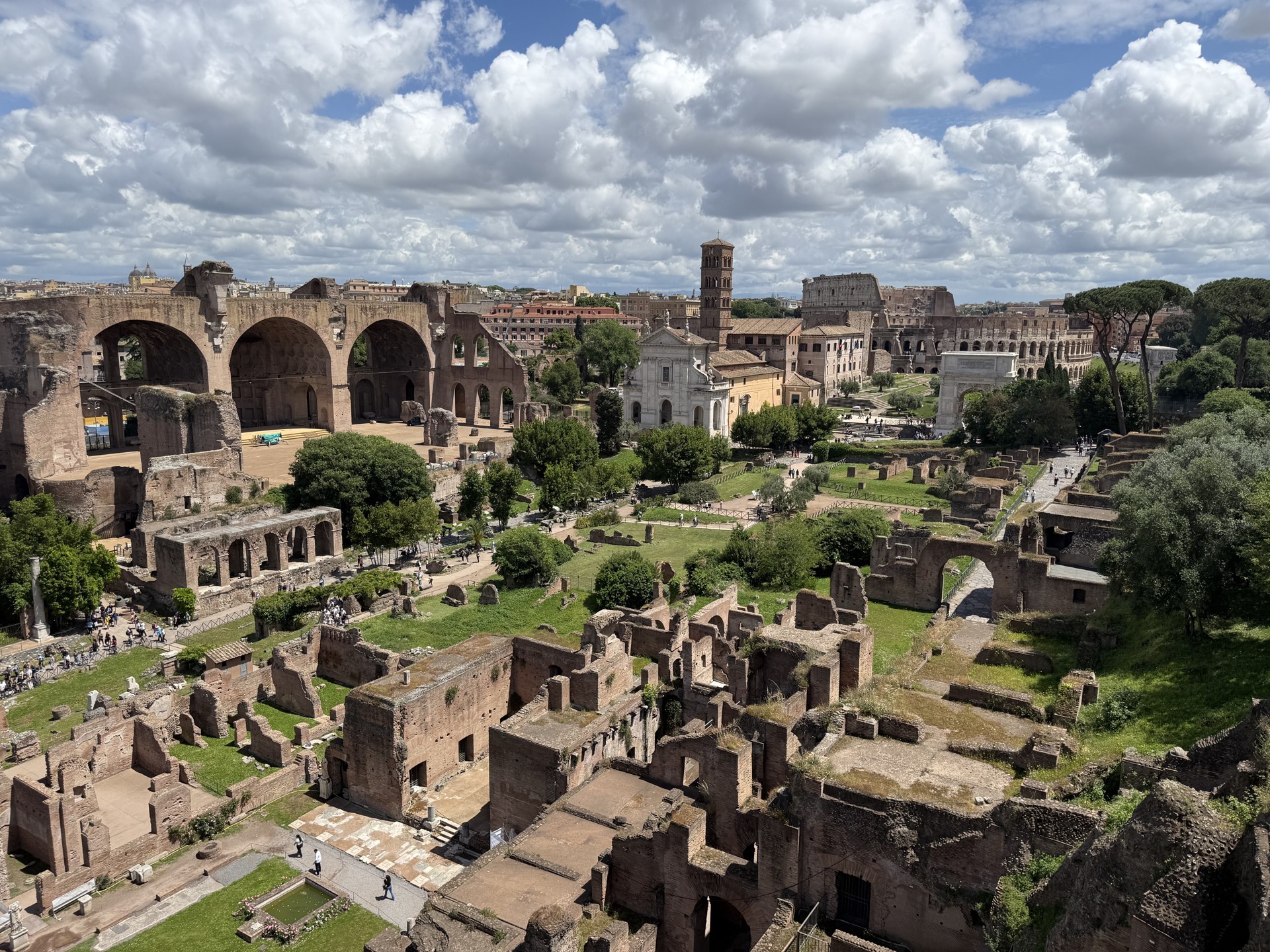
In the afternoon we crossed to the Palatine Hill, climbing past the Theatre of the Great Fountain, its stone lion still on guard. From the top, the Roman Forum spreads out below — the three great arches of the Basilica of Maxentius, fallen columns and temple bases, and in the distance the white mass of the Vittoriano. It is the most rewarding uphill walk in Rome.
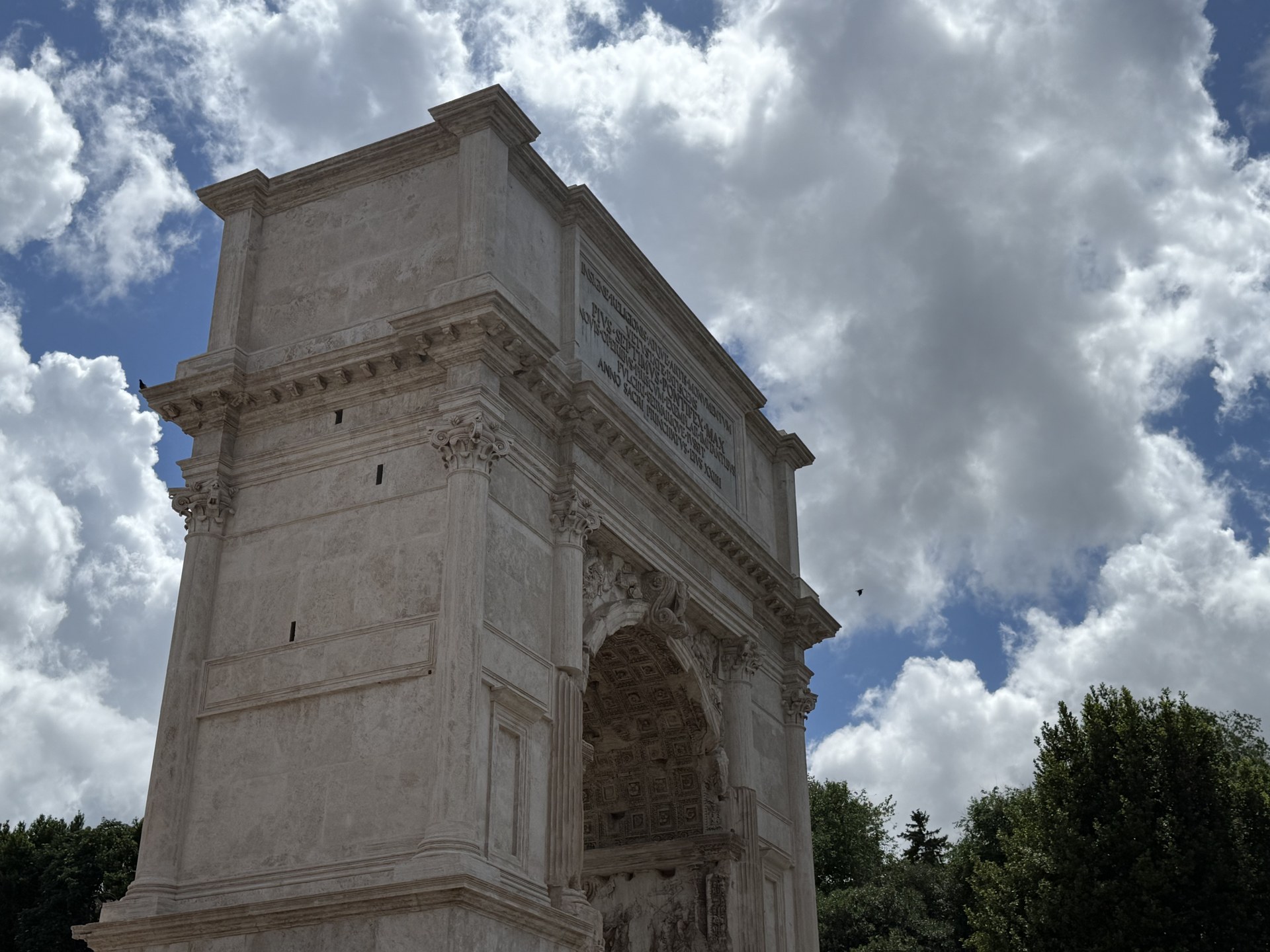
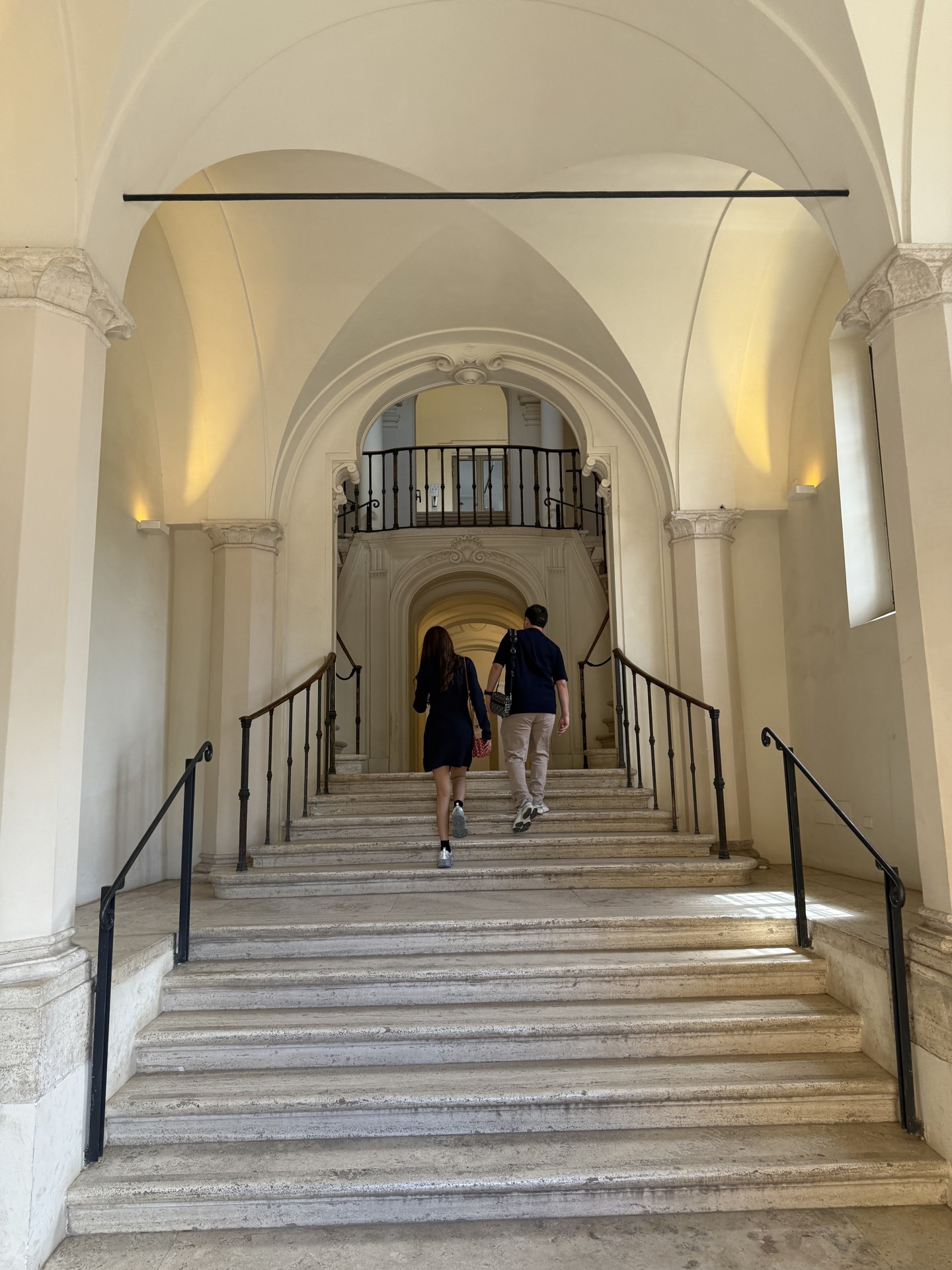
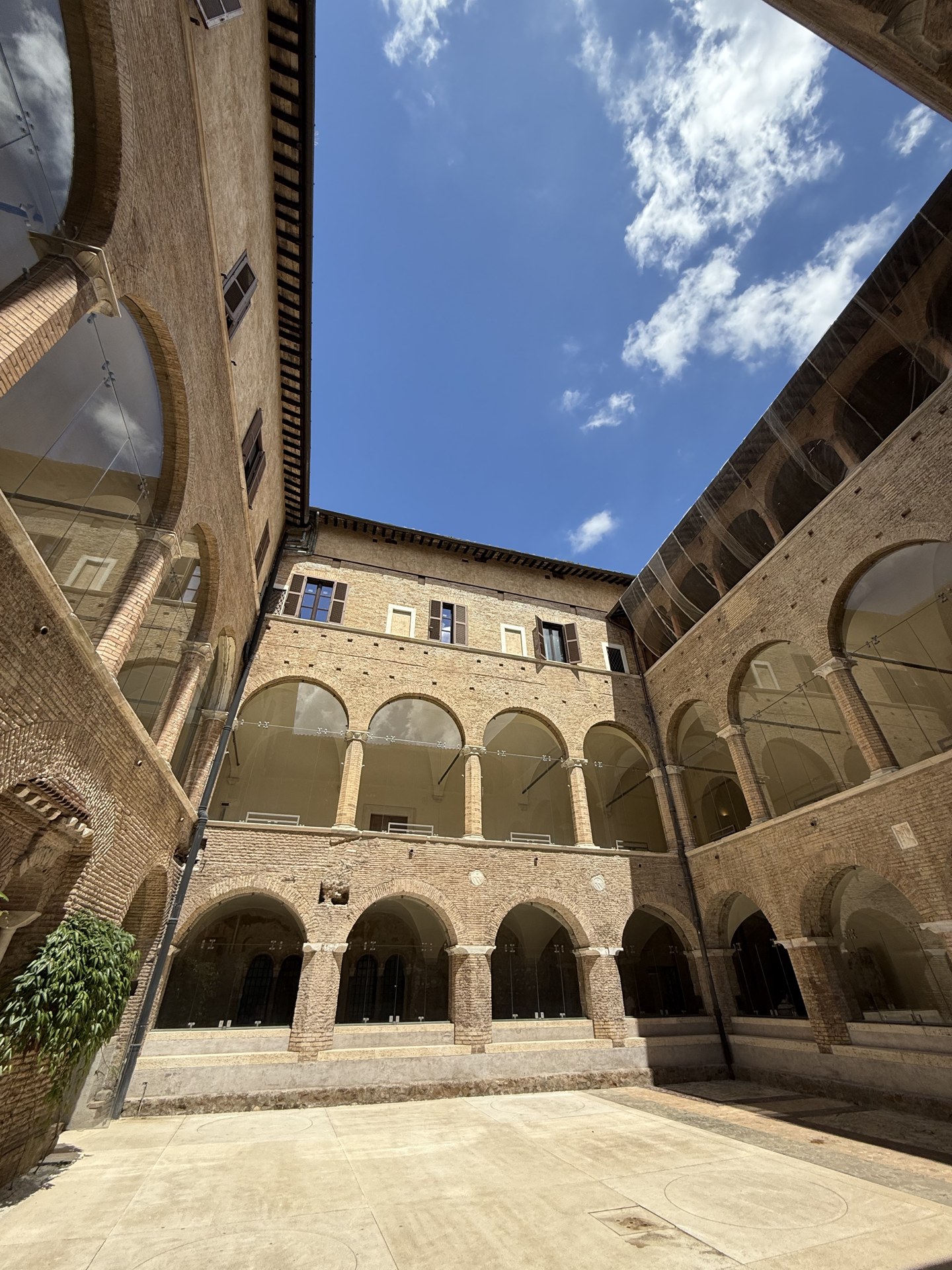
Down the Via Sacra, the Arch of Titus stands at the road's highest point. Then into the Museo del Foro: a vaulted grand staircase and a cloister courtyard holding one square of blue sky — quiet enough to feel like another city.
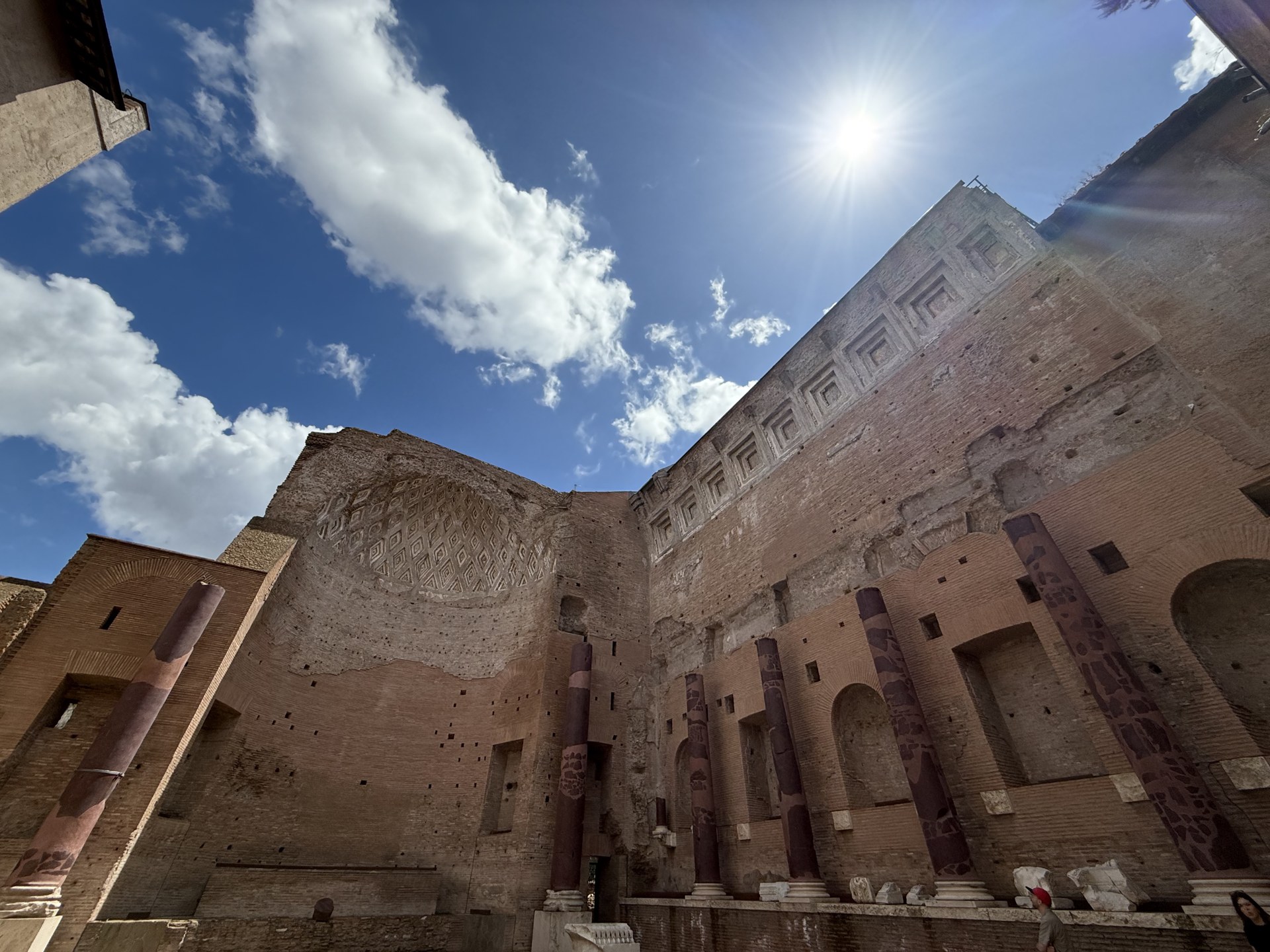
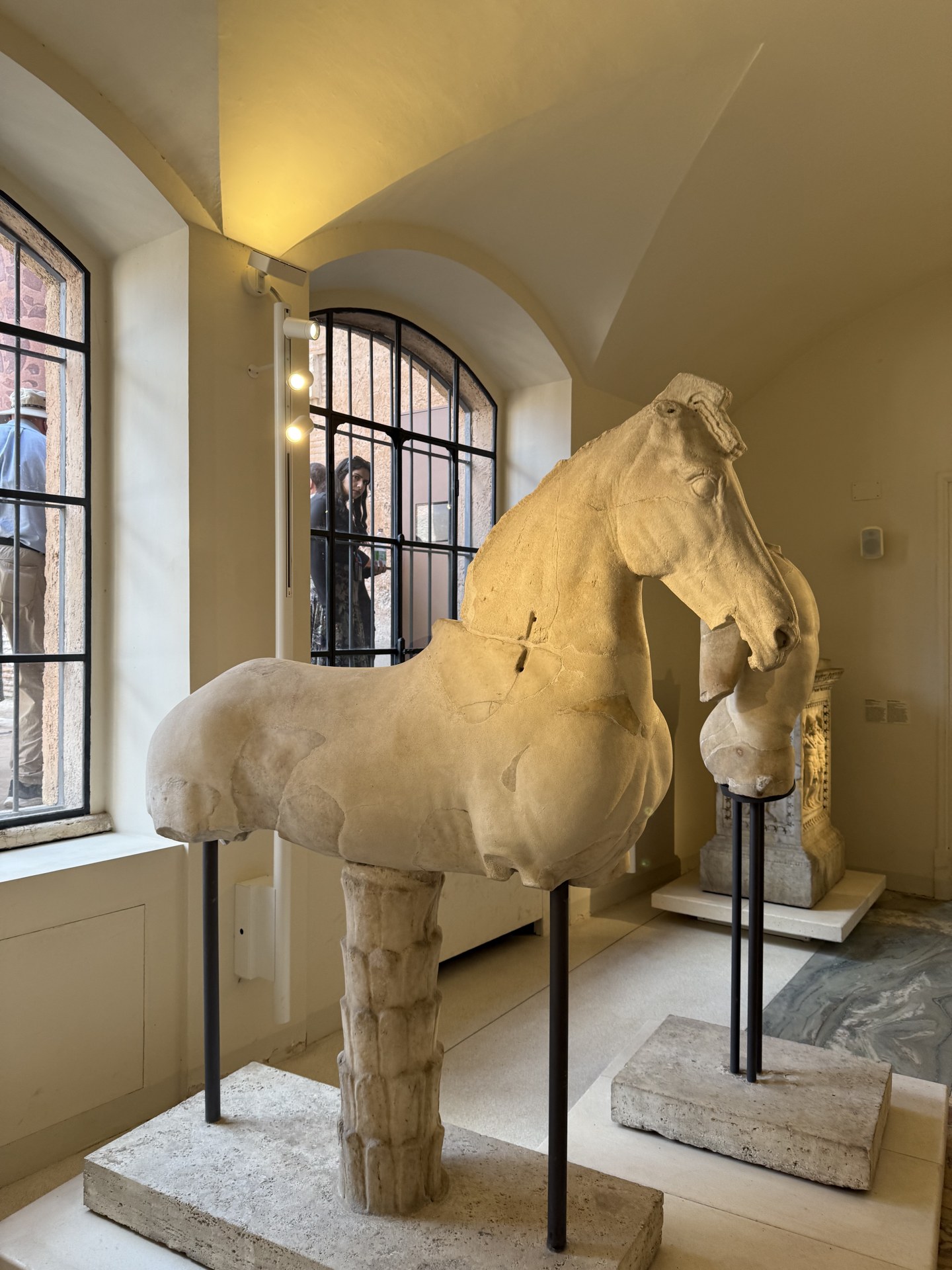
Next door is the apse of the Temple of Venus and Roma, the largest temple of ancient Rome: a coffered half-dome carried on porphyry columns. Our last look in the museum went to a marble horse — only the torso survives, its muscles still taut, as if ready to run again.
Lunch, and One Word: Salty
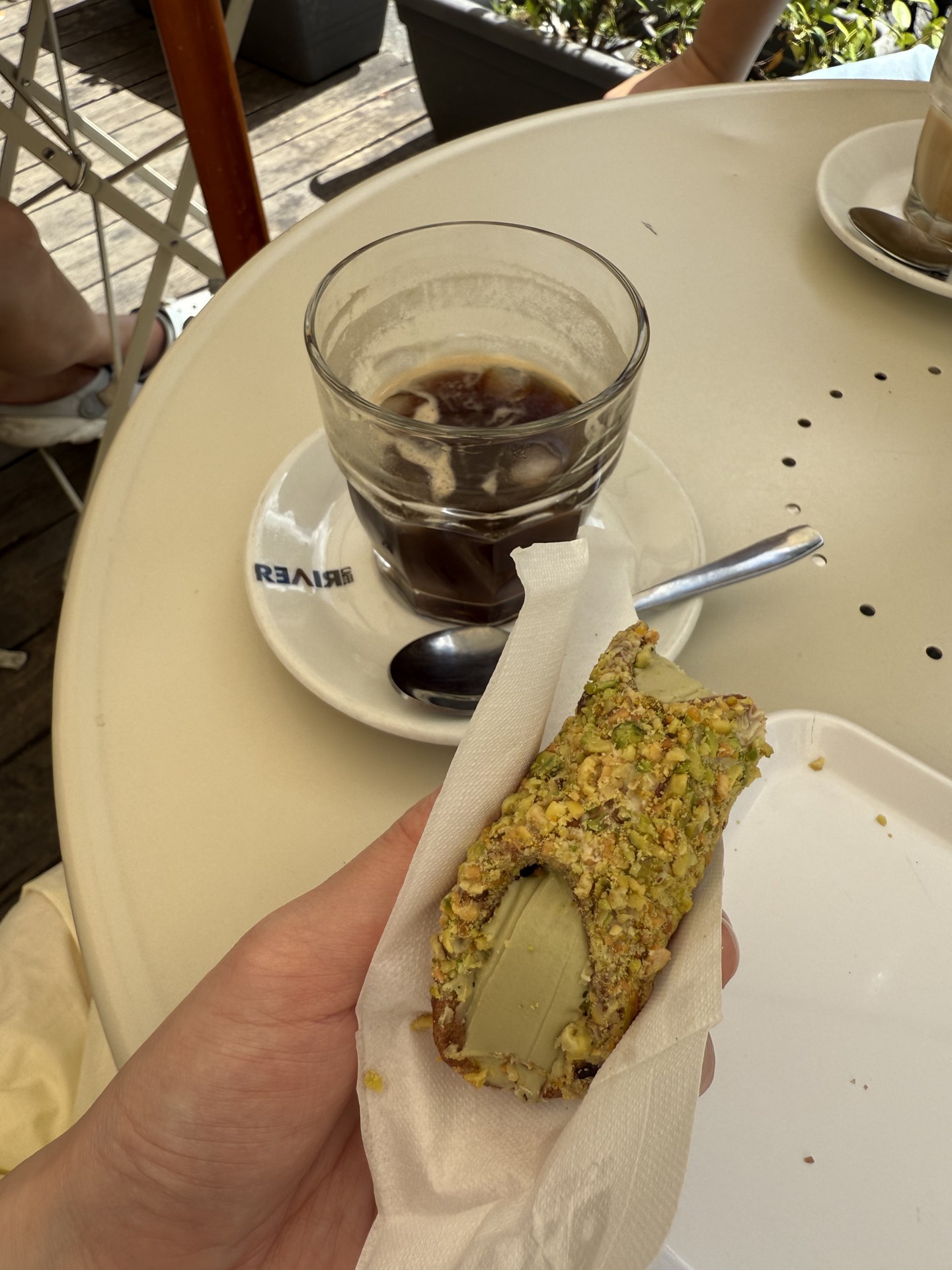
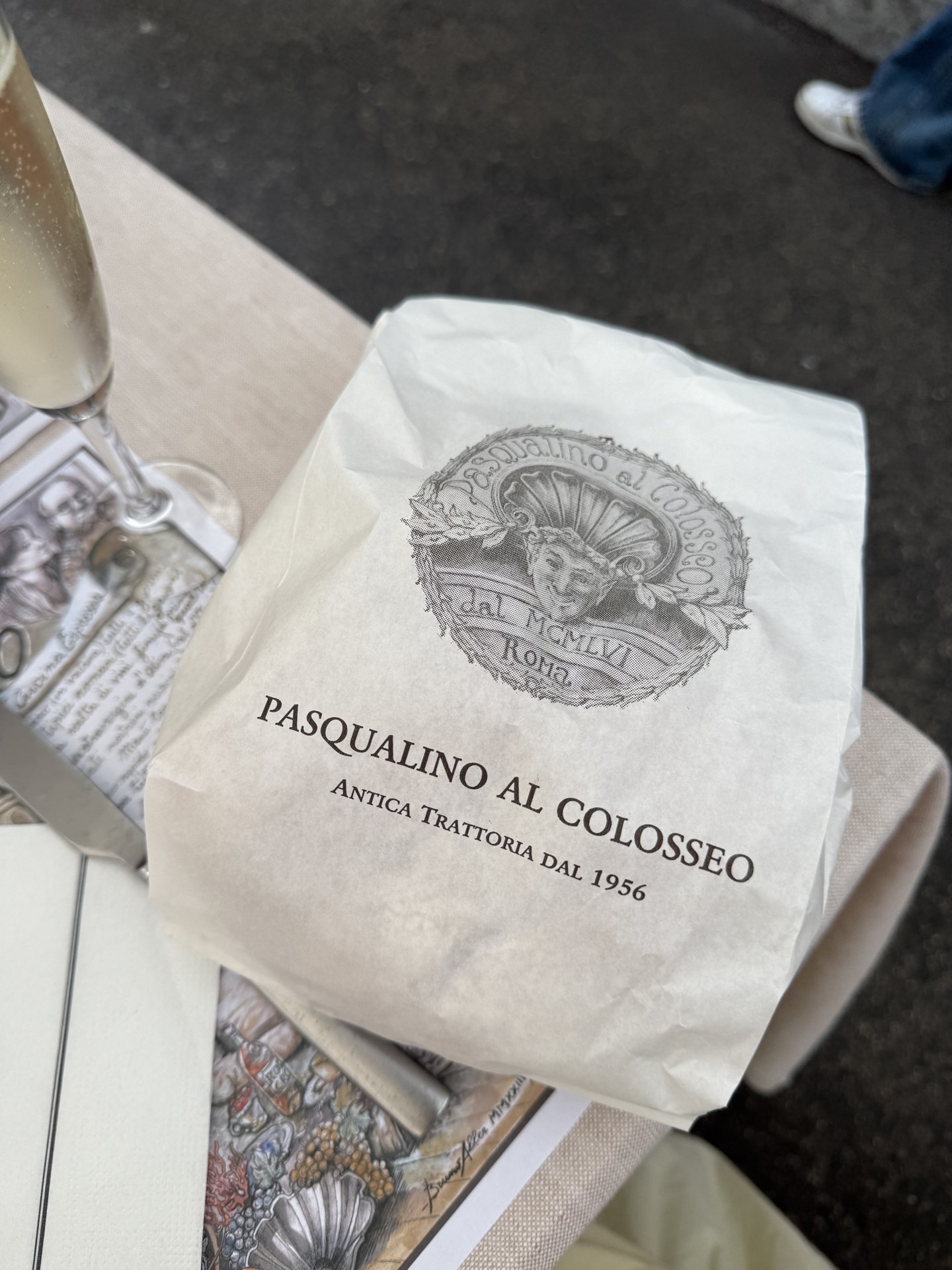
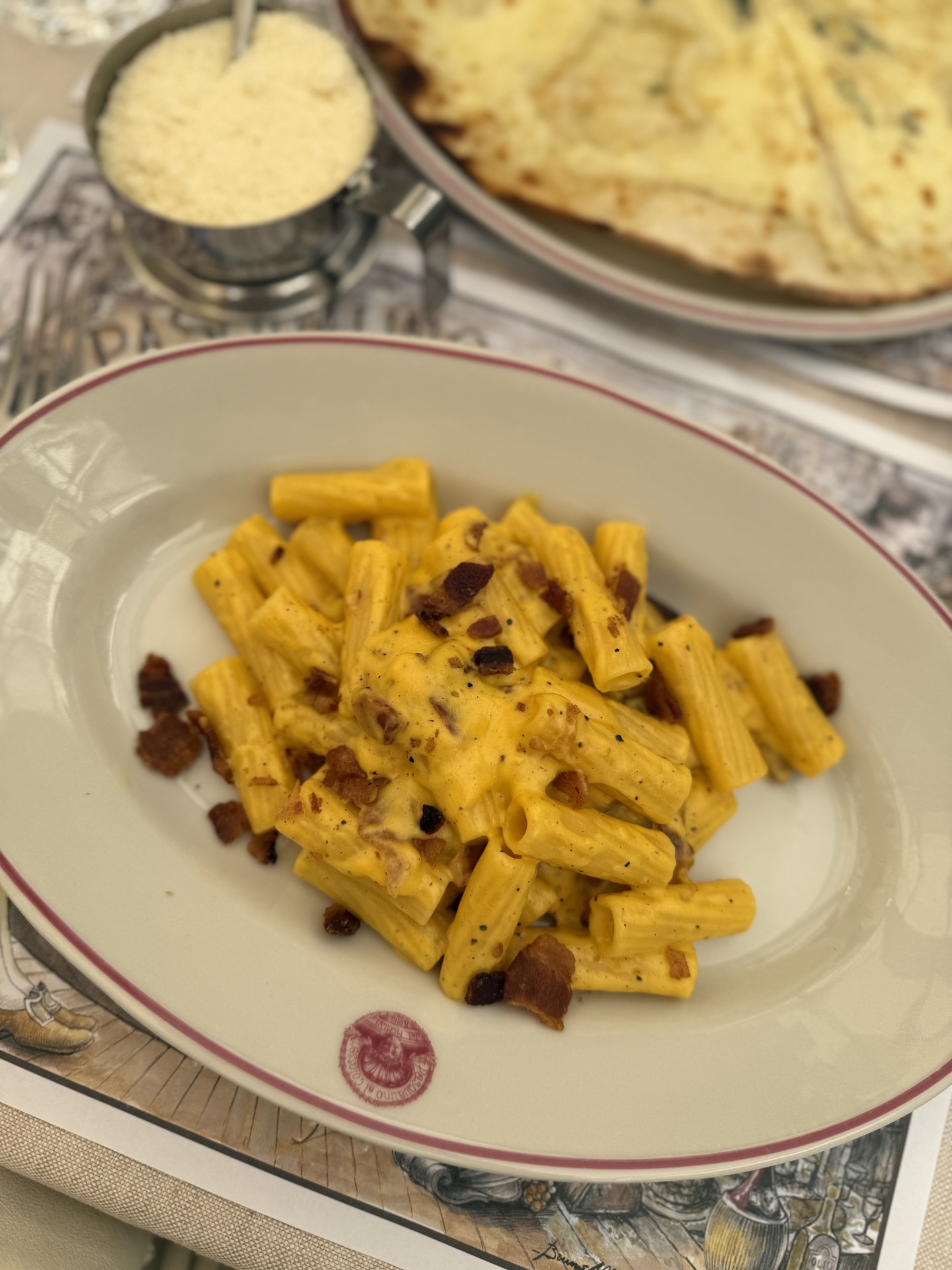
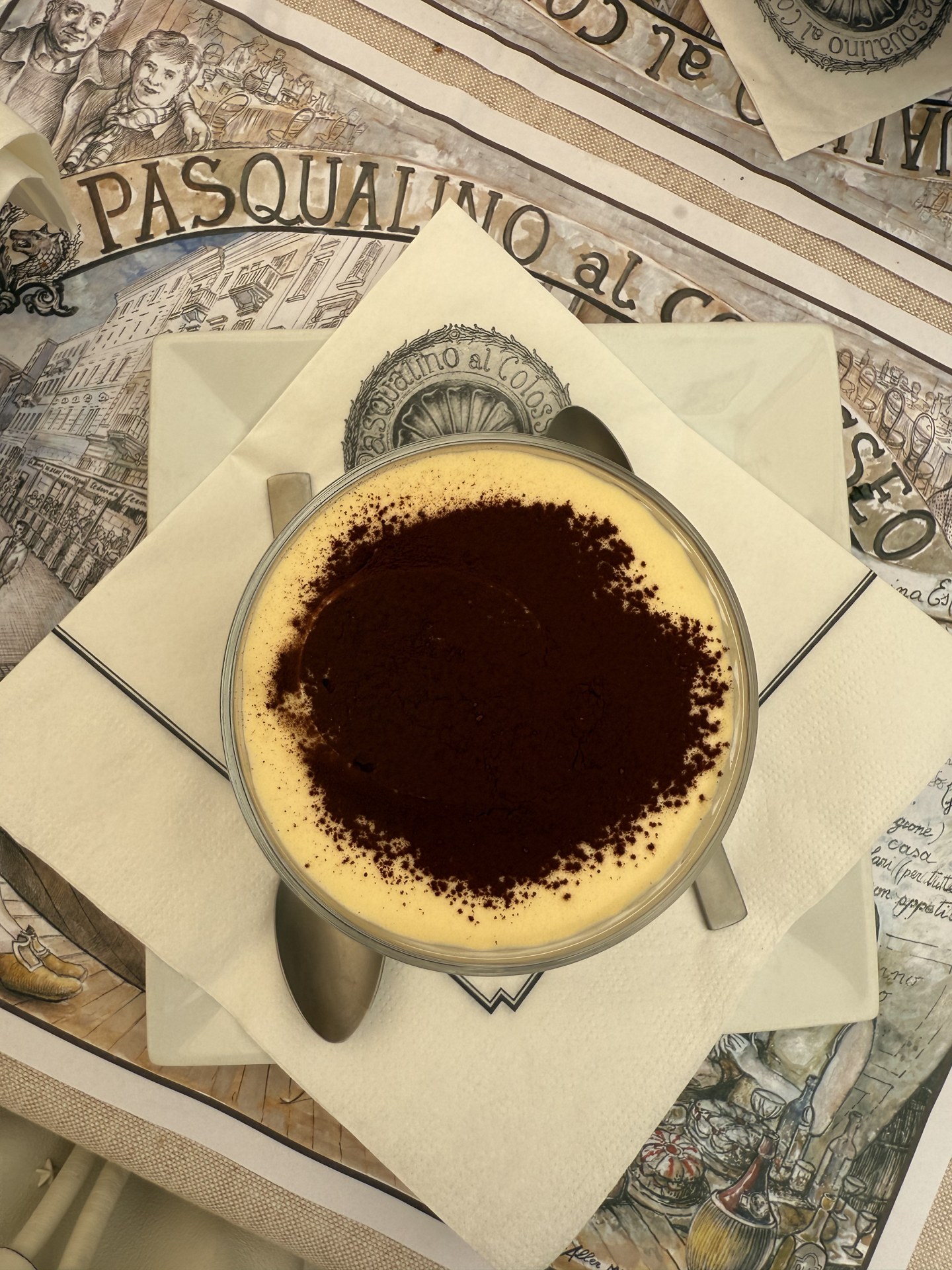
Out of the ruins, a pistachio cannolo and an espresso at a café first; then a proper lunch at Pasqualino al Colosseo, in business since 1956: a quattro formaggi pizza and rigatoni carbonara arriving together, and tiramisu under heavy cocoa to finish.
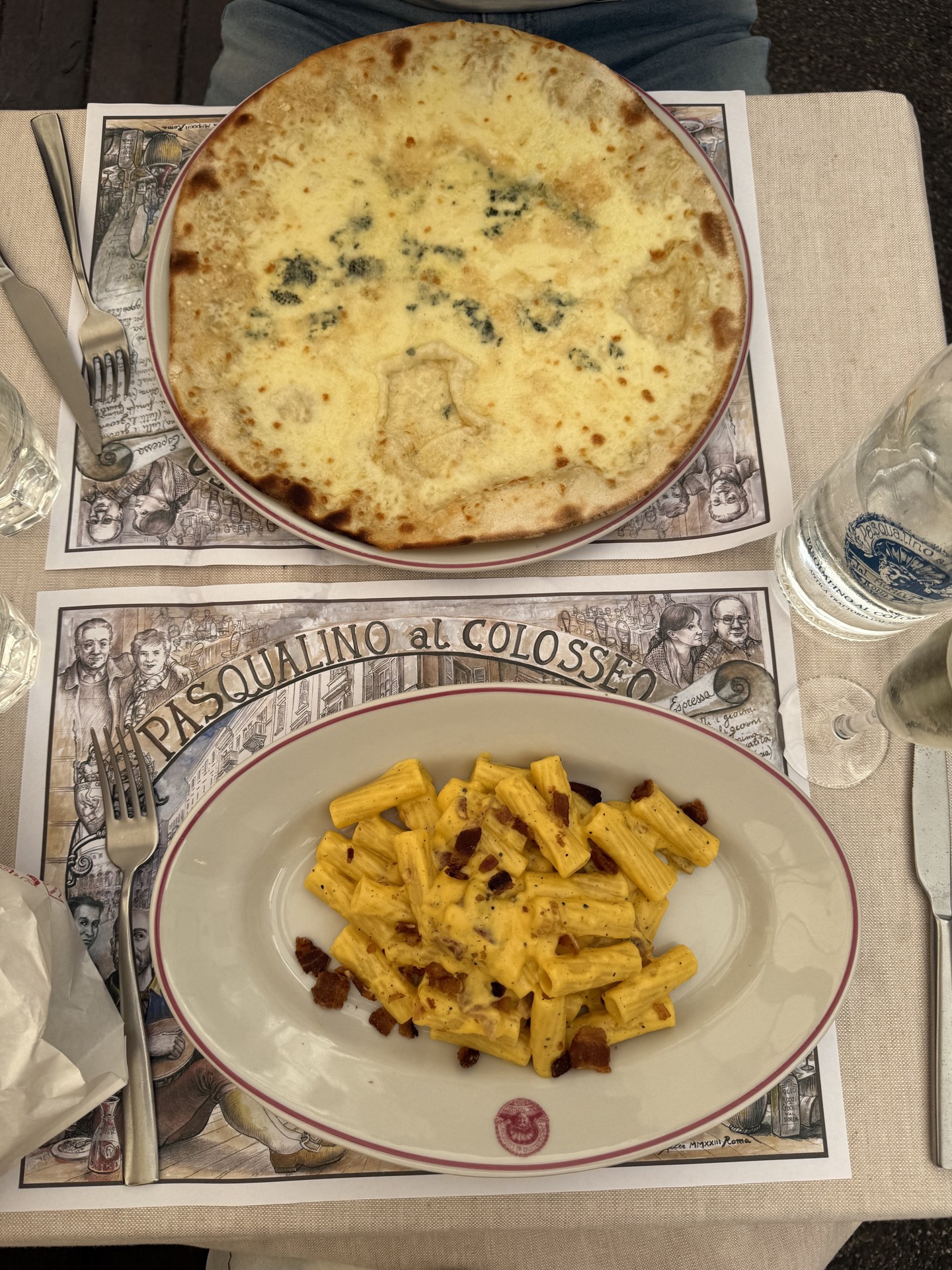
The verdict on the meal fits in one line: everything in Rome is salty. With carbonara it is no accident — pecorino romano and cured guanciale are the twin salt engines of Roman cooking, and bound in egg yolk the result is direct and intense. The first bite startles if you eat lightly; by the third, you understand: this city has tasted like this for two thousand years.
Coda: The Vittoriano
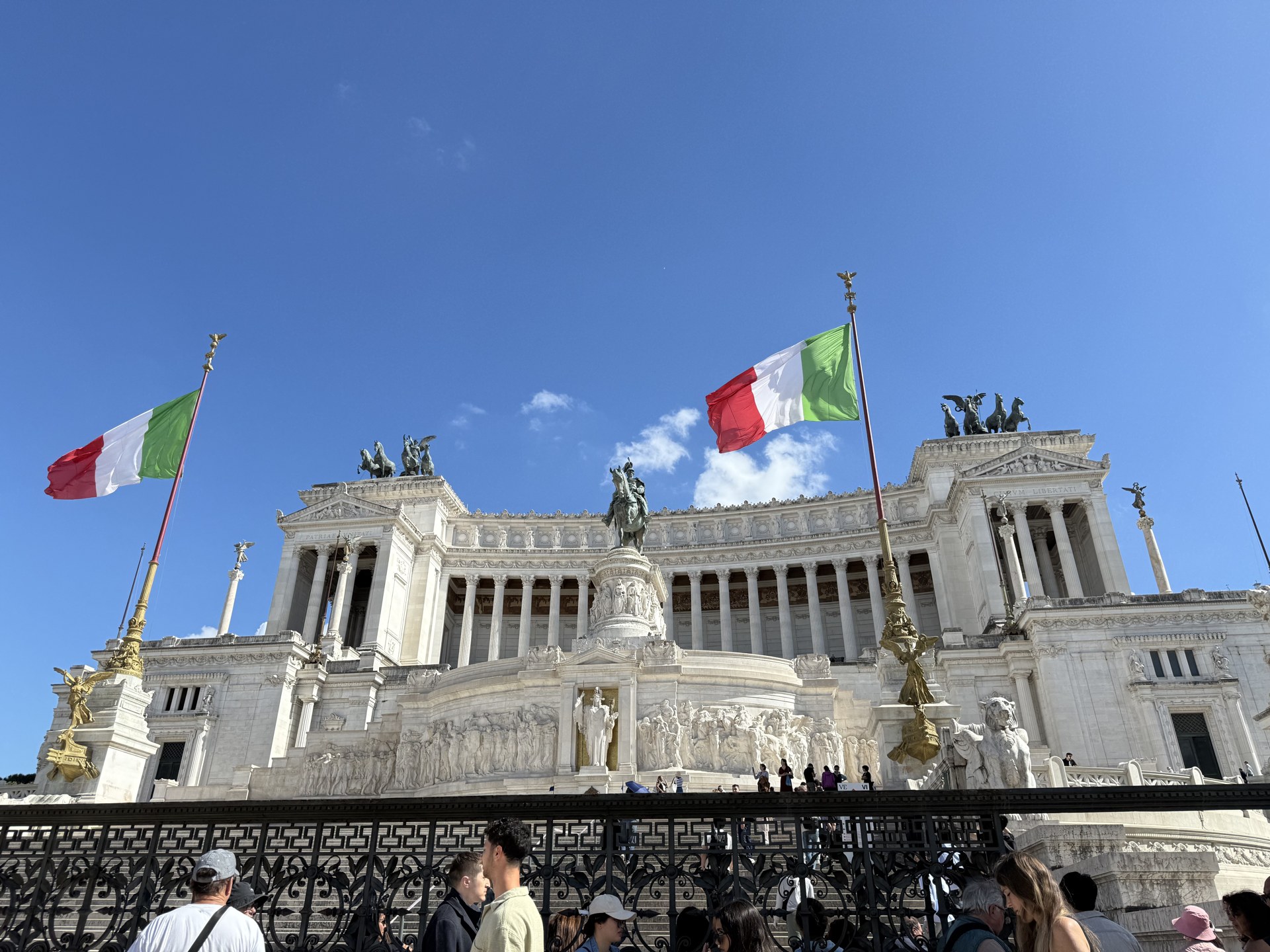
At four we reached the Vittoriano, the Altar of the Fatherland, on Piazza Venezia — white marble glaring in the blue, two Italian flags flying full. A portrait in front of it, and the day in ancient Rome was done.