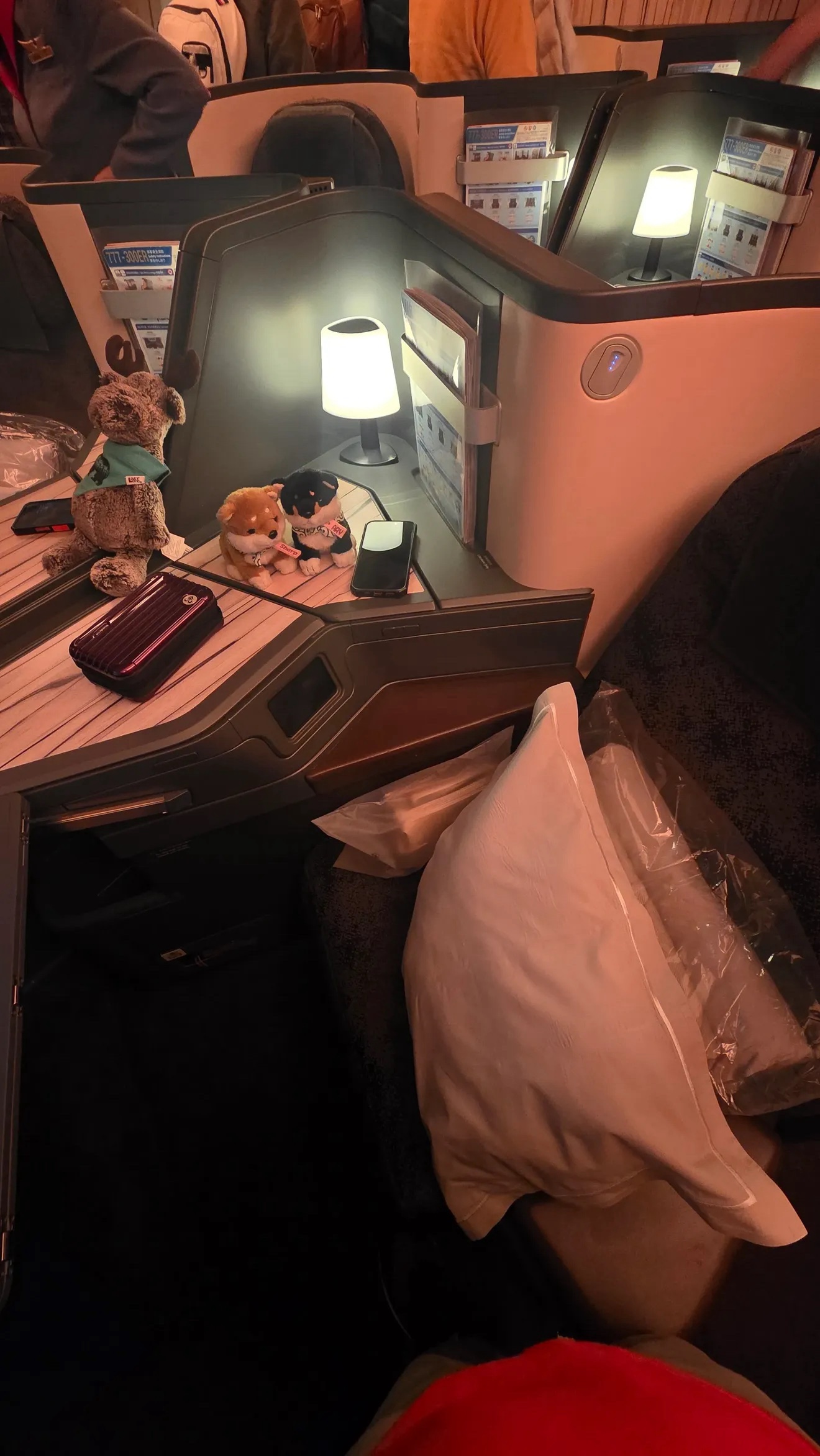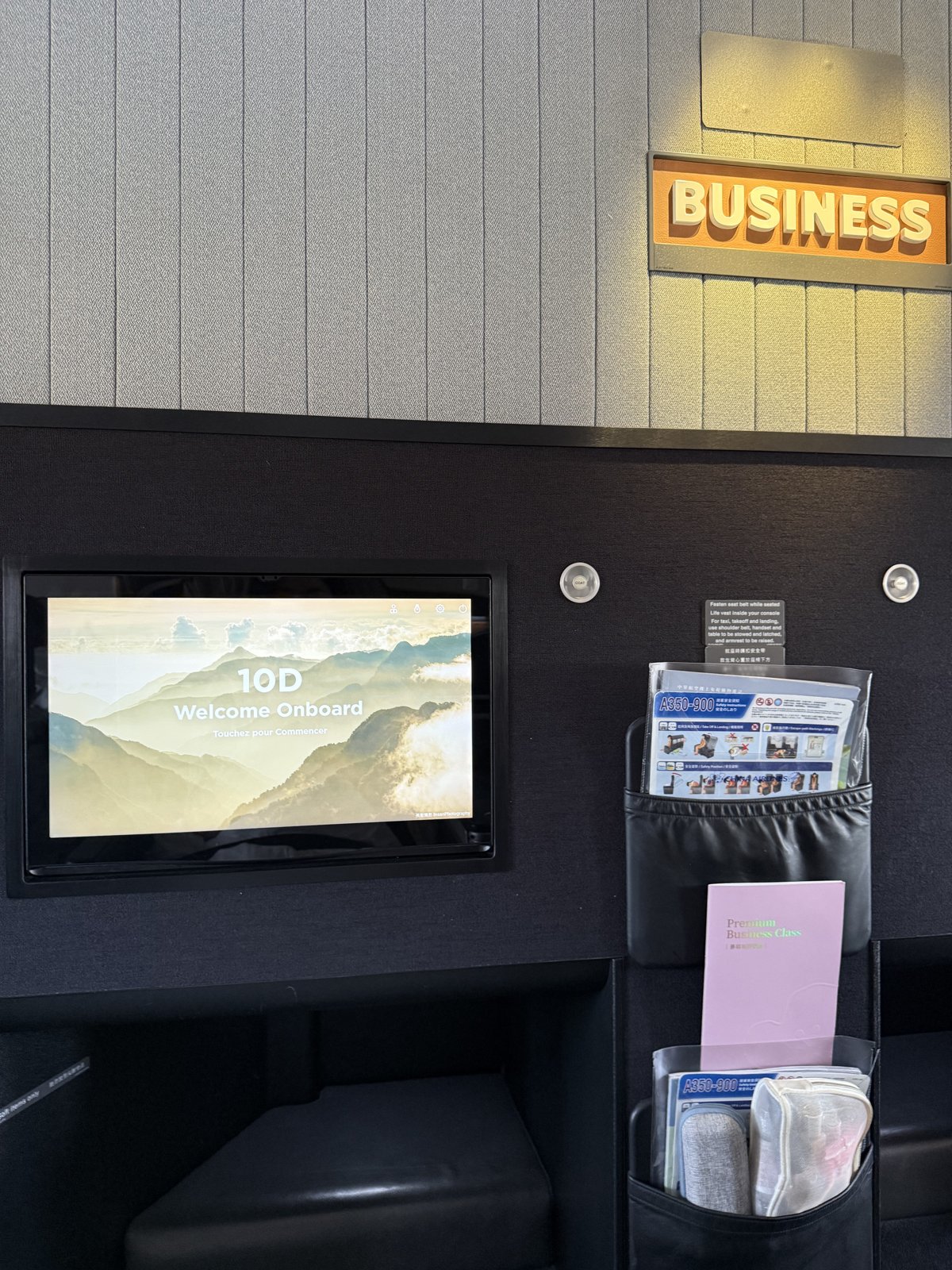
Three days in Rome ended at Fiumicino, boarding China Airlines CI76 back to Taipei. Everything looked normal at the gate — until I stepped into the cabin. No reverse herringbone, China Airlines' signature A350 layout. Instead, a staggered, one-left-one-right seat plan, and a "BUSINESS" sign in a typeface that wasn't quite right. This aircraft was an A350-900 leased from Scandinavian Airlines (SAS).
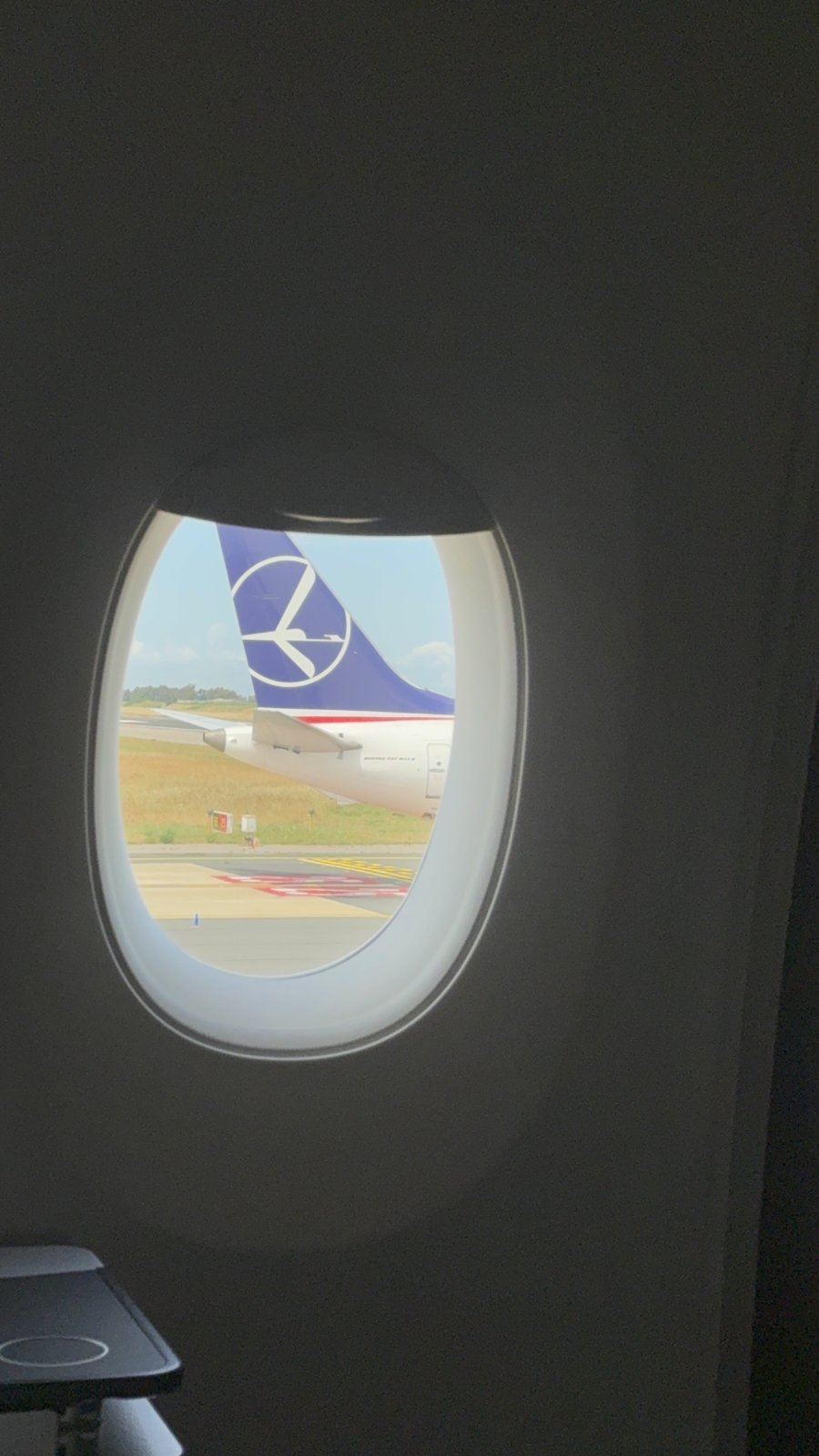
A Leased Airframe: SAS Hardware on a China Airlines Flight
After the pandemic, China Airlines leased this batch of A350-900s from SAS to rebuild long-haul capacity quickly, deploying them on the Rome and Singapore routes. The seats are Thompson Aero Vantage XL units — fully flat, in a staggered 1-2-1 layout with direct aisle access for everyone. The hardware itself is respectable. But it was specified for a Scandinavian airline: dark wood-look panels, SAS-style signage, and a storage logic entirely different from China Airlines' own A350s. I spent the first hour relearning where everything was — headphones, slippers, amenity kit, all in unfamiliar places.

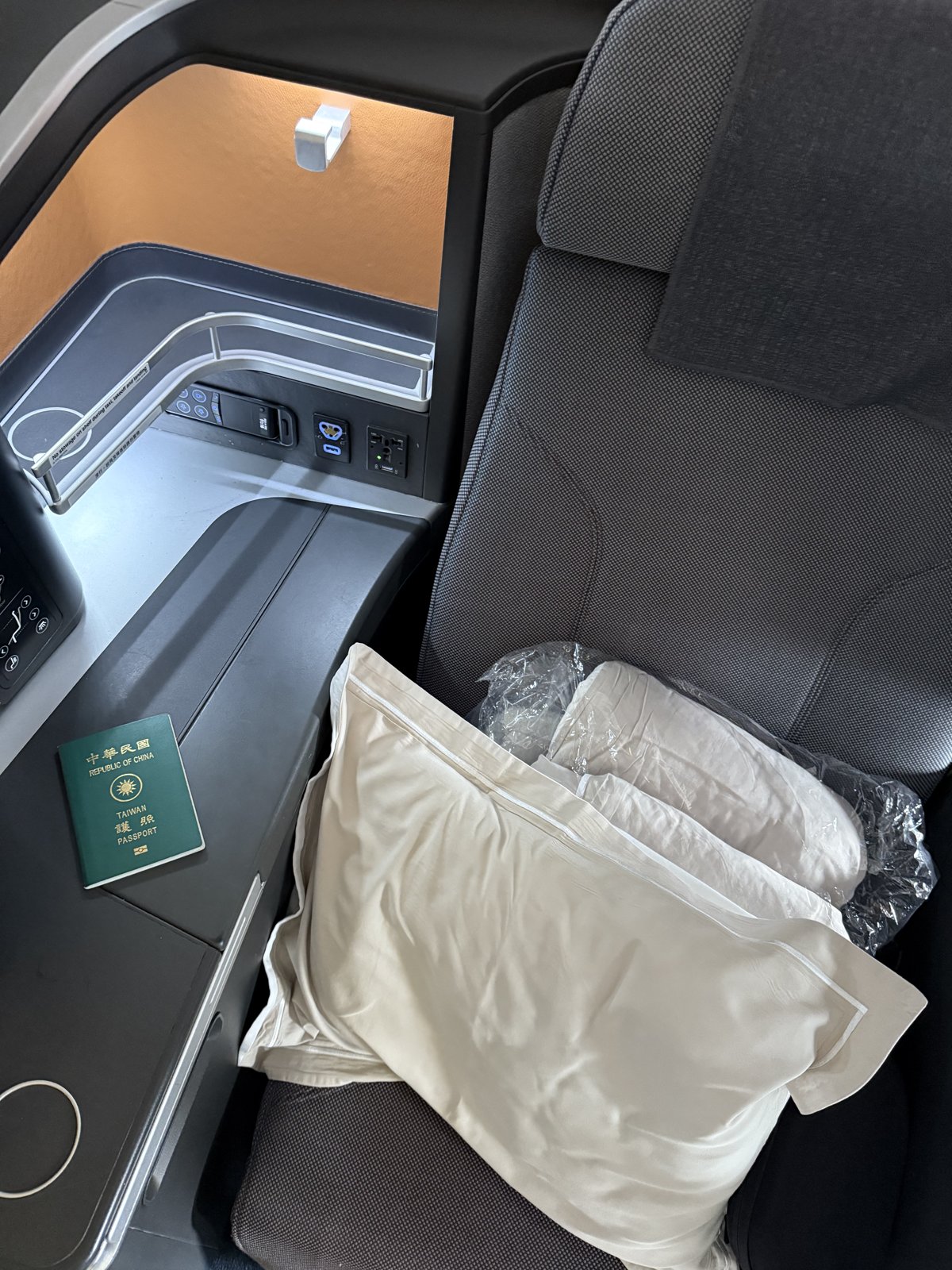
The Seat: Sleeps Fine, But It Isn't the Product You Paid For
Lay the Vantage XL flat and it does its job — good length, a level sleeping surface, and the staggered geometry delivers more privacy than you'd expect. The deductions are in the details: fragmented storage, an awkward tray-table mechanism, and bedding simply dumped on the seat rather than presented. None of the "everything is ready for you" polish of China Airlines' own A350. If you bought this ticket for the famous reverse-herringbone cabin, reset your expectations to zero before boarding.
The Wine List: The Flight's One Genuine Surprise
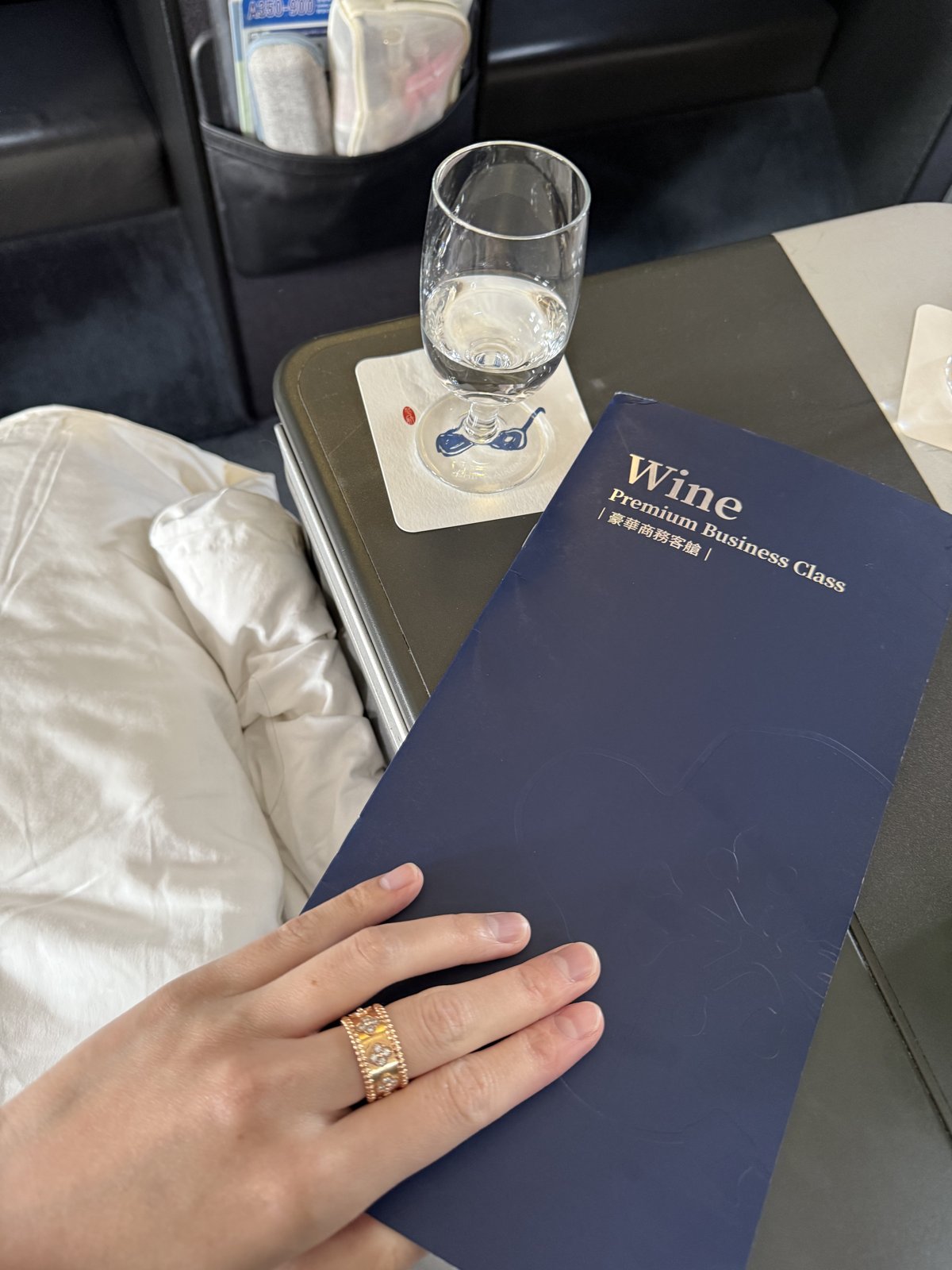
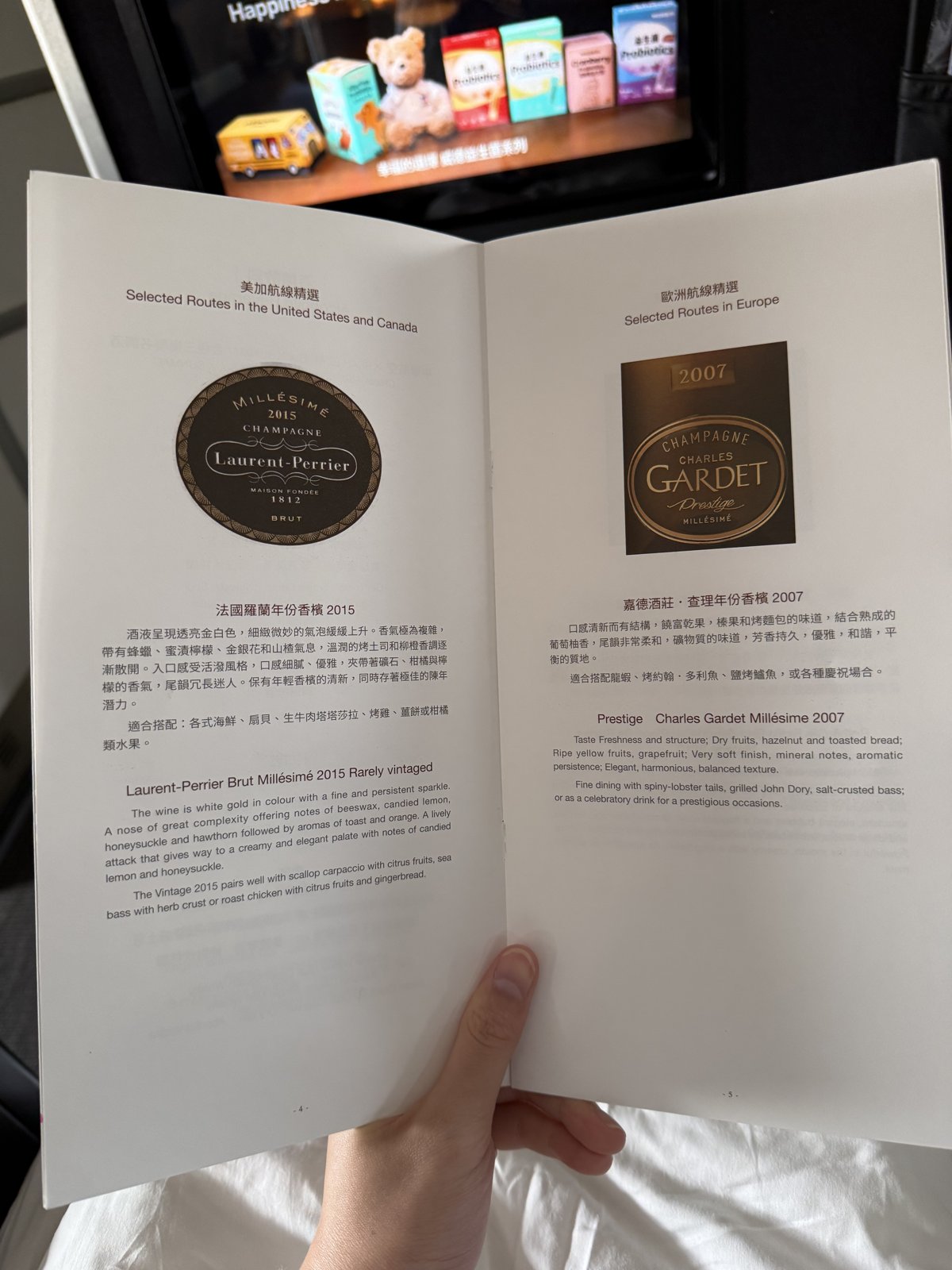
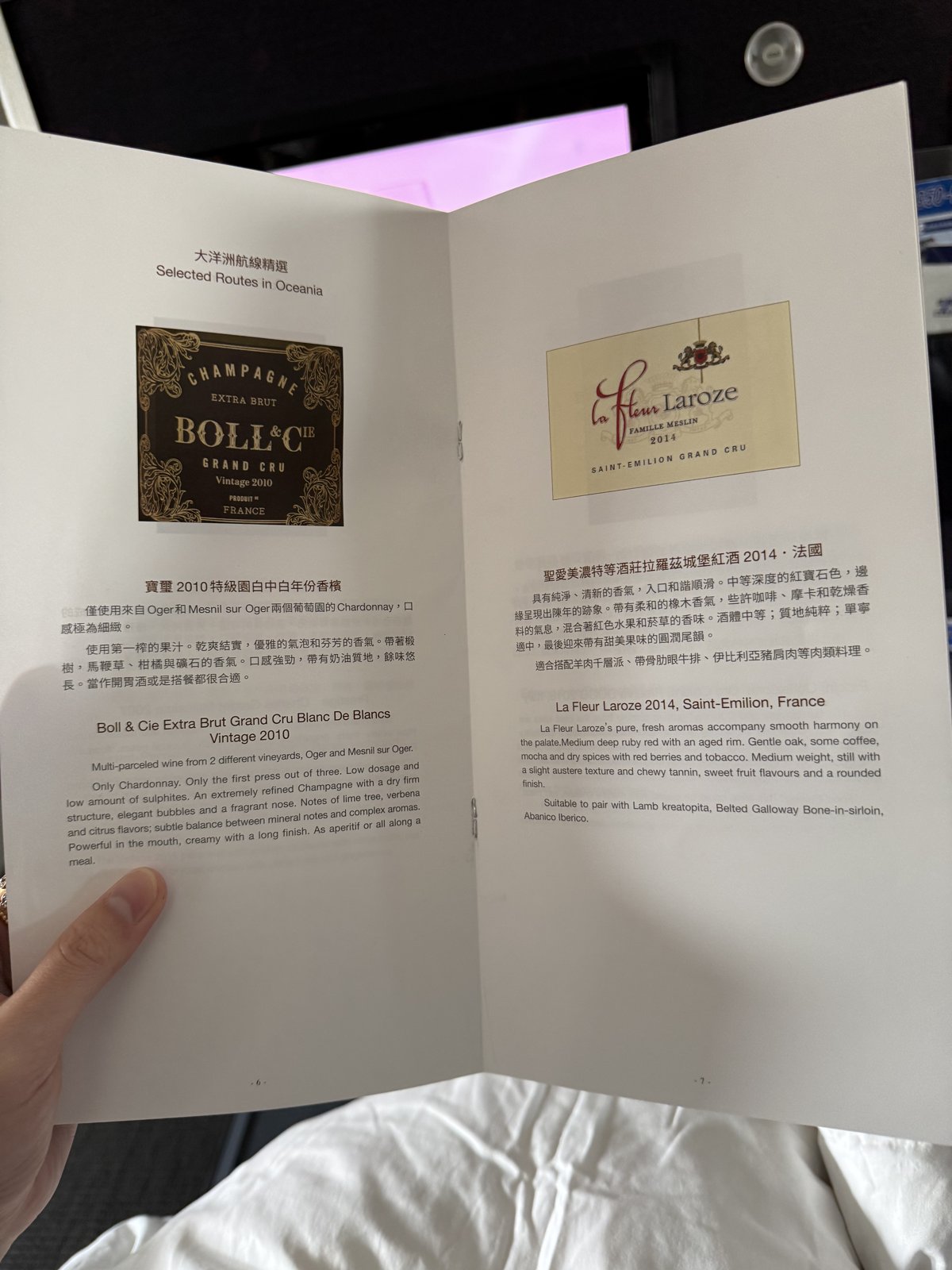
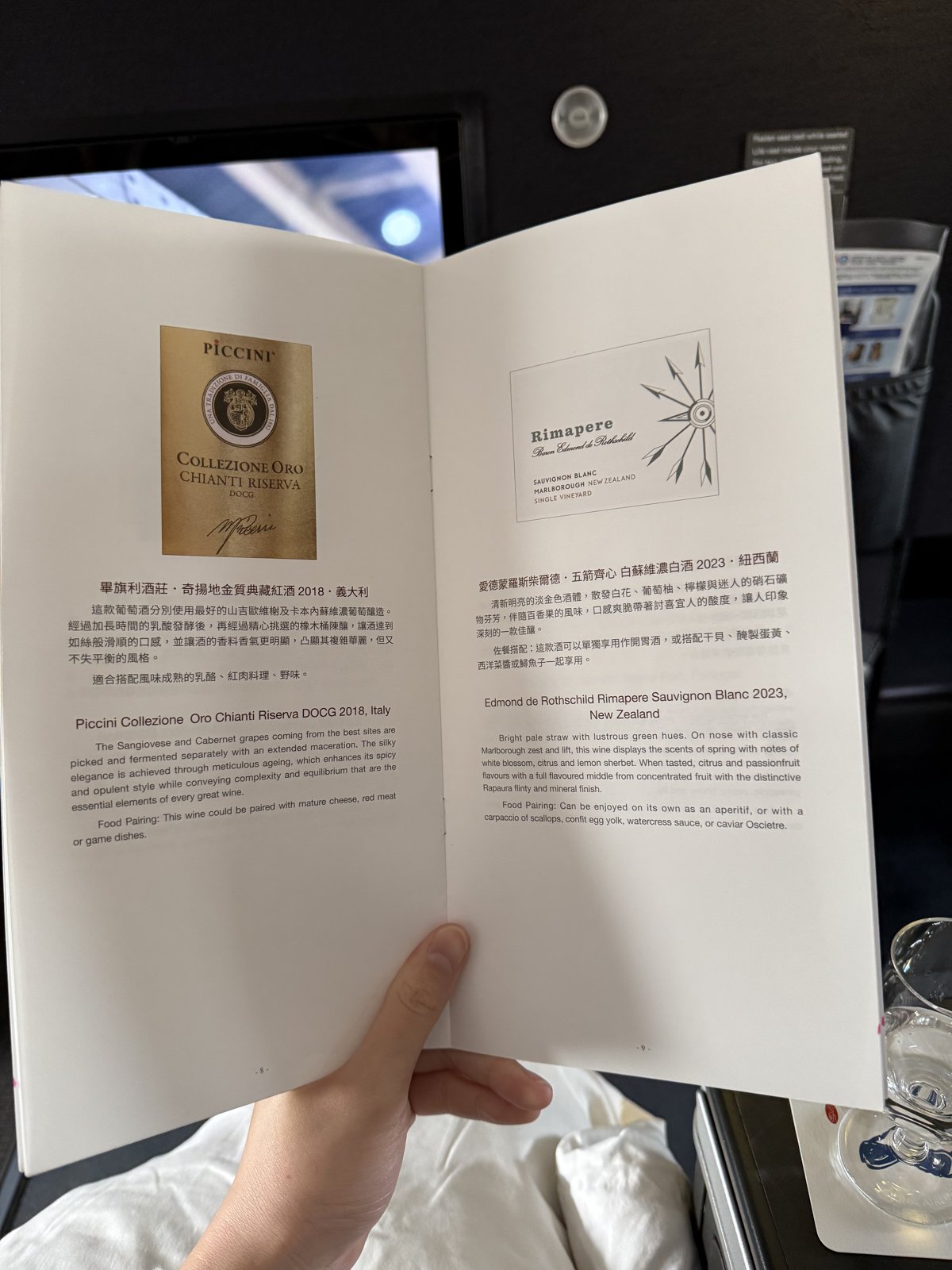
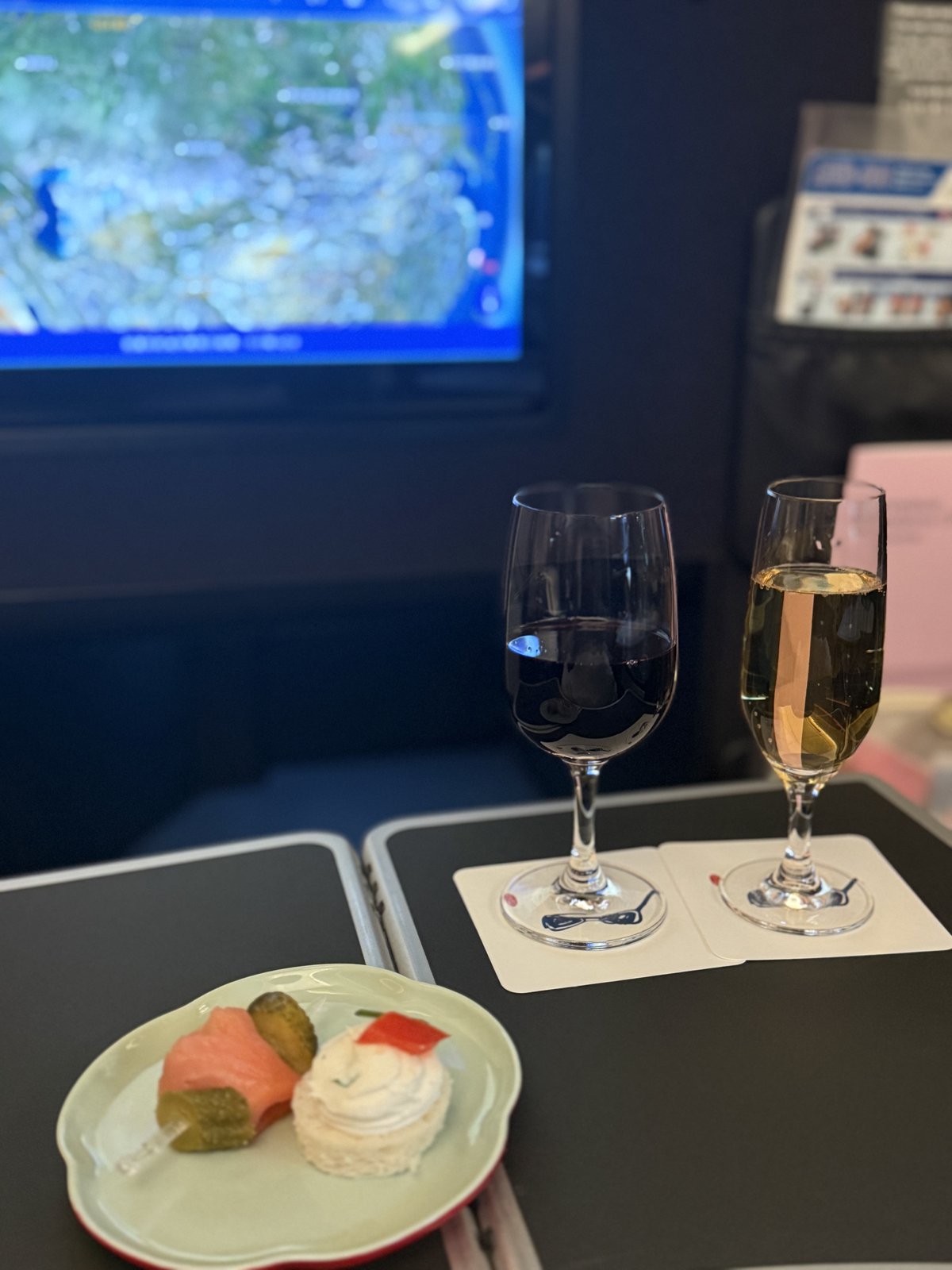
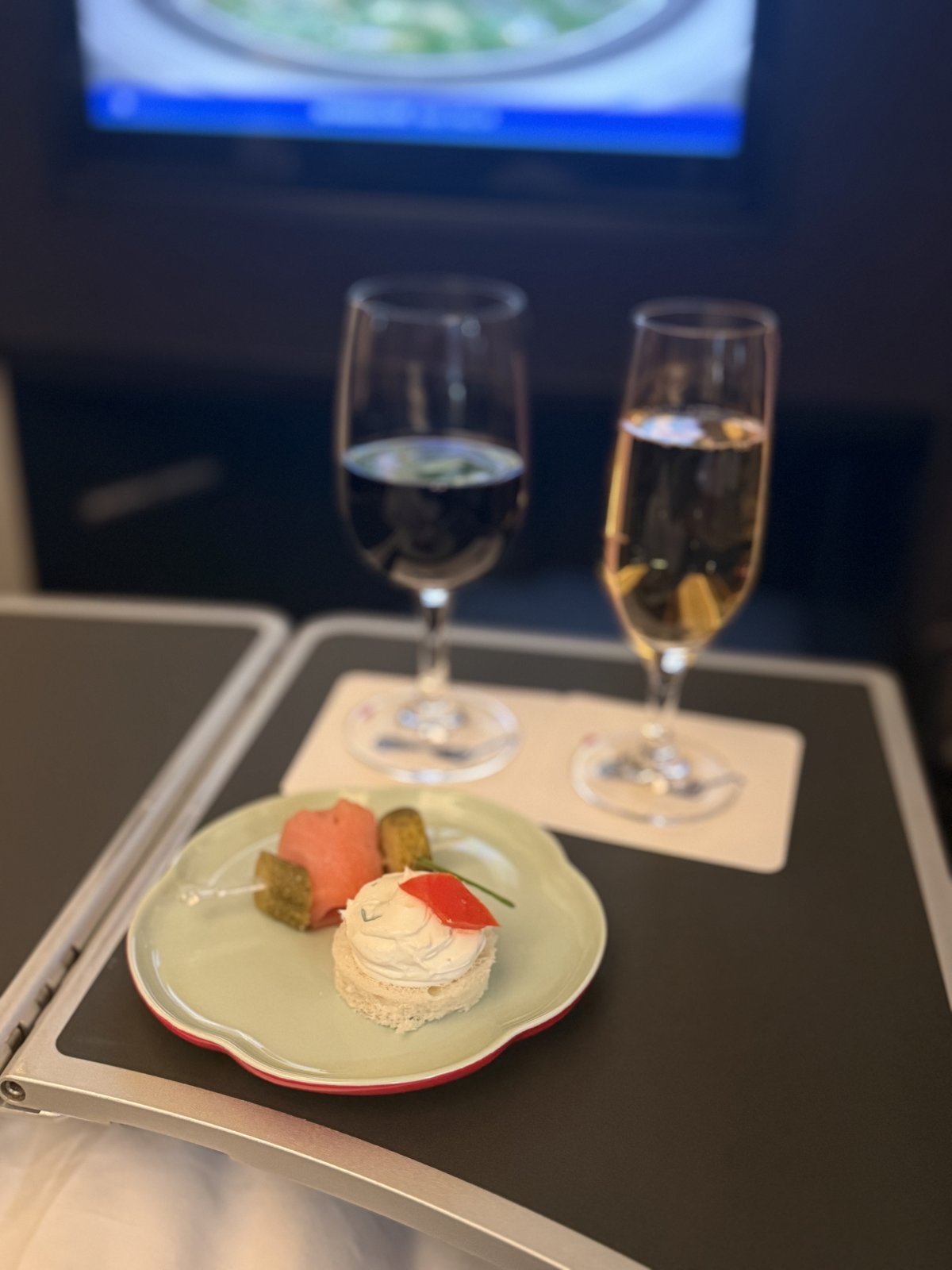
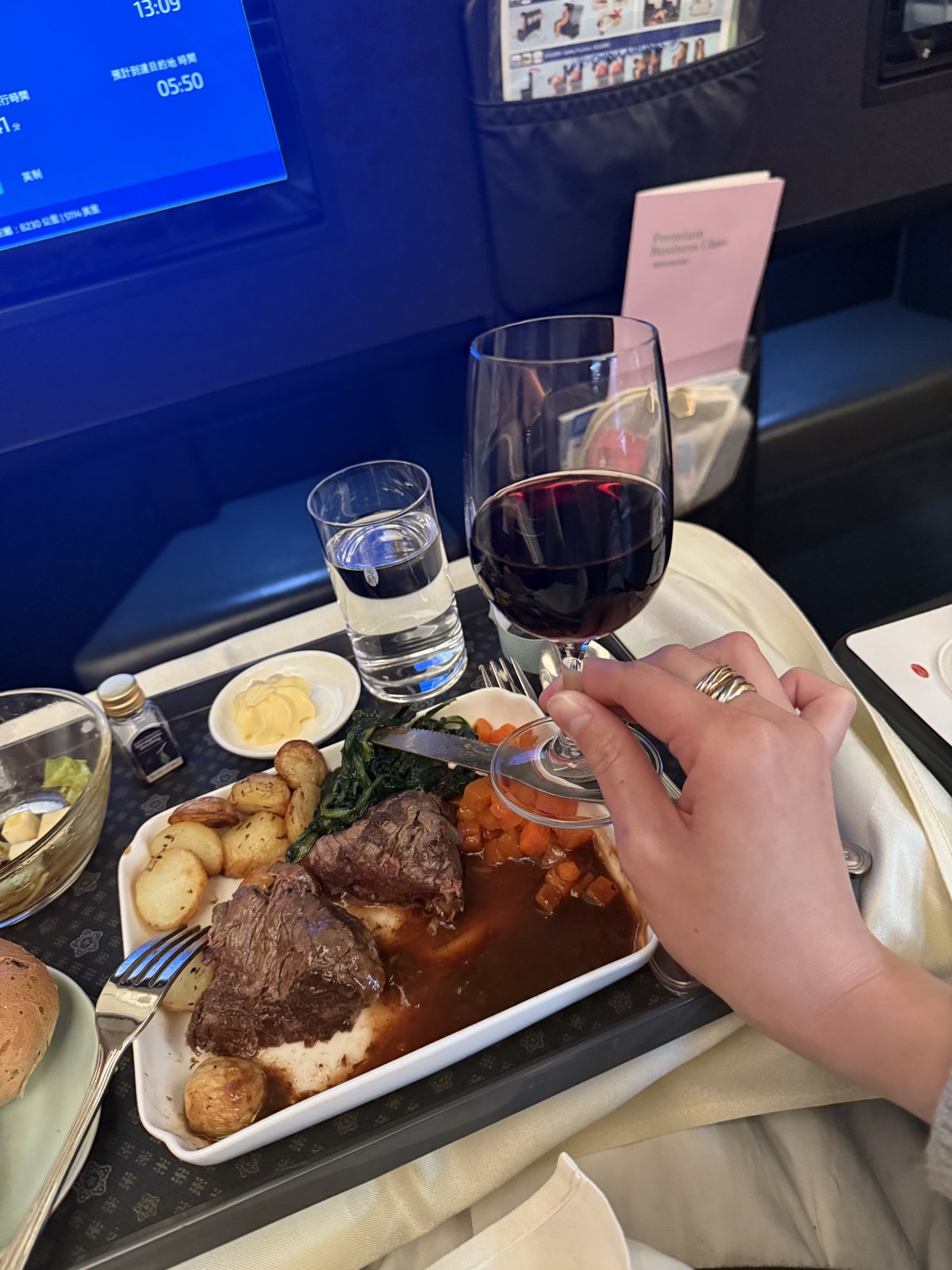
Now the bright spot — the wine. The list opens with Laurent-Perrier, Gardet and Boll & Cie champagnes, plus New Zealand Rimapere Sauvignon Blanc and a Bordeaux red. Whoever curates this list did their job properly. The welcome champagne arrived with fine bubbles at the right temperature — the ten minutes of this flight that felt most like business class is supposed to feel.
The Food: Bread Like a Rock
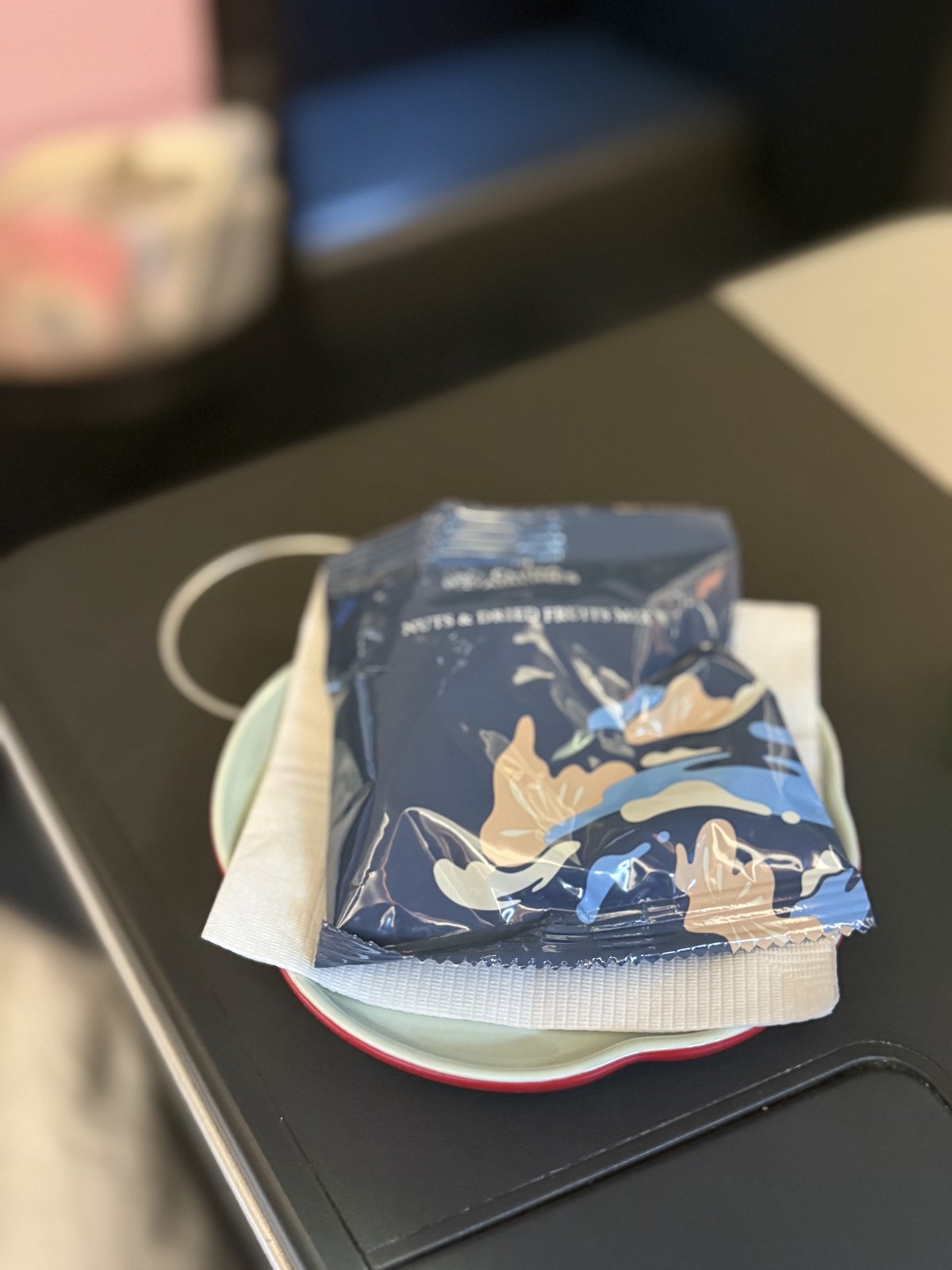
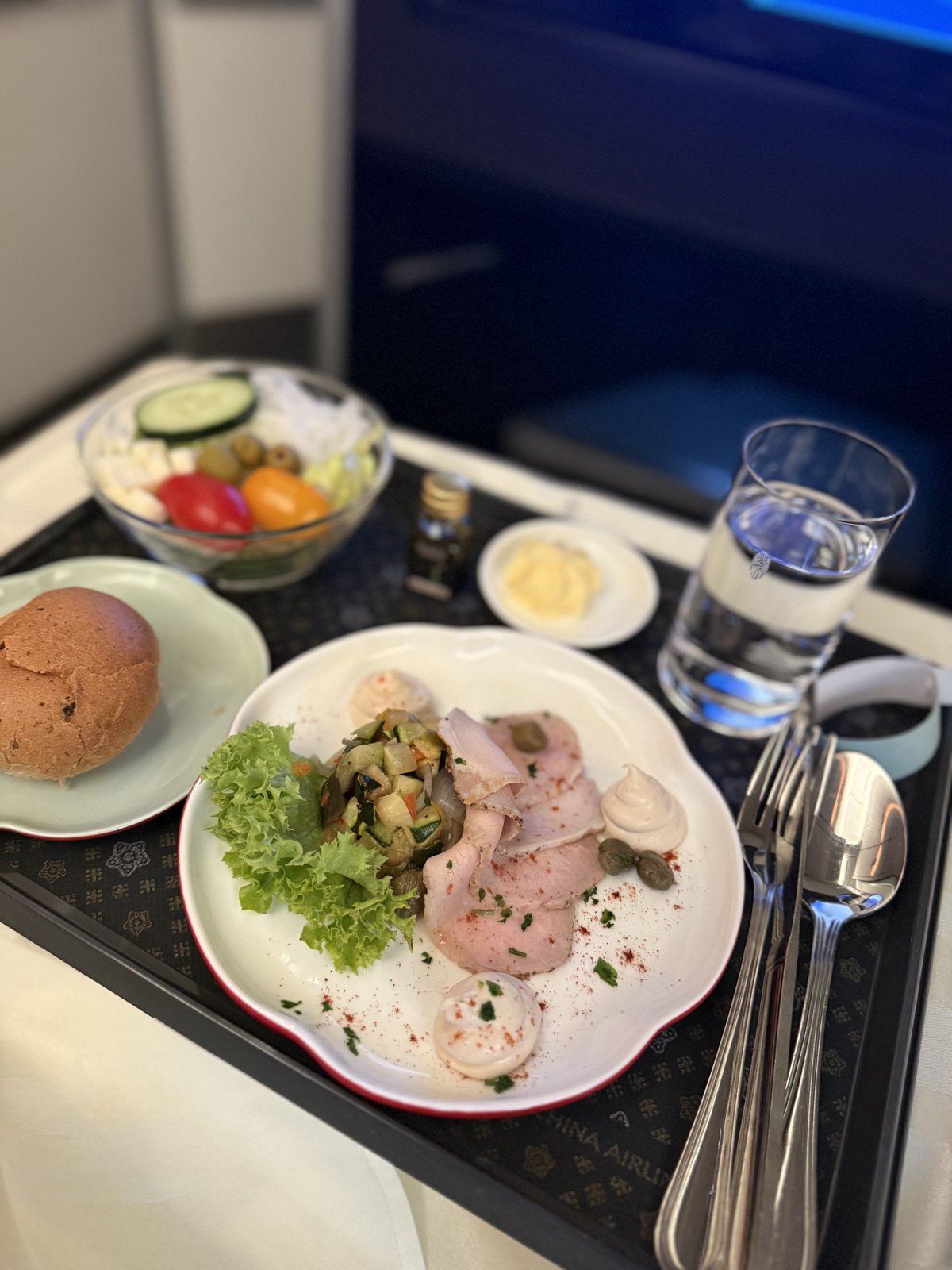
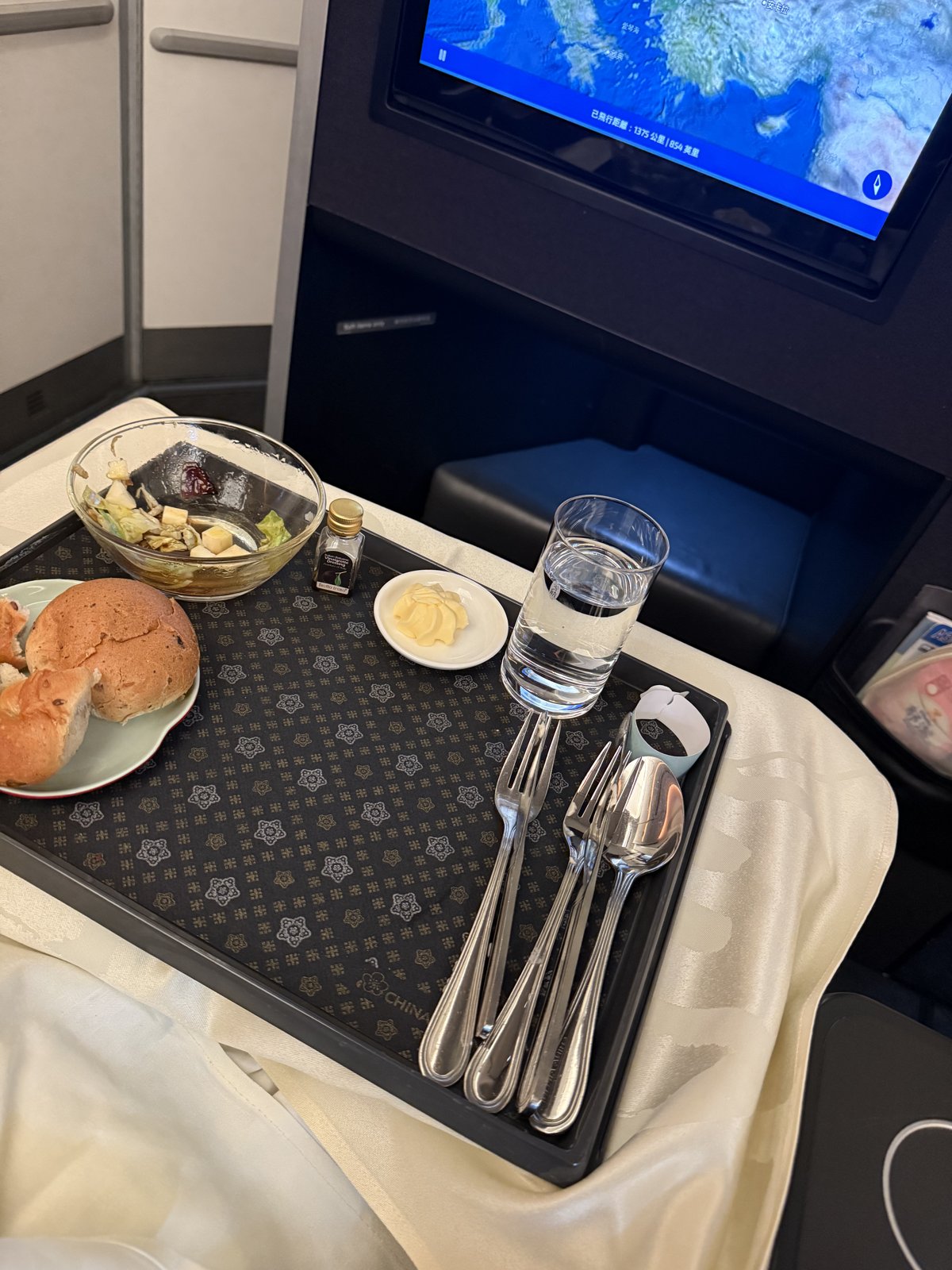
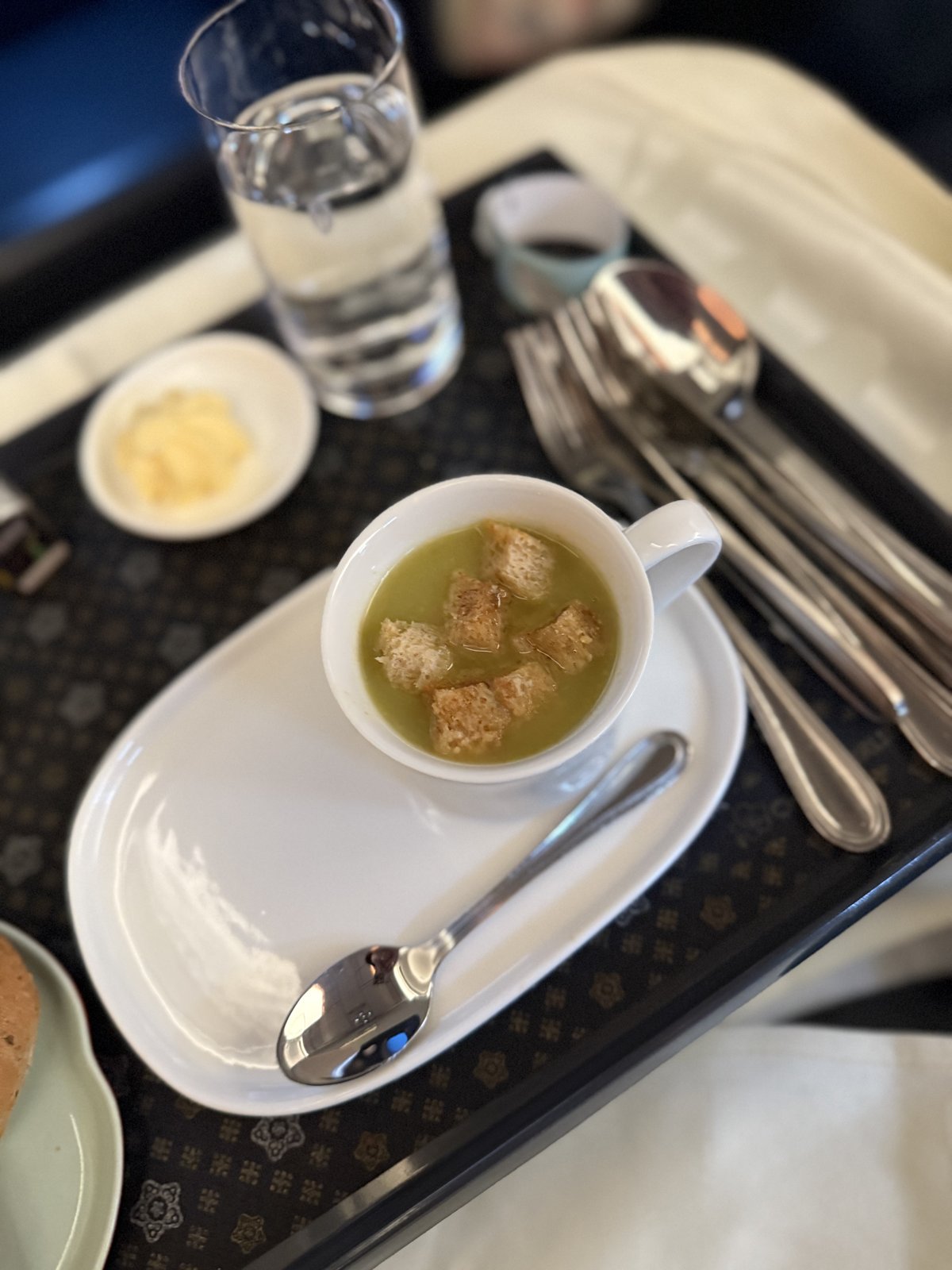
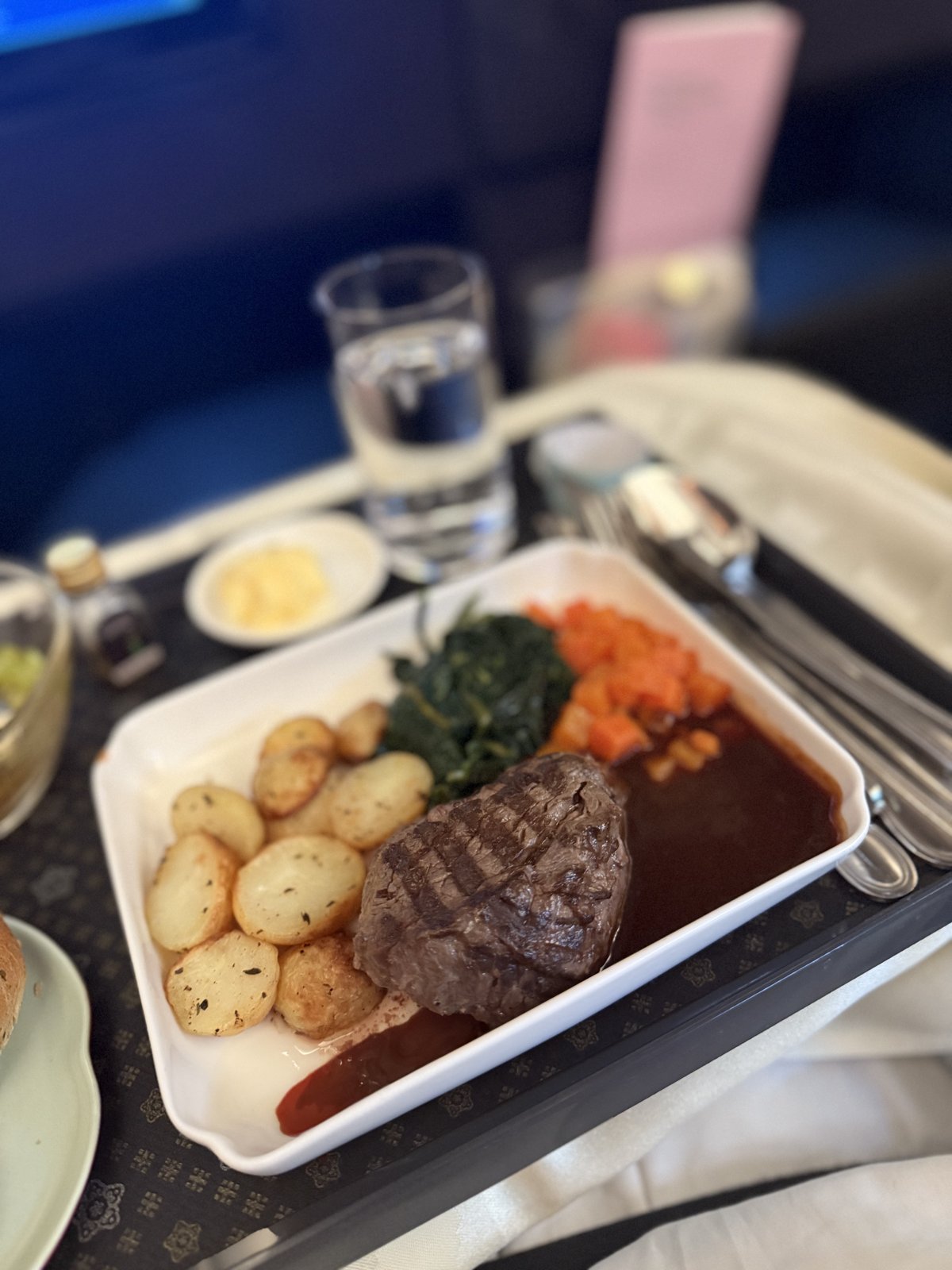
Then reality arrived. The cold appetiser and salad were unremarkable, the soup was fine, the steak's doneness was acceptable — but the bread. I remember it to this day. Biting in, I thought I'd picked up a display model: a crust you have to tear apart by hand, and dry crumb inside. Warming bread properly on a long-haul flight is not hard; serving it like this means nobody cared. Seasoning across the meal was timid, and my lasting impression was simply "I am no longer hungry."
Wi-Fi: Dead for Thirteen Hours
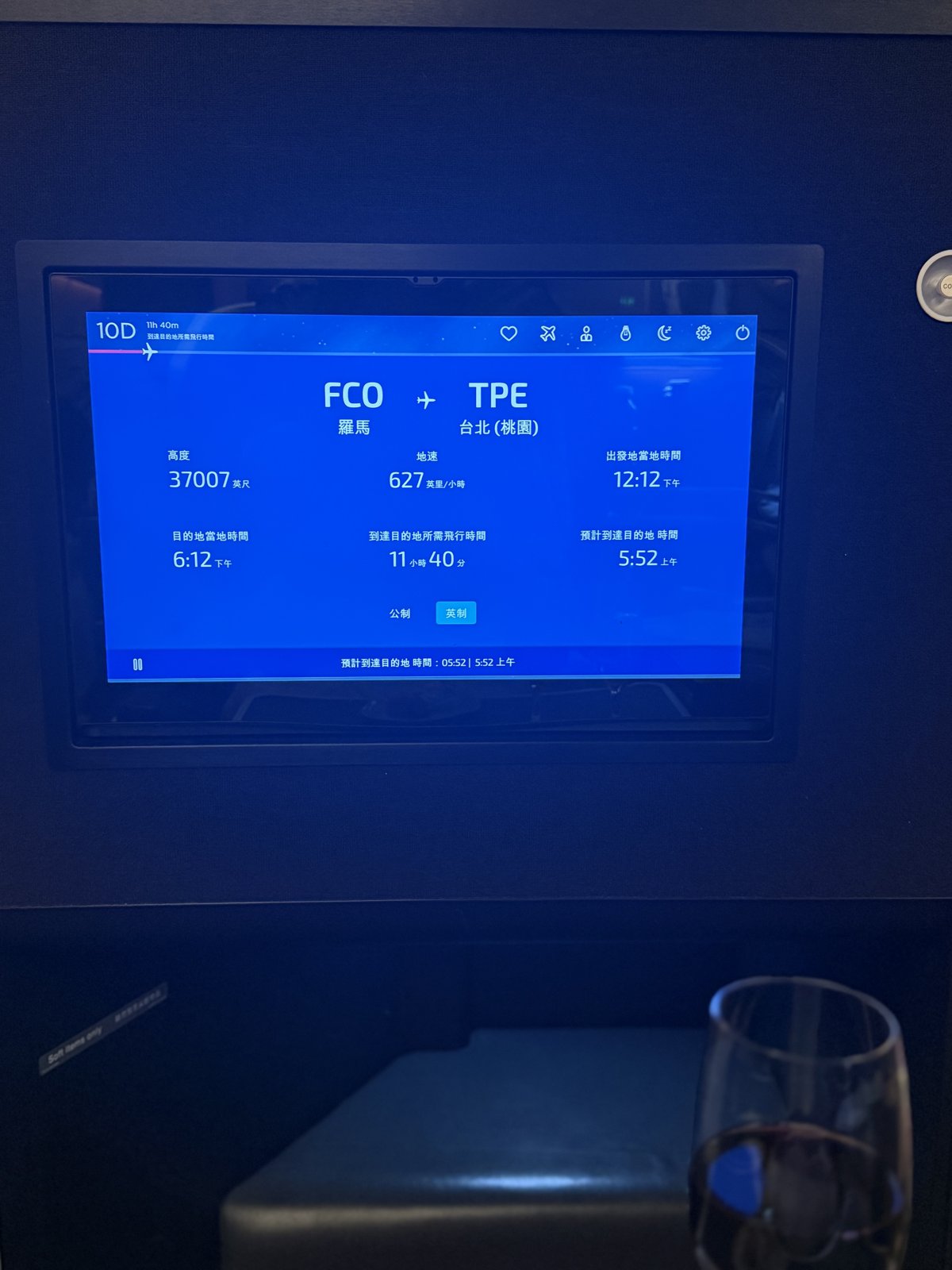
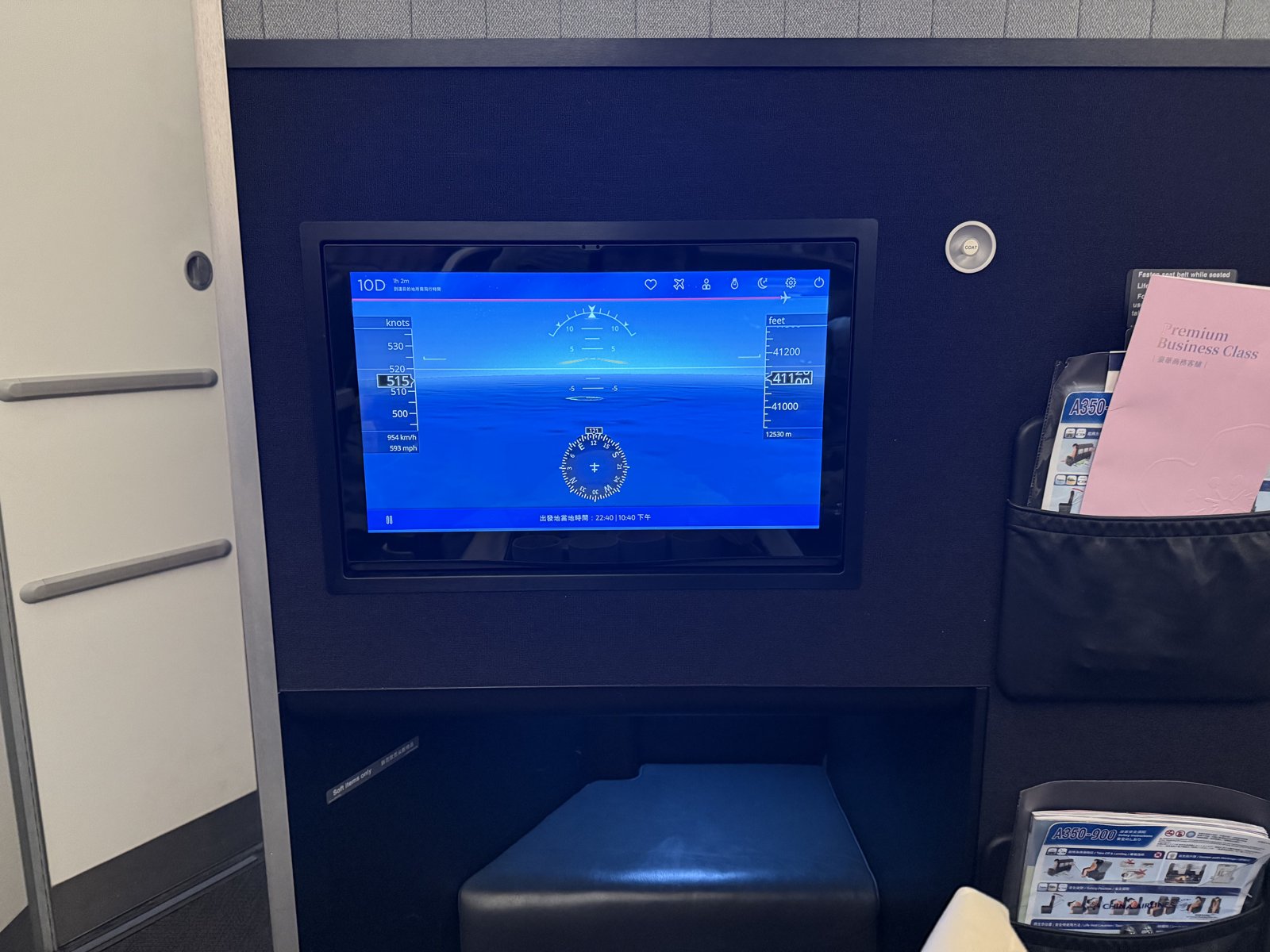
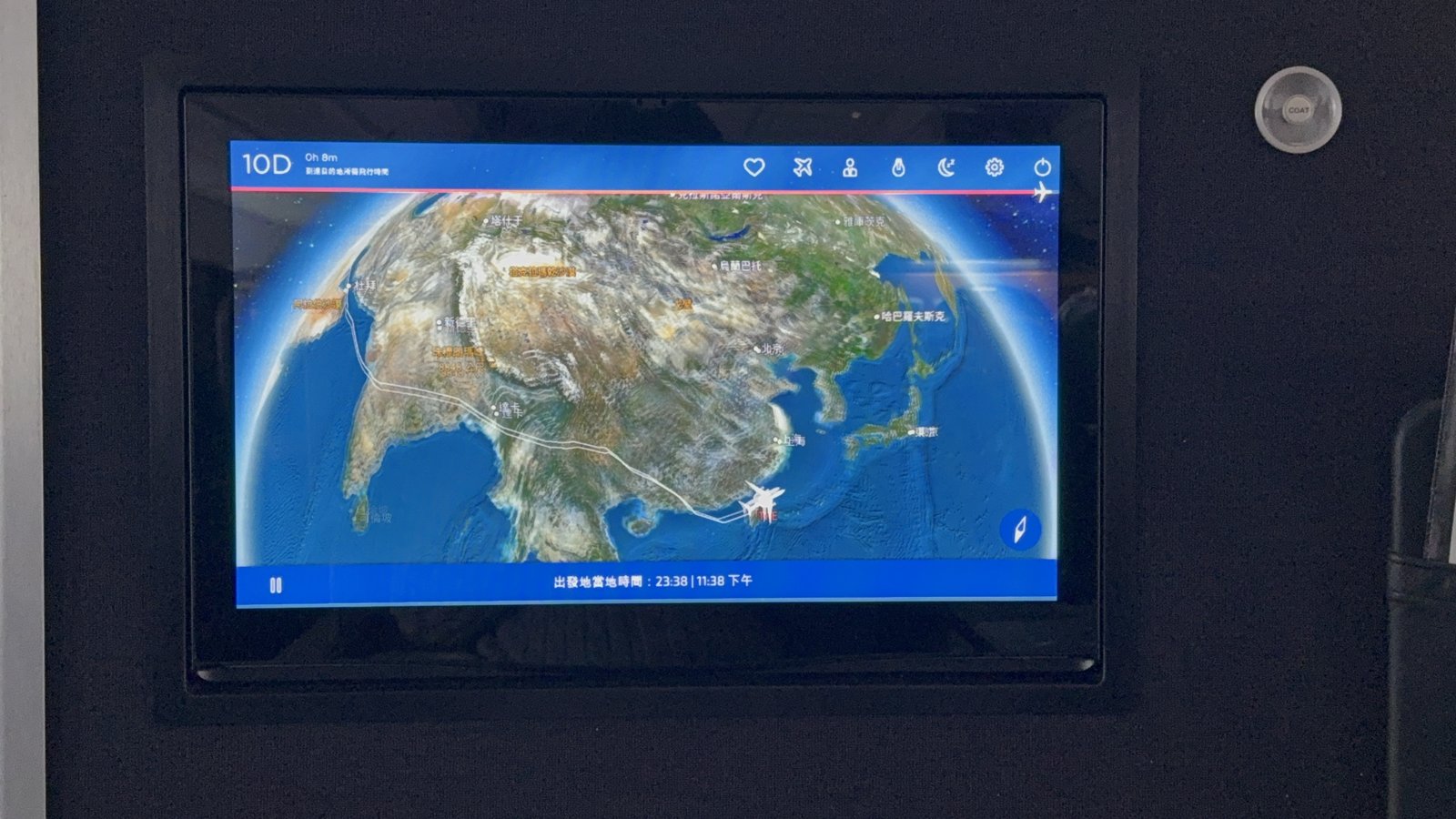
What angered me most wasn't the food. It was the network — or rather, its total absence. Across a thirteen-hour sector, the onboard Wi-Fi never connected once. The entertainment system itself is serviceable: a large screen, complete flight maps and airshow data. But in 2025, a long-haul business class cabin with zero connectivity is a thirteen-hour forced disappearance. A leased airframe with an unnegotiated connectivity package — and the passenger pays for it.
Mid-Flight and Second Meal: Noodles and Congee
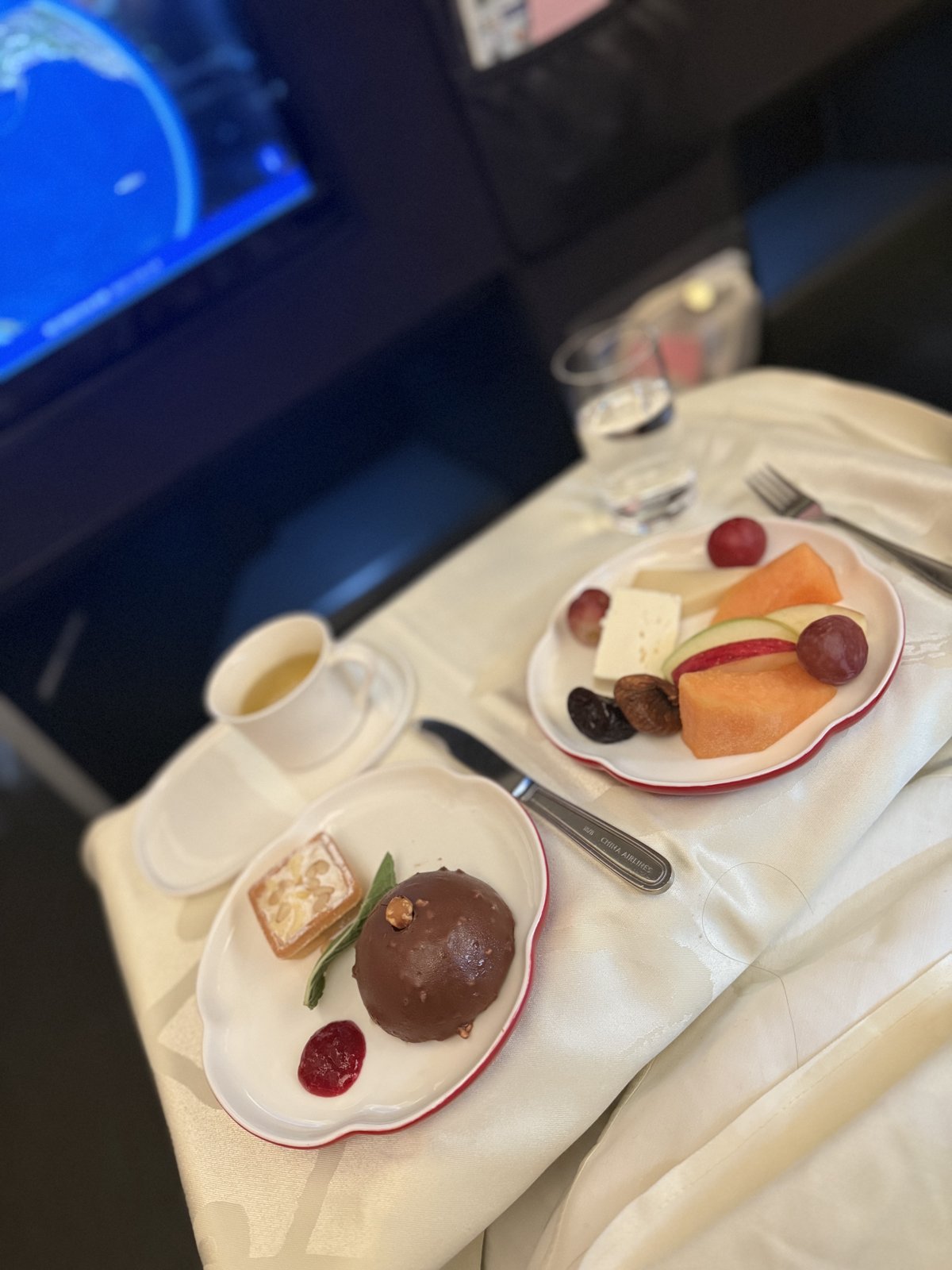
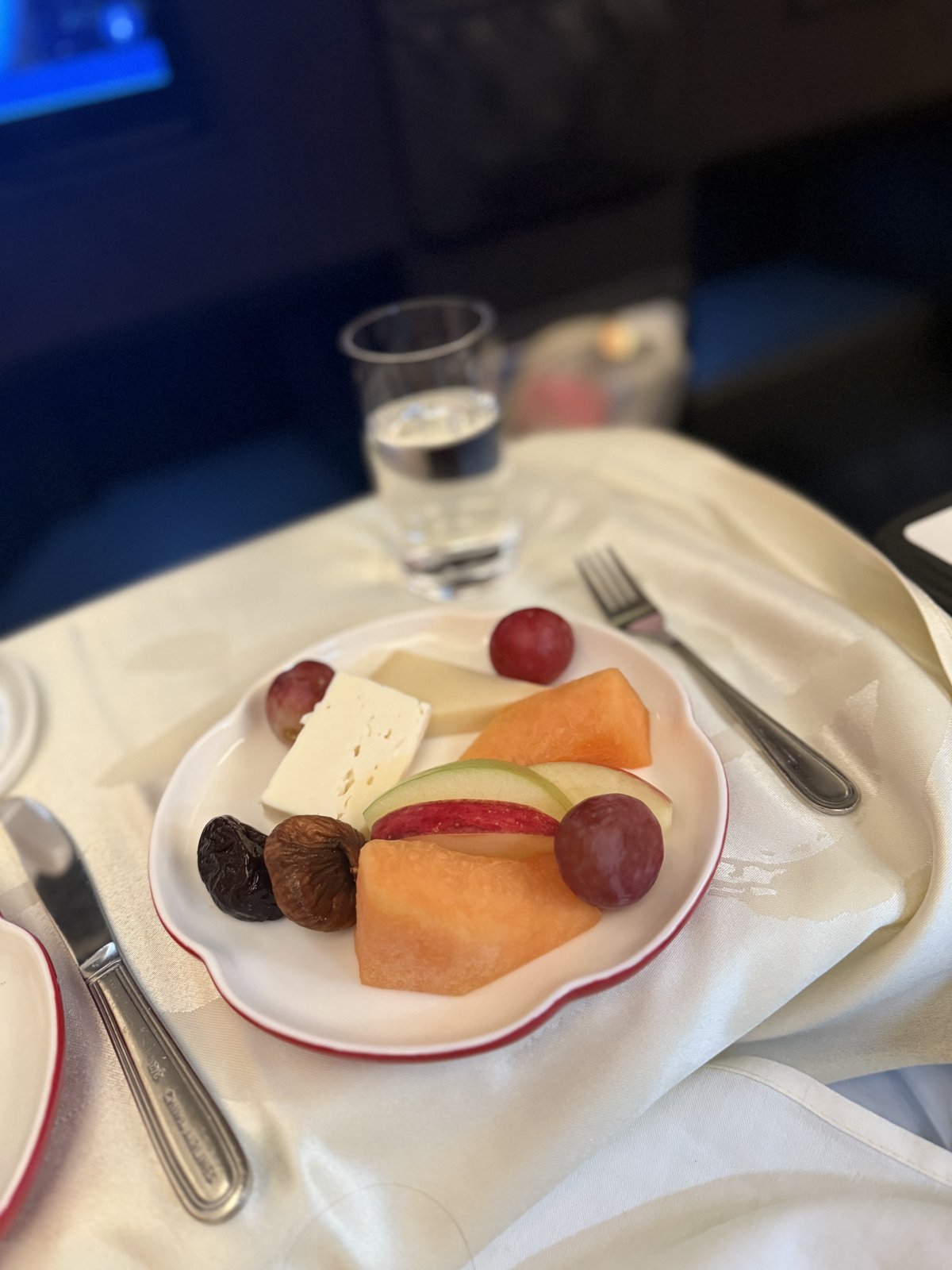
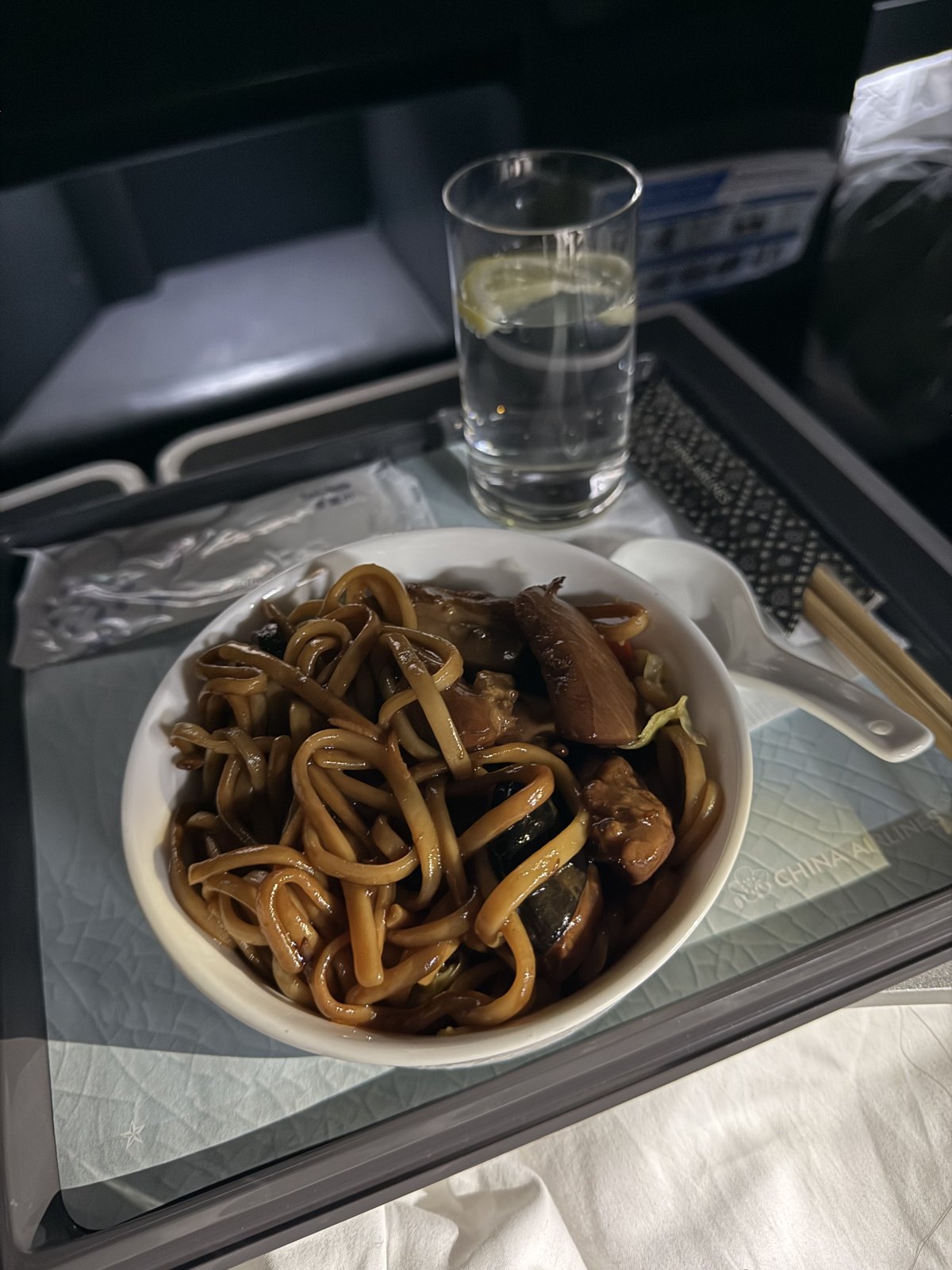
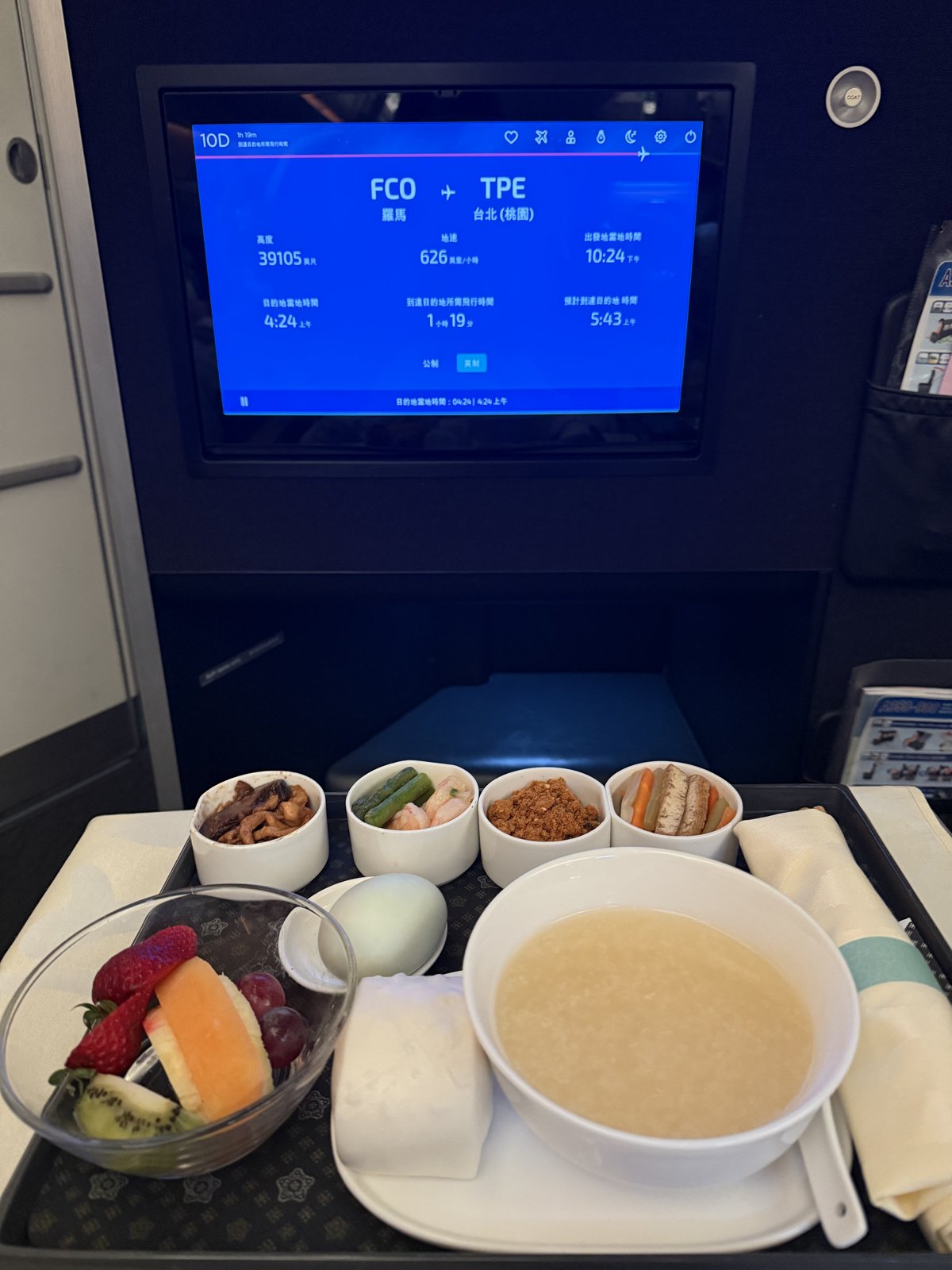
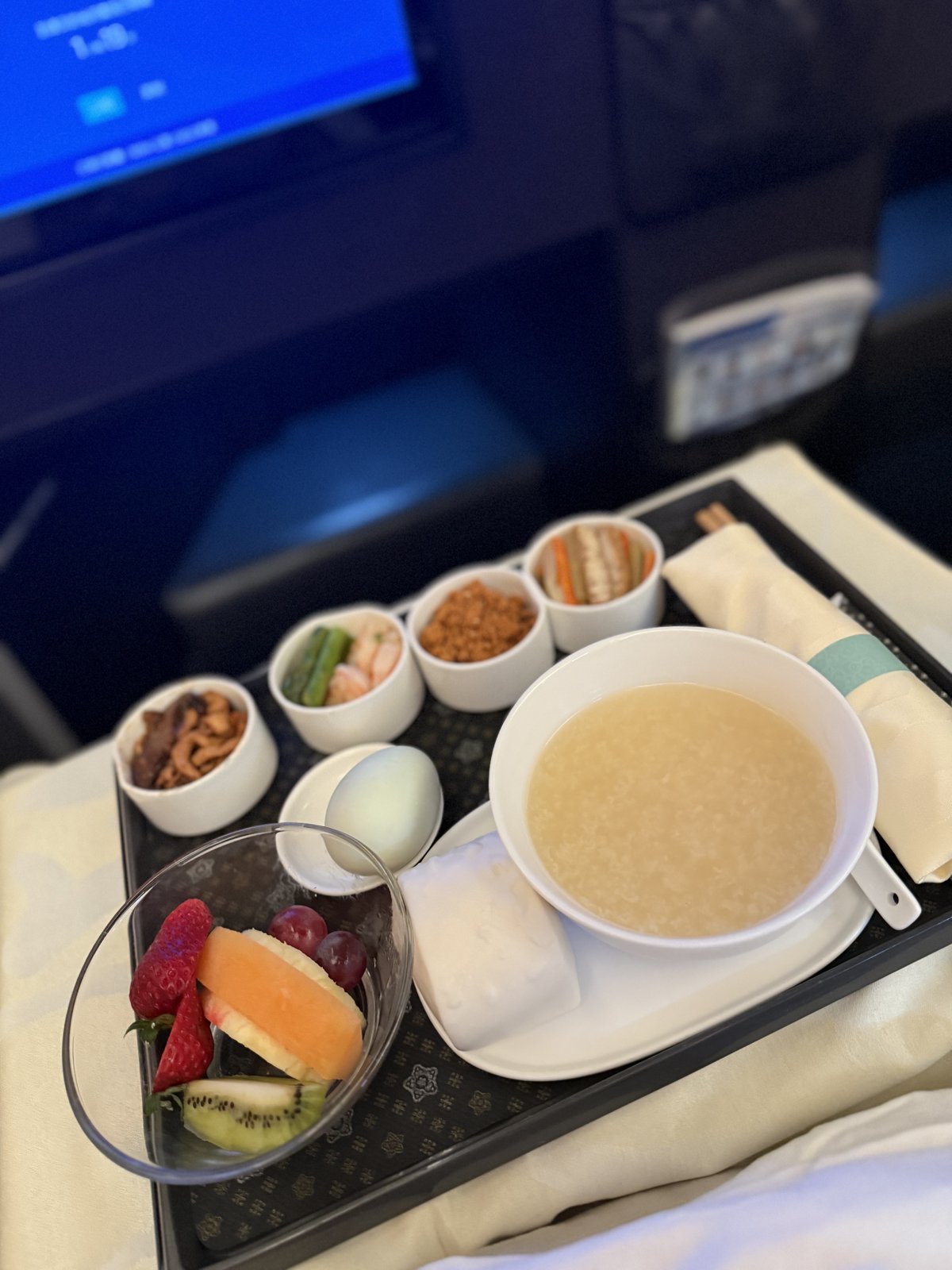
Mid-flight brought a bowl of stir-fried noodles that was, unexpectedly, the most honest food on board — hot, with real wok flavour. Breakfast before landing was Chinese congee with side dishes, a braised egg and fruit: light, gentle on a just-woken stomach. Both raised the same question — if the kitchen can do this, why was the bread like that?
Service: Indifferent
Finally, the crew. Not rude — just cold. Slow answers to the call button, trays collected in silence, and my question about the Wi-Fi earned exactly one sentence — "it's currently unavailable" — with nothing after. Business class sells more than a seat; it sells the feeling of being looked after. On this flight, from start to finish, I felt processed, not served.
Verdict: 62 — The Problem Isn't the Aircraft, It's the Patchwork
To be fair, the Vantage XL bed sleeps well and the wine list beats some of China Airlines' own flights. But every element of CI76 that day reminded you this product was assembled from borrowed parts: someone else's aircraft, someone else's seats, a network that never worked, careless bread, and warmth-free service. The fare is China Airlines business class money; what was delivered was a leased patchwork. Next time I fly Rome–Taipei, I'll check whether it's their own A350 before I pay.